





Abstract
This study examines how dynamic capabilities, institutional stakeholder pressure, and consumer sustainability expectations shape sustainable design and green marketing practices, and how these strategies contribute to sustainable business model innovation and organizational outcomes in Indonesia's Muslimah fashion sector. Focusing on urban-based small and medium enterprises serving predominantly middle- and upper-market segments, the study draws on survey data from 212 business owners and senior managers. Data were analyzed using covariance-based structural equation modeling with bootstrapped estimates to account for multivariate nonnormality. The results indicate that dynamic capabilities significantly enhance both sustainable design and green marketing practices, while consumer expectations and institutional stakeholder pressure strongly influence sustainability-oriented strategies. Sustainable design and green marketing both positively affect sustainable business model innovation, with green marketing exerting a stronger influence. Sustainable business model innovation, in turn, improves environmental performance, operational resilience, and brand credibility. The findings extend dynamic capabilities and stakeholder perspectives to a culturally embedded and underexplored context, highlighting the role of moral legitimacy and credibility in sustainability-driven business model innovation within Muslimah fashion markets. They also offer practical insights for modest fashion enterprises seeking to align sustainability, trust, and competitive performance.
Introduction
The global fashion industry has expanded rapidly in recent decades, largely driven by fast-fashion business models characterized by accelerated production cycles, low prices, and mass consumption. While commercially successful, this model has generated substantial environmental externalities, including excessive textile waste, high carbon emissions, intensive water use, and chemical pollution across supply chains (Leal Filho et al., 2024). These impacts have prompted growing criticism of linear fashion systems and have stimulated interest in alternative approaches such as slow fashion, zero waste design, and circular fashion models. These approaches emphasize environmentally responsible production, extended product life cycles, and more ethical consumption patterns (Karimzadeh & Boström, 2024; Rahaman et al., 2024).
Within this broader transformation, the modest fashion industry has emerged as a significant and rapidly growing segment of the global apparel market. In Indonesia, Muslimah fashion holds a particularly prominent position because of the country’s Muslim-majority population and growing demand for clothing that aligns with syar’i principles while incorporating contemporary design and aesthetics (Rizlah et al., 2025). The sector has evolved beyond purely religious dress into a dynamic creative industry with strong market visibility, especially in urban centers. However, despite this growth, many Muslimah fashion businesses still rely on conventional fast-fashion practices, with limited integration of sustainability considerations into design, production, and marketing. This contradiction highlights a critical gap between market expansion and sustainability-oriented innovation.
Muslimah fashion is theoretically distinct from generic fashion segments because consumption and production are embedded in a religio-cultural framework that emphasizes modesty, ethical conduct, and moral responsibility. Unlike mainstream fashion markets, where sustainability adoption is often driven primarily by regulatory compliance or environmental awareness, Muslimah fashion is shaped by Islamic values such as amanah, maslahah, and stewardship, which influence both entrepreneurial decision-making and consumer expectations. In this context, sustainability claims are therefore evaluated not only as environmental attributes but also as reflections of moral integrity and trustworthiness. As a result, authenticity and transparency become central mechanisms through which sustainability practices translate into brand legitimacy, making misalignment between claimed and actual practices particularly damaging to consumer trust. This religio-cultural embeddedness amplifies the strategic importance of credible sustainability practices and provides a theoretically meaningful context for examining how sustainability, trust, and business model innovation interact.
Responding to sustainability challenges in such contexts requires firms to move beyond isolated environmental initiatives and pursue more fundamental transformations toward sustainable business models (Trizotto et al., 2024). Sustainable business models integrate environmental, social, and economic objectives within core value creation, delivery, and capture mechanisms. For small and medium enterprises in the modest fashion segment, achieving this transformation depends heavily on developing dynamic capabilities. These capabilities enable firms to sense emerging sustainability opportunities and threats, seize them through strategic innovation, and reconfigure organizational resources and routines accordingly (Bornay-Barrachina et al., 2025). In fashion industries characterized by rapid trend cycles and intense competition, dynamic capabilities are essential to embedding sustainability in both design and market-facing strategies.
Green marketing plays a complementary and increasingly critical role by communicating a firm’s environmental and ethical commitments to consumers. Effective green marketing can enhance trust, strengthen brand differentiation, and support long-term customer relationships (Thomas & Douglas, 2024). However, when sustainability claims are not supported by substantive design and operational practices, green marketing may be perceived as greenwashing, thereby eroding credibility and damaging brand reputation (Widjajanti et al., 2025). This risk is particularly pronounced in Muslimah fashion markets, where consumers are highly sensitive to authenticity and moral consistency, and where trust is closely linked to both religious and ethical expectations.
Against this backdrop, this study examines how Muslimah fashion businesses in Makassar, Indonesia, develop and implement sustainability strategies through sustainable design and green marketing, and how these practices contribute to sustainable business model innovation. The empirical focus is on urban-based Muslimah fashion small and medium enterprises that predominantly serve middle- and upper-market segments, where consumers are more likely to have both the purchasing power and value orientation needed to support sustainability-oriented products. This contextual focus matters because sustainability adoption in fashion is uneven across income groups, and price sensitivity may constrain environmentally responsible consumption in lower-income segments. By focusing on Makassar as a growing urban hub for modest fashion entrepreneurship in eastern Indonesia, the study provides context-specific insights into how dynamic capabilities and external pressures shape sustainability-driven business model transformation within a culturally embedded and economically differentiated market. From this supply-side perspective, the research contributes to the literature on sustainable business models, dynamic capabilities, and green marketing by showing how sustainability-oriented innovation unfolds in an underexplored Muslim fashion context.
Literature Review and Hypothesis Development
Theoretical Foundations
This study draws on an integrative theoretical framework grounded in Dynamic Capability Theory, the Natural Resource-Based View (NRBV), Sustainable Business Model Innovation (SBMI), and Green Marketing Theory. Together, these perspectives explain how firms develop internal capabilities, respond to external pressures, and communicate sustainability commitments in ways that enable strategic transformation and long-term value creation in culturally embedded markets such as Muslimah fashion.
Dynamic capabilities refer to a firm’s capacity to sense environmental changes, seize emerging opportunities, and reconfigure internal and external resources to remain competitive under uncertainty (Chaudhuri et al., 2024). In small and medium-sized fashion enterprises, particularly within the Muslimah fashion sector, dynamic capabilities enable firms to identify shifts in consumer values toward ethical and environmentally responsible products, adopt new design and production practices, and realign organizational routines accordingly. These capabilities are especially critical in industries transitioning from fast fashion toward more responsible models such as slow fashion, zero-waste design, and circular production systems.
Complementing this perspective, the Natural Resource-Based View extends the resource-based logic by emphasizing that competitive advantage can be derived from environmentally valuable, rare, inimitable, and non-substitutable resources (Liu, 2025). In the fashion context, such resources may include access to eco-friendly materials, long-term relationships with ethical suppliers, and capabilities for waste minimization and cleaner production. When embedded in core business processes, these environmentally oriented resources contribute not only to reduced ecological impact but also to differentiation and legitimacy in increasingly sustainability-conscious markets.
Sustainable Business Model Innovation refers to redesigning a firm's value creation, delivery, and capture mechanisms to integrate environmental and social objectives alongside economic performance (Chabowski et al., 2025). Unlike isolated sustainability initiatives, SBMI involves systemic change that embeds sustainability into the logic of how the business operates. In Muslimah fashion businesses, SBMI may involve reconfiguring value propositions to balance Islamic ethical principles with ecological responsibility, adopting alternative sourcing and production models, leveraging digital channels to promote sustainable products, and reshaping customer engagement practices to support long-term sustainability goals.
It is important to distinguish sustainability-oriented practices from green marketing activities. Sustainability encompasses substantive changes in design, production, and organizational processes aimed at reducing environmental impact and enhancing social responsibility. Green marketing, by contrast, refers specifically to how firms communicate environmental and ethical attributes of their products and practices to external audiences (Deshmukh & Tare, 2023). Green marketing includes promotional messages, labeling, storytelling, and transparency initiatives that signal a firm’s sustainability orientation. While effective green marketing can build trust, differentiate brands, and strengthen customer loyalty, its credibility depends on alignment with genuine sustainability practices. In contexts where greenwashing is a concern, inconsistencies between communication and actual practices can undermine consumer trust and damage brand reputation (Apostolopoulos et al., 2025; Wang et al., 2025).
Together, these theoretical lenses provide a coherent foundation for understanding how internal capabilities, environmentally oriented resources, and strategic communication interact to shape sustainable business model innovation and performance outcomes. They allow this study to examine not only whether Muslimah fashion businesses adopt sustainability practices, but how sustainability is operationalized through internal transformation, external engagement, and credible market communication.
Dynamic Capabilities and Sustainable Strategic Practices
Dynamic capabilities refer to a firm's ability to purposefully adapt, integrate, and reconfigure its internal and external resources in response to environmental change (Cavusgil & Deligonul, 2025). These capabilities are especially important in dynamic industries such as fashion, where shifts in consumer preferences, regulatory landscapes, and environmental demands require businesses to innovate and continuously realign their strategies. For small Muslimah fashion businesses, dynamic capabilities can serve as the foundational mechanism to adopt sustainability practices that align with both Islamic values and global environmental expectations.
Two critical areas where dynamic capabilities are expected to play a central role are sustainable design strategy and green marketing practices. Sustainable design refers to integrating ecological principles such as durability, waste reduction, ethical material use, and long product lifespans into product development (Alzaydi, 2024). Firms with strong dynamic capabilities, especially sensing and reconfiguring, are better equipped to identify sustainability trends, understand environmental risks, and restructure production processes accordingly (Zheng et al., 2024). For example, a business that can sense consumer interest in slow fashion or zero-waste practices will be more likely to introduce eco-conscious product lines and design strategies. Reconfiguring internal processes such as switching to biodegradable materials or redesigning cutting patterns also reflects the operational flexibility that dynamic capabilities enable.
In parallel, dynamic capabilities also enhance a firm’s ability to adopt and execute green marketing strategies. These strategies involve communicating the environmental benefits of products or operations in ways that build trust, reflect authenticity, and differentiate the brand (Mehta, 2024). The seizing dimension of dynamic capabilities is particularly relevant here, as it enables firms to craft timely and relevant green value propositions and deliver them to the right audiences through effective marketing channels. Firms with strong dynamic capabilities are also more likely to keep marketing messages aligned with actual sustainability practices, reducing reputational risk (Mohammed et al., 2025; Santos et al., 2024).
In the context of Muslimah fashion, dynamic capabilities help businesses navigate the dual expectations of modesty and environmental responsibility. For example, a boutique that senses increased demand for faith-aligned yet eco-friendly clothing may reconfigure its product offerings and develop promotional narratives that emphasize ethical sourcing, zero-waste design, and halal-certified materials.
Thus, based on both theoretical and empirical evidence, this study argues that dynamic capabilities are critical enablers of two interrelated strategic practices: sustainable design and green marketing.
H1: Dynamic capabilities positively influence the implementation of sustainable design strategies in Muslimah fashion businesses.
H2: Dynamic capabilities positively influence the implementation of green marketing practices in Muslimah fashion businesses.
Consumer Sustainability Expectations and Green Marketing Practices
Consumer behavior in the fashion industry is increasingly influenced by environmental and ethical concerns (Schiaroli et al., 2024; Upadhyay & Kamble, 2025). A growing body of evidence shows that modern consumers, particularly younger and more educated segments, expect fashion brands to demonstrate clear commitments to sustainability, including responsible sourcing, fair labor practices, and ecological production methods (Kamgang et al., 2023). These expectations extend beyond product quality to how businesses communicate their environmental values, a domain known as green marketing.
Green marketing refers to creating, communicating, and delivering environmentally responsible value propositions to customers (Zhang et al., 2024). It involves not only promoting eco-friendly attributes of products but also reflecting a company’s broader sustainability commitments through brand narratives, labeling, certifications, and public engagement. However, green marketing effectiveness depends on its credibility and relevance to the target audience.
For Muslimah fashion consumers, sustainability expectations often intersect with religious values such as modesty, ethical consumption, and stewardship (Manzoor et al., 2024). This unique consumer profile is highly sensitive to authenticity, integrity, and social responsibility. Consequently, businesses in the Muslimah fashion sector face increasing pressure to demonstrate their environmental values in ways that align with faith-based consumer expectations.
Recent studies confirm the link between consumer expectations and green marketing adoption. Camel et al. (2024), in their empirical study of sustainable fashion brands, found that brands that engaged with sustainability-conscious consumers were more likely to adopt transparent, proactive green marketing strategies. Furthermore, Widjajanti et al. (2025) emphasized that consumer-driven green orientation serves as a critical external factor shaping firms' marketing agendas.
In small Muslimah fashion businesses, where customer loyalty and community reputation are essential, meeting consumer sustainability expectations through green marketing becomes a strategic imperative. Firms that recognize and respond to these expectations are better positioned to gain trust, build brand equity, and sustain market relevance.
H3: Consumer sustainability expectations positively influence the use of green marketing practices in Muslimah fashion businesses.
Institutional Stakeholder Pressure and Sustainable Design Strategy
Stakeholder theory posits that businesses do not operate in isolation. Rather, firms are embedded in a broader network of actors that can influence organizational behavior and strategic decision-making. In sustainability contexts, these actors may include regulators, suppliers, industry associations, civil society organizations, religious authorities, and local communities, all of whom may exert expectations regarding environmental responsibility, ethical sourcing, waste reduction, and transparency (Bankins et al., 2024). In this study, stakeholder pressure refers specifically to institutional stakeholder pressure, while consumer-related expectations are treated separately through the construct of consumer sustainability expectations in H3. This distinction matters because consumers represent a distinct market-based source of sustainability demand, whereas H4 focuses on broader institutional, social, and community-based pressures that encourage firms to adopt environmentally responsible design practices.
In the context of environmental sustainability, institutional stakeholders increasingly expect businesses to minimize their ecological footprint, adopt socially responsible practices, and improve transparency in production and sourcing processes (Deshmukh & Tare, 2023). These external pressures are particularly relevant in the fashion industry, which is widely associated with textile waste, chemical use, excessive resource consumption, and unsustainable supply chain practices. For small and medium-sized fashion enterprises, stakeholder pressure may serve as an important external trigger that encourages firms to reassess production practices and adopt more sustainable alternatives.
Sustainable design strategy, defined as integrating environmental considerations into product development and production processes, is one of the key areas in which businesses respond to stakeholder pressure (Mengistu et al., 2024). This strategy includes selecting eco-friendly materials, applying zero-waste principles, designing long-lasting products, reducing textile waste, and minimizing production-related emissions and resource use (Rahaman et al., 2024). Empirical research shows a consistent relationship between stakeholder pressure and the adoption of environmentally responsible product design. For example, Agyabeng-Mensah et al. (2024) found that external pressure from institutional actors, civil society organizations, and industry partners significantly influenced circular design initiatives among fashion firms. Such pressures often act as catalysts that push businesses, especially small and medium-sized enterprises, to adopt sustainable design practices even when internal motivation or resources remain limited.
In the context of Muslimah fashion businesses in Makassar, institutional stakeholder pressure can take several forms. Regulatory bodies may encourage compliance with environmental standards, suppliers may influence material choices and production processes, industry associations may promote sustainability norms, religious authorities may encourage ethical sourcing consistent with Islamic values, and local communities may expect businesses to contribute to broader social and ecological goals. This sociocultural and institutional context increases the salience of stakeholder demands and motivates businesses to embed sustainability considerations into product design and production decisions.
Therefore, when institutional stakeholder pressure is perceived as strong and legitimate, Muslimah fashion businesses are more likely to adopt sustainable design strategies to gain legitimacy, meet institutional and community expectations, and maintain competitive relevance.
H4: Institutional stakeholder pressure positively influences the adoption of sustainable design strategies in Muslimah fashion businesses.
Sustainable Design Strategy and Sustainable Business Model Innovation
Sustainable design strategy in the fashion industry refers to deliberately integrating environmental and ethical considerations into the product development process (Mengistu et al., 2024). This includes using eco-friendly materials, minimizing waste through design efficiency, extending product life cycles, and aligning production with social responsibility standards (Siwiec et al., 2024). These strategies reflect a departure from conventional fast fashion practices and are central to the slow fashion and zero-waste movements.
Implementing sustainable design strategies not only transforms product characteristics but also has broader implications for how businesses create, deliver, and capture value, elements that define a business model (Jorzik et al., 2024). When fashion businesses adopt eco-conscious design approaches, they often must adapt other components of their business models, such as sourcing, production, distribution, pricing, and customer engagement (Bhandari et al., 2022). For instance, designing long-lasting clothing with minimal environmental impact may require forming new supplier relationships, revising cost structures, or educating customers, all of which contribute to sustainable business model innovation.
Sustainable business model innovation (SBMI) refers to redesigning business models to incorporate sustainability goals alongside economic performance. It involves creating systemic change by embedding sustainability in core business logic rather than treating it as an add-on (Boons & Lüdeke-Freund, 2013). In fashion, this includes shifting from linear to circular models, adopting pre-order systems to minimize overproduction, or engaging in product-service systems (e.g., rental, repair, reuse).
Empirical studies support the link between sustainable design and SBMI. For example, D'Itria et al. (2024) and Lit et al. (2024) found that sustainable product design choices in fashion businesses are closely linked with broader innovations in their business models. By prioritizing environmentally responsible design, firms signal long-term commitment to sustainability, which in turn requires and stimulates innovation across their value chain.
In the context of Muslimah fashion boutiques, where product design reflects both modesty norms and growing environmental consciousness, sustainable design becomes a strategic entry point for rethinking the entire business model. It provides both the necessity and the opportunity to move toward a sustainable, value-driven business architecture.
H5: Sustainable design strategies positively influence sustainable business model innovation in Muslimah fashion businesses.
Green Marketing Practices and Sustainable Business Model Innovation
Green marketing practices refer to strategies businesses use to promote the environmental attributes of their products and operations while also communicating broader sustainability commitments (Pattanaik, 2024). These practices may include labeling, storytelling, eco-certifications, transparency in sourcing, and educational campaigns. In fashion, green marketing has become a vital tool for brand differentiation and trust-building, particularly among consumers who value ethical and environmentally conscious consumption.
However, green marketing is not merely a communication function; it often reflects and reinforces deeper transformations within a business (Sohaib et al., 2025). Businesses that implement credible green marketing strategies often need to adjust other parts of their operations to align external messages with internal practices. This need for internal coherence often leads to sustainable business model innovation (SBMI), where firms reconfigure their value proposition, supply chain, and stakeholder relationships to support environmental goals (Norris et al., 2021).
SBMI involves rethinking the business logic to integrate sustainability at its core, rather than treating it as a peripheral or compliance-driven concern (Chabowski et al., 2025). In the fashion sector, especially among smaller niche brands, this may include shifting to made-to-order models, investing in local and ethical production, or engaging in community-based marketing and circular economy practices.
Empirical studies support the proposition that green marketing can catalyze SBMI. Singh (2024) describes how marketing efforts centered on environmental transparency require corresponding innovation in operations, logistics, and supplier selection. Similarly, Vehbi et al. (2025) found that fashion companies engaged in circular business models often relied on green marketing not only to educate consumers but also to drive internal innovation and alignment.
In the context of Muslimah fashion businesses, where customers are sensitive to both moral and environmental values, green marketing bridges the brand and its consumers' values. To avoid greenwashing and maintain credibility in this values-driven segment, businesses must ensure their green marketing is underpinned by structural changes in how the business operates, encouraging innovation in the business model itself.
H6: Green marketing practices positively influence sustainable business model innovation in Muslimah fashion businesses.
Sustainable Business Model Innovation and Business Outcomes
Sustainable Business Model Innovation (SBMI) refers to a firm's ability to redesign its core value creation, delivery, and capture mechanisms to generate not only economic value but also positive environmental and social value (Maselli et al., 2024). Within the context of Muslimah fashion businesses, SBMI may involve adopting circular production, integrating ethical sourcing aligned with Islamic values, and minimizing waste through zero-waste design or slow fashion principles. Implementing SBMI is expected to generate a range of business outcomes that support long-term sustainability and competitiveness.
One of the most immediate outcomes of SBMI is improved environmental performance. Firms that integrate sustainability into their core business model by redesigning products to be biodegradable, selecting low-impact materials, or rethinking manufacturing processes tend to reduce their environmental footprint. Das et al. (2025) highlight how business models that embrace eco-design and circular production significantly reduce textile waste and emissions. Similarly, De Felice et al. (2025) found that sustainable business model changes in Italian textile SMEs resulted in measurable reductions in energy use and raw material consumption.
Beyond environmental outcomes, SBMI contributes to operational resilience, defined as a firm’s capacity to withstand and recover from external disruptions (Agu et al., 2024). Resilient businesses can quickly adapt to supply chain interruptions, market volatility, and policy changes. Ortiz-Avram et al. (2024) argue that dynamic, sustainability-oriented models enable firms to respond more effectively to uncertainty by fostering flexibility and stakeholder collaboration. Imran et al. (2024) support this, showing that fashion firms with sustainable business models were better able to adjust their operations during crisis periods, such as the COVID-19 pandemic. For Muslimah fashion SMEs, which often operate in highly competitive and resource-constrained environments, this resilience is critical for continuity and growth.
SBMI also enhances brand credibility and market positioning. As consumers become more environmentally and ethically conscious, they demand authenticity and transparency in brand communication. Agu et al. (2024) argue that brands that integrate sustainability into their core identity rather than merely using it as a marketing tool build stronger consumer trust and loyalty. In the modest fashion sector, Beta (2021) found that Muslimah fashion entrepreneurs who embedded sustainability into their value proposition experienced improved customer retention, particularly among younger, values-driven segments. SBMI enables these firms to differentiate themselves by aligning with dual consumer values: modesty and environmental stewardship.
Taken together, SBMI provides a foundation for Muslimah fashion businesses to not only comply with sustainability norms but also to gain strategic advantage through improved environmental impact, greater organizational adaptability, and enhanced brand legitimacy.
H7: Sustainable business model innovation positively influences the environmental performance of Muslimah fashion businesses.
H8: Sustainable business model innovation positively influences the operational resilience of Muslimah fashion businesses.
H9: Sustainable business model innovation positively enhances the brand credibility and market positioning of Muslimah fashion businesses.
Figure 1 illustrates the research conceptual model.
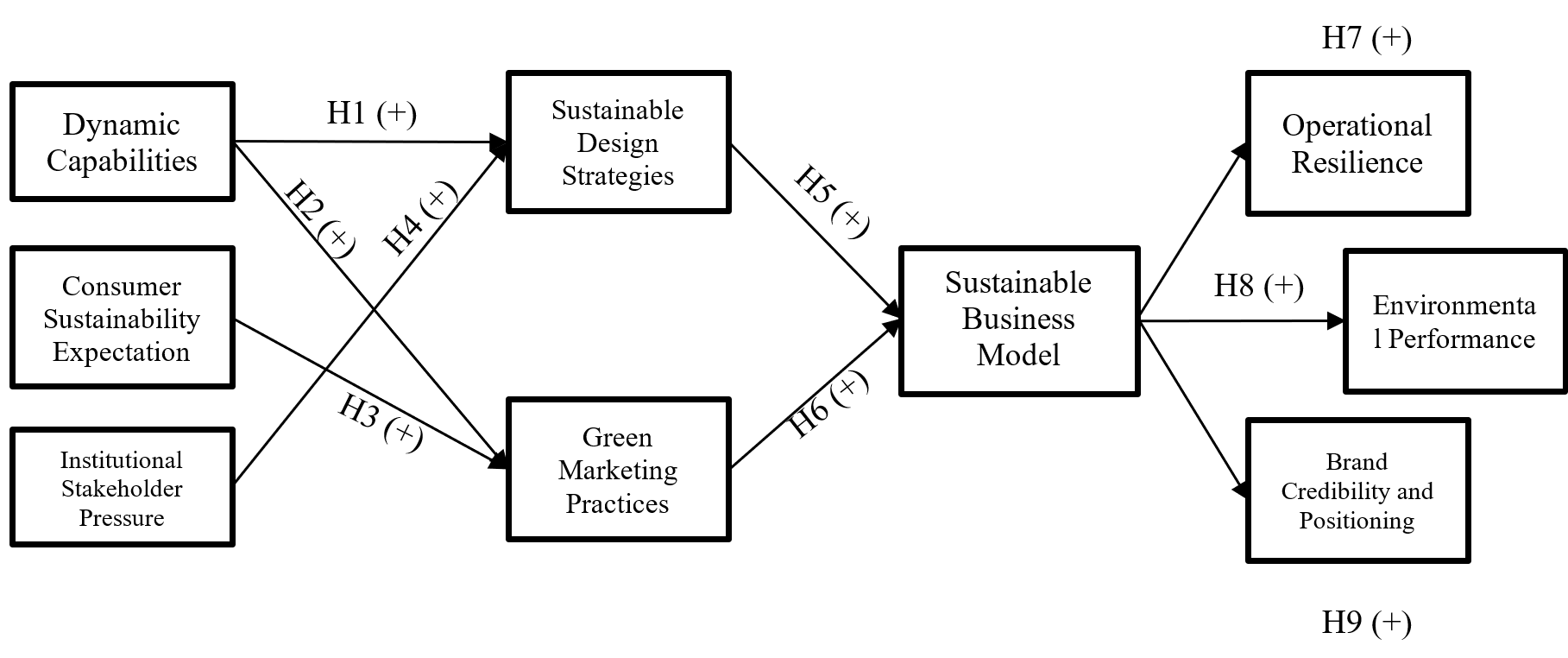
Source: Authors’ own elaboration.
Research Method
This study employed a quantitative, explanatory research design to examine how institutional stakeholder pressure and consumer sustainability expectations influence strategic sustainability responses in the form of sustainable design and green marketing practices, and how these strategies contribute to sustainable business model innovation (SBMI). The study further assessed the impact of SBMI on three organizational performance outcomes: environmental performance, operational resilience, and brand credibility. A cross-sectional approach was adopted to capture relationships among latent variables at a single point in time, an appropriate strategy for theory testing in sustainable entrepreneurship within the modest fashion sector.
The target population consisted of owners and senior managers of Muslimah fashion businesses in Indonesia who were directly involved in business strategy, design innovation, and marketing. These respondents were considered most knowledgeable to evaluate firm-level sustainability practices and business model transformation. Using purposive sampling, the study collected data from 212 qualified respondents through an online survey administered via Google Forms. Distribution channels included modest fashion business associations, entrepreneurial communities, and curated WhatsApp groups. A pilot study with 35 participants was conducted before the main data collection to ensure item clarity and cultural appropriateness. We made minor revisions to wording and item sequencing, and reliability scores for all constructs exceeded the acceptable threshold (Cronbach's > 0.75).
The questionnaire was administered in Bahasa Indonesia. The opening section contained a study explanation, informed consent, and assurances of anonymity and voluntary participation. Respondents could withdraw at any point, and no personally identifiable information was collected. The Faculty Research Ethics Committee approved the research protocol in line with institutional standards for ethical research involving human participants.
All constructs were measured using multi-item reflective indicators adapted from validated scales in prior literature and contextualized for the Muslimah fashion industry in Indonesia. Respondents indicated their responses on a 7-point Likert scale ranging from 1 (strongly disagree) to 7 (strongly agree). Table 1 presents the full list of measurement items, construct codes, and primary sources. We adapted all items from established scales and contextualized them for Muslimah fashion businesses in Indonesia.
We analyzed the data using covariance-based structural equation modeling (CB-SEM) in AMOS. Before estimating the structural model, we assessed multivariate normality, common method bias, and the measurement model through confirmatory factor analysis, including reliability, convergent validity, discriminant validity, and overall model fit. We then estimated the structural model to test the hypothesized relationships. Bias-corrected bootstrapping with 2,000 resamples was used to evaluate the robustness of the estimates, and the hypothesized model was compared with a theoretically plausible alternative model.
Table 1. Measurement Items and Sources
| Construct | Items | Sources |
| Dynamic Capability | Our business quickly identifies emerging trends and opportunities related to sustainability in the fashion industry. | (Cavusgil & Deligonul, 2025; Bornay-Barrachina et al., 2025) |
| We are able to seize new opportunities to align our products and processes with sustainability demands. | ||
| We reconfigure our internal processes and resources to respond to changes in the sustainability landscape. | ||
| Our business adapts quickly to changes in market trends, regulations, or consumer expectations related to sustainability. | ||
| Institutional Stakeholder Pressure | Our business is pressured by NGOs, government, and communities to implement sustainability practices. | (Liu & Heugens, 2024; Tetteh et al., 2024) |
| Industry associations encourage our business to improve environmental responsibility. | ||
| Civil society organizations and community groups expect our business to reduce environmental impacts | ||
| Religious or social institutions encourage our business to use ethical and responsible production practices | ||
| Consumer Sustainability Expectations | Our customers insist on transparency and eco-friendly materials in our products. | (Mednini & Charfi Ben Hmida, 2025; Ogunmola & Kumar, 2024) |
| Our customers prefer Muslimah fashion products made from environmentally responsible materials. | ||
| Our customers expect our business to communicate sustainability practices clearly. | ||
| Our customers value brands that combine modest fashion with environmental responsibility. | ||
| Sustainable Design Strategy | We embed eco-design principles (e.g., zero-waste pattern cutting) in product development. | (Prakash et al., 2024; Srisathan et al., 2025) |
| We use design approaches that reduce fabric waste during production. | ||
| We prioritize durable designs that extend product life. | ||
| We consider environmentally responsible materials in designing our products. | ||
| We design products with attention to resource efficiency and waste minimization. | ||
| Green Marketing Practices | We highlight environmental benefits in advertising and social-media content. | (Japutra et al., 2024; Kwon et al., 2024) |
| We use social media to highlight our sustainability related practices. | ||
| We provide customers with information about environmentally responsible materials or production. | ||
| We use sustainability messages to differentiate our brand from competitors. | ||
| We ensure that our sustainability claims are consistent with our actual business practices. |
Table 2. Measurement Items and Sources (continued)
| Construct | Items | Sources |
| Sustainable Business Model Innovation (SBMI) | We have reconfigured how we create and deliver value to support sustainability goals. | (Siddiqi et al., 2025; Sondhi et al., 2024) |
| We have changed our value proposition to include environmental and ethical considerations. | ||
| We have adjusted our sourcing, production, or distribution practices to support sustainability. | ||
| We have developed new ways to engage customers around sustainability. | ||
| We have integrated sustainability into the overall logic of our business model. | ||
| Environmental Performance | We have significantly reduced water use, emissions, or textile waste. | (Leal Filho et al., 2024; Solis et al., 2024) |
| Our business has reduced the use of environmentally harmful materials. | ||
| Our business has improved resource efficiency in production processes. | ||
| Our business has reduced negative environmental impacts from its operations. | ||
| Operational Resilience | We can maintain operations during economic or supply-chain shocks. | (Ivanov, 2024; Zheng et al., 2024) |
| Our business can adapt quickly to changes in material availability or production costs. | ||
| Our business can continue serving customers during economic or market uncertainty. | ||
| Our business can recover effectively from operational disruptions. | ||
| Brand Credibility & Market Positioning | Customers view our brand as ethical and trustworthy with respect to sustainability. | (Agu et al., 2024; Hasan et al., 2024) |
| Customers perceive our sustainability claims as credible. | ||
| Our sustainability practices strengthen our brand position in the market. | ||
| Our brand is recognized as ethical and responsible by customers. |
Results
Descriptive Statistics and Correlations.
Table 2 presents the descriptive statistics and correlations among the study constructs. Mean scores ranged from 4.30 to 5.20 on a seven-point Likert scale, indicating moderately high agreement among respondents regarding sustainability-related practices in Muslimah fashion businesses.
Table 3. Descriptive Statistics and Correlations
| Construct | Mean | SD | DC | SP | CSE | SDS | GMP | SBMI | EP | OR | BCMP |
| DC | 4.75 | 1.05 | .830 | ||||||||
| SP | 4.30 | 1.20 | .36 | .775 | |||||||
| CSE | 5.10 | 1.00 | .40 | .42 | .806 | ||||||
| SDS | 4.80 | 1.10 | .38 | .55 | .48 | .812 | |||||
| GMP | 4.70 | 1.00 | .35 | .46 | .62 | .51 | .825 | ||||
| SBMI | 4.60 | 1.10 | .44 | .50 | .58 | .55 | .68 | .849 | |||
| EP | 4.50 | 1.20 | .39 | .47 | .52 | .56 | .60 | .74 | .837 | ||
| OR | 4.90 | 1.00 | .41 | .44 | .50 | .53 | .61 | .70 | .63 | .860 | |
| BCMP | 5.20 | .90 | .43 | .45 | .59 | .54 | .66 | .72 | .65 | .67 | .849 |
Brand Credibility and Market Positioning recorded the highest mean value, M = 5.20, SD = .90, suggesting that respondents perceived their brands as relatively credible and well positioned in the market. Consumer Sustainability Expectations also showed a relatively high mean value, M = 5.10, SD = 1.00, reflecting strong perceived customer demand for sustainability-related values, transparency, and responsible fashion practices.
Institutional Stakeholder Pressure recorded the lowest mean value, M = 4.30, SD = 1.20, indicating that respondents perceived external institutional pressure for sustainability as moderate rather than strong. Nevertheless, Sustainable Design Strategy (M = 4.80, SD = 1.10) and Green Marketing Practices (M = 4.70, SD = 1.00) showed that firms actively implemented sustainability-oriented initiatives in both product development and market communication.
The standard deviations ranged from .90 to 1.20, suggesting reasonable variability in respondent perceptions. The correlations among constructs were positive and theoretically consistent, indicating that the relationships among the study variables followed the expected direction without suggesting excessive multicollinearity. Overall, the descriptive results suggest that while consumer expectations and brand credibility are relatively strong, institutional stakeholder pressure and environmental performance remain areas where sustainability adoption could be further strengthened.
Common Method Bias
The common latent factor (see Table 3) test results show that the unmeasured method factor accounted for 17.5 percent of the variance, well below the recommended threshold of 25 percent. This indicates that common method variance is not a serious concern in this study. In other words, systematic response bias is unlikely to inflate the relationships among constructs. The procedural remedies employed during survey design, such as assuring respondent anonymity and randomizing item order, combined with this statistical test, provide strong evidence that the findings are robust against common method bias.
Table 4. Common Method Bias Test Using Common Latent Factor
| Method | Obtained Value | Recommended Criterion |
| Common Latent Factor (CLF) | 17.5% | 25% |
Multivariate Normality Assessment
Before estimating the measurement and structural models, we assessed multivariate normality to determine whether the assumptions underlying covariance-based structural equation modeling were met. We used Mardia’s multivariate skewness and kurtosis statistics for this assessment. The results indicated that the data did not fully satisfy the assumption of multivariate normality. Specifically, Mardia’s multivariate skewness was significant (, ), and Mardia’s multivariate kurtosis was 164.38, with a critical ratio of 12.74. Because the critical ratio exceeded the recommended threshold, the data were considered non-normal.
Given this result, we re-estimated both the confirmatory factor analysis and the structural model using a bootstrap procedure with 2,000 resamples. We used bias-corrected bootstrap confidence intervals to assess the stability and statistical significance of the measurement and structural estimates. The bootstrapped CFA results showed that all standardized factor loadings remained significant and exceeded the recommended threshold of .70, indicating that the measurement model was robust to potential nonnormality. Similarly, the bootstrapped structural model produced results that were consistent with the original maximum likelihood estimates. All hypothesized paths remained statistically significant, and no confidence interval included zero. These findings indicate that the results are robust to violations of multivariate normality and provide additional confidence in the validity of the measurement and structural models.
Measurement Model
The measurement model was evaluated by examining indicator reliability, internal consistency reliability, convergent validity, discriminant validity, and overall model fit. The results indicated satisfactory reliability and convergent validity. All standardized factor loadings exceeded the recommended threshold of .70, ranging from .75 to .90, which indicates strong indicator reliability. Cronbach's values ranged from .83 to .91. In contrast, composite reliability values ranged from .86 to .93, both exceeding the recommended threshold of .70. The average variance extracted values ranged from .60 to .74, surpassing the minimum criterion of .50. These results indicate that all constructs demonstrated adequate internal consistency reliability and convergent validity.
Discriminant validity was also supported. The square root of the average variance extracted for each construct exceeded its correlations with other constructs, satisfying the Fornell and Larcker criterion. For example, the square root of the average variance extracted for Sustainable Business Model Innovation was .849, which was higher than its correlations with Green Marketing Practice (.68) and Sustainable Design Strategy (.55). This indicates that each construct shared more variance with its own indicators than with other constructs. In addition, the Heterotrait Monotrait ratios ranged from .45 to .82, all below the conservative threshold of .85. For instance, the Heterotrait Monotrait ratio between Consumer Sustainability Expectations and Green Marketing Practice was .79, while the highest observed ratio, between Sustainable Business Model Innovation and Environmental Performance, was .82. These results confirm that the constructs were empirically distinct.
The measurement model also demonstrated acceptable fit to the data. Although the statistic was significant (, , ), this result is expected in models with moderate sample sizes and multiple observed indicators. Therefore, we also examined alternative fit indices. The -to-degrees-of-freedom ratio was 2.06, below the recommended threshold of 3.00. The Root Mean Square Error of Approximation was .049, indicating a close approximate fit. Incremental fit indices were also satisfactory, with Comparative Fit Index = .952 and Tucker-Lewis Index = .944, both exceeding the commonly recommended threshold of .90. The Standardized Root Mean Square Residual was .046, indicating low residual variance. Taken together, these fit indices support the measurement model’s adequacy for subsequent structural testing.
Because the multivariate normality assessment indicated deviation from normality, the measurement model was also evaluated using bootstrapping with 2,000 resamples and bias-corrected confidence intervals. The bootstrapped results confirmed the measurement model's robustness. All standardized factor loadings remained statistically significant, and no confidence interval included zero. These results indicate that the measurement model remained stable under bootstrapping and was not substantially affected by potential nonnormality in the data.
Structural Model
Before examining the hypothesized relationships, we assessed the overall fit of the structural model. The structural model demonstrated acceptable fit to the data, , df = 263, p < .001, /df = 2.09, RMSEA = .051, CFI = .946, TLI = .938, and SRMR = .052. Although the -square statistic was significant, this result is common in SEM models with moderate sample sizes and multiple observed indicators. Therefore, we used alternative fit indices to evaluate model adequacy. The -square to degrees of freedom ratio was below the recommended threshold of 3.00, the RMSEA and SRMR values indicated acceptable residual error, and the CFI and TLI values exceeded the commonly accepted threshold of .90. These results indicate that the hypothesized structural model provided an adequate representation of the observed data and was suitable for hypothesis testing.
The structural model results provided strong empirical support for the proposed hypotheses. Dynamic capabilities had significant positive effects on both sustainable design strategy (β= 0.38, CR = 6.21, p = 0.001) and green marketing practice (β= 0.35, CR = 5.87, p = 0.001), indicating that firms with stronger adaptive abilities are more likely to embed sustainability in both design and marketing practices. Consumer sustainability expectations exerted a particularly strong effect on green marketing practice (β= 0.62, CR = 9.84, p = 0.001), the most influential path among the antecedents and underscoring the critical role of consumer demand in shaping sustainability communication in Muslimah fashion businesses. Institutional stakeholder pressure was also positively related to sustainable design strategy (β= 0.55, CR = 8.92, p = 0.001), suggesting that institutional and social expectations significantly drive firms toward environmentally responsible product development.
Table 5. Structural Path Estimates with Bias Corrected Bootstrap Confidence Intervals
| H | Path | β | SE | CR | p value | 95% BC CI | Result |
| H1 | Dynamic Capabilities →Sustainable Design Strategy | .38 | .061 | 6.21 | .001 | [.26, .49] | Supported |
| H2 | Dynamic Capabilities →Green Marketing Practice | .35 | .060 | 5.87 | .001 | [.23, .46] | Supported |
| H3 | Consumer Sustainability Expectations →Green Marketing Practices | .62 | .063 | 9.84 | .001 | [.50, .73] | Supported |
| H4 | Institutional Stakeholder Pressure →Sustainable Design Strategy | .55 | .062 | 8.92 | .001 | [.43, .66] | Supported |
| H5 | Sustainable Design Strategy →SBMI | .29 | .136 | 2.14 | .032 | [.04, .53] | Supported |
| H6 | Green Marketing Practices →SBMI | .57 | .123 | 4.65 | .001 | [.33, .78] | Supported |
| H7 | SBMI →Environmental Performance | .74 | .189 | 3.91 | .001 | [.39, .91] | Supported |
| H8 | SBMI →Operational Resilience | .81 | .250 | 3.24 | .001 | [.34, .94] | Supported |
| H9 | SBMI →Brand Credibility | .79 | .313 | 2.52 | .012 | [.21, .95] | Supported |
Both sustainable design strategy and green marketing practice significantly predicted sustainable business model innovation (SBMI). Sustainable design strategy had a positive but weaker effect (β= 0.29, CR = 2.14, p = 0.032), while green marketing practice showed a stronger effect (β= 0.57, CR = 4.65, p = 0.001). This finding highlights the importance of external communication in transforming sustainability practices into business model innovations, complementing internal design efforts. SBMI, in turn, significantly improved all three performance outcomes. The model revealed that SBMI enhanced environmental performance (β= 0.74, CR = 3.91, p = 0.001), strengthened operational resilience (β= 0.81, CR = 3.24, p = 0.001), and bolstered brand credibility (β= 0.79, CR = 2.52, p = 0.012). These findings show that sustainability-rooted business model innovations not only deliver ecological benefits but also support organizational adaptability and consumer trust.
Because the multivariate normality assessment indicated deviation from normality, we further evaluated the structural paths using bias-corrected bootstrap confidence intervals based on 2,000 resamples. As shown in Table 4, all hypothesized paths remained statistically significant, and none of the 95 percent bias-corrected confidence intervals included zero. These results confirm that the hypothesized relationships are robust to potential nonnormality in the data.
The model's explanatory power was moderate to substantial. Sustainable design strategy and green marketing practice were moderately explained by their antecedents, with R² values of 0.46 and 0.58, respectively. Sustainable business model innovation was substantially explained by sustainable design and green marketing, with an R² value of 0.63. The performance outcomes also showed substantial explanatory power, with environmental performance at 0.55, operational resilience at 0.66, and brand credibility at 0.64. These results demonstrate that the model not only fits the data well but also explains meaningful proportions of variance in key sustainability and performance constructs, supporting the robustness of the proposed framework.
Alternative Model Assessment
We estimated an alternative structural model to assess the robustness and parsimony of the hypothesized indirect-effects-only model. Consistent with Zhao et al. (2010), the hypothesized model specified that dynamic capabilities, consumer sustainability expectations, and institutional stakeholder pressure influence organizational outcomes through sustainable design strategy, green marketing practices, and sustainable business model innovation, rather than through direct paths.
The alternative model added selected theoretically plausible direct paths: dynamic capabilities →sustainable business model innovation, institutional stakeholder pressure →environmental performance, consumer sustainability expectations →brand credibility, sustainable design strategy →environmental performance, and green marketing practices →brand credibility. These paths were included to test reasonable competing explanations without estimating a fully saturated model.
Both models demonstrated acceptable fit. The alternative model fit the data adequately, = 541.16, df = 258, p < .001, /df = 2.10, RMSEA = .052, CFI = .947, TLI = .936, and SRMR = .051. The hypothesized model also showed acceptable fit, = 548.72, df = 263, p < .001, /df = 2.09, RMSEA = .051, CFI = .946, TLI = .938, and SRMR = .052. Although the alternative model produced a slightly lower -square value, the improvement was marginal and required additional direct paths.
Table 6. Comparison of Hypothesized and Alternative Structural Models
| Model | df | /df | RMSEA | CFI | TLI | SRMR | AIC | BIC | Interpretation | |
| Indirect effects only model | 548.72 | 263 | 2.09 | .051 | .946 | .938 | .052 | 684.72 | 912.34 | Preferred |
| Alternative model | 541.16 | 258 | 2.10 | .052 | .947 | .936 | .051 | 687.16 | 931.58 | Acceptable but less parsimonious |
As shown in Table 5, information criteria favored the hypothesized model. The hypothesized model produced lower AIC and BIC values, AIC = 684.72 and BIC = 912.34, than the alternative model, AIC = 687.16 and BIC = 931.58. Several added direct paths were also nonsignificant when the mediating variables were included. Thus, the hypothesized indirect-effects-only model was retained because it provided comparable fit with fewer estimated paths and greater parsimony.
This result supports the theoretical position that sustainable design strategy, green marketing practices, and sustainable business model innovation function as key mechanisms through which internal capabilities and external pressures translate into sustainability-related organizational outcomes. Therefore, consistent with Zhao et al. (2010), the findings support an indirect-effects-only interpretation. Dynamic capabilities, consumer sustainability expectations, and institutional stakeholder pressure do not appear to translate directly into environmental performance, operational resilience, or brand credibility. Instead, they influence outcomes through the strategic adoption of sustainable design and green marketing practices, which then translate into sustainable business model innovation and related organizational outcomes.
Discussion
This study examined how dynamic capabilities, institutional stakeholder pressure, and consumer sustainability expectations influence sustainable design and green marketing strategies, and how these strategies contribute to sustainable business model innovation (SBMI) and subsequent organizational performance in Indonesia's Muslimah fashion sector. The analysis confirmed all nine hypotheses, demonstrating that both internal capabilities and external pressures play critical roles in shaping firm-level sustainability practices, and that SBMI functions as a central mechanism linking these practices to environmental performance, operational resilience, and brand credibility.
The results show that dynamic capabilities significantly enhance both sustainable design and green marketing practices. This finding aligns with the argument that dynamic capabilities enable firms to sense, seize, and reconfigure resources in response to changing environmental and market conditions (Teece, 2007). Prior studies in manufacturing and technology-intensive sectors similarly report that dynamic capabilities facilitate integrating sustainability into product development and strategic decision-making (Wu, 2010; Lin & Wu, 2014). The present study extends this evidence to the Muslimah fashion industry, indicating that even small and medium-sized enterprises in creative and culturally embedded sectors can leverage adaptive capabilities to pursue sustainability-oriented transformation.
Consumer sustainability expectations emerged as the strongest predictor of green marketing practices. This finding aligns with existing literature suggesting that environmentally conscious consumers pressure firms to adopt and communicate sustainability initiatives (Biswas & Roy, 2015; Joshi & Rahman, 2017). However, the strength of this relationship in the current study reflects the distinctive characteristics of Muslimah fashion markets, where consumer expectations are closely intertwined with religious and moral values. In this context, sustainability communication is evaluated not only in terms of environmental benefit but also as a signal of ethical integrity and moral responsibility. As a result, green marketing becomes a particularly salient mechanism for firms to demonstrate authenticity, trustworthiness, and alignment with faith-based consumption norms, thereby amplifying its strategic importance relative to other sustainability practices.
Institutional stakeholder pressure significantly influenced sustainable design strategies, supporting institutional theory arguments that coercive, normative, and mimetic pressures encourage firms to adopt environmentally responsible practices (Delmas & Toffel, 2008; DiMaggio & Powell, 1991). Similar relationships have been observed in manufacturing and tourism sectors (Gonz{\'a}lez-Benito & Gonz{\'a}lez-Benito, 2006). In the Indonesian Muslimah fashion context, institutional stakeholder pressure may originate from regulatory institutions, community expectations, and religious or social norms, collectively motivating firms to incorporate sustainability considerations into product design and production processes.
Both sustainable design and green marketing contributed positively to SBMI, but green marketing had a substantially stronger effect. This result partially contrasts with prior studies that emphasize sustainable product and process design as the primary drivers of sustainable business models (Bocken et al., 2014; Khan et al., 2021). In the Muslimah fashion sector, however, symbolic and moral dimensions of consumption strongly mediate business legitimacy. When perceived as credible and authentic, green marketing functions not merely as communication but as a mechanism for reinforcing moral legitimacy and relational trust with consumers. Because modest fashion consumption is guided by values of modesty, responsibility, and ethical conduct, sustainability messages that resonate with these values are more likely to trigger broader changes in value propositions, customer engagement, and revenue models. This helps explain why green marketing influences SBMI more strongly than sustainable design alone, particularly in culturally and religiously embedded markets.
The descriptive statistics further support this interpretation. Mean values for sustainable design, green marketing, and SBMI constructs were consistently above the scale midpoint, indicating that sustainability-oriented practices and business model innovation are not marginal phenomena but represent an emerging trend among the sampled firms. This pattern suggests that SBMI is increasingly normalized within urban Muslimah fashion enterprises, especially those operating in middle- and upper-market segments where consumers have both the purchasing power and the value orientation to support sustainability-oriented offerings. These findings imply that sustainability-driven innovation is gaining traction in specific market segments, even though adoption may remain uneven across income groups and geographic contexts.
SBMI was shown to positively influence environmental performance, operational resilience, and brand credibility. These results are consistent with earlier research linking sustainable business models to ecological and competitive outcomes (Boons & L{\"u}deke-Freund, 2013; Foss & Saebi, 2017). The findings also extend existing literature by demonstrating that SBMI enhances organizational resilience and strengthens brand credibility in culturally sensitive industries. In Muslimah fashion, where trust and moral consistency are central to consumer relationships, embedding sustainability into the business model supports both adaptive capacity and long-term legitimacy (Zott & Amit, 2010).
Taken together, the findings reinforce theoretical claims that dynamic capabilities and external legitimacy pressures jointly shape sustainability strategies and that these strategies are translated into performance outcomes through sustain*nable business model innovation. More importantly, the study highlights the distinctive dynamics of Muslimah fashion in Indonesia, where religio-cultural identity amplifies the importance of authenticity, trust, and moral legitimacy in sustainability adoption. By situating SBMI within this under-researched, culturally embedded industry, the study contributes to sustainable marketing and entrepreneurship research. It complements existing evidence largely derived from Western and secular market contexts.
Limitations and Future Directions
Despite its contributions, this study has several limitations that offer opportunities for future research. First, the cross-sectional design limits the ability to make strong causal inferences or capture how sustainability practices and sustainable business model innovation evolve. Although cross-sectional SEM is appropriate for theory testing, it cannot fully explain whether dynamic capabilities, green marketing, and sustainable design develop sequentially as firms mature. Future studies could adopt longitudinal designs to examine how sustainability-oriented capabilities and business model changes unfold across different stages of firm development. This approach would align with prior research that treats dynamic capabilities and sustainability-oriented innovation as evolving processes rather than static organizational attributes, as shown in studies on dynamic capabilities for sustainability and sustainable business model transformation (Trizotto et al., 2024; Ortiz-Avram et al., 2024).
Second, this study relied on self-reported data from business owners and senior managers. These respondents are appropriate informants because they are directly involved in strategic, design, and marketing decisions. However, self-reported measures may introduce social desirability bias, particularly when respondents evaluate sustainability practices, ethical commitments, and brand credibility. Future research could strengthen validity by using multi-source data, including customer evaluations, supplier assessments, third party certifications, social media content, or objective indicators of environmental performance. Prior studies have shown the value of combining firm level sustainability data with external stakeholder perspectives and performance indicators to produce more robust evidence on sustainability outcomes (Imran et al., 2024; Agyabeng-Mensah et al., 2024).
Third, the empirical focus on urban based Muslimah fashion small and medium enterprises serving primarily middle and upper market segments limits the generalisability of the findings. Sustainability adoption, consumer expectations, and willingness to pay may differ across rural markets, lower income consumer groups, and less formalized fashion enterprises. Future studies could examine whether the proposed relationships hold across different geographic and socioeconomic contexts. Comparative designs across urban and rural settings, or across different consumer income segments, would help clarify the boundary conditions of sustainable business model innovation in emerging markets. This direction aligns with recent fashion consumption research showing that consumer values, affordability, and contextual barriers shape sustainability-oriented behavior across consumption phases (Schiaroli et al., 2024; Upadhyay & Kamble, 2025).
Finally, the study focuses on Muslimah fashion businesses in Indonesia, a culturally embedded context where sustainability is closely connected to modesty, ethical consumption, and moral legitimacy. While this context offers important theoretical insight, the findings may not be directly transferable to other fashion segments or religious and cultural markets. Future research could compare Muslimah fashion with mainstream fashion, halal lifestyle products, or other value-driven consumption settings to examine whether moral legitimacy and green marketing play similar roles in sustainable business model innovation. Such comparative work would extend current research on sustainable branding, green marketing credibility, and culturally embedded sustainability strategies (Kwon et al., 2024; Manzoor et al., 2024; Wang et al., 2025).
Conclusion and Implications
This study examined how dynamic capabilities, institutional stakeholder pressure, and consumer sustainability expectations shape sustainable design and green marketing practices, and how these strategies contribute to sustainable business model innovation and organizational outcomes in Indonesia’s Muslimah fashion sector. The findings show that both internal adaptive capabilities and external legitimacy pressures drive sustainability adoption in this context. Consumer sustainability expectations strongly influenced green marketing practices, while institutional stakeholder pressure shaped sustainable design strategy. Sustainable business model innovation emerged as a central mechanism through which sustainability practices were translated into improved environmental performance, operational resilience, and brand credibility.
The study offers several theoretical contributions. First, it extends dynamic capabilities theory by demonstrating its relevance in the Muslimah fashion industry, a culturally embedded and underexplored sector dominated by small and medium enterprises. The finding that dynamic capabilities support sustainable design and green marketing aligns with prior studies showing that adaptive capabilities help firms integrate sustainability into strategy, innovation, and resource reconfiguration in other sectors (Ortiz-Avram et al., 2024; Siddiqi et al., 2025). This study extends that evidence by showing that such capabilities also matter in faith-informed fashion markets, where sustainability must align with ethical values, modesty norms, and consumer trust.
Second, the findings reinforce stakeholder and institutional perspectives by confirming that institutional stakeholder pressure encourages sustainable design strategy. This result is consistent with prior research showing that external pressure from regulators, civil society actors, supply chain partners, and institutional environments can motivate firms to adopt circular, responsible, and environmentally oriented practices (Agyabeng-Mensah et al., 2024; Tetteh et al., 2024). In the Muslimah fashion context, these pressures extend beyond environmental compliance to include ethical sourcing, social responsibility, and moral legitimacy.
Third, the stronger effect of green marketing compared with sustainable design provides an important theoretical insight. While prior sustainable business model research has often emphasized product design, circular production, and operational transformation as key drivers of business model innovation (Chabowski et al., 2025; Norris et al., 2021), this study shows that credible sustainability communication can also play a decisive role. This finding is consistent with green marketing studies showing that transparent and authentic environmental communication strengthens consumer trust, brand differentiation, and sustainability-related value creation (Kwon et al., 2024; Zhang et al., 2024). In Muslimah fashion markets, green marketing appears to operate not merely as promotion but as a legitimacy mechanism through which firms communicate moral responsibility and environmental commitment.
Finally, the positive effects of sustainable business model innovation on environmental performance, operational resilience, and brand credibility align with prior studies showing that sustainability-oriented business model transformation can generate both ecological and competitive benefits (Imran et al., 2024; Boons & L{\"u}deke-Freund, 2013; Foss & Saebi, 2017). This study extends the literature by showing that sustainable business model innovation can also strengthen credibility in culturally sensitive markets, where consumers evaluate brands not only on environmental claims but also on moral consistency and ethical conduct.
From a practical perspective, the findings offer guidance for managers and entrepreneurs in Muslimah fashion and related value-driven industries. Firms should invest in dynamic capabilities that allow them to sense sustainability opportunities, respond to changing consumer expectations, and reconfigure resources toward environmentally responsible practices. This recommendation aligns with prior work emphasizing the role of dynamic capabilities in enabling sustainability-oriented innovation and resilience under uncertain market conditions (Ortiz-Avram et al., 2024; Thomas & Douglas, 2024).
Managers should also give particular attention to credible green marketing. Because consumer sustainability expectations strongly influence green marketing practices, firms need to communicate environmental and ethical commitments transparently and ensure that such claims are supported by actual design, sourcing, and production practices. This implication is consistent with studies showing that green marketing can build trust when it is credible, but may damage reputation when it is perceived as greenwashing (Kwon et al., 2024; Mohammed et al., 2025; Santos et al., 2024).
In addition, proactive engagement with institutional stakeholders remains essential. Regulatory bodies, industry associations, suppliers, civil society organizations, religious institutions, and local communities can encourage firms to embed sustainability into product design and production decisions. This practical implication aligns with stakeholder-based sustainability research showing that external institutional pressure can accelerate the adoption of environmental practices, particularly among firms facing resource and legitimacy constraints (Agyabeng-Mensah et al., 2024; Liu & Heugens, 2024).
In conclusion, this research advances understanding of how sustainability strategies form and are operationalized within a culturally embedded industry. The findings demonstrate that sustainable business model innovation serves as a strategic pathway for aligning environmental responsibility, moral legitimacy, and competitive performance. By situating sustainability and innovation within the Muslimah fashion context, the study highlights the importance of religio-cultural values and market segmentation in sustainable marketing research, while extending sustainable entrepreneurship theory beyond predominantly Western and secular market settings.
References
- . Exploring the relationship between sustainable business practices and increased brand loyalty. International Journal of Management & Entrepreneurship Research, 6(8), 2463–2475. https://doi.org/10.51594/ijmer.v6i8.1365 CrossRef | Google Scholar
- . Stakeholder pressure and circular supply chain practices: Moderating roles of environmental information exchange capability and circular innovation orientation. Business Strategy and the Environment, 33(6), 5703–5720. https://doi.org/10.1002/bse.3779 CrossRef | Google Scholar
- . Balancing creativity and longevity: The ambiguous role of obsolescence in product design. Journal of Cleaner Production, 445. https://doi.org/10.1016/j.jclepro.2024.141239 CrossRef | Google Scholar
- . The impact of greenwashing awareness and green perceived benefits on green purchase propensity: The mediating role of green consumer confusion. Sustainability, 17(14). https://doi.org/10.3390/su17146589 CrossRef | Google Scholar
- . A multilevel review of artificial intelligence in organizations: Implications for organizational behavior research and practice. Journal of Organizational Behavior, 45(2), 159–182. https://doi.org/10.1002/job.2735 CrossRef | Google Scholar
- . Out of thin air: Emerging Muslim fashion entrepreneurs and the spectre of labour in Indonesia. Continuum, 35(6), 824–837. https://doi.org/10.1080/10304312.2021.1993569 CrossRef | Google Scholar
- . Barriers to sustainable sourcing in the apparel and fashion luxury industry. Sustainable Production and Consumption, 31, 220–235. https://doi.org/10.1016/j.spc.2022.02.007 CrossRef | Google Scholar
- . Green products: An exploratory study on the consumer behaviour in emerging economies of the East. Journal of Cleaner Production, 87, 463–468. https://doi.org/10.1016/j.jclepro.2014.09.075 CrossRef | Google Scholar
- . A literature and practice review to develop sustainable business model archetypes. Journal of Cleaner Production, 65, 42–56. https://doi.org/10.1016/j.jclepro.2013.11.039 CrossRef | Google Scholar
- . Business models for sustainable innovation: State-of-the-art and steps towards a research agenda. Journal of Cleaner Production, 45, 9–19. https://doi.org/10.1016/j.jclepro.2012.07.007 CrossRef | Google Scholar
- . Sensing, seizing, and reconfiguring dynamic capabilities in innovative firms: Why does strategic leadership make a difference?. BRQ Business Research Quarterly, 28(2), 399–420. https://doi.org/10.1177/23409444231185790 CrossRef | Google Scholar
- . Integrating smart green product platforming for carbon footprint reduction: The role of blockchain technology and stakeholders influence within the agri-food supply chain. International Journal of Production Economics, 272. https://doi.org/10.1016/j.ijpe.2024.109251 CrossRef | Google Scholar
- . Dynamic capabilities framework and its transformative contributions. Journal of International Business Studies, 56(1), 33–42. https://doi.org/10.1057/s41267-024-00758-8 CrossRef | Google Scholar
- . Sustainable international business model innovations for a globalizing circular economy: A review and synthesis, integrative framework, and opportunities for future research. Journal of International Business Studies, 56(3), 383–402. https://doi.org/10.1057/s41267-023-00652-9 CrossRef | Google Scholar
- . External environment and internal dynamics of ``born global'': Strategic and operational firm performance. Management Decision, 62(1), 274–300. https://doi.org/10.1108/MD-02-2023-0168 CrossRef | Google Scholar
- . Designing sustainability today: An analytical framework for a design for sustainability model in European fashion and furniture industries. Sustainability, 16(8). https://doi.org/10.3390/su16083240 CrossRef | Google Scholar
- . Circular economy: A sustainable model for waste reduction and wealth creation in the textile supply chain. SPE Polymers, 6(1). https://doi.org/10.1002/pls2.10171 CrossRef | Google Scholar
- . Digital-driven circular ecosystems for the textile sector: Insights from a survey on sustainable practices in Italy. Applied Sciences, 15(6). https://doi.org/10.3390/app15063266 CrossRef | Google Scholar
- . Organizational responses to environmental demands: Opening the black box. Strategic Management Journal, 29(10), 1027–1055. https://doi.org/10.1002/smj.701 CrossRef | Google Scholar
- . Green marketing and corporate social responsibility: A review of business practices. Multidisciplinary Reviews, 7(3). https://doi.org/10.31893/multirev.2024059 CrossRef | Google Scholar
- . Introduction. In Powell, Walter W. and DiMaggio, Paul J. (Ed.), The New Institutionalism in Organizational Analysis (pp. 1–38). University of Chicago Press.
- . Fifteen years of research on business model innovation: How far have we come, and where should we go?. Journal of Management, 43(1), 200–227. https://doi.org/10.1177/0149206316675927 CrossRef | Google Scholar
- . A review of determinant factors of environmental proactivity. Business Strategy and the Environment, 15(2), 87–102. https://doi.org/10.1002/bse.450 CrossRef | Google Scholar
- . The impact of environmental, social, and governance (ESG) practices on customer behavior towards the brand in light of digital transformation: Perceptions of university students. Cogent Business & Management, 11(1). https://doi.org/10.1080/23311975.2024.2371063 CrossRef | Google Scholar
- . Modeling the supply chain sustainability imperatives in the fashion retail industry: Implications for sustainable development. PLOS ONE, 19(12). https://doi.org/10.1371/journal.pone.0312671 CrossRef | Google Scholar
- . Exiting the COVID-19 pandemic: After-shock risks and avoidance of disruption tails in supply chains. Annals of Operations Research, 335(3), 1627–1644. https://doi.org/10.1007/s10479-021-04047-7 CrossRef | Google Scholar
- . Environmental or personal benefit? The role of message appeal and information type in destination social media advertisements. Journal of Travel Research, . Advance online publication. https://doi.org/10.1177/00472875241257271 CrossRef | Google Scholar
- . Sowing the seeds for sustainability: A business model innovation perspective on artificial intelligence in green technology startups. Technological Forecasting and Social Change, 208. https://doi.org/10.1016/j.techfore.2024.123653 CrossRef | Google Scholar
- . Investigating the determinants of consumers' sustainable purchase behaviour. Sustainable Production and Consumption, 10, 110–120. https://doi.org/10.1016/j.spc.2017.02.002 CrossRef | Google Scholar
- . Responsible sourcing in the food industry: A scoping review. Environment, Development and Sustainability, 26(8), 19325–19349. https://doi.org/10.1007/s10668-023-03509-1 CrossRef | Google Scholar
- . Ethical consumption in three stages: A focus on sufficiency and care. Environmental Sociology, 10(1), 1–11. https://doi.org/10.1080/23251042.2023.2277971 CrossRef | Google Scholar
- . Industry 4.0 and sustainable development: A systematic mapping of triple bottom line, circular economy and sustainable business models perspectives. Journal of Cleaner Production, 297, 126655. https://doi.org/10.1016/j.jclepro.2021.126655 CrossRef | Google Scholar
- . From green advertising to greenwashing: Content analysis of global corporations' green advertising on social media. International Journal of Advertising, 43(1), 97–124. https://doi.org/10.1080/02650487.2023.2208489 CrossRef | Google Scholar
- . Reducing the carbon footprint of the textile sector: An overview of impacts and solutions. Textile Research Journal, 94(15-16), 1798–1814. https://doi.org/10.1177/00405175241236971 CrossRef | Google Scholar
- . Exploring the role of dynamic capabilities in firm performance under the resource-based view framework. Journal of Business Research, 67(3), 407–413. https://doi.org/10.1016/j.jbusres.2012.12.019 CrossRef | Google Scholar
- . Business model innovation in circular start-ups: Overcoming barriers in the circular plastics economy. International Small Business Journal: Researching Entrepreneurship, 42(4), 506–550. https://doi.org/10.1177/02662426231217954 CrossRef | Google Scholar
- . Green management promotes long-term business competitive advantage through the resource-based view. Total Quality Management & Business Excellence, . Advance online publication. https://doi.org/10.1080/14783363.2025.2499142 CrossRef | Google Scholar
- . Cross-sector collaborations in global supply chains as an opportunity structure: How NGOs promote corporate sustainability in China. Journal of International Business Studies, 55(4), 429–449. https://doi.org/10.1057/s41267-023-00644-9 CrossRef | Google Scholar
- . Advancing Muslim modest fashion clothing: Impact on consumer behavior and challenges for young female Muslim influencers. Journal of Comparative Asian Development, 20(1), 1–26. https://doi.org/10.4018/JCAD.346369 CrossRef | Google Scholar
- . Carbon capture and utilisation (CCU) solutions: Assessing environmental, economic, and social impacts using a new integrated methodology. Science of the Total Environment, 948. https://doi.org/10.1016/j.scitotenv.2024.174873 CrossRef | Google Scholar
- . Managing brand hate in the airline industry: Strategies for mitigating negative consumer perceptions. Journal of Cyberspace Studies, 9(2). https://doi.org/10.22059/jcss.2025.392419.1136 CrossRef | Google Scholar
- . Sustainable branding and communication: Influencing consumer choices through authentic narratives. Journal of Law for Future Security, 1(2).
- . Sustainable product design factors: A comprehensive analysis. Journal of Cleaner Production, 463. https://doi.org/10.1016/j.jclepro.2024.142260 CrossRef | Google Scholar
- . From greenwashing to brand avoidance: The roles of perceived risk, trust and negative word-of-mouth. International Journal of Bank Marketing, . Advance online publication. https://doi.org/10.1108/IJBM-09-2024-0535 CrossRef | Google Scholar
- . Linking sustainable business models and supply chains: Toward an integrated value creation framework. Business Strategy and the Environment, 30(8), 3960–3974. https://doi.org/10.1002/bse.2851 CrossRef | Google Scholar
- . A strategic model for attracting and retaining environmentally conscious customers in e-retail. International Journal of Information Management Data Insights, 4(2). https://doi.org/10.1016/j.jjimei.2024.100274 CrossRef | Google Scholar
- . Dynamic capabilities for sustainability: Toward a typology based on dimensions of sustainability-oriented innovation and stakeholder integration. Business Strategy and the Environment, 33(4), 2969–3004. https://doi.org/10.1002/bse.3630 CrossRef | Google Scholar
- . Public perception of corporate environmental commitments: How communication shapes trust. Journal of Law for Future Security, 1(2).
- . Does the purchase intention of green consumers align with their zero-waste buying behaviour? An empirical study on a proactive approach towards embracing waste-free consumption. Heliyon, 10(3). https://doi.org/10.1016/j.heliyon.2024.e25022 CrossRef | Google Scholar
- . Green production and consumption of textiles and apparel: Importance, fabrication, challenges and future prospects. Journal of Open Innovation: Technology, Market, and Complexity, 10(2). https://doi.org/10.1016/j.joitmc.2024.100280 CrossRef | Google Scholar
- . Factors influencing consumer purchase intention in syar'i hijabs: Insights in Indonesia's halal fashion market. International Journal of Marketing and Digital Creative, 3(1), 34–53. https://doi.org/10.31098/ijmadic.v3i1.3066 CrossRef | Google Scholar
- . The greenwashing effects on corporate reputation and brand hate, through environmental performance and green perceived risk. Asia-Pacific Journal of Business Administration, 16(3), 655–676. https://doi.org/10.1108/APJBA-05-2022-0216 CrossRef | Google Scholar
- . How can consumers behave sustainably in the fashion industry? A systematic literature review of determinants, drivers, and barriers across the consumption phases. Journal of Cleaner Production, 483. https://doi.org/10.1016/j.jclepro.2024.144232 CrossRef | Google Scholar
- . Sustainable supply chain, dynamic capabilities, eco-innovation, and environmental performance in an emerging economy. Business Strategy and the Environment, 34(1), 338–350. https://doi.org/10.1002/bse.3976 CrossRef | Google Scholar
- . Measuring the broader value proposition of digital transformation in supply chains. International Journal of Supply Chain Management, 13(1), 16–24. https://doi.org/10.59160/ijscm.v13i1.6222 CrossRef | Google Scholar
- . Sustainable design of products: Balancing quality, life cycle impact, and social responsibility. Advances in Production Engineering & Management, 19(4), 460–488. https://doi.org/10.14743/apem2024.4.519 CrossRef | Google Scholar
- . Exploring AI-enabled green marketing and green intention: An integrated PLS-SEM and NCA approach. Cleaner and Responsible Consumption, 17. https://doi.org/10.1016/j.clrc.2025.100269 CrossRef | Google Scholar
- . Contribution of waste management to a sustainable textile sector. Waste Management, 189, 389–400. https://doi.org/10.1016/j.wasman.2024.08.037 CrossRef | Google Scholar
- . Exploring open innovation dynamics: Service and delivery interplay in circular economy. IEEE Transactions on Engineering Management, 71, 15511–15524. https://doi.org/10.1109/TEM.2024.3483750 CrossRef | Google Scholar
- . Digitalisation to zero-waste: The interplay of open eco-innovation and the circular economy in agricultural enterprises. International Journal of Sustainable Engineering, 18(1), 1–21. https://doi.org/10.1080/19397038.2024.2446771 CrossRef | Google Scholar
- . Explicating dynamic capabilities: The nature and microfoundations of (sustainable) enterprise performance. Strategic Management Journal, 28(13), 1319–1350. https://doi.org/10.1002/smj.640 CrossRef | Google Scholar
- . Institutional pressures and accountability processes in pursuit of sustainable development goals: Insights from Ghanaian indigenous oil companies. Corporate Social Responsibility and Environmental Management, 31(1), 89–107. https://doi.org/10.1002/csr.2554 CrossRef | Google Scholar
- . Resource reconfiguration by surviving SMEs in a disrupted industry. Journal of Small Business Management, 62(1), 140–174. https://doi.org/10.1080/00472778.2021.2009489 CrossRef | Google Scholar
- . Sustainability, business strategy and innovation: A thematic literature review. Sustainability Accounting, Management and Policy Journal, 15(6), 1338–1377. https://doi.org/10.1108/SAMPJ-03-2023-0136 CrossRef | Google Scholar
- . The role of environmental concerns and self-expression in ethical fashion consumption: A mediated model of consumer values. Journal of Global Marketing, . Advance online publication. https://doi.org/10.1080/08911762.2025.2472776 CrossRef | Google Scholar
- . Nexus amid green marketing, green business strategy, and competitive business among the fashion industry: Does environmental turbulence matter?. Sustainability, 17(5). https://doi.org/10.3390/su17051769 CrossRef | Google Scholar
- . Perceived greenwashing and consumer responses in hospitality: A cross-national study of Taiwan and Indonesia. Advances in Tourism Studies, 3(3), 111–128. https://doi.org/10.53893/ats.v3i3.75 CrossRef | Google Scholar
- . A conceptual framework for green entrepreneurial orientation and sustainable business performance in emerging Asian markets. PaperASIA, 41(2b), 191–210. https://doi.org/10.59953/paperasia.v41i2b.418 CrossRef | Google Scholar
- . Applicability of the resource-based and dynamic-capability views under environmental volatility. Journal of Business Research, 63(1), 27–31. https://doi.org/10.1016/j.jbusres.2009.01.007 CrossRef | Google Scholar
- . Value delivery in green consumption: The effect of advertisement value proposition on consumer perception and purchase intention. Frontiers in Psychology, 15. https://doi.org/10.3389/fpsyg.2024.1339197 CrossRef | Google Scholar
- . Reconsidering Baron and Kenny: Myths and truths about mediation analysis. Journal of Consumer Research, 37(2), 197–206. https://doi.org/10.1086/651257 CrossRef | Google Scholar
- . Rural settlement of urban dwellers in China: Community integration and spatial restructuring. Humanities and Social Sciences Communications, 11(1). https://doi.org/10.1057/s41599-024-02680-8 CrossRef | Google Scholar
- . A study on the impact of external shocks on the resilience of China's grain supply chain. Sustainability, 16(3). https://doi.org/10.3390/su16030956 CrossRef | Google Scholar
- . Business model design: An activity system perspective. Long Range Planning, 43(2-3), 216–226. https://doi.org/10.1016/j.lrp.2009.07.004 CrossRef | Google Scholar
- . Exploring the relationship between sustainable business practices and increased brand loyalty. International Journal of Management & Entrepreneurship Research, 6(8), 2463–2475. https://doi.org/10.51594/ijmer.v6i8.1365 CrossRef | Google Scholar
- . Stakeholder pressure and circular supply chain practices: Moderating roles of environmental information exchange capability and circular innovation orientation. Business Strategy and the Environment, 33(6), 5703–5720. https://doi.org/10.1002/bse.3779 CrossRef | Google Scholar
- . Balancing creativity and longevity: The ambiguous role of obsolescence in product design. Journal of Cleaner Production, 445. https://doi.org/10.1016/j.jclepro.2024.141239 CrossRef | Google Scholar
- . The impact of greenwashing awareness and green perceived benefits on green purchase propensity: The mediating role of green consumer confusion. Sustainability, 17(14). https://doi.org/10.3390/su17146589 CrossRef | Google Scholar
- . A multilevel review of artificial intelligence in organizations: Implications for organizational behavior research and practice. Journal of Organizational Behavior, 45(2), 159–182. https://doi.org/10.1002/job.2735 CrossRef | Google Scholar
- . Out of thin air: Emerging Muslim fashion entrepreneurs and the spectre of labour in Indonesia. Continuum, 35(6), 824–837. https://doi.org/10.1080/10304312.2021.1993569 CrossRef | Google Scholar
- . Barriers to sustainable sourcing in the apparel and fashion luxury industry. Sustainable Production and Consumption, 31, 220–235. https://doi.org/10.1016/j.spc.2022.02.007 CrossRef | Google Scholar
- . Green products: An exploratory study on the consumer behaviour in emerging economies of the East. Journal of Cleaner Production, 87, 463–468. https://doi.org/10.1016/j.jclepro.2014.09.075 CrossRef | Google Scholar
- . A literature and practice review to develop sustainable business model archetypes. Journal of Cleaner Production, 65, 42–56. https://doi.org/10.1016/j.jclepro.2013.11.039 CrossRef | Google Scholar
- . Business models for sustainable innovation: State-of-the-art and steps towards a research agenda. Journal of Cleaner Production, 45, 9–19. https://doi.org/10.1016/j.jclepro.2012.07.007 CrossRef | Google Scholar
- . Sensing, seizing, and reconfiguring dynamic capabilities in innovative firms: Why does strategic leadership make a difference?. BRQ Business Research Quarterly, 28(2), 399–420. https://doi.org/10.1177/23409444231185790 CrossRef | Google Scholar
- . Integrating smart green product platforming for carbon footprint reduction: The role of blockchain technology and stakeholders influence within the agri-food supply chain. International Journal of Production Economics, 272. https://doi.org/10.1016/j.ijpe.2024.109251 CrossRef | Google Scholar
- . Dynamic capabilities framework and its transformative contributions. Journal of International Business Studies, 56(1), 33–42. https://doi.org/10.1057/s41267-024-00758-8 CrossRef | Google Scholar
- . Sustainable international business model innovations for a globalizing circular economy: A review and synthesis, integrative framework, and opportunities for future research. Journal of International Business Studies, 56(3), 383–402. https://doi.org/10.1057/s41267-023-00652-9 CrossRef | Google Scholar
- . External environment and internal dynamics of ``born global'': Strategic and operational firm performance. Management Decision, 62(1), 274–300. https://doi.org/10.1108/MD-02-2023-0168 CrossRef | Google Scholar
- . Designing sustainability today: An analytical framework for a design for sustainability model in European fashion and furniture industries. Sustainability, 16(8). https://doi.org/10.3390/su16083240 CrossRef | Google Scholar
- . Circular economy: A sustainable model for waste reduction and wealth creation in the textile supply chain. SPE Polymers, 6(1). https://doi.org/10.1002/pls2.10171 CrossRef | Google Scholar
- . Digital-driven circular ecosystems for the textile sector: Insights from a survey on sustainable practices in Italy. Applied Sciences, 15(6). https://doi.org/10.3390/app15063266 CrossRef | Google Scholar
- . Organizational responses to environmental demands: Opening the black box. Strategic Management Journal, 29(10), 1027–1055. https://doi.org/10.1002/smj.701 CrossRef | Google Scholar
- . Green marketing and corporate social responsibility: A review of business practices. Multidisciplinary Reviews, 7(3). https://doi.org/10.31893/multirev.2024059 CrossRef | Google Scholar
- . Introduction. In Powell, Walter W. and DiMaggio, Paul J. (Ed.), The New Institutionalism in Organizational Analysis (pp. 1–38). University of Chicago Press.
- . Fifteen years of research on business model innovation: How far have we come, and where should we go?. Journal of Management, 43(1), 200–227. https://doi.org/10.1177/0149206316675927 CrossRef | Google Scholar
- . A review of determinant factors of environmental proactivity. Business Strategy and the Environment, 15(2), 87–102. https://doi.org/10.1002/bse.450 CrossRef | Google Scholar
- . The impact of environmental, social, and governance (ESG) practices on customer behavior towards the brand in light of digital transformation: Perceptions of university students. Cogent Business & Management, 11(1). https://doi.org/10.1080/23311975.2024.2371063 CrossRef | Google Scholar
- . Modeling the supply chain sustainability imperatives in the fashion retail industry: Implications for sustainable development. PLOS ONE, 19(12). https://doi.org/10.1371/journal.pone.0312671 CrossRef | Google Scholar
- . Exiting the COVID-19 pandemic: After-shock risks and avoidance of disruption tails in supply chains. Annals of Operations Research, 335(3), 1627–1644. https://doi.org/10.1007/s10479-021-04047-7 CrossRef | Google Scholar
- . Environmental or personal benefit? The role of message appeal and information type in destination social media advertisements. Journal of Travel Research, . Advance online publication. https://doi.org/10.1177/00472875241257271 CrossRef | Google Scholar
- . Sowing the seeds for sustainability: A business model innovation perspective on artificial intelligence in green technology startups. Technological Forecasting and Social Change, 208. https://doi.org/10.1016/j.techfore.2024.123653 CrossRef | Google Scholar
- . Investigating the determinants of consumers' sustainable purchase behaviour. Sustainable Production and Consumption, 10, 110–120. https://doi.org/10.1016/j.spc.2017.02.002 CrossRef | Google Scholar
- . Responsible sourcing in the food industry: A scoping review. Environment, Development and Sustainability, 26(8), 19325–19349. https://doi.org/10.1007/s10668-023-03509-1 CrossRef | Google Scholar
- . Ethical consumption in three stages: A focus on sufficiency and care. Environmental Sociology, 10(1), 1–11. https://doi.org/10.1080/23251042.2023.2277971 CrossRef | Google Scholar
- . Industry 4.0 and sustainable development: A systematic mapping of triple bottom line, circular economy and sustainable business models perspectives. Journal of Cleaner Production, 297, 126655. https://doi.org/10.1016/j.jclepro.2021.126655 CrossRef | Google Scholar
- . From green advertising to greenwashing: Content analysis of global corporations' green advertising on social media. International Journal of Advertising, 43(1), 97–124. https://doi.org/10.1080/02650487.2023.2208489 CrossRef | Google Scholar
- . Reducing the carbon footprint of the textile sector: An overview of impacts and solutions. Textile Research Journal, 94(15-16), 1798–1814. https://doi.org/10.1177/00405175241236971 CrossRef | Google Scholar
- . Exploring the role of dynamic capabilities in firm performance under the resource-based view framework. Journal of Business Research, 67(3), 407–413. https://doi.org/10.1016/j.jbusres.2012.12.019 CrossRef | Google Scholar
- . Business model innovation in circular start-ups: Overcoming barriers in the circular plastics economy. International Small Business Journal: Researching Entrepreneurship, 42(4), 506–550. https://doi.org/10.1177/02662426231217954 CrossRef | Google Scholar
- . Green management promotes long-term business competitive advantage through the resource-based view. Total Quality Management & Business Excellence, . Advance online publication. https://doi.org/10.1080/14783363.2025.2499142 CrossRef | Google Scholar
- . Cross-sector collaborations in global supply chains as an opportunity structure: How NGOs promote corporate sustainability in China. Journal of International Business Studies, 55(4), 429–449. https://doi.org/10.1057/s41267-023-00644-9 CrossRef | Google Scholar
- . Advancing Muslim modest fashion clothing: Impact on consumer behavior and challenges for young female Muslim influencers. Journal of Comparative Asian Development, 20(1), 1–26. https://doi.org/10.4018/JCAD.346369 CrossRef | Google Scholar
- . Carbon capture and utilisation (CCU) solutions: Assessing environmental, economic, and social impacts using a new integrated methodology. Science of the Total Environment, 948. https://doi.org/10.1016/j.scitotenv.2024.174873 CrossRef | Google Scholar
- . Managing brand hate in the airline industry: Strategies for mitigating negative consumer perceptions. Journal of Cyberspace Studies, 9(2). https://doi.org/10.22059/jcss.2025.392419.1136 CrossRef | Google Scholar
- . Sustainable branding and communication: Influencing consumer choices through authentic narratives. Journal of Law for Future Security, 1(2).
- . Sustainable product design factors: A comprehensive analysis. Journal of Cleaner Production, 463. https://doi.org/10.1016/j.jclepro.2024.142260 CrossRef | Google Scholar
- . From greenwashing to brand avoidance: The roles of perceived risk, trust and negative word-of-mouth. International Journal of Bank Marketing, . Advance online publication. https://doi.org/10.1108/IJBM-09-2024-0535 CrossRef | Google Scholar
- . Linking sustainable business models and supply chains: Toward an integrated value creation framework. Business Strategy and the Environment, 30(8), 3960–3974. https://doi.org/10.1002/bse.2851 CrossRef | Google Scholar
- . A strategic model for attracting and retaining environmentally conscious customers in e-retail. International Journal of Information Management Data Insights, 4(2). https://doi.org/10.1016/j.jjimei.2024.100274 CrossRef | Google Scholar
- . Dynamic capabilities for sustainability: Toward a typology based on dimensions of sustainability-oriented innovation and stakeholder integration. Business Strategy and the Environment, 33(4), 2969–3004. https://doi.org/10.1002/bse.3630 CrossRef | Google Scholar
- . Public perception of corporate environmental commitments: How communication shapes trust. Journal of Law for Future Security, 1(2).
- . Does the purchase intention of green consumers align with their zero-waste buying behaviour? An empirical study on a proactive approach towards embracing waste-free consumption. Heliyon, 10(3). https://doi.org/10.1016/j.heliyon.2024.e25022 CrossRef | Google Scholar
- . Green production and consumption of textiles and apparel: Importance, fabrication, challenges and future prospects. Journal of Open Innovation: Technology, Market, and Complexity, 10(2). https://doi.org/10.1016/j.joitmc.2024.100280 CrossRef | Google Scholar
- . Factors influencing consumer purchase intention in syar'i hijabs: Insights in Indonesia's halal fashion market. International Journal of Marketing and Digital Creative, 3(1), 34–53. https://doi.org/10.31098/ijmadic.v3i1.3066 CrossRef | Google Scholar
- . The greenwashing effects on corporate reputation and brand hate, through environmental performance and green p
- . Exploring the relationship between sustainable business practices and increased brand loyalty. International Journal of Management & Entrepreneurship Research, 6(8), 2463–2475. https://doi.org/10.51594/ijmer.v6i8.1365 CrossRef | Google Scholar
- . Stakeholder pressure and circular supply chain practices: Moderating roles of environmental information exchange capability and circular innovation orientation. Business Strategy and the Environment, 33(6), 5703–5720. https://doi.org/10.1002/bse.3779 CrossRef | Google Scholar
- . Balancing creativity and longevity: The ambiguous role of obsolescence in product design. Journal of Cleaner Production, 445. https://doi.org/10.1016/j.jclepro.2024.141239 CrossRef | Google Scholar
- . The impact of greenwashing awareness and green perceived benefits on green purchase propensity: The mediating role of green consumer confusion. Sustainability, 17(14). https://doi.org/10.3390/su17146589 CrossRef | Google Scholar
- . A multilevel review of artificial intelligence in organizations: Implications for organizational behavior research and practice. Journal of Organizational Behavior, 45(2), 159–182. https://doi.org/10.1002/job.2735 CrossRef | Google Scholar
- . Out of thin air: Emerging Muslim fashion entrepreneurs and the spectre of labour in Indonesia. Continuum, 35(6), 824–837. https://doi.org/10.1080/10304312.2021.1993569 CrossRef | Google Scholar
- . Barriers to sustainable sourcing in the apparel and fashion luxury industry. Sustainable Production and Consumption, 31, 220–235. https://doi.org/10.1016/j.spc.2022.02.007 CrossRef | Google Scholar
- . Green products: An exploratory study on the consumer behaviour in emerging economies of the East. Journal of Cleaner Production, 87, 463–468. https://doi.org/10.1016/j.jclepro.2014.09.075 CrossRef | Google Scholar
- . A literature and practice review to develop sustainable business model archetypes. Journal of Cleaner Production, 65, 42–56. https://doi.org/10.1016/j.jclepro.2013.11.039 CrossRef | Google Scholar
- . Business models for sustainable innovation: State-of-the-art and steps towards a research agenda. Journal of Cleaner Production, 45, 9–19. https://doi.org/10.1016/j.jclepro.2012.07.007 CrossRef | Google Scholar
- . Sensing, seizing, and reconfiguring dynamic capabilities in innovative firms: Why does strategic leadership make a difference?. BRQ Business Research Quarterly, 28(2), 399–420. https://doi.org/10.1177/23409444231185790 CrossRef | Google Scholar
- . Integrating smart green product platforming for carbon footprint reduction: The role of blockchain technology and stakeholders influence within the agri-food supply chain. International Journal of Production Economics, 272. https://doi.org/10.1016/j.ijpe.2024.109251 CrossRef | Google Scholar
- . Dynamic capabilities framework and its transformative contributions. Journal of International Business Studies, 56(1), 33–42. https://doi.org/10.1057/s41267-024-00758-8 CrossRef | Google Scholar
- . Sustainable international business model innovations for a globalizing circular economy: A review and synthesis, integrative framework, and opportunities for future research. Journal of International Business Studies, 56(3), 383–402. https://doi.org/10.1057/s41267-023-00652-9 CrossRef | Google Scholar
- . External environment and internal dynamics of ``born global'': Strategic and operational firm performance. Management Decision, 62(1), 274–300. https://doi.org/10.1108/MD-02-2023-0168 CrossRef | Google Scholar
- . Designing sustainability today: An analytical framework for a design for sustainability model in European fashion and furniture industries. Sustainability, 16(8). https://doi.org/10.3390/su16083240 CrossRef | Google Scholar
- . Circular economy: A sustainable model for waste reduction and wealth creation in the textile supply chain. SPE Polymers, 6(1). https://doi.org/10.1002/pls2.10171 CrossRef | Google Scholar
- . Digital-driven circular ecosystems for the textile sector: Insights from a survey on sustainable practices in Italy. Applied Sciences, 15(6). https://doi.org/10.3390/app15063266 CrossRef | Google Scholar
- . Organizational responses to environmental demands: Opening the black box. Strategic Management Journal, 29(10), 1027–1055. https://doi.org/10.1002/smj.701 CrossRef | Google Scholar
- . Green marketing and corporate social responsibility: A review of business practices. Multidisciplinary Reviews, 7(3). https://doi.org/10.31893/multirev.2024059 CrossRef | Google Scholar
- . Introduction. In Powell, Walter W. and DiMaggio, Paul J. (Ed.), The New Institutionalism in Organizational Analysis (pp. 1–38). University of Chicago Press.
- . Fifteen years of research on business model innovation: How far have we come, and where should we go?. Journal of Management, 43(1), 200–227. https://doi.org/10.1177/0149206316675927 CrossRef | Google Scholar
- . A review of determinant factors of environmental proactivity. Business Strategy and the Environment, 15(2), 87–102. https://doi.org/10.1002/bse.450 CrossRef | Google Scholar
- . The impact of environmental, social, and governance (ESG) practices on customer behavior towards the brand in light of digital transformation: Perceptions of university students. Cogent Business & Management, 11(1). https://doi.org/10.1080/23311975.2024.2371063 CrossRef | Google Scholar
- . Modeling the supply chain sustainability imperatives in the fashion retail industry: Implications for sustainable development. PLOS ONE, 19(12). https://doi.org/10.1371/journal.pone.0312671 CrossRef | Google Scholar
- . Exiting the COVID-19 pandemic: After-shock risks and avoidance of disruption tails in supply chains. Annals of Operations Research, 335(3), 1627–1644. https://doi.org/10.1007/s10479-021-04047-7 CrossRef | Google Scholar
- . Environmental or personal benefit? The role of message appeal and information type in destination social media advertisements. Journal of Travel Research, . Advance online publication. https://doi.org/10.1177/00472875241257271 CrossRef | Google Scholar
- . Sowing the seeds for sustainability: A business model innovation perspective on artificial intelligence in green technology startups. Technological Forecasting and Social Change, 208. https://doi.org/10.1016/j.techfore.2024.123653 CrossRef | Google Scholar
- . Investigating the determinants of consumers' sustainable purchase behaviour. Sustainable Production and Consumption, 10, 110–120. https://doi.org/10.1016/j.spc.2017.02.002 CrossRef | Google Scholar
- . Responsible sourcing in the food industry: A scoping review. Environment, Development and Sustainability, 26(8), 19325–19349. https://doi.org/10.1007/s10668-023-03509-1 CrossRef | Google Scholar
- . Ethical consumption in three stages: A focus on sufficiency and care. Environmental Sociology, 10(1), 1–11. https://doi.org/10.1080/23251042.2023.2277971 CrossRef | Google Scholar
- . Industry 4.0 and sustainable development: A systematic mapping of triple bottom line, circular economy and sustainable business models perspectives. Journal of Cleaner Production, 297, 126655. https://doi.org/10.1016/j.jclepro.2021.126655 CrossRef | Google Scholar
- . From green advertising to greenwashing: Content analysis of global corporations' green advertising on social media. International Journal of Advertising, 43(1), 97–124. https://doi.org/10.1080/02650487.2023.2208489 CrossRef | Google Scholar
- . Reducing the carbon footprint of the textile sector: An overview of impacts and solutions. Textile Research Journal, 94(15-16), 1798–1814. https://doi.org/10.1177/00405175241236971 CrossRef | Google Scholar
- . Exploring the role of dynamic capabilities in firm performance under the resource-based view framework. Journal of Business Research, 67(3), 407–413. https://doi.org/10.1016/j.jbusres.2012.12.019 CrossRef | Google Scholar
- . Business model innovation in circular start-ups: Overcoming barriers in the circular plastics economy. International Small Business Journal: Researching Entrepreneurship, 42(4), 506–550. https://doi.org/10.1177/02662426231217954 CrossRef | Google Scholar
- . Green management promotes long-term business competitive advantage through the resource-based view. Total Quality Management & Business Excellence, . Advance online publication. https://doi.org/10.1080/14783363.2025.2499142 CrossRef | Google Scholar
- . Cross-sector collaborations in global supply chains as an opportunity structure: How NGOs promote corporate sustainability in China. Journal of International Business Studies, 55(4), 429–449. https://doi.org/10.1057/s41267-023-00644-9 CrossRef | Google Scholar
- . Advancing Muslim modest fashion clothing: Impact on consumer behavior and challenges for young female Muslim influencers. Journal of Comparative Asian Development, 20(1), 1–26. https://doi.org/10.4018/JCAD.346369 CrossRef | Google Scholar
- . Carbon capture and utilisation (CCU) solutions: Assessing environmental, economic, and social impacts using a new integrated methodology. Science of the Total Environment, 948. https://doi.org/10.1016/j.scitotenv.2024.174873 CrossRef | Google Scholar
- . Managing brand hate in the airline industry: Strategies for mitigating negative consumer perceptions. Journal of Cyberspace Studies, 9(2). https://doi.org/10.22059/jcss.2025.392419.1136 CrossRef | Google Scholar
- . Sustainable branding and communication: Influencing consumer choices through authentic narratives. Journal of Law for Future Security, 1(2).
- . Sustainable product design factors: A comprehensive analysis. Journal of Cleaner Production, 463. https://doi.org/10.1016/j.jclepro.2024.142260 CrossRef | Google Scholar
- . From greenwashing to brand avoidance: The roles of perceived risk, trust and negative word-of-mouth. International Journal of Bank Marketing, . Advance online publication. https://doi.org/10.1108/IJBM-09-2024-0535 CrossRef | Google Scholar
- . Linking sustainable business models and supply chains: Toward an integrated value creation framework. Business Strategy and the Environment, 30(8), 3960–3974. https://doi.org/10.1002/bse.2851 CrossRef | Google Scholar
- . A strategic model for attracting and retaining environmentally conscious customers in e-retail. International Journal of Information Management Data Insights, 4(2). https://doi.org/10.1016/j.jjimei.2024.100274 CrossRef | Google Scholar
- . Dynamic capabilities for sustainability: Toward a typology based on dimensions of sustainability-oriented innovation and stakeholder integration. Business Strategy and the Environment, 33(4), 2969–3004. https://doi.org/10.1002/bse.3630 CrossRef | Google Scholar
- . Public perception of corporate environmental commitments: How communication shapes trust. Journal of Law for Future Security, 1(2).
- . Does the purchase intention of green consumers align with their zero-waste buying behaviour? An empirical study on a proactive approach towards embracing waste-free consumption. Heliyon, 10(3). https://doi.org/10.1016/j.heliyon.2024.e25022 CrossRef | Google Scholar
- . Green production and consumption of textiles and apparel: Importance, fabrication, challenges and future prospects. Journal of Open Innovation: Technology, Market, and Complexity, 10(2). https://doi.org/10.1016/j.joitmc.2024.100280 CrossRef | Google Scholar
- . Factors influencing consumer purchase intention in syar'i hijabs: Insights in Indonesia's halal fashion market. International Journal of Marketing and Digital Creative, 3(1), 34–53. https://doi.org/10.31098/ijmadic.v3i1.3066 CrossRef | Google Scholar
- . The greenwashing effects on corporate reputation and brand hate, through environmental performance and green p
Licensing
https://creativecommons.org/licenses/by/4.0/
Copyright
Copyright © 2026 by authors. This is an open access article distributed under the Creative Commons Attribution License, which permits unrestricted use, distribution, and reproduction in any medium, provided the original work is properly cited.
Copyright Year
2026
Correction statement
About contributors

Kurniawati Kurniawaty
STIE AMKOP Makassar, Panakkukang, Makassar, South Sulawesi, Indonesia
Indonesia
Muh Said
ITB Nobel Makassar, Makassar, South Sulawesi, Indonesia
Indonesia
Syahruddin
STIE AMKOP Makassar, Panakkukang, Makassar, South Sulawesi, Indonesia
Indonesia
Sitti Mujahida Baharuddin
STIE AMKOP Makassar, Panakkukang, Makassar, South Sulawesi, Indonesia
Indonesia