





Abstract
This study investigates the role of social media influence in fostering the adoption of sustainable fashion in Indonesia through the Stimulus-Organism-Response (S-O-R) framework. Specifically, it examines how social media influence shapes psychological mechanisms—pro-environmental attitudes, environmental guilt, and perceived longevity—while evaluating the moderating effect of financial constraints on the relationship between intention to switch and behavioral switching. Employing a quantitative approach, data were gathered from 306 respondents via online surveys and analyzed using Structural Equation Modeling-Partial Least Squares (SEM-PLS). The findings reveal that social media influence significantly enhances pro-environmental attitudes, fosters environmental guilt, and strengthens perceived longevity, collectively driving the intention to switch. However, financial constraints substantially weaken the progression from intention to switch to behavioral switching, highlighting critical barriers in cost-sensitive markets like Indonesia. These results emphasize the pivotal role of psychological factors in promoting sustainable consumption behaviors amid economic challenges. The study contributes theoretical insights and practical strategies for advancing sustainable fashion adoption, addressing both psychological mechanisms and financial barriers. Limitations and directions for future research are also discussed.
Introduction
The global fashion industry faces critical environmental challenges, with fast fashion contributing to 10% of global carbon emissions and generating over 92 million tons of textile waste annually (Niinimäki et al., 2020; WEF, 2020). Major brands such as Zara, H&M, and Forever 21 encourage consumer behavior centered on frequent purchasing and disposal due to the short lifespan of their products (Chi et al., 2021). In Indonesia, these global trends manifest significantly, as the country generates 2.3 million tons of textile waste annually, placing it among the leading contributors to global textile waste (GGGI, 2024; Mordor Intelligence, 2024). The absence of robust circular fashion practices further compounds this issue, with most textile waste either incinerated or disposed of in landfills, intensifying environmental degradation (Ekonomi Sirkular, 2024). These challenges highlight an urgent need for sustainable fashion adoption to mitigate environmental impacts and align Indonesia with global sustainability goals.
Sustainable fashion has emerged as a promising solution to these challenges by promoting product durability, ethical production, and waste reduction (Aprianingsih et al., 2022). Unlike fast fashion, which prioritizes rapid trends and mass production, sustainable fashion emphasizes using recycled materials, reduced carbon emissions, and long-lasting products (Aponte et al., 2024; Khandual & Pradhan, 2019). Globally, this market has seen significant growth, valued at US\$ 7.80 billion in 2023 and projected to reach US$ 33.05 billion by 2030, reflecting a compound annual growth rate (CAGR) of 22.9% (GlobeNewswire, 2024). The Asia-Pacific region, which includes Indonesia, accounts for over 45% of the global market share, underscoring the region's pivotal role in driving global trends (GMI, 2016). While specific data on Indonesia's sustainable fashion market is unavailable, the broader fashion market—valued at USD 6.02 billion in 2023 with a CAGR of 5.22% through 2028—demonstrates robust consumer demand (Mulya, 2023). This growth and rising environmental awareness and participation in green campaigns (Anisah et al., 2024; McKinsey & Company, 2020) highlight untapped opportunities for sustainable fashion adoption. Localized strategies that align global principles with Indonesia's socio-economic and cultural dynamics are essential to realize these opportunities.
In Indonesia, adopting sustainable fashion presents significant challenges and promising opportunities shaped by socio-economic disparities and a rapidly growing digital ecosystem. Key barriers include limited awareness of sustainable fashion's benefits and affordability challenges, as the higher costs compared to fast fashion make it less accessible for middle-to-low-income groups (Arqam et al., 2024). Financial constraints further exacerbate these challenges, as affordability remains a critical determinant influencing purchasing decisions. Unlike developed markets, where financial incentives and access to sustainable brands are well-established (Ray & Nayak, 2023), Indonesia's consumers often lack affordable options, resulting in a significant accessibility gap (Anisah et al., 2024). However, the expanding digital ecosystem in Indonesia offers transformative opportunities. Social media platforms such as Instagram, TikTok, and YouTube facilitate campaigns that educate consumers and foster engagement with sustainable practices (Kemp, 2024; Siregar et al., 2023). Social media influencers, particularly those advocating for environmental values, have proven effective in driving behavioral change (Saleh et al., 2024). Furthermore, 80% of Asian social media users following these influencers are likelier to purchase recommended products (Nielsen, 2022). These dynamics highlight the potential of leveraging social media to promote sustainable fashion by raising awareness and reshaping affordability perceptions, aligning Indonesia with global sustainability goals.
Building on these opportunities and challenges, psychological mechanisms are pivotal drivers in Indonesia's transition toward sustainable fashion by transforming social media stimuli into actionable consumer behaviors. Social media platforms function as catalysts, activating pro-environmental attitudes, evoking environmental guilt, and reinforcing perceived longevity—mechanisms that are deeply intertwined with Indonesia's socio-economic and cultural context (Ilmalhaq et al., 2024; Qin et al., 2022). Pro-environmental attitudes are fostered through campaigns and community-driven initiatives, such as Sejauh Mata Memandang, which emphasize collective responsibility and resonate strongly with environmentally conscious Millennials and Gen Z (Institute, 2025). Viral content on social media amplifies environmental guilt by highlighting the detrimental effects of fast fashion, creating emotional dissonance that encourages consumers to adopt more sustainable practices, even in the face of financial constraints (Kim et al., 2023). Meanwhile, perceived longevity mitigates affordability concerns by underscoring sustainable products' durability and long-term value, which appeals to cost-sensitive consumers seeking economic and functional benefits (Wakes et al., 2020). These psychological drivers remain influential despite financial constraints, as evidenced by 79% of Indonesian consumers expressing a willingness to pay a premium for environmentally friendly products (Rakuten Insight, 2021). Collectively, these mechanisms provide a robust foundation for addressing key barriers to sustainable fashion adoption, positioning psychological factors as essential enablers of behavioral change in Indonesia's socio-economic context.
Despite the promising role of social media and psychological mechanisms, critical gaps remain in understanding how these elements interact with contextual barriers, particularly financial constraints. While previous studies have examined the cognitive and emotional effects of social media—especially through influencers and electronic word-of-mouth (Chen et al., 2024; Morais et al., 2022; Pu et al., 2024; Zhao et al., 2019)—their translation into actual behavior remains underexplored, particularly among affordability-sensitive consumers. Although pro-environmental attitudes and environmental guilt have been identified as cognitive and emotional mechanisms (Amatulli et al., 2020; Nkaizirwa et al., 2021), their behavioral implications in developing economies are insufficiently addressed. Moreover, perceived product longevity as a rational justification for sustainable fashion choices has received limited attention (Rausch et al., 2021). While the potential of social media to promote sustainable fashion has been recognized (Bennetta & Oeppen Hill, 2022; Choi & Ahn, 2023), few studies have holistically examined how cognitive, emotional, and rational mechanisms collectively shape the transition from intention to actual behavior—especially under the moderating influence of perceived financial constraints. These gaps highlight the need for an integrative framework that links social media exposure, internal psychological responses, and structural barriers. This inquiry is particularly salient in Indonesia, where fast fashion dominance, economic disparity, and high social media penetration create a complex but insightful context for understanding sustainable consumption transitions.
To address these gaps, this study formulates the following research questions:
RQ1: How does social media usage influence pro-environmental attitudes, environmental guilt, and perceived longevity among Indonesian consumers?
RQ2: How do these psychological mechanisms influence switching intentions toward sustainable fashion?
RQ3: How do perceived financial constraints moderate the relationship between switching intention and actual behavioral switching?
This study contributes to both the theoretical development and practical understanding of sustainable fashion adoption. Theoretically, it applies the stimulus–organism–response (S-O-R) framework by conceptualizing social media as a digital stimulus that activates internal psychological mechanisms—cognitive (pro-environmental attitudes), emotional (environmental guilt), and rational (perceived longevity)—which collectively shape consumers' switching intentions. By introducing perceived financial constraints as a moderating factor, this study contextualizes the intention–behavior gap within the socio-economic realities of affordability-sensitive consumers in emerging markets. Practically, it offers a broader understanding of how psychological drivers and economic conditions jointly influence sustainable consumption behavior. These insights are particularly valuable for stakeholders aiming to promote sustainable fashion in Indonesia and comparable economies, where high digital engagement coexists with persistent structural barriers.
Review of Literature
Sustainable Fashion
The fast fashion industry has faced substantial criticism for its severe environmental and social repercussions, including excessive carbon emissions, textile waste, and unethical labor practices (Niinimäki et al., 2020). As a sustainable alternative, sustainable fashion emphasizes utilizing environmentally friendly materials, efficient resource management, and ethical production practices (Aprianingsih et al., 2022). However, adopting sustainable fashion in developing economies, such as Indonesia, remains significantly constrained due to perceived financial constraints. In Indonesia, approximately 69% of the population falls into the lower-middle-income category (BPS, 2023), making the higher costs of sustainable fashion products a significant obstacle. Furthermore, while there is growing interest in sustainable fashion among Indonesian consumers, affordability concerns and limited awareness of sustainable fashion options continue to impede widespread adoption (Arqam et al., 2024). These challenges highlight the need for targeted interventions to bridge the gap between consumer interest and actual adoption.
In addressing these challenges, social media platforms such as Instagram, TikTok, and YouTube have emerged as pivotal tools in bridging the gap between consumer awareness and the adoption of sustainable fashion. In Indonesia, where 49.9% of the population actively used social media as of January 2024 (Kemp, 2024), these platforms serve as critical stimuli within the S-O-R framework. By leveraging visually engaging content and strategically targeted campaigns, these platforms effectively shape consumer attitudes and behaviors, enhancing awareness and strengthening the intention to switch toward sustainable fashion practices (Sandunima & Jayasuriya, 2024). These platforms evoke key psychological mechanisms, such as pro-environmental attitudes, environmental guilt, and perceived longevity, which are instrumental in motivating consumers' intention to switch to sustainable fashion (Amatulli et al., 2020; Cuong, 2024; Han et al., 2024). However, despite the potential of these psychological mechanisms, perceived financial constraints frequently moderate the relationship between the intention to switch and switching behavior, thereby diminishing their overall impact (Oliveira et al., 2022). By examining the interaction between social media stimuli, psychological mechanisms, and financial constraints, this study addresses a critical gap in the existing literature, particularly emphasizing the unique challenges and opportunities faced by developing economies like Indonesia.
Stimulus-Organism-Response (S-O-R) Theory
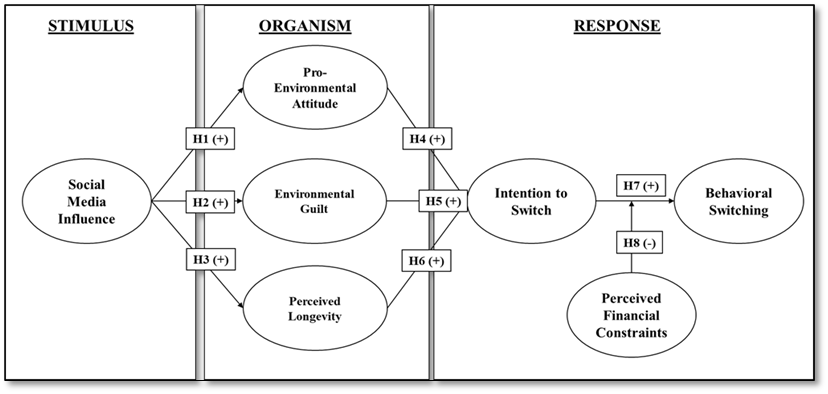
The S-O-R framework, introduced by Mehrabian and Russell (1974), serves as a theoretical lens for examining how external stimuli influence internal psychological states, shaping behavioral outcomes. Within this framework, stimuli (S) represent external influences, such as social media campaigns promoting sustainable fashion; organisms (O) encompass internal psychological mechanisms, including pro-environmental attitudes, environmental guilt, and perceived longevity; and responses (R) denote behavioral outcomes, such as the intention to switch to sustainable fashion and actual purchasing behavior (Quoquab et al., 2019). This study employs the S-O-R framework to conceptualize how social media stimuli activate psychological mechanisms that influence sustainable fashion adoption in Indonesia.
Cognitive, emotional, and rational mechanisms are selected based on their distinct roles in consumer decision-making theories (Ajzen, 1991; Kahneman, 2011). Cognitive factors enhance consumer awareness, emotional responses serve as motivational forces, and rational evaluations ensure economic feasibility, collectively forming a comprehensive model for explaining sustainable consumer behavior. Operationalized through pro-environmental attitudes, cognitive mechanisms shape consumer awareness and perceptions of sustainability. These attitudes reflect a consumer's commitment to environmental preservation and sustainable practices. In Indonesia, social media campaigns are pivotal in reinforcing these attitudes, particularly among Millennials and Gen Z, who actively engage with sustainability-focused content (Institute, 2025). Studies indicate that 60% of Indonesian consumers in these demographics are influenced by sustainability-related messages (Fitrayadi, 2024), reinforcing the positive relationship between pro-environmental attitudes and sustainable fashion adoption (Nkaizirwa et al., 2021). Given the significant environmental impact of fast fashion in Indonesia, fostering positive sustainability attitudes is crucial for driving behavioral change.
Emotional mechanisms, such as environmental guilt, serve as psychological drivers that motivate corrective consumer actions (Tangney et al., 2007). Social media amplifies these emotions through visual storytelling and viral campaigns, exposing the negative effects of fast fashion. This emotional dissonance often compels consumers to reconsider their purchasing behaviors, even among financially constrained individuals (Muralidharan & Sheehan, 2017). Empirical evidence suggests that guilt-induced motivation fosters incremental yet meaningful behavioral shifts toward sustainable consumption, highlighting its long-term influence on consumer decision-making (Lima et al., 2019; Ullah et al., 2023; Unger-Plasek et al., 2024). As reflected in perceived longevity, rational mechanisms focus on cost-benefit considerations that influence consumer purchasing decisions. Consumers in affordability-sensitive markets (such as Indonesia) prioritize products offering superior long-term value (Tully et al., 2015). Sustainable fashion addresses these affordability concerns by emphasizing product durability and cost-effectiveness, positioning itself as a viable alternative to fast fashion (Rausch et al., 2021). Recent data indicate that 79% of Indonesian consumers are willing to pay a premium for sustainable products that offer long-term financial benefits, reinforcing the importance of perceived longevity in purchase decisions (Rakuten Insight, 2021).
Although financial constraints remain a major barrier to immediate behavioral change (Oliveira et al., 2022), psychological mechanisms—such as pro-environmental attitudes and environmental guilt—facilitate gradual shifts toward sustainable consumption. Furthermore, perceived longevity mitigates affordability concerns by reinforcing the long-term economic benefits of durable products, making sustainability a more viable option for socio-economically diverse consumers (Madinga et al., 2024).
By integrating cognitive, emotional, and rational dimensions, this study utilizes the S-O-R framework as a theoretical foundation to examine how social media stimuli influence consumer decision-making in the context of sustainable fashion adoption in developing economies. The framework provides a structured approach to understanding how external stimuli, such as social media exposure, activate internal psychological mechanisms that influence consumer behavior, particularly in affordability-sensitive markets like Indonesia. Social media serves as a strategic stimulus, triggering psychological mechanisms that shape the intention to switch to sustainable fashion and actual switching behavior, as illustrated in Figure 1. Additionally, financial constraints function as a moderating factor, highlighting their role in shaping consumer adoption patterns within diverse socio-economic contexts. By employing the S-O-R framework as a conceptual tool, this study contributes to the theoretical understanding of psychological drivers in mitigating affordability barriers, offering insights for both academic discourse and practical strategies to promote sustainable consumption in emerging markets.
Hypotheses Development
Social Media and Its Influence
Social media is a dynamic platform that enables users to communicate, share information, and interact directly while providing tools to create and disseminate knowledge (Erkan & Evans, 2016). Platforms such as Twitter, blogs, TikTok, Instagram, YouTube, and Facebook facilitate connections among users who share similar interests (Sun & Wang, 2019). Social media has emerged as a transformative force in shaping pro-environmental attitudes, particularly among fast fashion consumers (Karimi et al., 2021). From a cognitive perspective, social media influence refers to the extent to which consumers are exposed to informational content that enhances their knowledge and awareness of the environmental damage caused by fast fashion and the benefits of sustainable alternatives. This construct encapsulates how such content shapes consumers' attitudes and perceptions toward adopting sustainable fashion practices. As primary social media users, the younger generation not only consumes information but actively disseminates product trends and reviews (Yao & Miao, 2021), which can inadvertently perpetuate the fast fashion consumption cycle.
However, increasing awareness of the environmental impact of fast fashion has positioned social media as a crucial tool for promoting sustainable consumption patterns (Meng et al., 2023). Beyond cognitive influences, social media also triggers emotional mechanisms by evoking environmental guilt, which encourages corrective consumer actions. Exposure to educational content and green campaigns on social media can foster personal reflection and reshape social norms, ultimately driving pro-environmental behavior (Meng et al., 2023). In-depth discussions of environmental issues on these platforms cultivate pro-environmental attitudes and evoke a sense of environmental guilt, prompting consumers to reconsider their purchasing behaviors and transition to sustainable fashion choices (Kim et al., 2023). Moreover, social media strengthens rational decision-making by enhancing consumers' perceptions of sustainable fashion's durability and long-term economic value, positioning it as a viable alternative to fast fashion (Choi & Ahn, 2023).
Previous research supports that social media positively influences consumers' pro-environmental attitudes. Meng et al. (2023) found that exposure to environmental information through social media, such as WeChat and Xiaohongshu, positively impacts pro-environmental attitudes sustainably. Karimi et al. (2021) also found that social media significantly improved pro-environmental attitudes, ultimately contributing to increased consumer intentions and sustainable behavior. Liao (2024) supports these findings by revealing that electronic word-of-mouth on platforms like Instagram significantly improves pro-environmental attitudes and encourages consumer commitment to sustainable fashion brands. Considering the role of social media in shaping cognitive awareness, the following hypothesis is proposed:
H1: Social media positively affects consumer pro-environmental attitudes.
Some studies have also shown that exposure to environmental information on social media can increase environmental guilt. Chen et al. (2024b) found that information disseminated through social media such as WeChat and Xiaohongshu could trigger environmental guilt, prompting consumers to act more pro-environmentally. Li and Fang (2022) found that guilt triggered by interactions on social media drives behavioral change, including in sustainable fashion consumption, where guilt plays a critical emotional driver. Kim et al. (2023a) show that green social media campaigns effectively evoke guilt, which increases consumer engagement in sustainable behavior. Since social media stimulates emotional responses through narratives, visual storytelling, and social influence, it can be a powerful mechanism in evoking consumer guilt, leading to more sustainable purchasing decisions. Based on these findings, the hypothesis proposed is:
H2: Social media positively affects consumer environmental guilt.
Previous research has also shown that social media significantly influences consumer perception of product value, including the perceived longevity of sustainable fashion. Kim et al. (2023a) found that social media interactivity, such as advertising through Instagram Stories, can improve consumer perception of a product's functional value. Findings from Choi and Ahn (2023) also show that electronic word-of-mouth on Instagram positively affects consumers' perception of economic value in the context of sustainable fashion. In addition, Hewei (2022) revealed that interaction on social media through short video applications can strengthen consumer perception of the value of fashion products. However, few studies still directly explore the relationship between social media and the perceived longevity of sustainable fashion products (Vladimirova et al., 2023). From a rational decision-making perspective, perceived longevity is a key determinant in cost-benefit evaluations, influencing consumers' economic justification for switching to sustainable fashion. Perceived longevity is an important attribute that distinguishes sustainable fashion from fast fashion (Thorisdottir et al., 2024). Therefore, this study aims to fill this gap by exploring how social media affects consumers' perception of the longevity of sustainable fashion products. Based on this description, the hypothesis proposed is:
H3: Social media positively affects the perceived longevity of sustainable fashion products.
Pro-Environmental Attitude
Pro-environmental attitudes are a cognitive mechanism that develops through belief formation and information processing, aligning with the Expectancy-Value Model (Fishbein & Ajzen, 1977). This attitude plays a vital role in encouraging environmentally friendly behavior, where individuals with a positive view of the environment tend to be more involved in sustainability actions (Tian et al., 2019). According to the Theory of Planned Behavior (TPB), cognitive awareness enhances motivation, increasing the likelihood of switching to more environmentally friendly behaviors (Ajzen, 1991). Within the S-O-R framework, pro-environmental attitudes serve as a cognitive mechanism that translates external stimuli (e.g., social media exposure) into an internalized commitment to sustainability. In fast fashion, consumers with a strong pro-environmental attitude are likelier to reduce the consumption of products that damage the environment and choose more sustainable alternatives (Rausch et al., 2021).
Previous research has shown that pro-environmental attitudes are a key predictor of sustainable fashion adoption, reflecting an individual's cognitive evaluation of environmental responsibility. A study by Kumar et al. (2022) and Penz and Drewes (2022) confirmed that a positive attitude towards the environment encourages consumers' intention to buy sustainable fashion. Rausch et al. (2021b) found that pro-environmental attitudes are the most potent predictive factor in determining the purchase intention of sustainable fashion products. Based on these findings, pro-environmental attitudes are essential in directing consumers' intentions to switch from fast to sustainable fashion. Therefore, the hypothesis proposed is:
H4: Consumers' pro-environmental attitudes positively affect their intention to switch to sustainable fashion.
Environmental Guilt
Environmental guilt is a negative emotional response when individuals perceive their actions as conflicting with their environmental values. As an emotional mechanism, guilt motivates compensatory behaviors to restore moral balance, particularly in consumer decision-making (Burnett & Lunsford, 1994). In sustainability contexts, guilt is an intrinsic motivator, encouraging individuals to adopt prosocial behaviors when they recognize that their prior consumption choices have contributed to environmental harm (Theotokis & Manganari, 2014). Within the S-O-R framework, environmental guilt represents an emotional organismic state that mediates the translation of external stimuli—such as exposure to sustainability messages on social media—into behavioral change. Cognitive dissonance theory further explains this process, suggesting that individuals experience psychological discomfort when their behavior misaligns with their moral values, prompting corrective action (Matz & Wood, 2005). This emotional dissonance is particularly relevant in fast fashion consumption, where consumers may acknowledge their purchases' ethical and environmental implications but continue engaging in unsustainable behavior due to convenience or affordability. When awareness of environmental harm increases, guilt can become a compelling force, motivating individuals to align their actions with sustainability principles (Shipley & Riper, 2022). Research indicates guilt-driven motivation can be even more effective than positive reinforcement in encouraging long-term behavior change (Moore & Yang, 2019).
Prior studies confirm that environmental guilt influences consumer intention to switch to sustainable alternatives. Studies by Chen et al. (2024b) and Haj-Salem et al. (2022) found that guilt triggered by environmental concerns significantly increases the likelihood of purchasing green products, demonstrating its effectiveness as a persuasive emotional driver. In the context of fast fashion, guilt emerges when consumers recognize the environmental damage caused by their consumption habits, triggering a shift toward more ethical choices (Niinimäki et al., 2020). This transition aligns with the principles of moral self-regulation, where individuals seek to resolve guilt-induced cognitive dissonance by adopting behaviors consistent with their ethical values (Ray & Nayak, 2023). Despite extensive research on guilt in green consumption, studies examining its role in fast fashion abandonment remain limited. By addressing this gap, this study explores how environmental guilt is a key emotional mechanism driving consumers toward sustainable fashion choices. Thus, the following hypothesis is proposed:
H5: Consumers' environmental guilt positively affects their intention to switch to sustainable fashion.
Perceived Longevity
Consumer perception of product durability plays a critical role in purchasing decisions, mainly when a product offers long-term benefits such as longevity (Wang et al., 2023). Consumers evaluate the price and the functional value, including the product's ability to maintain its quality over time (Zeithaml, 1988). From a rational decision-making perspective, perceived longevity represents a cognitive cost-benefit evaluation, where consumers justify switching to sustainable fashion based on product durability and economic efficiency. Perceived longevity refers to the belief that a product can be used for an extended period, offering economic advantages by reducing the frequency of replacements (Sun et al., 2021). Compared to fast fashion, which often has a shorter lifespan and contributes to increased textile waste, sustainable fashion is perceived as a more durable and environmentally friendly alternative (Sahimaa et al., 2023). This aligns with the Consumer Value Theory (Zeithaml, 1988), which suggests that perceived functional and economic value are key determinants of purchasing decisions, particularly in cost-sensitive markets.
Within the S-O-R framework, perceived longevity is a rational mechanism that bridges sustainability messaging with consumer decision-making. Exposure to information highlighting sustainable fashion's durability reinforces its economic feasibility, encouraging a shift from fast fashion to more sustainable options. Research by Sahimaa et al. (2023) emphasizes that consumers strongly associate sustainability with durability, leading to a more favorable economic assessment of these products. However, while prior studies have explored value perception in influencing consumer switching behavior (Gomes et al., 2023; Riyaz et al., 2024), limited research explicitly examines how perceived longevity functions as a distinct motivator in sustainability transitions. Ngo et al. (2024) suggest that consumers perceive durable products as long-term investments rather than immediate expenses, strengthening adoption. To address this gap, this study investigates the role of perceived longevity in driving consumers' transition from short-term consumption patterns (fast fashion) to durable, sustainable alternatives. Based on this rationale, the following hypothesis is proposed:
H6: Perceived longevity positively affects the intention to switch to sustainable fashion.
Switch intention and behavior
Switching intention refers to consumers' willingness to transition from fast fashion to sustainable alternatives that align with personal and environmental values (Bogue, 1977; Kushwah et al., 2024). This construct reflects a consumer's psychological readiness to purchase sustainable fashion products (Menidjel et al., 2023). Such readiness is driven by recognizing sustainable products' superior quality, durability, and positive environmental impact (Ray & Nayak, 2023). In this context, the intention to switch reflects a consumer's deliberate cognitive commitment to abandon fast fashion and adopt ethical, environmentally friendly fashion alternatives (Dangi et al., 2020). However, despite having strong intentions, various internal and external barriers, such as financial constraints or habitual behavior, can hinder the translation of intention into action, creating a gap between psychological commitment and actual behavior.
In contrast, behavioral switching refers to consumers' observable actions in reducing fast fashion consumption and adopting sustainable alternatives (White et al., 2019). The distinction between switching intentions and behavioral switching is critical for understanding why some consumers do not act on their stated intentions. Prior research suggests that switching intentions can indeed drive actual actions. For instance, Andika et al. (2023) and Dangi et al. (2020a) demonstrated that strong intentions often lead to behavioral changes. However, Rausch et al. (2021b) identified a research gap that explicitly explores how intentions translate into actual switching behavior within the sustainable fashion context. To address this gap, this study employs the SOR framework to examine the relationship between switching intentions and behavioral switching. Based on this, the hypothesis proposed is:
H7: Consumer switching intentions positively affect the behavior of switching to sustainable fashion.
Perceived Financial Constraints
Perceived financial constraints refer to the view of consumers that sustainable products, such as sustainable fashion, are often perceived as expensive or less affordable by consumers (Tran et al., 2022). This factor is usually a constraint to converting consumer intentions into real action, even if they strongly desire to switch to pro-environmental behavior (Palomo-Domínguez et al., 2023). This phenomenon is known as the intention-behavior gap, where consumers with positive intentions to adopt sustainable behaviors often do not manifest it in action due to constraints such as prices that are considered too high (Pires et al., 2024). When consumers feel that the cost of buying sustainable products is not worth the benefits obtained, their motivation to realize that intention tends to decline (Anisah et al., 2024).
Previous research supports the moderation of perceived financial constraints in weakening the relationship between intention and behavior. Bocti et al. (2021) found that the perception of the high price of sustainable products is a significant factor hindering consumers from realizing their intention to switch. A similar study by Wiederhold and Martinez (2018) shows that even if consumers have positive intentions, the perception of high prices can reduce those intentions unless consumers get precise information about the benefits and value of sustainable products. Based on these findings, the perception of financial constraints in sustainable fashion may weaken the relationship between switching intention and actual behavior. Therefore, the hypothesis proposed is:
H8: Perceived financial constraints negatively moderate the relationship between consumers' switching intentions and behavior toward sustainable fashion.
Research Methodology
Sampling and Data Collection
This study employed a quantitative survey method to examine consumer behavior in transitioning from fast to sustainable fashion. A non-probability purposive sampling technique was used to target Indonesian consumers who are active social media users and familiar with fashion consumption. Based on a priori power analysis conducted using G*Power, the parameters included a power level of 0.90 (Boraczynski et al., 2020), a significance level (α) of 0.05, an effect size (f²) of 0.15 (medium effect size) (Cohen, 2013; Hair et al., 2011), and six predictors as specified in the research model. The analysis indicated a minimum required sample size of 123 respondents to achieve robust statistical power and detect significant relationships within the model.
The inclusion criteria specified respondents aged 17 years and above, as this age represents Indonesia's legal and cognitive threshold for making independent purchasing decisions, including those related to fashion. The sample was drawn from several major islands, including Java, Sumatra, Kalimantan, Sulawesi, Bali & Nusa Tenggara, and Maluku & Papua, ensuring geographical diversity rather than proportional demographic representation. However, this study does not aim to generalize findings to the entire Indonesian population. Instead, the sample is designed to capture insights from digitally engaged consumers who actively interact with fashion-related content on social media, making them particularly relevant for research on social media-driven sustainable fashion adoption. This segmentation aligns with the study's objective of examining how social media influences consumer behavior rather than representing the broader population. Therefore, the findings should be interpreted within this contextual scope, recognizing that while the study provides valuable insights into digital fashion consumers, it may not fully capture the behaviors of offline consumers or those less engaged with social media.
Data was collected through an online survey administered via Google Forms, facilitating broad accessibility and ease of participation. Given the reliance on self-reported data, which is inherently susceptible to biases such as social desirability bias—where respondents may provide socially favorable answers—and recall bias, which may compromise the accuracy of responses, procedural safeguards were employed to mitigate these risks. These measures included randomizing the order of survey questions and maintaining strict assurances of respondent anonymity and confidentiality to foster an environment conducive to honest and unbiased participation. Additionally, the survey began with detailed definitions of fast and sustainable fashion to ensure that all respondents shared a consistent understanding of these key concepts before completing the questionnaire.
Before the primary data collection, a pilot test involving 30 respondents was conducted to evaluate the preliminary validity and reliability of the questionnaire. Construct validity was assessed through expert reviews to ensure the items adequately represented the investigated constructs. Reliability was examined using Cronbach's alpha, with all constructs exceeding the acceptable threshold of 0.70, demonstrating internal consistency (Hair et al., 2019). Although the sample size of 30 respondents is limited, the pilot test served as an essential step in identifying and refining ambiguous items to improve clarity and comprehensibility, enhancing the questionnaire's overall usability.
Large-scale data collection was conducted between September and October 2024. Survey links were disseminated widely through social media platforms such as Instagram and WhatsApp to reach eligible respondents. Respondents provided written consent, and their privacy and confidentiality were rigorously protected. Participation was entirely voluntary, adhering to ethical research standards. Of the 350 survey invitations distributed, 326 responses were received. Following a rigorous screening process to exclude incomplete and outlier data, 306 valid responses were retained for further analysis. The 306 valid respondents provided a diverse sample, as summarized in Table 1, highlighting key demographic characteristics relevant to the study's objectives. Of the respondents, 55.2% were women, and 44.8% were men, with most falling within the age ranges of 17–27 (55.5%) and 28–43 (37.3%). Educational attainment varied, with 58.8% holding a bachelor's degree and 32.4% a high school education. Income levels were distributed, with 38.6% earning IDR 2.000.000–5.000.000 and 36% earning below IDR 2.000.000. Occupations were diverse, predominantly students (31.1%) and private employees (21.9%). Social media platforms such as Instagram (29.1%) and WhatsApp (26.8%) were the most frequently used, reflecting the study's focus on social media influence. Additionally, respondents reported fashion purchase frequencies, with 39.2% buying 1–2 times and 38% buying 3–5 times within the last six months.
| Category | Frequency | Percent |
| Gender | ||
| Male | 137 | 44.8% |
| Female | 169 | 55.2% |
| Age | ||
| 17--27 | 170 | 55.5% |
| 28--43 | 114 | 37.3% |
| 44--59 | 20 | 6.5% |
| >59 | 2 | 0.7% |
| Education Level | ||
| < High School | 99 | 32.4% |
| Diploma/Bachelor's degree | 180 | 58.8% |
| Master/Doctoral | 27 | 8.8% |
| Income Level | ||
| IDR < 2,000,000 | 110 | 36.0% |
| IDR 2,000,000--5,000,000 | 118 | 38.6% |
| IDR 5,000,001--10,000,000 | 54 | 17.6% |
| IDR > 10,000,000 | 24 | 7.8% |
| Type of Occupation | ||
| Civil Servants/Military/Police | 19 | 6.2% |
| Teacher/Lecturer | 39 | 12.7% |
| Private Employees | 67 | 21.9% |
| Students | 95 | 31.1% |
| Self-employed | 49 | 16.0% |
| Other | 37 | 12.1% |
| Regularly Used Social Media Platforms | ||
| 26 | 8.5% | |
| 89 | 29.1% | |
| TikTok | 63 | 20.6% |
| 82 | 26.8% | |
| YouTube | 23 | 7.5% |
| Other | 23 | 7.5% |
| Frequency of Purchase in the Last 6 Months | ||
| 1--2 times | 120 | 39.2% |
| 3--5 times | 116 | 38.0% |
| 6--10 times | 46 | 15.0% |
| Other | 24 | 7.8% |
Measurement Scales
The questionnaire items in this study were adapted and modified from previous research to align with the broader context of sustainable fashion adoption. To ensure construct validity, these modifications preserved the theoretical meaning of the original scales while following best practices in research instrument development (DeVellis, 1992). After data collection, refinements were made to enhance neutrality, improve clarity, and minimize potential response bias without altering the underlying constructs or compromising the validity of the collected data. Social media influence was measured using a scale adapted from Li et al. (2024) and Xie and Madni (2023), which assesses the extent to which exposure to content on social media affects the perception of the environmental impact of fast fashion and the benefits of sustainable fashion. Pro-environmental attitude was measured using a scale from Hageman et al. (2023), which reflects consumers' belief in the importance of more environmentally friendly consumption practices. Perceived longevity, which is adapted from Jin et al. (2024) and Lopes et al. (2023), assesses consumer perceptions of sustainable fashion products' durability and long-term benefits. Perceived financial constraints are adapted from Rausch et al. (2021b) to evaluate consumers' perceptions of financial constraints in buying sustainable fashion products.
Meanwhile, the measurement of Intention to Switch and Behavioral Switching was adapted from Yang et al. (2024), with necessary modifications to fit the broader concept of sustainable fashion adoption. While Yang et al. (2024) specifically examined second-hand sustainable fashion behavior, this study expands the scope to include a more comprehensive transition to sustainable fashion, encompassing the reduction of fast fashion purchases, the adoption of sustainable brands, and the modification of overall fashion consumption habits. Therefore, while item wording was adjusted for relevance, its conceptual meaning was retained to ensure consistency with the theoretical framework. Environmental guilt was measured using three items from Sharma and Paço (2021), which assessed consumers' feelings of guilt and responsibility for the environmental impact of fast fashion consumption. All constructs, except Environmental Guilt, are measured using four items. Respondents assessed the level of approval of the statements in the questionnaire using a seven-point Likert scale (1 = strongly disagree, 7 = strongly agree). Full details of the questionnaire items are presented in Table 1.
Data analysis was conducted using the Partial Least Squares Structural Equation Modeling (PLS-SEM) method with SmartPLS 4 software. PLS-SEM was chosen for its ability to maximize explained variance in endogenous variables while accommodating complex models with multiple relationships (Sarstedt et al., 2021). It is particularly suitable for exploratory research and predictive modeling, as it does not assume data normality and is effective for small-to-moderate sample sizes (Hair et al., 2019). The analysis followed the two-stage approach recommended by Hair et al. (2022). In the first stage, the measurement model's reliability and validity were evaluated through metrics such as loadings, Composite Reliability (CR), Average Variance Extracted (AVE), and Cronbach's Alpha (CA). In the second stage, the structural model was assessed for in-sample and out-of-sample prediction capabilities (Guenther et al., 2023). Bootstrapping with 5.000 resamples was used to test the significance of path coefficients, ensuring robust and reliable results (Hair et al., 2019).
Results of Empirical Analysis
Common Method Variance (CMV)
Common Method Variance (CMV) is a potential concern in self-reported data as it may introduce systematic bias in the relationships between variables (Podsakoff et al., 2003). To mitigate these risks, procedural remedies were applied, including randomizing the order of survey questions and ensuring respondent anonymity to encourage honest responses and minimize bias (Bartell & Spyridakis, 2012; Chang et al., 2010). To statistically assess the presence of CMV, Harman's Single-Factor Test was first conducted. The results showed that a single factor explained only 38.79% of the total variance, well below the 50% threshold, suggesting that CMV is unlikely to be a significant issue. However, as Podsakoff et al. (2003) highlighted, this method alone is insufficient because it does not control for method effects beyond a single-factor structure.
To further strengthen the assessment, we employed the Full Collinearity Test (Kock, 2017), which is more suitable for PLS-SEM. This method evaluates CMV by examining variance inflation among predictor constructs rather than relying on factor structures alone. The results indicate that all inner VIF values ranged from 1.00 to 1.87, well below the critical threshold of 3 (Hair et al., 2019), confirming that CMV does not significantly affect the results. These findings collectively suggest that the observed relationships between constructs are not inflated due to common method variance, ensuring the validity of the study's conclusions.
Assessment of the Measurement Model
The measurement model was rigorously evaluated in the first stage to ensure its reliability, internal consistency, convergent validity, and discriminant validity. To address issues related to discriminant validity, items SMI1, PEA4, ITS4, and BS4 were excluded due to high inter-construct correlations that caused HTMT ratios to exceed the recommended threshold of below .85 (Hair et al., 2019). Removing these items effectively resolved cross-loading concerns, thereby safeguarding the theoretical distinctiveness of the constructs. Table 2 summarizes all constructs' reliability and validity metrics, confirming that the retained items satisfy the required thresholds. Specifically, factor loadings for all items exceed .70, demonstrating strong item reliability. Cronbach's Alpha (CA) and Composite Reliability (CR) values also surpass the recommended threshold of .70, ensuring robust internal consistency. Moreover, Average Variance Extracted (AVE) values exceed .50, providing evidence of adequate convergent validity (Hair et al., 2019).
Discriminant validity was assessed using the Fornell-Larcker Criterion (Fornell & Larcker, 1981) and the HTMT method (Henseler et al., 2014). The revised metrics, shown in Table 3, indicate that the bolded diagonal values—representing the square root of AVE—are more significant than the inter-construct correlations in the lower triangle, satisfying the Fornell-Larcker criterion. Additionally, all HTMT ratios in the upper triangle are below the recommended threshold of .85, confirming sufficient discriminant validity. These refinements establish a reliable and valid measurement model, ensuring alignment with theoretical and statistical standards and providing a strong foundation for subsequent structural analysis.
| Item | Loading | CA | CR | AVE |
|---|---|---|---|---|
| Behavior Switching (Yang et al., 2024) | ||||
| BS1. I have switched from fast fashion to eco-friendly clothing. | 0.85 | 0.82 | 0.89 | 0.74 |
| BS2. I more often choose sustainable fashion over fast fashion in my purchasing decisions. | 0.86 | |||
| BS3. I have reduced my consumption of fast fashion products and prefer clothing with greater durability. | 0.86 | |||
| Environmental Guilt (Sharma & Paço, 2021) | ||||
| EG1. I am aware that purchasing fast fashion products can have an impact on the environment. | 0.87 | 0.82 | 0.89 | 0.73 |
| EG2. I feel responsible for reducing environmental impact through my fashion consumption choices. | 0.84 | |||
| EG3. I consider the environmental impact of fast fashion products in my purchasing decisions. | 0.86 | |||
| Intention to Switch (Yang et al., 2024) | ||||
| ITS1. I am considering switching from fast fashion to more environmentally friendly fashion products. | 0.81 | 0.76 | 0.86 | 0.68 |
| ITS2. I am willing to adjust my preferences to support more sustainable fashion. | 0.82 | |||
| ITS3. I plan to reduce my fast fashion consumption in the coming months. | 0.84 | |||
| Pro-Environmental Attitude (Hageman et al., 2024) | ||||
| PEA1. I believe that purchasing clothing from brands that implement eco-friendly practices is a choice that supports sustainability. | 0.82 | 0.74 | 0.85 | 0.66 |
| PEA2. I feel that choosing fashion products with a lower environmental impact is an important consideration. | 0.80 | |||
| PEA3. I think that reducing fast fashion purchases can be one way to support sustainable fashion. | 0.82 | |||
| Perceived Financial Constraints (Rausch et al., 2021) | ||||
| PFC1. I perceive that the price of sustainable fashion is higher than fast fashion, which influences my decision to switch. | 0.97 | 0.92 | 0.94 | 0.84 |
| PFC2. I consider whether the cost of sustainable fashion is worth its benefits before deciding to switch. | 0.88 | |||
| PFC3. I noticed that the price difference between sustainable fashion and fast fashion can affect my choices. | 0.90 | |||
| Perceived Longevity (Jin et al., 2024; Lopes et al., 2024) | ||||
| PL1. I believe that clothing from sustainable fashion lasts longer compared to fast fashion. | 0.80 | 0.83 | 0.90 | 0.67 |
| PL2. In my opinion, sustainable clothing tends to be more durable and less prone to damage. | 0.82 | |||
| PL3. I feel that sustainable clothing remains of good quality even with frequent use. | 0.82 | |||
| PL4. Durability is one of my considerations when choosing between sustainable fashion and fast fashion. | 0.83 | |||
| Social Media Influence (Li et al., 2024; Xie & Madni, 2023) | ||||
| SMI2. Social media content about an eco-friendly lifestyle influences my preference for sustainable fashion products. | 0.76 | 0.73 | 0.85 | 0.65 |
| SMI3. Social media provides information that sustainable fashion products are more durable than fast fashion products. | 0.85 | |||
| SMI4. Social media posts discussing the benefits of sustainable fashion make me consider reducing my fast fashion consumption. | 0.80 | |||
| Note: SMI1, PEA4, ITS4, and BS4 were removed to improve discriminant validity. | ||||
| Constructs | 1 | 2 | 3 | 4 | 5 | 6 | 7 |
| 1. Behavior Switching (BS) | 0.86 | .59 | .80 | .57 | .09 | .63 | .51 |
| 2. Environmental Guilt (EG) | .48 | 0.86 | .79 | .77 | .05 | .75 | .70 |
| 3. Intention to Switch (ITS) | .63 | .63 | 0.82 | .75 | .09 | .85 | .77 |
| 4. Pro-Environmental Attitude (PEA) | .45 | .61 | .57 | 0.81 | .05 | .77 | .84 |
| 5. Perceived Financial Constraints (PFC) | .10 | .04 | .10 | -.01 | 0.92 | .08 | .12 |
| 6. Perceived Longevity (PL) | .52 | .62 | .67 | .61 | .07 | 0.82 | .76 |
| 7. Social Media Influence (SMI) | .40 | .55 | .58 | .62 | -.07 | .60 | 0.81 |
| Note: Italicized diagonal values represent the square root of AVE. Below diagonal = correlations; above diagonal = HTMT ratios. |
Predictive Relevance and Model Performance
The predictive relevance of the structural model was evaluated through three primary metrics: the coefficient of determination (R²), Q² predict, and PLS predict. R² values quantify the proportion of variance explained by the endogenous constructs, providing insights into the explanatory power of the model. According to Hair et al. (2019), R² values are classified as weak (around .25), moderate (around .50), and substantial (above .75). In this study, the R² for ITS is 0.54, reflecting a moderate level of explained variance. Meanwhile, the R² values for BS, EG, PEA, and PL are .42, .30, .38, and .36, respectively, indicating weaker but acceptable predictive accuracy for these constructs in the given context. To complement the R² assessment, Q² Predict was employed to evaluate the model's predictive relevance. A Q² Predict value greater than zero indicates that the model exhibits meaningful predictive capacity beyond the sample data (Hair et al., 2022). The Q² Predict values for ITS, BS, EG, PEA, and PL are .32, .16, .29, .37, and .35, as detailed in Table 4. These findings underscore the predictive validity of the model across all constructs.
| Construct | Q2 Predict | R2 |
| Behavior Switching | .16 | .42 |
| Environmental Guilt | .29 | .30 |
| Intention to Switch | .32 | .54 |
| Pro-Environmental Attitude | .37 | .38 |
| Perceived Longevity | .35 | .36 |
| Note: Q2 predict values > 0 indicate predictive relevance. |
Furthermore, PLS Predict was utilized to assess out-of-sample predictive performance by comparing the predictive accuracy of PLS-SEM with linear regression (LM) (Shmueli et al., 2019). The results reveal that most Root Mean Square Error (RMSE) and Mean Absolute Error (MAE) values for PLS-SEM are lower than those for LM, demonstrating a moderate but significant predictive advantage of PLS-SEM. These outcomes are summarized in Table 5, showcasing RMSE and MAE comparisons for each item across constructs.
| Item | PLS_RMSE | PLS_MAE | LM_RMSE | LM_MAE |
| BS1 | 1.30 | .99 | 1.32 | .99 |
| BS2 | 1.31 | 1.00 | 1.32 | .99 |
| BS3 | 1.36 | 1.03 | 1.38 | .99 |
| EG1 | 1.29 | .95 | 1.28 | .94 |
| EG2 | 1.19 | .90 | 1.19 | .90 |
| EG3 | 1.35 | .99 | 1.32 | .96 |
| ITS1 | 1.16 | .88 | 1.17 | .89 |
| ITS2 | 1.16 | .88 | 1.18 | .89 |
| ITS3 | 1.08 | .83 | 1.06 | .81 |
| PEA1 | 1.16 | .86 | 1.16 | .87 |
| PEA2 | 1.10 | .83 | 1.12 | .83 |
| PEA3 | 1.18 | .90 | 1.21 | .92 |
| PL1 | 1.07 | .82 | 1.07 | .81 |
| PL2 | 1.08 | .83 | 1.08 | .84 |
| PL3 | 1.04 | .82 | 1.03 | .81 |
| PL4 | 1.14 | .87 | 1.14 | .88 |
Hypotheses Testing
Before hypothesis testing, data normality was evaluated through skewness values, which were confirmed to fall within the acceptable range of +2 to -2. This validation enabled the application of percentile bootstrapping with 5.000 subsamples to estimate confidence intervals and compute t-statistics for assessing the significance of path coefficients (β) without the need for the Bias-Corrected and Accelerated (BCa) method (Hair et al., 2022). The analysis, conducted at a .05 significance level with a critical t-value of 1.96, encompassed examining direct effects and the moderating role of perceived financial constraints, ensuring a comprehensive structural model evaluation (see Figure 2).
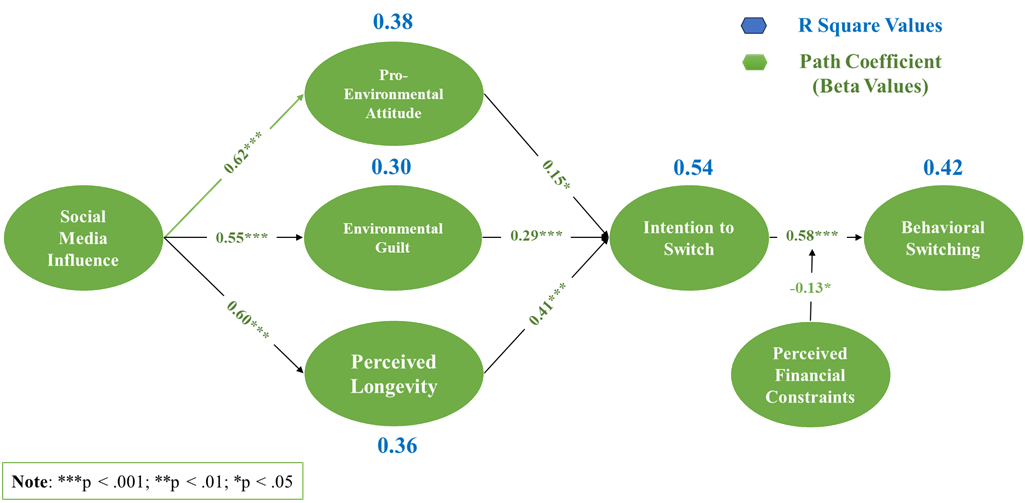
The bootstrapping results revealed that social media significantly and positively influenced Pro-Environmental Attitude (ß = .61, t = 10.92), Environmental Guilt (ß = .54, t = 9.08), and Perceived Longevity (ß = .60, t = 11.76). These three variables demonstrated high effect sizes (f²) (see Table 6), supporting hypotheses H1 to H3. Furthermore, Pro-Environmental Attitude (ß = .14, t = 1.96), Environmental Guilt (ß = .28, t = 4.22), and Perceived Longevity (ß = .40, t = 5.28) also significantly influenced Switching Intention. The effect sizes (f²) ranged from low to moderate, supporting hypotheses H4 to H6. Additionally, hypothesis H7 was confirmed, as Switching intention significantly influenced Switching behavior (ß = .58, t = 7.84) with a high effect size (f²). These findings indicate that all hypothesized relationships within the model are statistically valid and significant.
The perceived financial constraints variable was introduced as a moderator to examine its effect on the interaction between switching intention and switching behavior. The analysis results indicate that the interaction between switching intention and perceived financial constraints significantly negatively impacts switching behavior (ß = -.12, t = 2.02), supporting hypothesis H8. Although the interaction effect size is moderate (f² < .05), these findings suggest that perceived financial constraints can weaken the relationship between switching intention and switching behavior. This underscores the critical role of financial constraints as a significant barrier to consumers' transition toward sustainable fashion.
| Hypotheses | Path (ß) | STDEV | t-values | Effect Size (F2) | p-values | Decision |
| H1: SMI $\rightarrow$ PEA | .61 | .05 | 10.92 | .62 | <.05 | Supported |
| H2: SMI $\rightarrow$ EG | .54 | .06 | 9.08 | .43 | <.05 | Supported |
| H3: SMI $\rightarrow$ PL | .60 | .05 | 11.76 | .57 | <.05 | Supported |
| H4: PEA $\rightarrow$ ITS | .14 | .07 | 1.96 | .03 | <.05 | Supported |
| H5: EG $\rightarrow$ ITS | .28 | .06 | 4.22 | .10 | <.05 | Supported |
| H6: PL $\rightarrow$ ITS | .40 | .07 | 5.28 | .19 | <.05 | Supported |
| H7: ITS $\rightarrow$ BS | .58 | .07 | 7.84 | .49 | <.05 | Supported |
| H8: PFC $\times$ ITS $\rightarrow$ BS | -.12 | .06 | 2.02 | .03 | <.05 | Supported |
General Discussion
This study investigates the role of social media as an external stimulus in activating three key psychological mechanisms—pro-environmental attitudes, environmental guilt, and perceived longevity—and assesses their influence on consumers' switching intentions and subsequent behavior toward sustainable fashion in Indonesia. It also examines the moderating role of perceived financial constraints in the intention–behavior relationship. Grounded in the Stimulus–Organism–Response (S-O-R) framework, this research conceptualizes social media as the stimulus (S), psychological mechanisms as the organism (O), and both switching intention and behavior as the response (R). Building on these objectives, this section synthesizes the key findings and interprets them within the theoretical and practical landscape of sustainable fashion adoption.
First, the findings confirm that social media significantly influences pro-environmental attitudes, environmental guilt, and perceived longevity. As a persuasive digital stimulus, social media activates internal psychological states by shaping cognitive, emotional, and rational responses. Specifically, pro-environmental attitudes represent cognitive alignment with sustainability values, environmental guilt reflects an emotional reaction to awareness of fast fashion's environmental harm, and perceived longevity denotes a rational evaluation of product durability and value. These results validate the S-O-R framework by illustrating how internal mechanisms mediate the influence of external digital stimuli on behavioral outcomes. They are consistent with Meng et al. (2023) and Karimi et al. (2021), who emphasized social media's cognitive effects, as well as Li and Fang (2022) and Kim et al. (2023a), who underscored the role of guilt as an emotional driver. Additionally, Choi and Ahn (2023) highlight how peer-generated content on social media reinforces rational decision-making through shared experiences. From a managerial perspective, these findings suggest that social media platforms can effectively be leveraged to elicit meaningful psychological engagement with sustainability, particularly among younger, digitally connected audiences.
Second, all three organismic mechanisms—pro-environmental attitudes (cognitive), environmental guilt (emotional), and perceived longevity (rational)—were found to influence switching intention significantly. Notably, among these, pro-environmental attitudes exerted the weakest effect. This pattern suggests that emotional and rational drivers play a more prominent role in shaping behavioral intention, particularly in emerging markets such as Indonesia, where pragmatic concerns and experiential validation often outweigh abstract environmental ideals. This result supports the work of Kumar et al. (2022) and Penz and Drewes (2022) on the role of attitudes in sustainable behavior, while also affirming the stronger influence of guilt (Chen et al., 2024; Ray & Nayak, 2023) and perceived functional value (Angelis et al., 2020). Practically, the findings underscore the importance of crafting marketing strategies that effectively blend value-driven messaging with emotionally resonant content and tangible product benefits to cultivate stronger switching intentions.
Third, switching intention emerges as the strongest predictor of actual switching behavior, representing the response stage in the S-O-R model. This finding is consistent with Ajzen's Theory of Planned Behavior (1991), which posits intention as the most proximal determinant of behavior. It also reinforces prior findings by Andika et al. (2023) and Dangi et al. (2020a), who identified intention as a central construct in transitioning to sustainable consumption. Theoretically, this reinforces the critical role of intention in mediating the transition from internal psychological activation to observable behavior. From a practical standpoint, the result highlights the need for interventions that do not merely raise awareness or evoke emotional concern, but also actively guide consumers toward clear, goal-aligned intentions that can facilitate actual behavioral change.
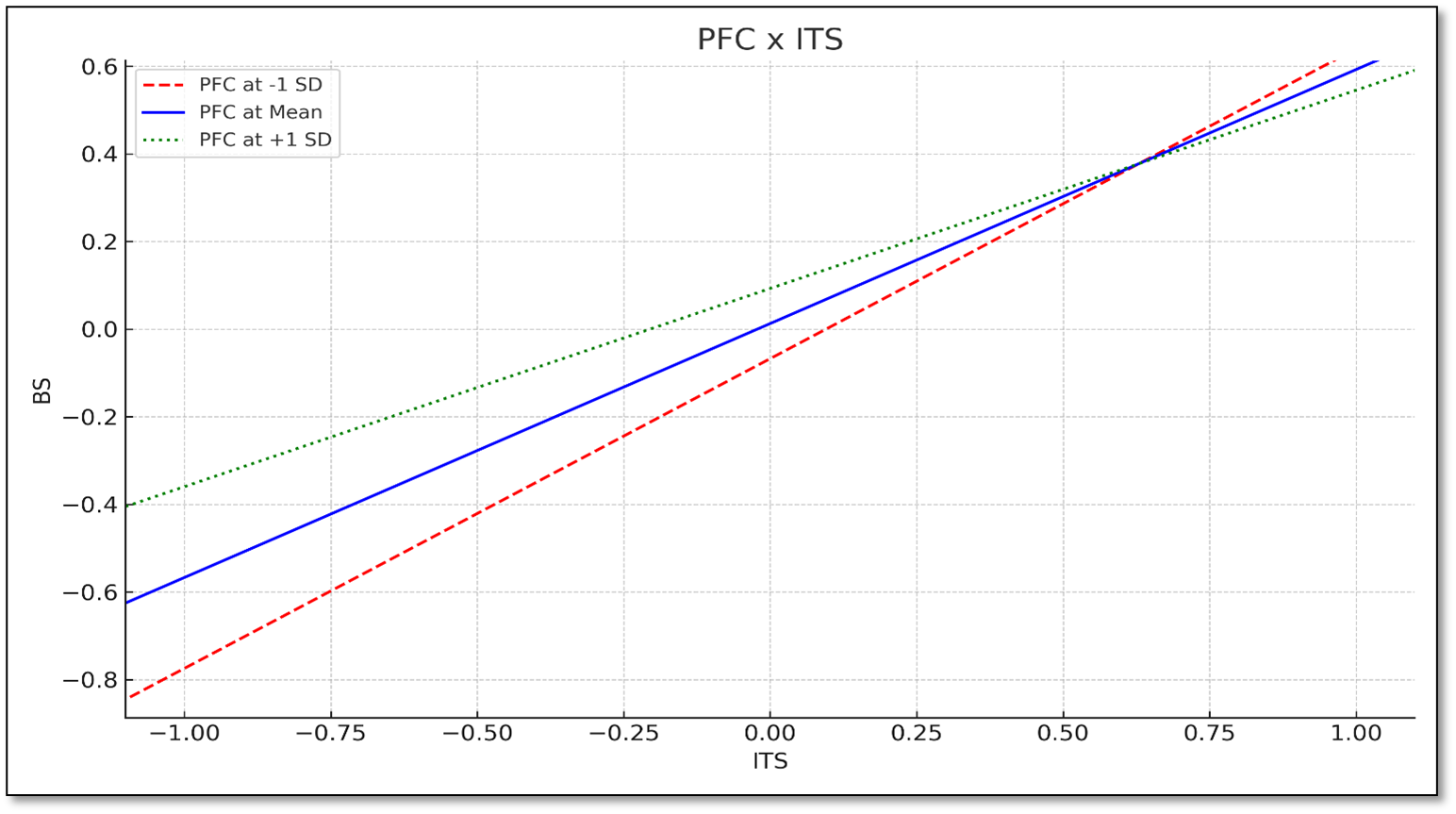
Finally, the results demonstrate that perceived financial constraints significantly moderate the relationship between switching intention and actual behavior, although the moderating effect is relatively modest. Within the S-O-R framework, financial constraints act as external inhibitors that weaken the organism–response linkage. As illustrated in Figure 3, when perceived financial constraints are low (-1 SD), the influence of intention on behavior is strong and significant. At average levels, this relationship is weaker, and under high constraints (+1 SD), it is virtually absent. These findings align with prior research by Bocti et al. (2021) and Wiederhold and Martinez (2018), which identified affordability concerns as major barriers to sustainable consumption. However, the limited effect size suggests that psychological readiness remains a substantial force, even in economically constrained contexts. This implies that while affordability remains an important barrier, it does not entirely negate behavioral change. On a broader scale, the decline of global fast fashion brands such as Forever 21—which filed for bankruptcy and closed numerous stores in the United States (Brown & Tabassum, 2025)—serves as a cautionary signal of the long-term risks associated with unsustainable business models. While this example stems from a developed economy, it reflects a growing global shift in consumer expectations that is also beginning to influence emerging markets. For Indonesia, this trend reinforces the urgency to accelerate the transition toward more durable, ethical, and environmentally responsible fashion systems. Accordingly, these results call for dual strategies: policy interventions aimed at improving economic accessibility and communication strategies designed to reinforce psychological motivation across income segments.
Implications, Limitations, and Directions for Future Research
Theoretical Implications
This study applies the S-O-R framework as a conceptual lens to examine the interplay between cognitive, emotional, and rational mechanisms in shaping consumer behavior toward sustainable fashion adoption. By structuring the organism stage around pro-environmental attitudes, environmental guilt, and perceived longevity, this study provides a systematic perspective on the psychological processes that drive the transition from fast fashion to sustainable alternatives.
Pro-environmental attitudes function as cognitive mechanisms, reflecting consumers' awareness, knowledge, and perceptions that align personal motivations with sustainability goals. Environmental guilt serves as an emotional driver, intensifying the psychological discomfort arising from misalignment between consumption habits and environmental values, thereby prompting corrective behavior. Meanwhile, perceived longevity represents a rational mechanism through which consumers evaluate product durability and cost-effectiveness, reinforcing sustainable fashion's functional and economic appeal. However, the relatively weak influence of pro-environmental attitudes suggests that cognitive alignment alone may be insufficient to trigger behavioral shifts, particularly in pragmatically driven emerging markets. This underscores the theoretical need to integrate emotional and rational dimensions more prominently in consumer behavior models to enhance their explanatory power.
Additionally, this study incorporates perceived financial constraints as a moderating factor, highlighting its role in shaping the relationship between switching intentions and actual behavior. The findings indicate that financial constraints significantly weaken the transition from intention to action, particularly among lower-income consumers who perceive sustainable fashion as financially inaccessible. Even when consumers experience strong emotional or rational motivations—such as environmental guilt or perceived product longevity—affordability barriers may still hinder actual behavioral shifts. This underscores the necessity of integrating internal psychological drivers with external economic obstacles to capture the complexities of consumer decision-making in sustainability contexts.
Finally, this study presents an integrative model grounded in the S-O-R framework, illustrating how external stimuli (social media) activate internal psychological mechanisms (organism stage), ultimately shaping behavioral responses (switching intention and actual behavior). By applying S-O-R without altering its original structure, this study refines theoretical understanding in the domain of sustainability-driven consumer behavior. This application not only affirms the framework's structural coherence across diverse behavioral domains but also demonstrates its relevance and adaptability in sustainability contexts characterized by both economic and psychological constraints.
Managerial implications
This study offers practical strategies for advancing sustainable fashion consumption, providing actionable insights for fashion brands, policymakers, and sustainability advocates. The findings underscore the transformative role of social media influence as a stimulus, the critical impact of psychological mechanisms such as pro-environmental attitudes, environmental guilt, and perceived longevity, and the persistent barrier posed by financial constraints. These insights underscore the need for integrated strategies that address behavioral, psychological, and financial determinants of sustainable consumption. First, social media influence should be leveraged strategically to drive consumer engagement with sustainability. Platforms like Instagram and TikTok offer powerful tools to integrate sustainability narratives into everyday content consumption. Partnering with micro-influencers, particularly those with high engagement rates, can enhance message authenticity and encourage broader adoption of sustainable practices. Rather than merely promoting sustainable products, brands should collaborate with influencers to demonstrate tangible, relatable ways to incorporate sustainability into fashion choices. Challenges such as the "30-Day Sustainable Fashion Challenge" on TikTok, where participants commit to wearing secondhand or sustainable outfits, can create widespread awareness and social momentum. Additionally, interactive Instagram features like augmented reality (AR) filters and polls can help consumers visualize themselves in sustainable outfits and engage in discussions about the impact of their purchasing decisions. Algorithm-driven content personalization can enhance engagement by tailoring sustainability messages to specific consumer preferences, ensuring sustained exposure to eco-conscious fashion choices. Given the weak effect of pro-environmental attitudes, managers should not rely solely on informational or awareness-based campaigns. Instead, strategies should be designed to resonate with consumers emotionally and offer clear, tangible product value that aligns with their pragmatic decision-making styles.
Second, perceived longevity, as the most influential psychological mechanism, should be actively reinforced through marketing and product strategies that directly address consumer concerns about durability and cost-effectiveness. Fashion brands can integrate QR codes on clothing tags that direct consumers to detailed information about product durability, cost-per-wear comparisons, and environmental benefits. These tools can enhance rational decision-making by providing clear evidence of the long-term value of sustainable fashion. Furthermore, repair and reuse programs can be expanded to include in-store garment restoration services or virtual repair tutorials, helping consumers extend the lifespan of their clothing. To build greater consumer trust in product longevity, brands should consider implementing independent third-party certifications verifying garment durability and sustainability credentials. A more transparent approach, such as displaying cost-comparison calculators on e-commerce platforms, can highlight the long-term affordability of sustainable fashion relative to fast fashion, encouraging consumers to view sustainability as an economically viable choice rather than an expensive alternative. Third, harnessing environmental guilt as an emotional motivator requires more than awareness-building campaigns; it demands interactive and immersive approaches that encourage behavioral shifts. Consumers often struggle to relate abstract environmental consequences to their shopping habits, making it crucial to provide tangible experiences that deepen their emotional connection to sustainability. Virtual reality (VR) experiences and 360-degree videos can be integrated into retail environments or online campaigns to expose consumers to the real-world consequences of fast fashion, such as overflowing landfills, polluted water sources, or exploitative labor conditions. These storytelling initiatives can be directly linked to actionable steps, such as trade-in programs where consumers receive tiered discounts based on garment quality and resale value on sustainable fashion in exchange for returning their old fast fashion items. This approach reinforces emotional engagement and provides a clear, actionable pathway for consumers to transition toward sustainable consumption.
Fourth, the affordability of fast fashion remains a critical barrier to adopting sustainable fashion, particularly among younger consumers with limited purchasing power. While many consumers express positive attitudes toward sustainability, high initial costs often deter them from making eco-friendly purchases. Sustainable fashion brands must implement targeted financial mechanisms to eliminate financial constraints that reduce cost barriers and increase accessibility. One effective strategy is the Buy Now, Pay Later (BNPL) model, allowing consumers to spread payments over time, making sustainable fashion more financially manageable. Structured trade-in programs should provide consumers with tiered discounts, where higher-quality fast fashion items yield greater savings on sustainable alternatives, ensuring tangible financial benefits for transitioning to sustainable fashion. Government-backed tax incentives and subsidies could further lower the price of certified sustainable products, similar to existing financial incentives for energy-efficient appliances and electric vehicles. Additionally, expanding secondhand marketplaces and thrift store collaborations can provide an alternative for budget-conscious consumers. Brands can partner with thrift retailers to offer discounts on sustainable products in exchange for donated fast fashion items, creating a circular economy while reducing textile waste. These financial solutions ensure that cost limitations no longer prevent consumers from adopting sustainable consumption practices.
Fifth, while financial mechanisms can lower the cost of sustainable fashion, effective marketing strategies are equally crucial to ensuring widespread adoption. Consumers' financial capacities vary, and brands must tailor their messaging and product positioning accordingly. For high-income consumers, sustainable fashion should be marketed as a premium lifestyle investment, emphasizing craftsmanship, exclusivity, and the ethical benefits of high-quality, sustainable materials. For middle-income consumers, marketing should highlight the long-term cost efficiency of sustainable fashion by focusing on durability, cost-per-wear advantages, and repairability. Meanwhile, lower-income consumers require marketing strategies reinforcing accessibility through affordable secondhand markets, rental services, and peer-to-peer clothing exchanges. Additionally, digital certifications such as "Eco-Friendly Choice" or "Best for the Planet" can simplify decision-making for all consumer groups while reinforcing the positive impact of sustainable consumption. By aligning marketing strategies with consumers' economic realities, brands can expand the adoption of sustainable fashion beyond niche eco-conscious markets and into the mainstream.
Finally, these recommendations present a cohesive strategy for promoting sustainable fashion consumption by integrating psychological insights such as pro-environmental attitudes, environmental guilt, perceived longevity, and financial constraints. Social media ecosystems, emotional storytelling, and affordability initiatives can synergistically engage diverse consumer segments and address barriers to sustainable behavior. By integrating financial accessibility with strategic consumer engagement, brands can actively reduce consumer dependence on fast fashion, while policymakers can accelerate this shift through targeted subsidies and regulatory incentives. Importantly, the relatively weak effects observed for pro-environmental attitudes and perceived financial constraints suggest that interventions must go beyond awareness and affordability alone. Effective strategies should prioritize emotional and rational engagement to activate behavioral shifts, while ensuring financial inclusivity is addressed without over-relying on economic levers. This comprehensive approach ensures that sustainable fashion transcends niche markets and becomes a widespread consumer norm.
Limitations and Suggestions for Future Research
While this study provides significant contributions, several limitations highlight opportunities for future research to build upon these findings:
First, the demographic focus of this study on young respondents (ages 17–43), primarily students and private sector employees, limits the generalizability of the results. The findings, particularly on pro-environmental attitudes and perceived longevity, are closely tied to the values and priorities of Millennials and Generation Z, who are typically more responsive to sustainability narratives and digital media influence. These insights may not fully capture the perspectives of older age groups or individuals from different occupational backgrounds, who may prioritize factors like cost-effectiveness or traditional purchasing habits. Future research should expand the demographic scope to include older consumers and diverse professional groups, enabling a more holistic understanding of sustainable fashion adoption across different consumer segments in Indonesia. Second, this study uses perceived financial constraints as the sole moderating variable, focusing on its role in weakening the link between switching intentions and actual behavior. While this approach captures a critical barrier, it does not account for other influential factors, such as environmental awareness or social engagement, which could mediate or amplify the impact of financial constraints. For example, heightened environmental awareness might mitigate financial concerns by emphasizing long-term ecological benefits, while social engagement could create peer-driven motivation to adopt sustainable behaviors despite economic barriers. Future studies should incorporate these additional moderating variables to uncover more nuanced interactions between psychological mechanisms and external constraints, particularly in the socio-cultural context of Indonesia, where collective values often play a significant role in decision-making.
Third, the cross-sectional design of this study limits its ability to analyze changes in consumer behavior over time. Consumer attitudes and behaviors toward sustainable fashion may evolve as sustainability narratives and economic conditions shift. For instance, the influence of social media algorithms or the salience of financial constraints may vary across economic cycles or due to new policy interventions. Future research employing a longitudinal design can track these behavioral dynamics, providing deeper insights into how external stimuli and internal mechanisms interact over time. Such an approach could reveal temporal trends and help refine strategies for engaging consumers at different stages of their sustainability journey. Fourth, although this study identifies social media as a primary variable shaping pro-environmental attitudes and perceived longevity, it does not consider the influence of direct social environments, such as friends and family. Close social relationships often influence consumer decisions, potentially acting as enablers or barriers to sustainable behavior. For example, family discussions about eco-consciousness or peer recommendations for sustainable brands could complement or counteract the impact of media-driven narratives. Future research should integrate elements of direct social influence into the model to explore how social support and interpersonal dynamics contribute to sustainable fashion adoption. This would provide a more comprehensive understanding of the interplay between digital ecosystems and personal social networks in shaping consumer behavior.
References
Licensing
https://creativecommons.org/licenses/by/4.0/
Copyright
Copyright © 2025 by authors. This is an open access article distributed under the Creative Commons Attribution License, which permits unrestricted use, distribution, and reproduction in any medium, provided the original work is properly cited.
Copyright Year
2025
Correction statement
About contributors

Andika Andika
Faculty of Economics and Business, Janabadra University, Yogyakarta, Indonesia
Indonesia
Gesty Ernestivita
Faculty of Economics and Business, Janabadra University, Yogyakarta, Indonesia
Indonesia
Tiara Nur Anisah
Faculty of Economics and Business, Janabadra University, Yogyakarta, Indonesia
Indonesia
Lutfiyah Hidayati
Faculty of Engineering, Universitas Negeri Surabaya, Surabaya, Indonesia
Indonesia
Mahesh Chandra Joshi
Manipal University Jaipur, Jaipur, India
India