





Abstract
Bridal fashion is resource-intensive and largely characterized by single-use garments, resulting in significant environmental impact. Collaborative consumption models, such as second-hand purchasing and dress rentals offer a more sustainable alternative by extending product lifecycles and reducing waste. This study investigates the factors influencing Austrian consumers' adoption of collaborative consumption models in bridal fashion. Drawing on semi-structured interviews with women married between 2022 and 2024 or at the time planning a wedding, the research identifies key motivations and barriers for buying a second-hand or rental gown. Findings reveal that monetary incentives, practicality, and access to unique designs or discontinued designs are primary drivers of adoption, while sustainability is perceived as a secondary benefit. Barriers include limited awareness or availability, perceived lack of uniqueness, social influences and concerns about quality, fit or the ambiance of second-hand settings. Emotional and cultural factors such as superstition or attachment to the symbolism of the wedding dress also play a role. This study extends collaborative fashion consumption research into a high-symbolism, niche product category. It offers both theoretical contributions and practical insights for improving communication, service design, and consumer engagement in the bridal sector.
Background to the Investigation
The fashion industry employs over 300 million people across its value chain and is a significant contributor to economic development in low-income countries (Foundation, 2017). However, this economic benefit comes at a cost: the fast fashion model accelerates the production and disposal of garments, leading to significant environmental degradation, including excessive waste, high water usage, and greenhouse gas emissions (Foundation, 2017; Commission, 2020). The industry is among the most resource-intensive and environmentally damaging sectors globally; it is the second-biggest consumer of water and accounts for 2-8% of global carbon emissions (Network, 2024) although some estimate this is as high as 10% (Maiti, 2024).
The environmental impact is particularly pronounced in the bridal fashion industry. Wedding dresses, which require significant resources to produce, are usually worn only once. This not only contributes to substantial environmental harm but also leads to considerable financial costs for consumers (Kwon, 2017). To address these challenges, the integration of circular economy principles could offer a solution. One promising strategy in this regard is collaborative consumption, defined as the shared use or acquisition of goods (Iran & Schrader, 2017). In the context of bridal fashion, this includes second-hand purchases, rentals, and peer-to-peer garment sharing.
Given the emotional, symbolic, and financial significance of weddings (Sykes & Brace-Govan, 2015), bridal fashion might offer an influential platform for shifting consumer mindsets toward sustainability. The consumer decision-making related to collaborative consumption models, such as second-hand gown purchasing or wedding dress rentals remains under-researched particularly in the European context. While existing literature has extensively explored sustainable consumption practices in everyday and luxury fashion (e.g., Iran & Schrader, 2017; Diddi et al., 2019; Aycock et al., 2023), there is scant research focused specifically on the bridal fashion sector, particularly concerning collaborative consumption models. Most academic work to date has concentrated on sustainability in mass-market fashion, production systems, and consumer awareness in everyday contexts (e.g., Brandão & Costa, 2021; Hamari et al., 2015), leaving ceremonial fashion categories like bridal wear largely unexamined.
Furthermore, the psychological, cultural, and practical barriers that influence consumer resistance to these models in bridal fashion have not been adequately examined or empirically tested. Studies in adjacent areas, such as luxury fashion consumption, suggest that identity, social status, and symbolic value play significant roles in sustainable consumer decision-making (Silva et al., 2022; Tangri & Yu, 2023), yet it remains unclear how these factors translate to the unique context of wedding attire. To our knowledge, there is no comprehensive study available on Austrian or broader Western European consumer attitudes toward collaborative bridal fashion consumption, thus presenting a clear geographic and thematic gap. This investigation seeks to fill this gap by qualitatively investigating Austrian female consumers' attitudes, motivations, and barriers related to the collaborative consumption of wedding dresses, thereby extending the current literature into a previously underexplored but environmentally impactful area.
This topic is highly relevant to industry stakeholders as both retailers and manufacturers could gain insights from this research to adapt marketing and service portfolios which might include offering more sustainable options like dress rental and curating second- hand collections.
This study makes several important contributions to the growing body of literature on collaborative consumption and sustainable fashion, particularly by addressing this area that has so far received limited empirical attention. A key contribution lies in the study's empirical depth and context-specific analysis. Using semi-structured qualitative interviews with Austrian women aged 18–39, the research reveals that although sustainability is a welcome feature, it is not the primary motivator for choosing collaborative consumption models in bridal fashion. Furthermore, the study draws on established behavioral models such as the Theory of Planned Behaviour (Ajzen, 1991) and the Behavioural Reasoning Theory (Westaby, 2005) to explore the complexity of motivations and barriers in this consumption setting. These models have been widely applied in the context of everyday sustainable behavior (e.g., McNeill & Venter, 2019; Diddi et al., 2019), but rarely in the specific domain of bridal wear. This research also contributes to a better understanding of consumer psychology in contexts where identity, tradition, and social validation play a notable role.
This article proceeds as follows. The literature review begins by contextualizing collaborative consumption within broader sustainable fashion discourse, including its relationship to fast and slow fashion, and identifies key motivators and barriers relevant to second-hand and rental models. This is followed by a review of existing research on bridal fashion and its intersection with collaborative consumption. The next section outlines the qualitative methodology, including sampling and data collection. Results from the interviews are subsequently presented and discussed, with a focus on consumer motivations, decision criteria, and perceived barriers. The paper concludes with theoretical and managerial implications, as well as limitations and recommendations for future research.
Literature Review
The rise of fast fashion which is marked by accelerated production cycles and low-cost garments, has contributed significantly to environmental degradation and social injustices (Foundation, 2017; Bick et al., 2018). In response, the slow fashion movement emphasizes ethical labor, sustainable design, and longer-lasting garments (Fletcher, 2015). Slow fashion should not be portrayed as the opposite of fast fashion and goes beyond the characteristic of slow culture. Rather, it is a new perspective in which the appreciation of fashion is promoted, and planetary boundaries are respected (Fletcher, 2015). According to Pookulangara and Shephard (2013) slow fashion approach aims to act more responsibly at all levels, from design to consumption. A further difference to fast fashion is the underlying economic practices; to reflect the consideration of social and ecological aspects, garments are sold at higher prices compared to fast fashion. The alternative business model is limited to the sale of fewer but higher-priced items of clothing (Fletcher, 2015).
While collaborative consumption and slow fashion both challenge fast fashion, they target different stages of the fashion system. Slow fashion intervenes at the design and production level, while collaborative consumption operates at the consumer access stage, helping to extend the lifespan of garments and reduce the need for new production (Iran & Schrader, 2017). As such, collaborative consumption complements slow fashion by promoting behavioral shifts toward circularity.
Collaborative Consumption
Collaborative consumption models present a valuable opportunity to support and advance the principles of a circular economy. Despite its increased popularity, different terms are still used in the literature for the sharing movement and no standardized definition of collaborative consumption activities has yet been found. As an alternative to sharing economy, terms such as collaborative economy, collaborative consumption or access-based consumption are used to describe collaborative consumption.
Botsman (2013) offers a comprehensive definition of collaborative consumption, encompassing activities such as sharing, exchanging, lending, selling, renting, and gifting. In contrast, Belk (2014) adopts a similarly broad definition but excludes gifting from the concept. Although ownership is transferred in the case of a gift, Belk argues that it does not qualify as collaborative consumption since the item is not consumed jointly. While Bardhi and Eckhardt (2012) emphasize access over ownership, Hamari et al. (2015) further highlight the role of technology in enabling collaborative access. Iran and Schrader (2017) view collaborative consumption in the specific application field of the textile industry and define collaborative fashion consumption (CFC) as:
(..) fashion consumption in which consumers, instead of buying new fashion products, have access to already existing garments either through alternative opportunities to acquire individual ownership (gifting, swapping, or second hand) or through usage options for fashion products owned by others (sharing, lending, renting, or leasing).
This concept has particular relevance in bridal fashion, where high-cost, low-use garments such as wedding dresses can be shared via second-hand markets or rental services to significantly reduce environmental impact.
Second-hand consumption involves acquiring previously owned products through distinct methods and venues compared to new items, as outlined by (Guiot & Roux, 2010). These goods may have been used or simply owned without being worn (Armstrong & Park, 2020). Within the clothing industry, popular second-hand items include those used briefly, such as baby clothes or evening dresses (Todeschini et al., 2017). Consumers access second- hand products directly from sellers or via third-party platforms, such as brick-and-mortar shops, flea markets, or online marketplaces (Turunen & Gossen, 2024). While online platforms offer convenience, concerns about quality assurance and limited return policies remain significant barriers (Chen et al., 2018). Additionally, second-hand practices may have unintended environmental drawbacks, such as a rebound effect that increases consumption by making designer brands accessible or encouraging fast-fashion purchases with the knowledge that items can later be resold (Iran & Schrader, 2017). Marketing strategies for second-hand goods often emphasize affordability and novelty rather than environmental benefits, potentially promoting consumerism (Turunen & Gossen, 2024).
Fashion rental models, such as the "Fashion Netflix" and "Fashion Library" approaches, provide temporary access to clothing, allowing consumers to rent items for specific periods or through subscriptions (Perlacia et al., 2017). These models offer affordable access to high-end or occasion-specific garments, reducing the need for unnecessary purchases (Jin & Shin, 2020; Strähle & Erhard, 2017). While "Fashion Netflix" combines online and in-store services, "Fashion Library" models operate exclusively through physical locations, fostering community engagement. Sustainability, economic incentives, and access to diverse wardrobes attract consumers to these options, with some fashion libraries incorporating personal stories into their garments to enhance their appeal (Pedersen & Netter, 2015).
To better understand the complex motivations and barriers influencing consumer decisions in collaborative bridal fashion consumption, this study draws on two well- established behavioral models: the Theory of Planned Behaviour (Ajzen, 1991) and the Behavioural Reasoning Theory (Westaby, 2005). The Theory of Planned Behaviour (TPB) has been widely used to predict sustainable consumer behavior by examining the roles of attitudes, subjective norms, and perceived behavioral control. The Behavioural Reasoning Theory (BRT) complements this by focusing on the reasons for and against engaging in certain behaviors, offering a richer explanation for consumer decision-making (Westaby, 2005). While both models have been applied extensively in the context of everyday sustainable fashion (e.g., McNeill & Venter, 2019; Diddi et al., 2019), they remain underutilized in ceremonial fashion settings such as bridal wear. Considering these theories allows for a more nuanced exploration of how practical, emotional, and social factors influence consumer choices in this highly symbolic context.
Despite growing interest in second-hand and rental models across fashion sectors, bridal fashion remains underexplored in the academic literature. This is surprising given the sector's high environmental impact and symbolic value. Although luxury fashion studies provide insight into consumer motivations and barriers, empirical evidence specific to bridal wear is lacking particularly in Austria. This study addresses that gap with the following research question: Which factors influence Austrian consumers' decisions to adopt collaborative consumption models in bridal fashion, and which reasons and barriers are most important in determining these choices?
Sustainable Approaches in Bridal Fashion
In 2023, 45,855 marriages took place in Austria (Statistics Austria, 2024). A wedding is considered a special occasion, which is why elaborate Western-style wedding ceremonies have increased and have now become common practice in many countries (Otnes & Pleck, 2003). The wedding dress is considered an essential part of the wedding ceremony and is typically a special piece of clothing with high sentimental value (Sykes & Brace-Govan, 2015).
One of the main problems in the wedding dress industry is the high volume of waste. In most cases, a wedding dress is only worn once by a consumer after a resource-intensive production process. In addition to a high financial burden for the customer, the low utilization rate of a wedding dress also has a strong negative impact on the environment (Kwon, 2017). Waste is therefore not only generated during the production process, but also during the consumption phase, when the consumer no longer finds a use for it.
While some companies experiment with sustainable materials (e.g., hemp silk, bamboo, organic cotton), these options are limited in scope and often misunderstood (Kwon, 2017; Liu, 2022). Transformable or modular designs that allow reuse beyond the wedding day offer another avenue, as do alteration services. Sustainable alternatives in bridal fashion include second-hand purchases, rentals, and convertible dresses. Collaborative consumption thus presents a scalable solution. Renting or buying second-hand dresses allows for increased garment utilization without requiring major design shifts. Although there are potential drawbacks (e.g., transportation emissions or care requirements), overall, shared consumption is considered an environmentally preferable alternative (Iran & Schrader, 2017).
Factors Influencing the Use of Collaborative Consumption Models
Research suggests that consumers are most willing to rent clothing for special occasions due to low usage frequency and high garment costs (Mukendi & Henninger, 2020). Economic motivations dominate, with consumers seeking access to high-quality or unique designs at lower costs (Ulrich et al., 2024). Renting also provides practical advantages as it eliminates the need for storage or resale and offers emotional satisfaction by enabling access to beautiful, event-specific garments. While ecological concerns are occasionally cited, sustainability is typically a secondary motivation for using rental services in this context (Ulrich et al., 2024).
As previously stated, most studies have focused on sustainable consumption practices for everyday and luxury clothing, little attention has been paid to bridal fashion. One of the few studies in this area was undertaken by Kwon (2017) who analyzed the attitudes of Korean consumers towards sustainable wedding dresses, including second-hand dresses. The main barrier to the purchase of sustainable wedding dresses is seen as the low level of awareness or lack of information on access to these dresses. In addition, existing designs are rejected due to the lack of volume and embellishments, which highlights the need to offer more style options. Another problem is the high price of environmentally friendly wedding dresses. Among other things, the rental of wedding dresses could provide a remedy here to create economic incentives for consumers (Kwon, 2017). Apart from this study, which deals not only with second-hand and rental bridal fashion, but primarily with attitudes towards the sustainable production of wedding dresses, to our knowledge no scientific findings are yet available on the reasons for and barriers to the use of second-hand and rental models in bridal fashion.
Luxury Fashion and Relevance to Bridal Wear
Existing research on collaborative consumption in luxury fashion reveals motivations that parallel those found in bridal fashion. Luxury consumption is often driven by emotional, symbolic, and experiential values rather than purely functional needs (Cabigiosu, 2020; Turunen & Leipämaa-Leskinen, 2015). Similarly, wedding dresses are high involvement purchases with deep personal meaning and considerable financial investment, (Kwon, 2017). The craftsmanship and customization associated with bridal gowns further align them with luxury fashion goods (Kuleli & Ünal, 2018).
Second-hand luxury consumption is motivated by a mix of practicality, individuality, and identity signaling. Consumers are drawn to second-hand items not only for cost savings but for access to high-quality materials and craftsmanship (Silva et al., 2022; Rathi et al., 2023). Uniqueness plays a central role as buyers seek distinctive pieces that allow them to express their style and values. Emotional satisfaction, nostalgia, and fashion interest also contribute to the appeal (Lou et al., 2022; Aycock et al., 2023). While sustainability is mentioned, it typically serves as a secondary motivator rather than the primary driver (Malhotra & Shaiwalini, 2023).
Despite the many reasons for buying second-hand fashion, there are several barriers to consider. Functional risks are a concern for consumers, as they fear potential defects or authenticity issues in second-hand items. This is particularly true for luxury goods, where defects may not be immediately detectable (Rathi et al., 2023). Financial risks also play a role; the inability to return items and concerns about counterfeit goods deter some consumers from making a purchase (Turunen & Leipämaa-Leskinen, 2015). Social stigma and the belief that buying second-hand items could negatively impact one's image are particularly relevant for those who use luxury goods to signal social status (Rathi et al., 2023).
In terms of rental models, consumers are motivated by factors similar to second-hand purchases, such as identity projection, economic benefits, and sustainability. Renting luxury fashion allows individuals to fulfill social norms and maintain their self-esteem by signaling status through access to luxury items (Jain & Mishra, 2020), (Ruan et al., 2022). While economic benefits are not always the primary motivator, renting provides consumers with a cost-effective option for accessing luxury goods they may not use frequently (Westerberg & Martinez, 2023). Sustainability also drives rental consumption, particularly among consumers who have engaged in sustainable practices in the past and view renting as part of a broader commitment to eco-friendly consumption (Mishra et al., 2020).
However, various obstacles hinder consumers from engaging with luxury fashion rentals, most notably limited awareness and understanding of how these models operate. Westerberg and Martinez (2023) report that many consumers are unaware of where to find rental services and lack sufficient information about the terms of the rental models, such as damage policies and the quality of the garments. They also highlight that the price-performance ratio is another significant barrier, as many consumers perceive the cost of renting as too high compared to the benefits. User-friendliness of online platforms also plays a role, as consumers expect intuitive, aesthetically pleasing websites with clear information and smooth processes. While renting is not yet as widely established as second-hand buying, it is becoming increasingly popular, particularly for products that are used infrequently. If the barriers related to awareness, pricing, and platform usability are addressed, rental models might gain more traction in the luxury fashion segment.
To consolidate the key themes in the literature and guide the empirical investigation, Table 1 and Table 1 summarize the most commonly cited reasons for, and barriers to, the adoption of collaborative consumption models in luxury fashion.
| Reasons | Collaborative Consumption Model | Source |
| Low frequency of use (meaningfulness and practicality) | Rental models | (Mukendi & Henninger, 2020) |
| Economic aspects and quality | Second Hand and rental models | (Rathi et al., 2023; Silva et al., 2022; Ulrich et al., 2024; Westerberg & Martinez, 2023) |
| Uniqueness | Second Hand | (Rathi et al., 2023) |
| Social status and identity projection | Second Hand and rental models | (Jain & Mishra, 2020; Lou et al., 2022; Ruan et al., 2022), (Aycock et al., 2023) |
| Fashion interest | Second Hand | (Aycock et al., 2023) |
| Emotional and experiential value | Second Hand and rental models | (Jain & Mishra, 2020; Lou et al., 2022; Ulrich et al., 2024) |
| Nostalgia | Second Hand | (Silva et al., 2022) |
| Sustainability | Second Hand and rental models | (Lou et al., 2022; Malhotra & Shaiwalni, 2023; Mishra et al., 2021; Ulrich et al., 2024) |
| Barriers | Collaborative Consumption Model | Source |
| Functional Risks | Second Hand | (Rathi et al., 2023) |
| Financial Risks | Second Hand | (Turunen & Leipämaa-Leskinen, 2015) |
| Social Stigma | Second Hand | (Rathi et al., 2023) |
| Lack of awareness and education | Second Hand and rental models | (Kwon, 2017; Westerberg & Martinez, 2023) |
| Price-performance ratio | Rental models | (Westerberg & Martinez, 2023) |
| User-friendliness of online platforms | Rental models | (Westerberg & Martinez, 2023) |
Empirical Design (Methods)
In the context of this research project, a qualitative approach was considered more appropriate than a quantitative one, as the goal was to explore and understand attitudes, needs, and personal perspectives regarding collaborative consumption models in bridal fashion. Given that this is a relatively under-researched area, the use of a qualitative method is well-suited to gaining in- depth insights. Qualitative research aims to uncover subjective views, motives and attitudes and to understand these in depth and is suitable when the facts to be analyzed are still unknown. Non- standardized instruments are used to analyze subjective views (Misoch, 2015).
Semi-structured interviews were used to facilitate open-ended conversations and create space for unexpected insights to emerge. Interviewees were selected through purposive sampling based on the following criteria: residency in Austria, representation from all nine federal states, female gender, and an age range between 18 and 39 years (see Table 1). The age required for the interview results from the legal minimum age for marriage in Austria and a survey by Statistics Austria, (2024), which shows that the female partner is usually under 30 or between 30 and under 40 years old at the time of marriage.
| No. | Second Hand/Rent/New | Married/in Wedding planning | Age | Location | Education |
| B1 | New purchase | Married | 28 | Rural | University degree |
| B2 | Second Hand | Wedding planning | 31 | Rural | Teaching |
| B3 | Second Hand | Married | 27 | Rural | Secondary School |
| B4 | Rent | Wedding planning | 34 | City | Secondary School |
| B5 | Second Hand | Wedding planning | 28 | Rural | Teaching |
| B6 | Second Hand | Wedding planning | 31 | City | University degree |
| B7 | New purchase | Married | 37 | Rural | Teaching |
| B8 | Second Hand | Wedding planning | 31 | City | University degree |
| B9 | New purchase | Wedding planning | 28 | City | Secondary School |
| B10 | New purchase | Wedding planning | 26 | Rural | University degree |
| B11 | Rent | Married | 36 | City | Secondary School |
| B12 | New purchase | Married | 29 | City | University degree |
| B13 | Second Hand | Wedding planning | 33 | City | Teaching |
| B14 | Rent | Married | 30 | Rural | Secondary School |
For those respondents who were already married, care was taken to ensure that the wedding took place between 2022 and 2024. This period was chosen because from 2020 to the beginning of 2022, weddings were not allowed to take place or only under strict conditions due to the COVID-19 pandemic. It was presumed that these circumstances might have influenced the selection of the wedding dress. Furthermore, it was expected that the interviewees would still be able to accurately recall the factors they considered when choosing their dress, even after this time. The perspectives of individuals who prefer to purchase new dresses, as well as those who opt for second-hand or rental options, were considered.
Social networks were used to recruit interviewees for this study. Several posts on social media drew attention to the research project, with an appeal to contact the interviewer if the given criteria were met. In addition to fulfilling the screening criteria, care was taken to achieve a balance between the chosen consumption option (new purchase, second-hand or rental), marital status (married or single, but planning a wedding), place of residence (city, country) and the individual Austrian federal states. After the interviews were conducted, they were transcribed, coded and analyzed using MAXQDA.
Results & Discussion
General Attitudes to Buying Clothing
Regarding general clothing purchasing behavior, most interviewees described their habits as relatively thrifty, though interpretations of "thrifty" varied. For many, buying clothes once a month was already considered infrequent, while one participant reported purchasing new clothing every one to two months due to work-related needs. Similar differences were observed in purchase quantities: while one interviewee bought 10–15 items per year, another reported buying between four and seven items monthly, amounting to 48–84 pieces annually. Around half of the interviewees try to organize their clothing consumption sustainably, the other half stated that they do not take sustainable aspects into account. One person represents that attitude in relation to fast fashion and stated in this context:
Because clothes are fast-moving for me. So, I might buy cheap clothes that I wear once and then never again. And that's why it's not so important to me that it's high quality or made of good material or something, because I often buy it for an occasion and then it disappears into my wardrobe. Sometimes even with a label on (B14, 37-40).
In contrast, many interviewees also demonstrated sustainable clothing habits. Some reported buying second-hand items, avoiding fast fashion, or considering the production origins of their garments. Others aimed to extend the life of their clothing by wearing pieces as long as possible before passing them on or donating them. Two participants expressed a desire to prioritize sustainability more in their clothing choices but cited financial constraints as a limiting factor. It is worth noting that, although around half of the interviewees stated that sustainability was not a primary concern in their clothing consumption, the majority had previously purchased second- hand clothing. Three participants reported that they regularly purchase second-hand clothing.
Only two interviewees stated they had never done so, mainly due to hygiene concerns; they felt uncomfortable wearing garments previously used by others. Interestingly, both individuals rented their wedding dress. One of them explained that the barrier was lower in this case, as she knew the dress had only been worn a few times and had been professionally cleaned. Additional barriers to buying second-hand included limited knowledge of where to shop, higher prices in some cases, and a general dislike of Austrian second-hand stores. Although buying second- hand clothing has become relatively common, only one interviewee reported having previously rented clothing and this consumer had a positive experience renting a ball gown. She did not hire any other items of clothing as the provider's location was too far away for her. The other 13 interviewees, apart from those who rented their wedding dress, had no experience of renting clothes. Several respondents feared that the rented clothing could be damaged and that they would have to pay for the damage. Four interviewees also argued that they would like to own their basic wardrobe and wear it regularly. Other barriers to renting clothes include the expense involved, a lack of awareness of where the option of renting would be available and the lack of choice.
Buying/Renting Bridal Gowns
Most of the interviewees stated that they had visited one or two bridal fashion shops when searching for their wedding dress. Before the fitting appointment, social media and wedding fairs were among the sources of inspiration for the brides. All respondents agreed that they had had positive experiences during the wedding dress selection process. From the general sentiment, it can be deduced that the choice of wedding dress is of great importance to the participants surveyed.
Exactly half of the interviewees knew from the outset which option they would choose (buying new, buying second-hand or renting). For four out of five respondents who bought their wedding dress new and for two out of three people who rented it, it was clear from the outset that they would choose the respective option. In contrast, only one of the six interviewees who bought their dress second-hand chose the option of a second-hand wedding dress from the outset. Three of the second-hand buyers informed themselves about the new purchase beforehand and then decided in favor of buying a second-hand wedding dress for various reasons.
Decision Criteria for Choosing a Wedding Dress
Figure 1 illustrates the decision-making criteria cited for selecting a wedding dress. The size of each term reflects how frequently it was mentioned as a key factor. The visual highlights that social influence, particularly from family and friends, is the most frequently cited criterion, followed by price and the style or appearance of the dress.
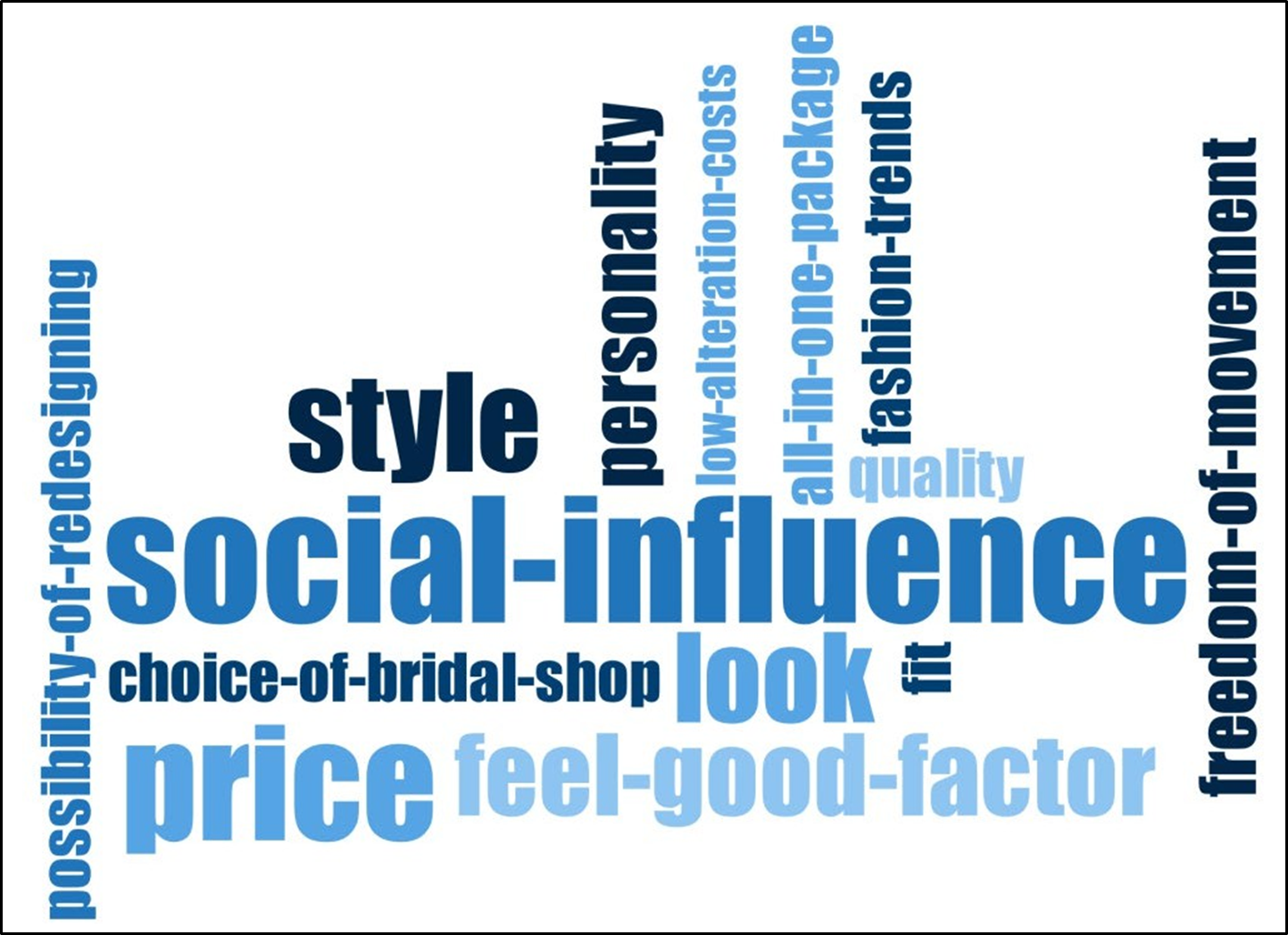
The social influence of the people close to the bride plays a decisive role in the choice of wedding dress. 11 out of 14 interviewees stated that the opinions of their significant others were of particular importance to them. For most of the interviewees, their mother's opinion was the most important, as interviewee B4 also stated:
Very important, (laughs) so without, I'm going to say consent in inverted commas, but I'm very, yes, so closely connected with my mum, with my sister ... I, I attach great importance to getting confirmation, so to speak, because if she were to say no, that's not possible, then I wouldn't take it either (B4, 117-126).
Price also emerged as a key deciding factor. Most interviewees reported setting a specific budget for their wedding dress. However, one participant differed, noting that price was not a major consideration for her, as the dress was her top priority. She chose to allocate more money toward the dress rather than other services like photography. It is worth noting that, in her case, the wedding dress was primarily financed by someone else.
The style and look of the wedding dress also play a key role in the decision process. While some brides tried out different styles with an open mind and finally decided on the dress that they liked best, other consumers already had a precise idea of their wedding dress in a certain style. The style of the wedding dress also determined whether the interviewees felt comfortable in it. The feel-good factor was mentioned six times as an important criterion for the choice of wedding dress. One interviewee described the feeling as follows:
You can feel it. Because it has to, it has to be easy for you, you have to feel beautiful. It has to, it's just such a feeling, you know, it's a feeling that you can't describe. And that is, and when you look at yourself in the mirror, you realize aha, okay, I want to say "yes" in this dress. And that's what it was (B11, 233-237).
A bride's comfort in her wedding dress depended not only on the style, as previously mentioned, but also on the freedom of movement it allowed. Other important factors in the selection process included high-quality materials, a good fit, and alignment with current bridal fashion trends. Additionally, many respondents emphasized the importance of staying true to their personal style and expressing their individuality through the dress. Two participants also highlighted the desire to repurpose the dress after the wedding, making the potential for redesign an additional consideration in their decision. Some interviewees also specifically chose a bridal shop where they wanted to find their dream dress. For one interviewee, reliability was very important, which is why she chose a bridal shop where she knew the owner. A second person decided in favor of the bridal shop because of its appealing website. Two of the interviewees expressed a desire for an all-in-one package; in other words, they chose a bridal shop where, in addition to purchasing the wedding dress, it is also possible to have it customized and, if necessary, purchase accessories. Finally, one interviewee mentioned the criterion of low alteration costs. A wedding dress was therefore chosen for which as few adjustments as possible were required or desired. As can be seen from the word cloud in Figure 1, sustainability is not a decision criterion; none of the 14 interviewees considered sustainability to be a criterion when choosing a wedding dress:
To be honest, that's not an important role for me, because, yes, it's once in a lifetime and I think, yes, well, you should rather pay attention to the ecological footprint and so on, but especially with the wedding dress ... that wasn't an important aspect for me either (B1, 197- 200).
Five respondents who bought or rented their wedding dress second-hand saw sustainability as a "nice-to-have" feature. However, they did not primarily consider the sustainability aspect when choosing it. Just one interviewee said that she wanted to make her wedding as sustainable as possible, for example by using existing decorations and living plants. For this reason, she found it nice that the sustainable aspect was now also reflected in the second-hand purchasing decision.
Reasons and Barriers for Use of Collaborative Consumption Models in Bridal Fashion
The financial incentive is clearly the most decisive reason for opting for a second-hand or rental model when choosing a wedding dress. Buying a new wedding dress is not only seen as a waste of money, but also a waste of resources. Although sustainability was mentioned both as a reason for buying a second-hand wedding dress and for renting a wedding dress, the analysis of the interviews shows that this is not a primary incentive or a decision criterion, but that the sustainable aspect is seen as a "nice-to- have" feature. The option to buy second-hand or rent a wedding dress is also positively influenced by the availability of older designs. Consumers may find styles from previous collections that are no longer available in traditional bridal shops. Additionally, nostalgic elements contribute to the appeal of second-hand dresses, the notion that each pre-worn dress carries a unique story and is tied to cherished memories makes this choice especially meaningful for some brides.
The practical benefits of renting bridal fashion were mentioned exclusively in relation to rentals but were emphasized strongly. For consumers who have no intention of reusing the dress after the wedding, renting offers a convenient solution by allowing them to avoid concerns about cleaning, storage, or resale. Another motivating factor for choosing to rent was social influence; one interviewee noted that her decision was partly shaped by her mother's opinion.
The biggest barriers to the use of collaborative consumption models in bridal fashion are a lack of awareness or a lack of supply. A considerable number of interviewees had either not contemplated the possibility of purchasing second-hand items or renting, or such options were not accessible within their local area. The lack of choice is also linked to the lack of supply. Consumers perceive a deficit in terms of variety and the styles on offer. Fashion-conscious consumers also see it as a barrier not to be able to follow the latest fashion trends when buying a second-hand wedding dress, as most are from a previous wedding season. Due to the high value that many interviewees place on the gown, the uniqueness of it also plays a decisive role. Especially when renting, they fear that it could be rented to several brides from the same neighborhood in the same wedding season, so that the uniqueness of the dress could be lost. They also assume that they will have to adapt to the dress of the previous owner and that they will therefore not be able to express their personality as strongly. This is also linked to the assumption that no alterations can be made to the wedding dress when renting. However, this again indicates a lack of awareness regarding renting a wedding dress, as the interviewees who rented their wedding dress confirmed that the dress was perfectly fitted to them and that personal alteration requests were also implemented. One respondent mentioned the ambience of a second-hand bridal shop as a negative factor that prevented her from buying a wedding dress she needed and drew a comparison with a junk room. However, she emphasized that this was only her subjective perception, as she did not buy the wedding dress in a second-hand shop.
A lack of quality is also the reason why one mother of the bride advised her daughter against the option of buying second-hand. Another negative influencing factor in relation to the use of collaborative consumption models is the respondents' superstition. The fear that the previous owner of the wedding dress was already divorced and that the bad luck could be transferred to her marriage if she were to wear the same wedding dress. Three key obstacles are associated with buying a wedding dress through online platforms. Consumers highlighted the physical separation from the dresses, the absence of personalized advice or alteration services, and the lack of a memorable experience compared to an in-person fitting at a bridal shop. The overview of the themes in relation to those identified in the literature review is summarized in Figure 2.
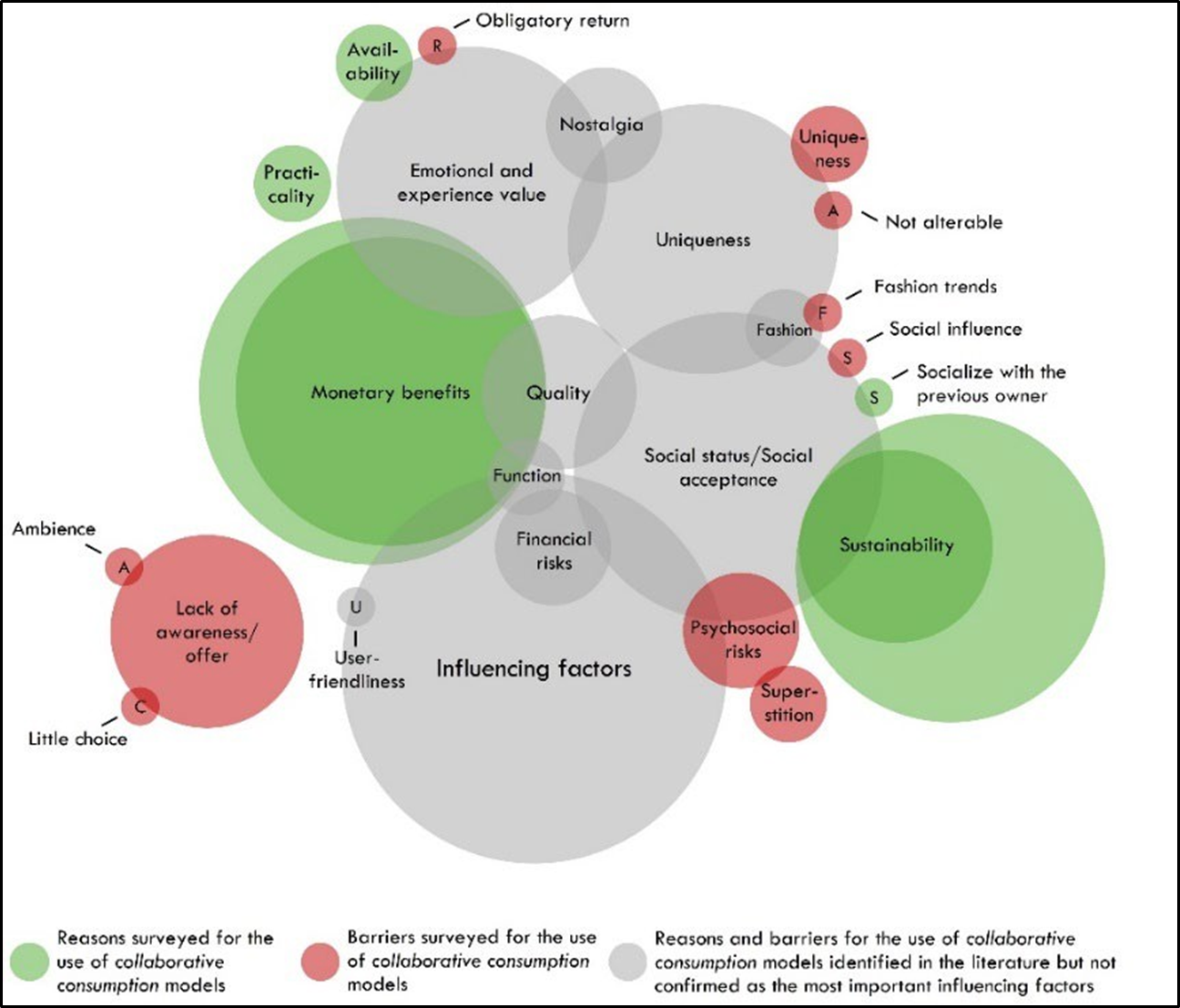
Overall, the choice of a wedding dress or a particular purchasing option largely depends on individual priorities. When the wedding dress holds significant importance in a bride's wedding planning, buying a new dress is often favored over second-hand or rental alternatives. For some, the emotional value attached to the dress makes returning it after the wedding unthinkable. As a result, the obligation to return a rented dress is perceived as a major drawback of the rental option. While the lower cost is often mentioned as an advantage of collaborative consumption models, one interviewee described price as a barrier to renting a wedding dress. She shared a negative experience, stating that the rental cost was unreasonably high in her view, which influenced her perception of the option.
At the conclusion of each interview, participants were asked to summarize what they considered the most important reasons for and barriers to using collaborative consumption models in bridal fashion. While not all respondents adhered strictly to listing exactly three, the following key motivations emerged through their responses:
- Low price
- Sustainability
- Practicality
- Possibility to find models from older collections
- Opportunity to socialize with the previous owner
Although the latter aspect was cited by one interviewee as one of the most important reasons, she emphasized that the other positive influencing factors she mentioned, namely price and sustainability, should be given more weight.
The barriers are much more widespread:
- Lack of awareness/offer
- Lack of uniqueness
- Superstition
- Little choice
- Ambience
- Obligatory return when renting a wedding dress
- Assumption that a rental wedding dress cannot be customized and altered
- Limited opportunities to follow fashion trends
- Social influence of attachment figures
Conclusion
This research explored the factors influencing Austrian consumers' adoption of collaborative consumption models in bridal fashion, addressing a significant gap in sustainability research on high-involvement, single-use garments. Using qualitative interviews, the research identified key motivations and barriers associated with renting or buying second-hand wedding dresses.
Findings show that cost savings, practicality, and access to unique or discontinued designs were primary motivators, while sustainability was generally perceived as a secondary benefit. Barriers included limited awareness, perceived loss of uniqueness, social influences (especially from family members), and concerns about quality, customization, and ambiance in second-hand retail settings.
Theoretically, the study contributes to the collaborative fashion consumption (CFC) literature by extending its scope to the underexplored bridal sector. It also contributes to the literature on behavioral theories of sustainable consumption by drawing on the Theory of Planned Behaviour (Ajzen, 1991) and Behavioural Reasoning Theory (Westaby, 2005) within a high-involvement, symbolic consumption context. The findings illustrate those subjective norms, particularly the opinions of close family members, significantly influenced decision- making, aligning with the TPB framework. While attitudes toward sustainability were generally positive, perceived behavioral control (e.g., limited access to rental options or concerns about fit and quality) often acted as a barrier to action. In line with BRT, participants clearly articulated both reasons for and against collaborative consumption models. Practical and financial arguments supported adoption, while emotional reasoning such as the desire for uniqueness, superstition, or symbolic attachment to the dress often served as barriers. These insights help explain why sustainability, though positively perceived, remained a secondary motivator. This study therefore demonstrates the usefulness of combining TPB and BRT to better understand consumer behavior in settings where identity, emotion, and tradition intersect.
The findings offer important managerial implications. They suggest the need for greater consumer education, improved service design in second-hand and rental bridal boutiques, and targeted communication strategies that emphasize both value and emotional resonance. By addressing these barriers, bridal retailers and rental services can better align with shifting consumer expectations and sustainability goals.
Research Limitations
The aim was to achieve a heterogeneous sampling to incorporate as many different consumer perspectives as possible into the study. Nevertheless, the focus in this study was on biological females, which may inadvertently exclude insights from individuals of diverse gender identities who also might buy bridal gowns.
Care was therefore taken to interview people from different federal states and to achieve a balanced ratio between those who live in the city and those who live in the countryside. In addition, the opinions of consumers who bought their wedding dress new as well as those who bought it second-hand or rented it were considered. From the 13th interview onward, participant responses began to repeat, indicating data saturation. As no new insights were anticipated, the interviews were concluded after the 14th session.
Creating a natural and comfortable interview setting was a priority. Given the geographic distribution goals, interviews were conducted online via Microsoft Teams. While all 14 interviews were conducted in a positive and open atmosphere, it is possible that in- person interviews may have encouraged more in-depth responses. Additionally, some responses, particularly those related to sustainability, may have been influenced by social desirability bias.
Future Directions
A promising direction for future research would be to replicate the study with other target groups such as different genders or age cohorts and compare the findings. One avenue could involve investigating the motivations and barriers related to buying or renting second-hand wedding suits, providing a comparative perspective with bridal gowns. As most participants in the current study belonged to the millennial generation who tend to be less engaged with sustainable consumption than Generation Z (Wood, 2022), further research could focus on Gen Z consumers to explore generational differences in attitudes toward collaborative consumption. Additionally, it would be valuable to conduct the study with individuals who identify with a sustainability-oriented lifestyle, such as those in the LOHAS (Lifestyle of Health and Sustainability) segment, to examine how sustainability values influence decision- making in this context.
Funding Statement
The author(s) received no financial support for the research, authorship, and/or publication of this article.
Conflict of Interest
No potential conflict of interest was reported by the author(s).
References
About contributors

Kirstie Riedl
Green Marketing & Sustainability Communication, Department of Business, Fachhochschule Wiener Neustadt, Campus Wieselburg, Lower Austria, Austria
Austria
Silvana Raffetseder
Green Marketing & Sustainability Communication, Department of Business, Fachhochschule Wiener Neustadt, Campus Wieselburg, Lower Austria, Austria
Austria