





Abstract
The rapidly growing fashion industry is producing harmful environmental results because of its unsustainable practices. Thus, sustainable fashion is receiving much attention from both practice and academia as it can be a potential solution to sustainability issues in the industry. Although past research explored various factors of sustainable fashion, most of it is only from the consumers' perspective. Hence, to explore the practitioner's perspective, this research used grounded theory to explore sustainable fashion perceptions and practices amongst industry professionals to identify and understand key themes and categories related to sustainable fashion. The data was collected in the form of semi-structured interviews with the 14 industry professionals in the fashion and sustainability area. The data was coded (open, axial, and selective coding) and analyzed using the software ATLAS.ti 24. The analysis identified and discussed in detail the environmental impact, ethical considerations, consumer behaviors, social influence, economic factors, and sustainable practices as core categories of sustainable fashion. Based on findings, the authors proposed a contingency-based sustainable fashion framework. The proposed framework can guide practitioners and policymakers in the decision making. The study contributes by exploring sustainable fashion from a practitioner perspective, addressing a significant gap in the literature.
Introduction
The fast growth of the fashion industry has the cost of environmental degradation. According to the World Economic Forum, 10% of the world's CO2 emissions are because of the fashion industry (World Economic Forum, 2020). Moreover, the industry is the second largest in terms of water consumption worldwide. The United Nations Environment Programme (UNEP) further states that fast fashion creates huge waste as large amounts of garments are disposed of in landfills every second and takes a long time to degrade adding to pollution (United Nations Environment Programme, 2022). The fashion industry has recently started acknowledging the need to move towards sustainability. Sustainable fashion (SF) is emerging as a potential solution that could help decrease the adverse impact of the fashion industry on nature and society through various methods of production, consumption, and disposal (Fletcher & Grose, 2012). These methods include organic materials, recycling, upcycling, ethical labor practices, and reducing carbon footprints in the supply chain (Henninger et al., 2016). On the same line, slow fashion, an important aspect of the SF, focuses on the longevity of clothing to minimize overproduction (Clark, 2008; Pookulangara & Shephard, 2013).
Ethical production is another part of SF that assures fair labor practices across the supply chain. It focuses on safe working conditions, fair wages, and protecting workers' rights which are often common concerns in developing countries (Medcalfe & Miralles, 2021). Brands that are committed to ethical production often seek certifications (e.g., Fair Trade or SA8000) to validate their practices (Boström & Micheletti, 2016). Another emerging trend of SF is circular fashion which includes clothing rental services, upcycling, and take-back schemes in which brands collect and recycle their products at the end of their life cycle (Denizel & Schumm, 2023; Niinimäki & Hassi, 2011).
Recent studies have explored the impact of various factors on consumers' adoption of SF such as shopping values, authenticity, market relevance, environmental consciousness, and social empathy (Madhav et al., 2018; Ma et al., 2024). Although these studies do offer valuable insights, the current qualitative study is important because it uses in-depth interviews with industry professionals to get a real-world understanding of SF from both practice and consumption aspects. The recent study by Mohammed and Razé (2023) suggested that government, society (consumers), and business have equal responsibility in taking care of sustainability in the fashion industry. Similarly, Yu et al. (2023) opined that to understand sustainable fashion consumption, it is necessary to understand the perspective of both producers and consumers. Producers ensure quality products at a better price while making them available through retailers, wherein consumers provide insights that help expand the business. That is why the current study is interesting to bridge the gap between producers and consumers, bringing them on the same page. The emerging markets of the world certainly need active participation from the government, society, and businesses, as a lot of resources are required, along with the right attitude and ecosystem.
India, an emerging market, is a major player in the global textile and apparel industry. The country has a rich history of textile craftsmanship and a large workforce dependent on this sector (Tewari, 2006). However, the fashion industry faces environmental issues such as water pollution and fashion waste, as well as social issues like working conditions and fair wages (Shaw et al., 2023). Based on the above, there is a need to study SF in the emerging economy as it can help make the industry more resilient and morally responsible. The study on the Indian market will also help generalize the findings and recommendations for other emerging markets in adopting sustainable fashion consumption due to similarities in characteristics of the business and market size. The aim of this paper is to explore and address the following research questions (RQ):
RQ1. What are the perceptions and practices related to sustainable fashion in the Indian fashion industry?
RQ2. What are the key themes and categories that influence sustainable fashion practices in India?
RQ3. What could be a model for sustainable fashion strategies considering the factors within the Indian fashion industry?
These research questions have the potential to provide evidence from fashion experts including retailers and manufacturers, on how they are integrating sustainable practices. Also, the recommendations from these retailers and manufacturers on consumers' fashion consumption patterns may lead to reinforcing sustainable cause in the long run.
Theoretical Background
Fashion Industry's Critical Need for Sustainable Practices
The roots of sustainable fashion can be traced back to the environmental movements of the 1960s when the detrimental impacts of industrial activities including textile manufacturing, began to surface (Dickson & Eckman, 2006). Over the decades, the movement has evolved, gaining momentum in the 1980s and 1990s with the rise of anti-fur campaigns and growing interest in ethical fashion (Mohr et al., 2021). The demand for transparent and responsible fashion brands has increased because consumers are seeking to purchase fashion products from brands that match their sustainable values.
Further, textile production involves water-intensive processes, the fashion industry relies heavily on natural resources. This contributes to water depletion and water pollution which affect the ecosystems (Hussain & Wahab, 2018). The industry is also responsible for vast CO2 emissions and creates millions of tons of fashion waste in landfills which negatively impacts the environment and communities (Nayak et al., 2021; Madhav et al., 2018).
Moreover, the fashion industry's global supply chains are often associated with unsafe labor conditions. Particularly in developing nations where labor laws are not strict. For example, the collapse of the Rana Plaza factory in Bangladesh in 2013, which killed over 1,100 garment workers clearly shows the urgent need for reform in the fashion industry's labor practices (Wickramasingha & Coe, 2021). In India, labor issues such as low wages, poor working conditions, and lack of job security for workers are criticized (Hasan et al., 2017). These underline the urgency of implementing corporate social responsibility (CSR) and ethical production practices in the fashion industry. Hence, implementing SF practices in India such as using organic cotton, natural dyes, and handloom fabrics will not only reduce environmental impact but also support traditional local artisans and preserve the cultural heritage of India (Tewari, 2006).
Sustainable Fashion
Past researchers have studied fast fashion's harm to the environment and society. The industry produced 879 million metric tons of CO2 in the year 2022, and this annual number is projected to increase to 1.2 billion metric tons by 2030 (Statista, 2024). This reinforces the call for taking measures to reduce pollution. Moreover, fast fashion consumes vast amounts of water (e.g., approximately 10,000 liters per kilogram of cotton) in production processes (Chapagain & Hoekstra, 2006). This contributes to water pollution and harms aquatic life. Past research has highlighted that not only production but also the discarding of fast fashion contributes to pollution, as the industry generates around 92 million tons of clothing waste annually (Niinimäki et al., 2020). Adopting sustainable fashion can mitigate pollution and conserve nature, which helps protect biodiversity and can lead to a sustainable future. Firms can also benefit from adopting sustainable fashion practices, such as cost efficiency, brand reputation, and regulatory compliance, all of which can lead to long-term profitability. Firms can save costs by recycling existing products instead of depending on raw materials (Shirvanimoghaddam et al., 2020). In addition, a brand reputation for sustainability will lead to consumer loyalty. Besides, adopting sustainable processes, such as using renewable energy, can help firms decrease their carbon emissions. In addition, adopting ethical labor practices can boost firms' reputations while also increasing employee productivity and retention (Tandon et al., 2025). Along with this, sustainable fashion can also help companies comply with environmental laws imposed by regulatory bodies. Finally, adopting sustainable fashion may also help companies attract investors who prioritize environmental, social, and governance (ESG) factors.
The goal of SF is to integrate sustainability into all aspects of fashion production and consumption. First, this includes using environmental-friendly materials or fibres such as cotton, hemp, and bamboo to reduce environmental impact and natural resource depletion (Lira & Costa, 2022). SF also focuses on ethical issues in fashion like transparency in the supply chain, fair wages, and safe working conditions of labors (Li et al., 2014; Jung et al., 2024). Alongside SF, slow fashion also opposes the fast fashion model of quick production and disposal of fashion products while endorsing quality over quantity (Srivastava et al., 2024).
Moreover, SF also includes the principles of circular economy model in the fashion industry which suggests that products should be designed in a way that enables sustainable disposal like upcycling and recycling (Fletcher & Grose, 2012; Kamalanon et al., 2022). By embracing circular economy principles, which prioritize reuse, recycling, and upcycling of materials, sustainable fashion aims to reduce waste and contribute to a more sustainable future for the fashion industry (Ma et al., 2024; Kim & Kim, 2020). This shift from a linear to a circular model is essential for reducing the environmental footprint of the fashion industry. As consumers become more aware of the environmental and social impacts of their purchases, the demand for slow and sustainable fashion is likely to grow, pushing brands to adopt more responsible practices (Atik & Ozdamar Ertekin, 2022; Todeschini et al., 2017; Pal & Gander, 2018). Hence, changes in production, consumption, and regulation of the fashion industry are necessary for the promotion and implications of sustainable practices.
Methodology
This paper uses a qualitative research design as it is well-suited when for exploring context-specific phenomena where extelephonic internviewsdeveloped (Creswell & Creswell, 2004; Creswell, 2013; Mohammed & Razé, 2023). Previous studies have also used qualitative research and grounded theory when studying emerging markets where industry practices and consumer behaviors are still developing (Agarwal et al., 2023; Bhamra & Kishore, 2022; Elhajjar, 2023; Sarkar, 2014). These studies highlight how qualitative methods are important for understanding the details and complexities that the quantitative approach may overlook.
Moreover, grounded theory method was used to analyze the data. Through grounded theory new concepts and theories emerge from the collected data instead of using pre-existing theories (Glaser & Strauss, 2017). This is particularly suitable for the current study as SF in India is an emerging concept with consumer behaviors and industry practices still evolving.
Interviews, specifically semi-structured interviews, were chosen as the method for data collection suitable for this study as it offered the opportunity to delve deeply into the participants' thoughts, feelings, and motivations regarding SF. Research suggests that semi-structured interviews are particularly valuable when seeking detailed insights to understand diverse viewpoints within the context of SF (Creswell, 2013; Merriam & Tisdell, 2016). Telephonic interviews and video conferences were selected for this study since they offered an efficient way to reach participants across various locations in India. Subsequently, research suggests that telephonic interviews can also reduce the social desirability bias often present in face-to-face interactions (Novick, 2008; Hanna, 2012). In this study, researchers used judgmental sampling to gather the data. Judgmental sampling allows researchers to deliberately select participants who have specific knowledge, expertise, or experience relevant to the research topic (Etikan et al., 2016). In the present study, this approach was particularly valuable as it allowed the researchers to select industry professionals who are directly involved in or have significant insights into SF practices. The study's sample size is 14, which is good in number for the qualitative study, and it also aligned with similar studies (Ackermann et al., 2018; Shaikh et al., 2020). Sampling unit: These are the organizations or entities considered within the fashion industry in India. This includes fashion brands, retail chains, and textile manufacturers.
Sampling elements: The sampling elements were professionals or individuals within the organizations who are knowledgeable about or directly involved in SF related work. Specifically, the sampling element in the study included a specific and diverse group of professionals from the SF industry in India. This group included a Retail Store Manager (P1), a CEO from a clothing retail chain (P2), a Senior Account Executive specializing in AI in fashion (P3), and an SF Expert and Ethical Production Manager (P4). It also included a Fashion Influencer active on Instagram (P5), a Category Buyer and Planner from a leading fashion brand (P6), and a Sustainable Fabric Manufacturer (P7). Additionally, the study involved a researcher in SF (P8), two Fashion Designers (one of whom is a brand founder) (P9, P10), a Climate Activist focused on waste management (P11), a Sustainability Impact Manager (P12), a Sales Manager from an Environmental, Sustainable, and Governance tech company (P13), and the Head of Retail Operations at a leading fashion brand (P14). The participants were approached based on their job profiles through the professional networking site LinkedIn.com. The recruited interviewee had different experiences and knowledge of SF which provided an overview of the industry, trends, and sustainability in the fashion sector.
The geographical locations of participants were dispersed across India. P1, P3, P4, P9, P10, P11, and P14 were from the southern parts of India (Bangalore, Chennai, and Kochi). P2, P7, and P12 were based in western India (Mumbai). P5, P6, P8, and P13 were based in northern India (Delhi and Kangra). This selection ensured regional diversity and representation because different parts of the country are significant for fashion retail, manufacturing, exports, and sustainability initiatives. For example, Mumbai and Delhi are major fashion markets and house corporate offices of various fashion brands. Bangalore is known for its sustainable fashion startups and sustainability initiatives, while Chennai is recognized for fashion exports. Similarly, Kochi and Kangra have traditional textile production hubs.
The participants in this study worked with a mix of small, medium, and large enterprises. P1, P6, P11, and P14 were associated with large enterprises. Furthermore, P2, P8, and P10 were associated with medium-sized enterprises. The remaining participants (P3, P4, P5, P7, P9, P12, and P13) worked with small enterprises.
The participants represented a mix of fashion brands and other stakeholders from the fashion industry e.g., manufacturers, fashion designers, and climate activists. Out of the fourteen participants, six (P1, P2, P6, P9, P12, and P14) were directly involved with fashion brands. Among these, three brands were expensive (P6 and P14 work with two different premium fashion brands of India with high price points ; P12 designs luxury apparel for celebrities), two were less expensive (P2 works with a fashion brand with mid-range pricing and P9 is a sustainable fashion designer selling their own fashion label, which also offers mid-range priced apparel), and one had fair market positioning (P1 works with a fashion brand selling affordable apparel). The Indian fashion industry is often categorized by price into premium, mid-range, and affordable segments (TechSci Research, 2023).
Finally, 14 semi-structured telephonic and video conference interviews were conducted. The Interviews were 30-60 minutes. The interviews were recorded and transcribed by the researchers. The interview transcripts were uploaded to qualitative data analysis software ATLAS.ti in Microsoft Word format. The coding and analysis of data in this study employed grounded theory methodology facilitated by ATLAS.ti Version 24. ATLAS.ti is a widely used qualitative data analysis software in various research fields, such as business and healthcare (Calandra et al., 2022; Kaur & Singh, 2021; Manzi et al., 2014; Sadraei et al., 2022). ATLAS.ti software was instrumental in organizing and managing these codes, providing tools for the iterative process of refinement of categories and the exploration of relationships through axial coding (Hutchison et al., 2010). The data analysis first began with open coding where initial codes captured emerging concepts and themes. Next, axial coding was conducted to identify connections between categories. Selective coding was then used to refine the core categories (Strauss & Corbin, 2008).
Data Analysis
This section explains the analysis process including open, axial, and selective coding. The data was coded in ATLAS.ti 24 for Mac with codes and categories generated from the analysis. The results of the coding are shown in Table 1 and Table 2.
Open Coding
Open coding has been defined as 'the process of breaking down the data into distinct units of meaning' (Strauss & Corbin, 2008). All the original transcripts were analyzed line by line with the help of ATLAS.ti. Vague or irrelevant statements were excluded. The factors affecting SF consumption were classified, and relevant sentences from the interview materials were coded with an unbiased attitude and open mind. 14 Microsoft Word documents were uploaded to ATLAS.ti for note creation. Through browsing, coding, and extracting relevant concepts, 26 initial categories were formed through open coding (See Table 1). These initial categories were further refined through axial coding, where relationships between categories were identified and organized into core categories and subcategories, resulting in a more coherent understanding of the data (See Table 2).
Axial Coding
Axial coding is achieved by specifying relations through constant comparison, grouping previous codes, and forming final theory and core categories. Categories, as defined by Corbin and Strauss (1990), are higher in level and more abstract than the concepts they represent. This process is the basis of theory construction (Charmaz, 2006). It included refining the 26 initial categories from open coding and forming six core categories after recombining (Table 2). The six core categories identified through the analysis are environmental impact, ethical considerations, consumer behavior, social influences, economic factors and sustainable practices.
| S.N. | Open Codes | Participant Responses |
|---|---|---|
| 1 | Barriers to adoption | "I think the only sustainability, main sustainability issues....the pricing is what is a deterrent to most consumers" (P9) |
| 2 | Circularity | "Once somebody is done ...they want to change their wardrobe for example we don't have the right mechanisms.....to either give it away ...or to give it back to a manufacturer." (P10) |
| 3 | Consumer Attitudes | "There are these consumers that are moving towards a lifestyle change...like a slower lifestyle. And hence, they like to incorporate more ethical brands into their life and more..." (P5) |
| 4 | Consumer Purchase Factors | "I feel that there is a certain segment which is always going to be trend driven." (P5) |
| 5 | Consumption behaviours | "So if these clothes are not properly sort of maintained, if they have not ... and then they throw them within a few months, that's a tremendous waste." (P11) |
| 6 | Disposal Methods | "I would say donate obviously would be on top number one right because there's a lot of people who can use it."(P3) |
| 7 | Environmental Concerns | "But from what we know in terms of the waste composition currently we have ... paper and textile as one of the largest contributors for waste currently." (P10) |
| 8 | Environmental Impact | "In terms of how much is being produced as opposed to how much is being ... disposed and discarded right I feel in that sense there is a huge impact" (P9) |
| 9 | Ethical Concerns | "Consumers want to purchase products from ethical and morally right companies." (P7) |
| 10 | Fashion Consciousness | "Definitely the fashion-conscious customer or a fashion-forward customer would be a little prone to use sustainable products." (P2) |
| 11 | Fashion Trends | "Styling is also a major thing that has evolved a lot over the years in fashion, so people are ready to style cropped off with skirt, with pants." (P6) |
| 12 | Functionality in Sustainable Fashion | "In fact, I actually see a hope that athleisure is the is the way to go ... is concerned if more of that because athleisure is mostly non-iron" (P2) |
| 13 | Future Trends | "Consumers are becoming more and more cognizant at least of the fact that ... a choice and that their choice could influence what actually gets made." (P12) |
| 14 | Greenwashing | "They are trying to mix and make more sort of blended fabrics like it could ... out is a sustainable fashion is a kind of hype that brands are creating." (P6) |
| 15 | Industry Awareness | "There are some brands right they are actively trying to be sustainable but that's I guess are very few." (P9) |
| 16 | Knowledge Gap | "Fashion industry has to have a couple of things which are part of their ... know we will change we'll start a separate stream then in that sense right" (P9) |
| 17 | Minimalism | "I started reading about minimalism and you know i saw some documentary ... my backpack which is a 8 kg backpack that's great i have it right here" (P3) |
| 18 | Mutual Benefits | "I think we are going to find it very difficult to implement any ... unless there is a win-win that you know the consumer benefits and you also achieve sustainability" (P2) |
| 19 | Policy/regulations | "There's no regulation it's quite voluntary at this point everyone's happy ... more um and uh yeah I think yeah the current efforts that are being taken" (P10) |
| 20 | Price of Sustainable Fashion | "I think sustainable, when you're saying sustainable fashion, I think now also those come, it comes with a slightly higher price." (P9) |
| 21 | Production Practices | "It's like government has, with the handloom society over here, the ... still not there. The private schools still want to put synthetic uniform." (P9) |
| 22 | Recycling Initiatives | "A lot of companies they are running some campaign for you know old ... and coupons yeah they encourage people to recycle they are taking back" (P1) |
| 23 | Self | "Sustainability cannot be taught in one day or one go to anybody it is ... to go for this brand only because they don't produce sustainable clothes" (P6) |
| 24 | Social Influence | "I do think that that is possible in the sense, because just as a society ... do tend to see what the other person is doing and that must be, you know," (P9) |
| 25 | Social Media Influence | "But I do think that what has helped is the internet. It is the awareness. ... it's also very, very specifically to a certain socio-economic background." (P9) |
| 26 | Technology in Sustainable Fashion | "The inventory which are available on their ERP system so it will go ... ERP system inventory system so they can look it and they can take action" (P1) |
| Core Category | Subcategory | Axial Code | Open Codes |
|---|---|---|---|
| Environmental Impact | Pollution | Environmental Pollution | Environmental Impact, Environmental Concerns |
| Resource Usage | Resource Usage, Carbon Footprint, Waste Generation, Water Consumption, Chemical Usage | Circularity | |
| Consumer Behavior | Value for Money | Consumer Attitudes | Consumer Attitudes, Consumer Purchase Factors, Fashion Consciousness, Consumption Behaviors, Self |
| Social Influences | Influence of Peers and Family | Social Media Influence | Social Media Influence, Social Influence, Fashion Trends |
| Economic Factors | Cost of Sustainable Fashion | Price of Sustainable Fashion | Barriers to Adoption |
| Ethical Considerations | Fair Labor Practices | Ethical Issues and Concerns | Ethical Concerns, Industry Awareness, Mutual Benefits, Knowledge Gap, Policy/Regulations |
| Sustainable Practices | Recycling Initiatives | Production and Recycling Practices | Production Practices, Recycling Initiatives, Technology in Sustainable Fashion, Minimalism, Disposal Methods, Greenwashing, Sustainable Fashion Definition, Future Trends |
Selective Coding
The final selective coding in the data analysis process merges all concepts to fully explain the phenomenon and establish theories based on the data (Corbin & Strauss, 2008). Six core categories were identified by detailed analysis and comparison of open and axial codes: environmental impact, ethical considerations, consumer behavior, social influences, economic factors, and sustainable practices.
A Conceptual Model
Based on the findings of this study, the authors proposed a grounded theory conceptual model: Contingency-based SF (See Figure 1). The model is proposed on the principles of contingency theory, which suggests that there is no universally optimal way to manage organizational challenges (Fiedler, 1964).
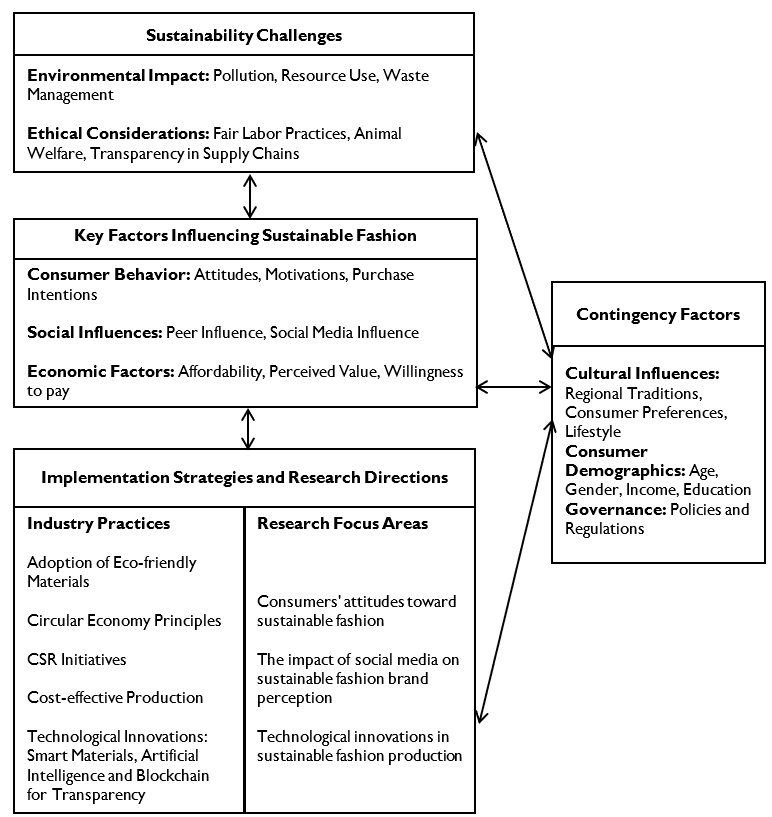
This model outlines the sustainability challenges, key influencing factors of SF, and implementation strategies for sustainable fashion. The model further suggests that consumer behavior, social influences, and economic considerations are important when designing SF implementation strategies. In addition, it states that the adoption of SF is contingent upon cultural, demographic, and governance-related factors. Finally, it also identifies three strategic research directions based on the findings:
- Consumers' attitudes toward sustainable fashion
- The impact of social media on sustainable fashion brand perception
- Technological innovations in sustainable fashion production
Findings
This section discusses the findings of the analysis. Each of the identified six categories is examined in depth to understand their implications and the literature that supports the findings.
Defining and Interpreting Sustainable Fashion
When asked, 'How do you define SF from your perspective?', participants in the study provided diverse yet converging perspectives that collectively define SF. They highlighted that sustainable fashion prioritizes durability, the use of eco-friendly and ethically sourced materials, and a commitment to minimizing both environmental and social impacts. For example, one participant noted: "It would be clothing that lasts for a longer duration of time... quality of the garment how long a garment will last" (P9). Environmental impact remains a central sustainability concern in fashion, with participants repeatedly mentioning the importance of using eco-friendly materials. As one participant insisted that "SF means... using materials that do not harm the environment and are biodegradable" (P1). This perspective is reinforced by another participant who described SF as involving "The design for clothing that is environmentally conscious, minimizing waste and reducing pollution" (P6). These views of the participants indicate that the focus of SF is on reducing environmental damage across the value chain, starting from production to disposal. Another participant highlighted the importance of ethical considerations by stating "Ethical production practices are where fare wages and safe working conditions are in focus" (P10).
Others highlighted the importance of using sustainable fibers and production methods. Such as: "SF is...one what is the kind of materials that are being used and the methods that have minimal impact on the environment" (P13) and "When you talk about fashion, a fiber which uses less water and energy in its production process is considered sustainable" (P14).
The perspectives provided by participants are consistent with those in research, which emphasizes the focus on environmental sustainability and social responsibility (Shaw et al., 2023). Research also indicates that consumers increasingly demand brands to adopt sustainable practices and provide evidence of their environmental and social initiatives (Pookulangara & Shephard, 2013; Shen et al., 2012).
Environmental Impact
Participants in the study acknowledged that the fashion industry's environmental footprint is noteworthy as one participant says: "The impact of the fashion industry on the environment is massive" (P5), while another emphasized on pollution and remarked "Well, the textile industry is basically the second most polluting industry in the world" (P4).
Participants also emphasized the importance of reducing the carbon footprint and conserving resources. One participant underlined the importance of reducing carbon footprint and conserving natural resources (P3). The negative consequences of fast fashion and micro-trends were brought to light as well, as one participant asserts "Fast fashion for me would be using one cloth and throwing it away immediately" (P14). Participants' responses show a clear acknowledgment of the environmental challenges posed by the fashion industry and the need for more responsible fashion practices.
These negative environmental consequences of fast fashion are well-documented. Past studies have shown that the sector significantly contributes to pollution and resource depletion (Niinimäki et al., 2020). The past literature also stated the urgent need to adopt more sustainable practices to mitigate these impacts (Majumdar & Sinha, 2018; Peters et al., 2021).
Consumer Behavior
Participants' responses suggest that consumer behavior toward SF is complex, as consumers' attitudes and intentions vary across segments. As one participant in this study noted, "Middle-class family okay, so they don't care about sustainability. They just want value for money" (P1), highlighting that some consumers focus more on cost and convenience over environmental concerns. Conversely, another participant observed a shift towards more ethical consumption by noting, "There are these consumers that are moving towards a lifestyle change… like a slower lifestyle, and hence, they like to incorporate more ethical brands into their life" (P5).
Consumers' lack of information about SF was underlined by participants. One respondent implies this by noting "actually….they (consumers) don't know anything about SF" (P1), suggesting that unawareness can impact purchasing decisions about SF. This is further mentioned by another participant as "Gen Z, like the few bunch of people, they're very conscious about the sustainability of their clothing" (P4). This indicates that although not predominant but awareness is growing among younger consumers. Additionally, there is a growing awareness of sustainability among consumers credited to social media usage. This is reflected by a participant who states "Thanks to social media, the consumer suddenly started realizing that what they are buying has consequences" (P12). Consistent with Beard's (2008) findings, these responses show that while there is a growing interest in SF, many consumers still prioritize factors like price and convenience over sustainability.
This study also found that self-concept plays a key role in these behaviors. For instance, one participant highlighted that "sustainability cannot be taught in one day or one week; it is more about a mindset change, a habit change, and something that must come from within oneself" (P6). Another respondent mentioned, "It is more of a mindset change, a habit change that needs to be internalized by individuals" (P5). It indicates that SF practices are intrinsic in nature and sustainability cannot be just a set of actions but personal responsibility that demands a fundamental shift in consumers' attitudes and behaviors. Past research also suggested that self-concept influences SF consumption and practices as it reflects individual values and identity (Jeong & Ko, 2021; McNeill & Venter, 2019).
Social Influences
Some participants highlighted the role of peers and word-of-mouth in influencing fashion choices, as reflected in comments like "peers and social media heavily influence consumer behavior towards SF" (P3) and "word-of-mouth and social media influencers significantly impact fashion purchases" (P4). Social media plays a crucial role in shaping consumer attitudes towards SF. Influencers and campaigns on popular social media platforms like Instagram have a significant impact on consumer behavior by promoting eco-friendly brands and practices. One participant noted that "social media influencers can influence better than family because they have a larger reach" (P1). While another respondent suggested that social media campaigns and influencers can impact consumer behavior towards sustainability (P2).
These responses show that social influences (i.e., peers, friends, family, social media influencers) can affect consumers' SF choices and behaviors. These findings are also consistent with past studies which suggest that social media platforms have become essential and effective in consumer awareness and engagement to promote sustainability (Park & Lin, 2020; Sudbury-Riley & Kohlbacher, 2016).
Economic Factors
Participants noted that cost is a significant barrier to SF adoption as one participant stated that "price is a significant factor in the adoption of SF" (P9) while another suggested "The cost of SF can be prohibitive for many consumers" (P6). One participant expressed frustration over the price, stating that "The price of SF is ironically higher despite using recycled materials" (P3). These responses reveal that the price-related challenges consumers face when purchasing SF make affordability an important issue.
Extant studies also suggested that the higher costs of SF can deter consumers from making eco-friendly choices (Shen et al., 2012; Grazzini et al., 2021). For example, Joergens' (2006) research on the luxury niche versus the mass-market reality of ethical fashion found that higher prices often limit the adoption of sustainable practices. Researchers have looked at the economic challenges in SF. They highlighted the need for low-cost, sustainable practices to make it more available to consumers (Joung, 2014; Lundblad & Davies, 2015).
Ethical Considerations
Participants highlighted ethical issues in fashion. One participant said ethical production practices where people are paid fairly and work in good conditions are essential (P10). Another noted sweatshop, animal rights, and fair trade are big concerns in fashion (P4). A participant also shared that true sustainability needs both ethical and environmental compliance (P6).
Extant research has also highlighted the centrality of ethical considerations in SF (Joergens, 2006; Niinimäki & Hassi, 2011; Lundblad & Davies, 2015). For example, Shen et al. (2012) studied the importance of labor practices and animal welfare in the fashion industry and found that ethical concerns influence consumers' SF purchase decisions. Similarly, the role of ethics in SF is also discussed by researchers which suggested that consumers are increasingly demanding transparency and fairness in the production processes of their clothing (Bray et al., 2010).
Sustainable Practices
Several participants in this study placed emphasis on sustainable practices like limited production and recycling campaigns. One participant stated, "Producing limited clothes can benefit everyone" (P1), while another mentioned, "A lot of companies they are running some campaign for you know old clothes and then they give vouchers and coupons yeah they encourage people to recycle they are taking back" (P1).
The adoption of technology was also seen as crucial. For example, one participant observed, "the inventory which are available on their ERP system so it will go... ERP system inventory system so they can look it and they can take action" (P1), and another noted, "Technology adoption in the fashion industry is fast, driven by market trends" (P2).
Participants also highlighted the importance of recycling and the circular economy. As two participants noted, "the industry needs to focus on recycling and circularity to reduce waste" (P6), and "Minimalism and reducing overconsumption can help address sustainability issues" (P2). These responses are consistent with past research, where the critical role of sustainable design and production practices are discussed in relation to reducing the negative environmental impact of fashion (Caniato et al., 2012; Hall et al., 2023; Harris et al., 2015).
Discussions and Recommendations for Stakeholders
When asked about the impact of the fashion industry on the environment, there was a consensus among the participants that the fashion industry negatively impacts the environment and that this impact is significant. Participants criticized overproduction and wasteful consumption associated with fast fashion for contributing to environmental harm (i.e., pollution, water usage, and carbon footprint). Participants suggested a few ways to make brands sustainable: investing in sustainable production practices, increasing transparency, and reducing overproduction by optimizing stock using technologies like inventory management systems.
Additionally, participants stated that although the fashion industry is becoming more aware of the need for sustainability, the progress appears to be slow. In addition, fashion brands' sustainable campaigns are often seen as greenwashing rather than authentic efforts. Hence, brands should ensure that their sustainability initiatives are genuine and that it is also integrated into their business model.
There was a mixed response from participants to the question, "How familiar are retailers/manufacturers with methods to make clothing more sustainable?" where some participants indicated that the industry has the knowledge and technology to implement sustainable practices, others pointed out a lack of motivation or effort to do so. A few participants also highlighted the high costs of SF production. Therefore, industry stakeholders such as firms, regulators, environmental protection bodies, activists, and other relevant entities should collaborate to create and disseminate knowledge on sustainable production and practices in the industry. Finally, policymakers can offer incentives to sustainable fashion brands, manufacturers, and producers to support the adoption of sustainability practices. Further, participants suggested that factors such as design, brand, price, and comfort have greater influence on fashion purchases compared to sustainability features. Therefore, SF brands should implement and communicate the sustainable value proposition of their product, such as longevity, cost-effectiveness, and ethical sourcing in marketing efforts.
Most of the participants believe that education, awareness, and fashion consciousness influences consumers' attitudes towards sustainability. Hence, brands should take initiative on educating and inspiring consumers about the importance of SF. The pricing of SF emerged as a major barrier to its adoption as most of the participants expressed that SF is typically perceived as expensive. Therefore, brands should invest in new technologies to make SF accessible and affordable to consumers.
The majority of the participants also stated that social factors (i.e., peers, friends, family influence, and social media) can influence consumers' adoption of SF. Although some participants also highlighted greenwashing concerns related to social media influencers, brands can avoid this by working with influencers who are committed to sustainability in fashion and lifestyle. Participants highlighted the disposal challenged in used and suggests that brands could educate consumers on donating, reselling, or recycling their fashion items by implementing take-back programs partnership with resale platforms.
The success of any mission is dependent on its stakeholders. Sustainability is a gigantic task in which sustainable fashion consumption can contribute significantly to achieving the mission. Producers are expected to bring innovation to their business models. The model should ensure that sustainable products are affordable for target customers without compromising the ethics and integrity of the business and the environment. Consumers can stretch themselves to buy sustainable products, even if they have to pay a little more, as the longevity of humanity and society depends on how well we (consumers/society) accept the changes. Finally, the role of government policies are particularly important in emerging markets as they are the drivers of change. Policies which provide certain incentives to producers can reduce SF production costs and make the products available to consumers at lower prices. Such integrations will encourage retailers and distributors to stock sustainable fashion products as they will have an organic demand in the market which may lead to lower inventory management costs. This creates a win-win situation for society, the government, and producers, contributing to happy, healthy, and responsible countries/markets of the universe.
Implications
The study has major implications for designers, brands, and policymakers in the fashion industry. The practical implication includes the contingency-based model proposed by authors, which can help in designing policies on sustainable fashion according to the market and environment. Insights from this research could help brands and designers in their strategies and communications of sustainable practices according to regional or local laws and policies. This can improve a brand's reputation and success by ensuring its sustainability efforts resonate with consumers.
The study has social implications as it highlights the importance of the fashion industry's adoption of sustainable practices pertaining to ethical factors like fair wages, safe working conditions. The study also emphasizes that policymakers should create regulations and incentives that encourage sustainable practices within the fashion industry, specifically to manufacturers and producers of sustainable clothing. The findings can help formulate policies that encourage ethical labor practices and reduce the environmental impact of fashion production, which can help align industry standards with consumer expectations.
Conclusion
This study explored and identified key factors of Sustainable Fashion consumption practices through a thorough analysis using open, selective, and axial coding. Based on the findings, a conceptual model is proposed by researchers. The model can help companies, policymakers, and various stakeholders to design their SF strategies.
Several core categories and subcategories were identified and discussed. Specifically, the research found that environmental concerns (i.e., pollution, water wastage, and carbon footprints) are critical issues in the fashion industry. SF is also influenced by other factors, such as consumer behavior, social influences, and ethical concerns. In addition, economic factors influence consumers' accessibility and affordability of SF products. Also, sustainable practices (i.e., recycling and using eco-friendly materials) are instrumental in implementing sustainability in fashion. Finally, it is important for the fashion industry to make collaborative efforts in educating consumers and professionals about sustainable fashion methods and practices to make the industry sustainable. The study contributes to the research on sustainable fashion in three ways. First, this study focuses on a practitioner-oriented approach, addressing a largely neglected area in the literature on sustainable fashion. It emphasizes the challenges, perspectives, and decision-making processes of practitioners. Thereby, it provides a practical and grounded understanding of sustainability in the fashion sector.
Second, the study proposed a contingency-based sustainable fashion model that considers various business needs and challenges related to sustainable fashion. The proposed model can also serve as a strategic map for various stakeholders in the fashion industry.
Third, the study also offers replicable methodology wherein it allows future researchers to adopt similar techniques in other industries or contexts. Overall, this research bridges the gap between theory and practice which paves the way for actionable strategies in sustainable fashion.
Limitations and Future Research
The study provided insights into SF consumption practices and consumption in India. However, there are some limitations that could be addressed in future research. The study interviewed fashion professionals in India (an emerging market approach) working in diverse related areas as it was the scope of this research. Future cross-cultural comparative studies can be conducted by interviewing fashion professionals in other developing or developed countries to generalize the findings. Also, conducting mixed-method studies, like combining qualitative research (i.e., interview, case study, focus group discussion) with experiments, could produce further insights. Future researchers can also test and validate the model proposed in this study using empirical methods.
Future studies should also examine the impact of SF consumption on brand loyalty and consumer trust and investigate the role of technological advancements, such as blockchain and digital fashion, in enhancing transparency and sustainability within the fashion supply chain. Finally, conducting comparative and longitudinal studies across different cultural contexts can provide more insights into the ever-evolving perceptions and practices related to SF.
Conflict Statement
The author(s) declared no potential conflicts of interest with respect to the research, authorship, and/or publication of this article
Funding Statement
The author(s) received no financial support for the research, authorship, and/or publication of this article.
Ethical Statement
Participants provided consent verbally during interviews and via email. They were informed of the study's purpose, their right to withdraw, and data use. Confidentiality was ensured through data anonymization.
Data Availability Statement
The anonymized datasets generated during and/or analyzed during the current study are available from the corresponding author on demand.
Acknowledgements
The authors are thankful to the Journal of Sustainable Marketing for encouraging researchers to do meaningful research in the area of sustainable fashion consumption.
Conflict of Interest
The authors confirm that there are no actual or potential conflicts of interest associated with their work.
References
Licensing
https://creativecommons.org/licenses/by/4.0/
Copyright
Copyright © 2025 by authors. This is an open access article distributed under the Creative Commons Attribution License, which permits unrestricted use, distribution, and reproduction in any medium, provided the original work is properly cited.
Copyright Year
2025
Correction statement
About contributors

Bandinee Pradhan
School of Management (SOM), Pandit Deendayal Energy University (PDEU), Gujarat, India
India
Kaushal Kishore
School of Management (SOM), Pandit Deendayal Energy University (PDEU), Gujarat, India
India