




Abstract
The fashion industry is one of the largest contributors to pollution. It is crucial to reduce the carbon footprint of these industries by adopting sustainability. This study investigates the factors that promote the adoption of sustainable fashion practices and provides the theoretical framework from an extensive literature review of existing literature through the Delphi-assisted Total Interpretive Structural Modeling (TISM) and Cross-Impact Matrix Multiplication Applied to Classification (MICMAC) analysis. TISM is utilized to develop a structural model based on contextual relationships, allowing the identification of influential factors. Meanwhile, MICMAC is used to categorize these factors based on their driving power and dependence. The findings reveal that consumer awareness and demand, CSR Knowledge, Consumer awareness and Sustainability Education, Environmental regulations and policies, and Global sustainability goals (e.g., SDGs) are the most influential factors of adoption. This study will help industry practitioners, policymakers, and managers to strategically navigate the road to successfully adopting sustainable fashion, paving the way for more sustainable and efficient practices in the textile industry.
Introduction
Global pollution and climate change are a big threat to our planet and are degrading the environment (Daga et al., 2024; Islam et al., 2020). Growing industries and an enormous increase in consumption lead to environmental degradation and take our ecosystems toward a potentially dangerous point. This urgent reality has compelled international organizations and global economies to rethink and redesign policies that determine goals to achieve the Sustainable Development Agenda.
Among the various contributors to pollution, the global fashion industry ranks among the top, due to its high resource consumption, waste production, and significant carbon footprint (Vishwakarma et al., 2024). However, growing awareness among people has now motivated them to adopt sustainable aspects and has evoked a movement toward sustainable fashion. Apetrei et al. (2024). It not only produces and consumes clothing, accessories, and footwear that helps to reduce the destructive impact on the environment, but also increases the overall social responsibility. It includes reducing waste, using eco-friendly materials, and promoting circular economic concepts. This helps to maintain a balance between consumption and long-term environmental health. In this regard, the present research explores the following research questions:
RQ1-What are the most influential factors in the adoption of sustainable fashion in the textile industry?
RQ2: What are the interactions and contextual relationships between these factors?
Additionally, this study also highlights how the adoption of sustainable fashion is a need of the hour. Various barriers hinder the adoption of sustainable fashion consumption, with the most significant being the lack of knowledge needed to encourage sustainable choices (Mohammed & Raze, 2023). Other factors like price, Lack of information, price, a sense of powerlessness, attitude-behavior gap, and unmet expectations also hinder consumers from adopting sustainable fashion (Bocti et al., 2021; Muposhi & Chuchu, 2022). Despite this, there are multiple factors that have led to a shift toward durable fashion and an increased interest in purchasing second-hand clothing, both of which support sustainability.
However, the paradigm shift became necessary after the COVID-19 Pandemic, where there has been an urge to shift towards environmentally friendly fashion with a smaller carbon footprint (Min et al., 2024). This study addresses this gap by identifying key factors that facilitate the adoption of sustainable fashion.
Factors like quality, ease of use, comfort, and consumer attitudes also require attention, while merging sustainability with fashion (Pranta et al., 2024). It makes it necessary to identify the key drivers that motivate the adoption of sustainable fashion.
This study introduces a novel direction by presenting a sustainable fashion adoption behavior model using TISM and MICMAC techniques (Daga et al., 2025). This approach bridges a gap between marketing interventions and organizational strategies within the textile sector's sustainability domain. This study improves the existing literature by recognising the key determinants of sustainable fashion adoption and suggests targeted interventions to encourage environmentally conscious practices. It identifies the interconnection between knowledge, ethical responsibility, environmental concern, costrelated considerations, and industry attitudes toward sustainable initiatives. These findings reshape the textile industry through their scholarly insights, which explore the various drivers and barriers to transition towards sustainable fashion. Moreover, this study contains the practical implications for industry regulators, policymakers, and textile practitioners. It offers feasible strategies that designing educational and awareness campaigns and developing policies to promote sustainable practices across the industry. By emphasizing the importance of ethical sourcing, transparency, and waste reduction to a minimal level, the study gives a broader understanding of the alignment of the textile industry with global sustainability goals.
The study guides textile manufacturers and retailers in the implementation of effective measures to promote sustainable fashion, which includes the adoption of eco-friendly production methods, gaining consumer trust through responsible branding, and leveraging sustainable certifications. These insights help industry stakeholders to understand the consumer demand for sustainable products while enhancing operational efficiency simultaneously.
Additionally, the study's findings support the redesign of marketing strategies that educate customers and provide awareness by encouraging pro-environmental and conscious purchasing behavior. In this way, broader sustainability objectives align and enhance the industry's capacity to cater to evolving market expectations. Lastly, this research also provides a comprehensive theoretical framework for future studies on sustainable fashion in the textile industry.
Further structure of the paper is organized as follows: literature review provides an overview of catalysts for sustainable fashion adoption in section 2; section 3 presents the research methodology and details the rationale for the selected approach; section 4 discusses the results and presents key findings; section 5 shows theoretical and managerial implications; and finally, section 6 highlights conclusion, limitations, and future research directions.
Literature Review
Factors that Drive the Adoption of Sustainable Fashion in the Textile Industry
The fashion industry's adoption of sustainability is driven by the pressing need to reduce water and energy usage, minimize waste, and lower its carbon footprint (El-Den et al., 2024). Key measures include reusing washing water, recycling wastewater, and improving energy efficiency through advancements in methods and equipment. The urgency for these sustainable practices has grown significantly since the Paris Climate Agreement, underscoring the critical importance of implementing green industry standards, particularly in dyeing operations, to mitigate environmental impacts while ensuring long-term economic viability. Additionally, it fosters ethical production practices by enhancing supply chain transparency, ensuring fair labor conditions, and promoting sustainability (Mathivathanan et al., 2022). Companies also reap financial benefits, including cost savings, improved brand reputation, and increased consumer loyalty, as consumers prioritize eco-friendly options . This study aims to identify the factors of adoption of sustainable fashion within the textile industry and how these factors are interlinked to build a comprehensive theoretical framework. Through an extensive review of the existing literature (detailed in Section 3), ten critical factors have been identified. These factors are as follows:
Consumer Awareness and Sustainability Education (A1)
Consumers who are aware of the impact of their choices on the environment and society are expected to make an informed choice and choose sustainability over its counterparts (Vassalo & Marques, 2024). Cultivating a circular mindset among consumers is a key factor in driving the adoption of sustainable fashion, as attitudes play a pivotal role in promoting sustainable practices (Papamichael et al., 2024; Zollo, 2024). There is a significant lack of educational initiatives aimed at informing consumers about the benefits of sustainable fashion and helping them distinguish it from non-sustainable alternatives (Peleg Mizrachi & Tal, 2024). Studies have highlighted that educating consumers on sustainable fashion is essential for promoting its adoption and advancing the achievement of Sustainable Development Goals (Djossouvi et al., 2024). Additionally, consumers with strong environmental beliefs are more likely to embrace sustainable practices in their fashion choices (Pires & Morais, 2024). Thus, Awareness campaigns and educational initiatives help bridge the gap between attitude and performance regarding sustainability and promote environmental conservation and social equity within the fashion industry.
Environmental Regulations and Policies (A2)
They play a crucial role in promoting sustainable fashion by addressing the industry's significant environmental and social impacts (Pastran et al., 2021). These policies aim to transform the fashion industry into a more sustainable model by encouraging circular economy practices, reducing waste, and ensuring social accountability. Various countries have implemented specific laws to ensure sustainability in the fashion industry. Like, The New York Fashion Sustainability and Social Accountability Act aims to hold fashion companies accountable for their environmental and social impacts (Peleg Mizrachi & Tal, 2022), The Australian Modern Slavery law targets labor exploitation, however, France prohibits the destruction of unsold textiles. Even various countries take voluntary initiatives like The European Union's Circular Economy Action Plan and the Sustainable Textiles Strategy 2030 focus on making textiles more durable, repairable, and recyclable, while also addressing fast fashion and unsold textiles, while The United Nations' Sustainable Development Goals (SDGs) and initiatives like the Green New Deal provide a global framework for sustainable fashion, emphasizing the need for a circular economy and responsible production and consumption practices.
Corporate Social Responsibility (CSR) Initiatives (A3)
CSR influences the fashion industry's sustainability and environmental impact by applying ethical practices to business operations, which results in a reduction in environmental harm, and it also enhances social welfare. Fashion sector CSR initiatives focus on identifying the industry's substantial carbon footprint and consumption of resources, encouraging more sustainable practices (Gatti et al., 2019). This transition is a crucial contribution given by industry to carbon emissions and environmental degradation (Adamkiewicz et al., 2022). CSR induces the adoption of sustainable practices such as the Reduce, Reuse, and Recycle (RRR) framework, which aims to minimal waste and resource consumption in the fashion industry (Thokal & Bara, n.d.). CSR initiatives in circular fashion aim to reduce water pollution, textile waste, and foster a more sustainable production cycle (Adamkiewicz et al., 2022).
Ethical Labor Practices (A4)
Ethical labor practices significantly influence the fashion industry's sustainability. It is done through promoting transparency and fair treatment within the supply chain management (Islam et al., 2020). The brands can motivate community empowerment and also enhance social responsibility by enabling fair wages and safe working conditions for the labour (Singh & Bansal, 2024). This approach eliminates the labour and resource exploitation and, on the other hand, also encourages consumer loyalty and trust, which results in increased demand for sustainable products (Zollo, 2024).
Technological Innovations in Sustainable Materials (A5)
The fashion industry is heavily technologically dependent and requires a paradigm shift toward the use of sustainable materials to ensure its alignment with the goal of sustainable development. It can be done by using bio-based fabrics and closed-loop recycling technologies, which significantly enhance and reduce the environmental impact of investing in fashion . Advanced technologies like AI, blockchain, and 3D printing, which facilitate significant improvement in efficiency and waste reduction . Ecofriendly materials to minimize ecological footprints, such as recycled fibers, bamboo, and organic cotton, minimize dependence on harmful resources, which facilitates recycling and helps to decrease waste.
Circular Economy Models (e.g., Recycling, Upcycling) (A6)
Circular economy principles help to minimize environmental impact and create a closed-loop system that ensures materials are recycled, reused, and repurposed (Garg et al., 2021). Theo's paradigm shift from a traditional linear model to a circular economy needs new business models, sustainable processes, and innovative materials that aim to extend the lifecycle of fashion products (Soudi & Mohssine, 2024). H&M and Patagonia brands also implement renewable materials practices in their production processes. They also establish comprehensive recycling systems that mitigate environmental challenges and align with consumer expectations for sustainable practices (Abdelmeguid et al., 2024).
Brand Differentiation and Competitive Advantage (A7)
Brand differentiation and competitive advantage are crucial for the fashion industry, enabling companies to stand out in a crowded market and attract a loyal customer base. Differentiation strategies, such as those employed by Zara, focus on product, channel, image, service, and personnel differentiation to capture new customers and maintain market share (Sutter & Galleli, 2015). The integration of sustainability into brand differentiation further enhances competitive advantage, as seen in the Brazilian fashion industry, where sustainability is combined with design, quality, and after-sales services to meet consumer demands (Peleg Mizrachi & Tal, 2022).
Pressure from Investors and Stakeholders (A8)
Investor and stakeholder pressure significantly influences the adoption of sustainable practices in the fashion industry. This pressure manifests through demands for CSR, sustainable innovation, and workplace compliance, driven by various stakeholders, including consumers, media, social activists, and regulatory bodies (Thokal & Bara, 2024). The fashion industry, characterized by its rapid consumption cycles, faces increasing scrutiny to align with environmental and social governance standards. This pressure is not uniform but varies across different supply chain segments and geographical locations.
Stakeholders, particularly employees and customers, exert significant pressure on companies to adopt CSR practices, focusing on the Triple-Bottom-Line approach (People, Planet, Profit) (Halicki et al., 2024). The fashion industry necessitates collaborative efforts to address climate crises and human health issues (Thakker & Sun, 2023).
Global Sustainability Goals (e.g., SDGs) (A9)
The adoption of Global Sustainability Goals (SDGs) in the fashion industry is a multifaceted process that involves integrating environmental, social, and economic considerations into industry practices (Hassani & Bahini, 2024). As one of the most polluting sectors, the fashion industry is increasingly aligning with the SDGs to address these challenges. However, this alignment is witnessed in various aspects, from educational reforms to corporate practices and consumer engagement.
Transparency and Traceability in Supply Chains (A10)
The adoption of ethical practices, traceability, and transparency in supply chain management is significant for the achievement of sustainability goals in the fashion industry. These practices enable brands to understand, monitor, and display their environmental and social impacts, which will motivate stakeholders to trust brands Khan et al. (2018). Moreover, it can lead to improved sustainability performance by ensuring ethical sourcing, reducing environmental harm, and enhancing social responsibility (Tayal et al., 2020).
Research Methodology
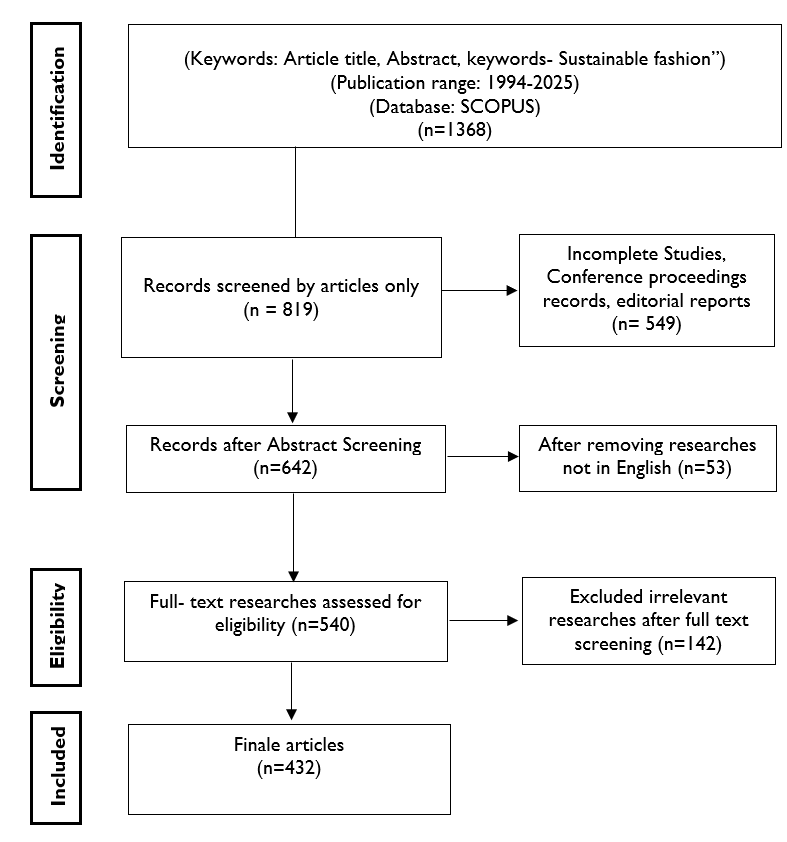
The study investigates the factors of the adoption of sustainable fashion practices by the textile industry and the interrelationship between these factors. The methodology consists of several phases that integrate literature review, expert opinion through the Delphi method, and qualitative modeling to identify, validate, and analyze these barriers (Abdelmeguid et al., 2024). In the first phase, an extensive literature review was done. Figure 1 shows the systematic process of identifying these factors from existing literature. From 432 articles, 25 barriers were initially identified. In the second phase, following identifying barriers, through the Delphi method, expert panels were consulted to refine and validate these factors. The expert panel consisted of 15 participants, including professors, researchers, and professionals from the textile and sustainability sectors. Participants were selected through purposive sampling to ensure a diverse range of expertise.
The experts included academics and professionals specializing in sustainability and textile industry practices (Table 1 ). A structured purposive sampling technique was used to gather data, leveraging a questionnaire based on the 25 identified factors. The experts reviewed the factors on their suitability and validity, leading to the elimination of duplicate and overlapping factors. After several iterations, a refined list of 16 factors was shared with the experts for further validation, which are theoretically and practically relevant.
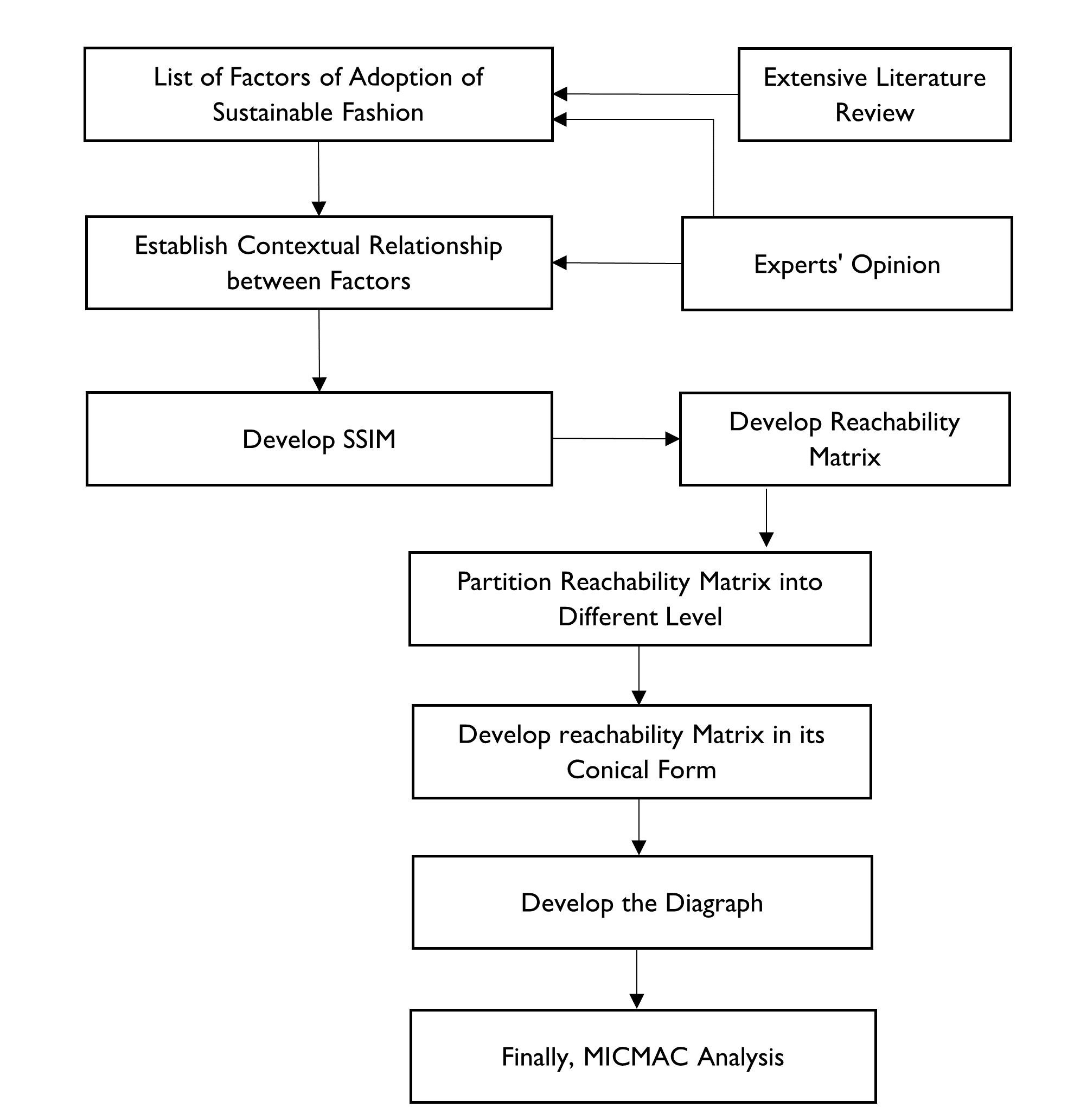
The expert group further refined ten factors for further analysis. Finally, in third phase, these factors were analysed by using TISM and MICMAC methodology. This technique is particularly suitable for exploring the hierarchical relationships and interdependencies among factors, and helps in building the theory. Unlike traditional ISM, TISM integrates paired comparisons and transitivity checks, enabling a more robust exploration of the "what," "why," and "how" of these interconnections (Agrawal & Vinodh, 2019). This approach provides insights into the hierarchical structure and strong transitive relationships among factors, whereas MICMAC categorizes the factors into dependency power and driving power (Azadnia et al., 2021). However, other methods like Fuzzy Cognitive Map and Decision making trial and evaluation laboratory help in understanding cause-effect relationships; they do not provide hierarchical structures or strong transitive relationships. TISM provides a qualitative causal relationship, like Analytic Hierarchy Process and Structural Equation Modeling analysis (Sushil, 2012). Figure 2 shows the steps of developing TISM and MICMAC analysis.
Step 1: Identification of Factors from Literature:
The first step in the creation of a theoretical framework using TISM-MICMAC analysis is to find the factors from the literature that go into the creation of the model that help in the adoption of sustainable fashion. An exhaustive literature review using the SCOPUS database gave a list of 25 factors, which were discussed with 15 experts (Table 1 ) initially, and based on the Delphi method, the list was limited to 10 factors that were found to have the maximum impact on the promotion of sustainable fashion.
| S.no | Field | Profile | Experience | Country |
|---|---|---|---|---|
| 1 | Academician | Professor | 30 years | India |
| 2 | Academician | Assistant professor | 11 years | UAE |
| 3 | Academician | Professor | 22 years | Dubai |
| 4 | Academician | Professor | 26 years | India |
| 5 | Academician | Associate Professor | 16 years | Malaysia |
| 6 | Academician | Associate Professor | 15 years | India |
| 7 | Academician | Associate Professor | 14 years | India |
| 8 | Industry | Audit manager | 25 years | India |
| 9 | Industry | Finance Manager | 22 years | India |
| 10 | Industry | Operation Manager | 18 years | India |
| 11 | Industry | Chief Engineer (R&D) | 22 years | India |
| 12 | Industry | Project Manager (R&D) | 20 years | India |
| 13 | Industry | Sales and marketing manager | 12 years | India |
| 14 | Industry | Supply chain manager | 10 years | India |
| 15 | Industry | Quality manager | 14 years | India |
Source- Authors' own creation
According to the Delphi method, the experts were given a questionnaire to determine the relevance and importance of various factors impacting the adoption of sustainable fashion. A detailed result depicting the results of both the academia and industry is presented in Table 2 and Table 3. The analysis from different academicians and industrialists was then calculated for their mean and standard deviation and consensus amongst the academic and industry experts respectively was calculated to see if the ratio is above 80%, which determines the hurdle rate. After getting results from both academia and industry the results of both these groups are combined and the final priority list of factors is determined and used for analysis further.
Round 1: Academia Perspective
In the first Delphi round, academic experts rated the 10 factors based on their perceived impact on sustainable fashion adoption using a 5-point Likert scale (1 = Not Important, 5 = Very Important).
| Factor (Code) | Mean Score | Standard Deviation | Consensus (%) |
|---|---|---|---|
| A1: Consumer Awareness & Education | 4.85 | 0.41 | 97% |
| A2: Environmental Regulations & Policies | 4.80 | 0.38 | 96% |
| A3: CSR | 4.65 | 0.47 | 94% |
| A4: Ethical Labor Practices | 4.50 | 0.55 | 90% |
| A5: Technological Innovations | 4.45 | 0.58 | 89% |
| A6: Circular Economy Models | 4.40 | 0.62 | 88% |
| A7: Brand Differentiation & Competitive Advantage | 4.25 | 0.65 | 85% |
| A8: Pressure from Investors & Stakeholders | 4.15 | 0.72 | 83% |
| A9: Global Sustainability Goals (SDGs) | 4.10 | 0.75 | 82% |
| A10: Transparency & Traceability in Supply Chains | 4.05 | 0.80 | 81% |
Source: Author's creation
Academia's perspective, shown in Table 2 , highlights Consumer awareness (A1) and regulations (A2) as the most highly ranked factors, indicating that academic experts view education and policy as primary enablers of sustainable fashion. Technology (A5) and circular economy (A6) ranked lower, suggesting that academia sees these as secondary enablers dependent on policy and education.
Round 2: Industry Perspective
The second Delphi round was conducted with industry experts, who rated the same 10 factors based on their perceived industry impact using the same Likert scale.
The industrialist perspective shown in Table 3 ranked CSR (A3) as the highest, reflecting that industry leaders see corporate responsibility as the most important driver of sustainability. Technology (A5), circular economy (A6), and investor pressure (A8) ranked significantly higher in the industry compared to academia, suggesting that market forces and innovation are stronger motivators for businesses than regulatory enforcement alone. Environmental policies (A2) ranked lower in the industry than in academia, indicating that industry experts may view policy compliance as reactive rather than a proactive driver of change.
Round 3: Merging Academic & Industry Perspectives
In the final Delphi round, we integrated the results and established a weighted ranking system to reflect both perspectives.
| Factor (Code) | Mean Score | Standard Deviation | Consensus (%) |
|---|---|---|---|
| A3: CSR | 4.90 | 0.32 | 98% |
| A5: Technological Innovations | 4.85 | 0.40 | 97% |
| A6: Circular Economy Models | 4.75 | 0.44 | 95% |
| A8: Pressure from Investors & Stakeholders | 4.70 | 0.48 | 94% |
| A4: Ethical Labor Practices | 4.60 | 0.53 | 92% |
| A1: Consumer Awareness & Education | 4.50 | 0.60 | 90% |
| A10: Transparency & Traceability in Supply Chains | 4.45 | 0.62 | 89% |
| A2: Environmental Regulations & Policies | 4.40 | 0.68 | 88% |
| A7: Brand Differentiation & Competitive Advantage | 4.30 | 0.70 | 86% |
| A9: Global Sustainability Goals (SDGs) | 4.25 | 0.75 | 85% |
Source: Author's creation
The final results are shown in Table 4 , highlighting Consumer awareness (A1as the top-ranked factor, emphasizing that both academia and industry agree on the importance of educating consumers on sustainability. Technology (A5) and CSR (A3) gained prominence due to industry emphasis, aligning with the TISM-MICMAC results, where these factors acted as linking enablers. Regulatory policies (A2) ranked lower than expected in the industry but remained crucial for academia, suggesting that policy acts as a facilitator rather than a primary driver. Brand differentiation (A7) and traceability (A10) were ranked the lowest, confirming that they are outcomes rather than drivers in sustainable fashion adoption. However, to test the robustness of the results TISM-MICMAC methodology is used further to see if the priority of the factors remains the same or is changed.
| Factor (Code) | Final Weighted Score | Final Rank |
|---|---|---|
| A1: Consumer Awareness & Education | 4.68 | 1 |
| A2: Environmental Regulations & Policies | 4.60 | 2 |
| A3: CSR | 4.58 | 3 |
| A5: Technological Innovations | 4.65 | 4 |
| A6: Circular Economy Models | 4.58 | 5 |
| A8: Pressure from Investors & Stakeholders | 4.52 | 6 |
| A4: Ethical Labor Practices | 4.55 | 7 |
| A10: Transparency & Traceability in Supply Chains | 4.40 | 8 |
| A9: Global Sustainability Goals (SDGs) | 4.38 | 9 |
| A7: Brand Differentiation & Competitive Advantage | 4.28 | 10 |
Source: Author's creation
Step 2: Creation of Structural Self-Interaction Matrix:
Experts were presented with a detailed questionnaire that had pairwise relationships and hence 100 (10*10 ) questions, and were asked to give a yes/no answer along with the reason in case the answer was yes. The SSIM was developed based on expert evaluations, where each factor's relationship was assessed using a structured questionnaire. Experts were asked to determine whether one factor influences another, resulting in a pairwise comparison matrix. The Reachability Matrix was then derived by converting qualitative judgments into binary values (0 or 1), establishing direct and transitive links. MICMAC analysis further categorizes factors into four quadrants (Autonomous, Dependent, Linkage, and Independent), providing insights into the system's structural stability.
On the basis of the filled responses, a SSIM was created, which is a 10*10 matrix representing results in the form of -V, A, X and O (Table 5) WHERE
V (Vertical) indicates that the factor in the row influences the factor in the column.
A (Alternative) signifies that the factor in the column influences the factor in the row.
X (Cross) denotes that the factors influence each other mutually.
O (Null) represents that there is no influence between the factors.
This matrix serves as the foundation for further analysis, helping to establish the hierarchical relationships between the factors.
| Variables | A1 | A2 | A3 | A4 | A5 | A6 | A7 | A8 | A9 | A10 |
|---|---|---|---|---|---|---|---|---|---|---|
| A1 | X | V | V | V | V | V | V | X | O | |
| A2 | V | V | V | V | O | V | A | V | ||
| A3 | O | X | X | O | X | O | V | |||
| A4 | A | O | O | A | O | V | ||||
| A5 | A | V | A | A | V | |||||
| A6 | O | A | A | V | ||||||
| A7 | A | O | O | |||||||
| A8 | O | V | ||||||||
| A9 | V | |||||||||
| A10 |
Source: Author's creation
Step 3: Creation of Initial Reachability Matrix:
After the creation of SSIM matrix, the results of experts are aggregated, and based on the consensual relationship a binary matrix showing values as "1" and "0" is created in the initial reachability matrix (Table 6) where 1 denotes the presence of a direct relationship between the factors and 0 provides otherwise.
| Variables | A1 | A2 | A3 | A4 | A5 | A6 | A7 | A8 | A9 | A10 | Driving Power |
|---|---|---|---|---|---|---|---|---|---|---|---|
| A1 | 1 | 1 | 1 | 1 | 1 | 1 | 1 | 1 | 1 | 0 | 10 |
| A2 | 1 | 1 | 1 | 1 | 1 | 1 | 0 | 1 | 0 | 1 | 10 |
| A3 | 0 | 0 | 1 | 0 | 1 | 1 | 0 | 1 | 0 | 1 | 7 |
| A4 | 0 | 0 | 0 | 1 | 0 | 0 | 0 | 0 | 0 | 1 | 2 |
| A5 | 0 | 0 | 1 | 1 | 1 | 0 | 1 | 0 | 0 | 1 | 7 |
| A6 | 0 | 0 | 1 | 0 | 1 | 1 | 0 | 0 | 0 | 1 | 7 |
| A7 | 0 | 0 | 0 | 0 | 0 | 0 | 1 | 0 | 0 | 0 | 1 |
| A8 | 0 | 0 | 1 | 1 | 1 | 1 | 1 | 1 | 0 | 1 | 7 |
| A9 | 1 | 1 | 0 | 0 | 1 | 1 | 0 | 0 | 1 | 1 | 10 |
| A10 | 0 | 0 | 0 | 0 | 0 | 0 | 0 | 0 | 0 | 1 | 1 |
| A10 | 3 | 3 | 6 | 5 | 7 | 6 | 4 | 4 | 2 | 8 |
Source: Author's creation
Step 4: Creation of Final Reachability Matrix based on Transitive Links:
SSIM only shows direct links between factors; however, there are instances where there are no direct links, but the links are indirect/transitive. For instance, Consumer awareness and demand or CSR Knowledge sustainability education (A1) has no direct link with Transparency and traceability in supply chains (A10) but there is a presence of an indirect link as A1 may influence another factor, such as Technological Innovations in Sustainable Materials (A5), which in turn impacts A10. All such transitive links are identified and are highlighted with 1* in Table 7.
| Variables | A1 | A2 | A3 | A4 | A5 | A6 | A7 | A8 | A9 | A10 | Driving Power |
|---|---|---|---|---|---|---|---|---|---|---|---|
| A1 | 1 | 1 | 1 | 1 | 1 | 1 | 1 | 1 | 1 | 1* | 10 |
| A2 | 1 | 1 | 1 | 1 | 1 | 1 | 1* | 1 | 1* | 1 | 10 |
| A3 | 0 | 0 | 1 | 1* | 1 | 1 | 1* | 1 | 0 | 1 | 7 |
| A4 | 0 | 0 | 0 | 1 | 0 | 0 | 0 | 0 | 0 | 1 | 2 |
| A5 | 0 | 0 | 1 | 1 | 1 | 1* | 1 | 1* | 0 | 1 | 7 |
| A6 | 0 | 0 | 1 | 1* | 1 | 1 | 1* | 1* | 0 | 1 | 7 |
| A7 | 0 | 0 | 0 | 0 | 0 | 0 | 1 | 0 | 0 | 0 | 1 |
| A8 | 0 | 0 | 1 | 1 | 1 | 1 | 1 | 1 | 0 | 1 | 7 |
| A9 | 1 | 1 | 1* | 1* | 1 | 1 | 1* | 1* | 1 | 1 | 10 |
| A10 | 0 | 0 | 0 | 0 | 0 | 0 | 0 | 0 | 0 | 1 | 1 |
| Dependent power | 3 | 3 | 7 | 8 | 7 | 7 | 8 | 7 | 3 | 9 |
Source: Author's creation
Step 5: Creation of Levels:
After the identification of various direct and indirect links, the factors are classified based on their driving and dependence power, which is then used to classify them on the basis of reachability, antecedent, and intersection set (Table 8). Iterations are then run till there is a final set of factors that are classified into different levels based on their importance in the theoretical framework (Table 9).
| Factors | Reachability Set | Antecedent Set | Intersection Set | Level |
|---|---|---|---|---|
| A1 | 1, 2, 3, 4, 5, 6, 7, 8, 9, 10 | 1, 2, 9 | 1, 2, 9 | |
| A2 | 1, 2, 3, 4, 5, 6, 7, 8, 9, 10 | 1, 2, 9 | 1, 2, 9 | |
| A3 | 3, 4, 5, 6, 7, 8, 10 | 1, 2, 3, 5, 6, 8, 9 | 3, 5, 6, 8 | |
| A4 | 4, 10 | 1, 2, 3, 4, 5, 6, 8, 9 | 4 | |
| A5 | 3, 4, 5, 6, 7, 8, 10 | 1, 2, 3, 5, 6, 8, 9 | 3, 5, 6, 8 | |
| A6 | 3, 4, 5, 6, 7, 8, 10 | 1, 2, 3, 5, 6, 8, 9 | 3, 5, 6, 8 | |
| A7 | 7 | 1, 2, 3, 5, 6, 7, 8, 9 | 7 | 1 |
| A8 | 3, 4, 5, 6, 7, 8, 10 | 1, 2, 3, 5, 6, 8, 9 | 3, 5, 6, 8 | |
| A9 | 1, 2, 3, 4, 5, 6, 7, 8, 9, 10 | 1, 2, 9 | 1, 2, 9 | |
| A10 | 10 | 1, 2, 3, 4, 5, 6, 8, 9, 10 | 10 | 1 |
| 1 2 3 4 | ||||
Source: Author's creation
| Factors | Reachability Set | Antecedent Set | Intersection Set | Level |
|---|---|---|---|---|
| A1 | 1, 2, 9 | 1, 2, 9 | 1, 2, 9 | 4 |
| A2 | 1, 2, 9 | 1, 2, 9 | 1, 2, 9 | 4 |
| A3 | 3, 5, 6, 8 | 1, 2, 3, 5, 6, 8, 9 | 3, 5, 6, 8 | 3 |
| A4 | 4 | 1, 2, 3, 4, 5, 6, 8, 9 | 4 | 2 |
| A5 | 3, 5, 6, 8 | 1, 2, 3, 5, 6, 8, 9 | 3, 5, 6, 8 | 3 |
| A6 | 3, 5, 6, 8 | 1, 2, 3, 5, 6, 8, 9 | 3, 5, 6, 8 | 3 |
| A7 | 7 | 1, 2, 3, 5, 6, 7, 8, 9 | 7 | 1 |
| A8 | 3, 5, 6, 8 | 1, 2, 3, 5, 6, 8, 9 | 3, 5, 6, 8 | 3 |
| A9 | 1, 2, 9 | 1, 2, 9 | 1, 2, 9 | 4 |
| A10 | 10 | 1, 2, 3, 4, 5, 6, 8, 9, 10 | 10 | 1 |
Source: Author's creation
Step 6: Creation of Diagraph and Interpretive Matrix:
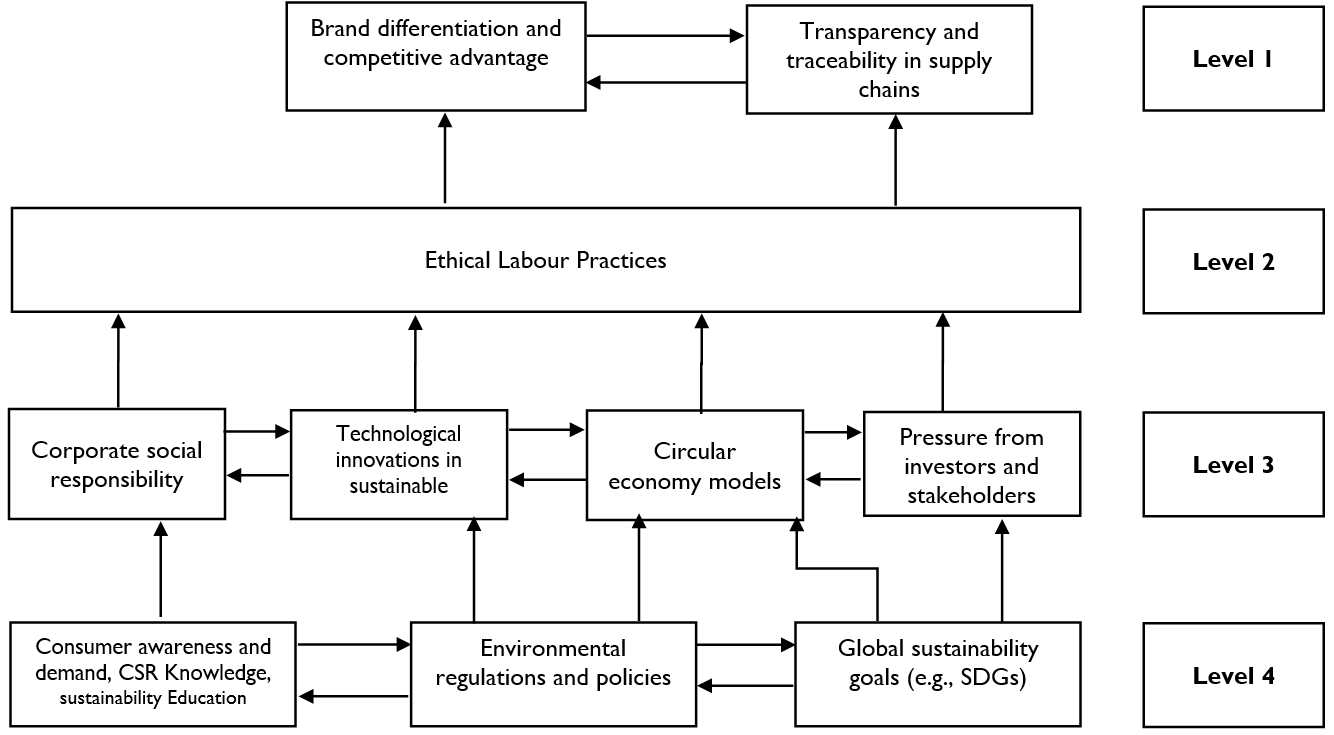
Based on the driving and dependence power, the factors are clubbed into various levels, which are presented in the diagram (Figure 3), and the reason for the relationship is explained in the Interpretive matrix (Table 11). This is the addition of TISM over the traditional models that do not explain the reason for the existence of the relationship between the factors.
Step 7: MICMAC Analysis
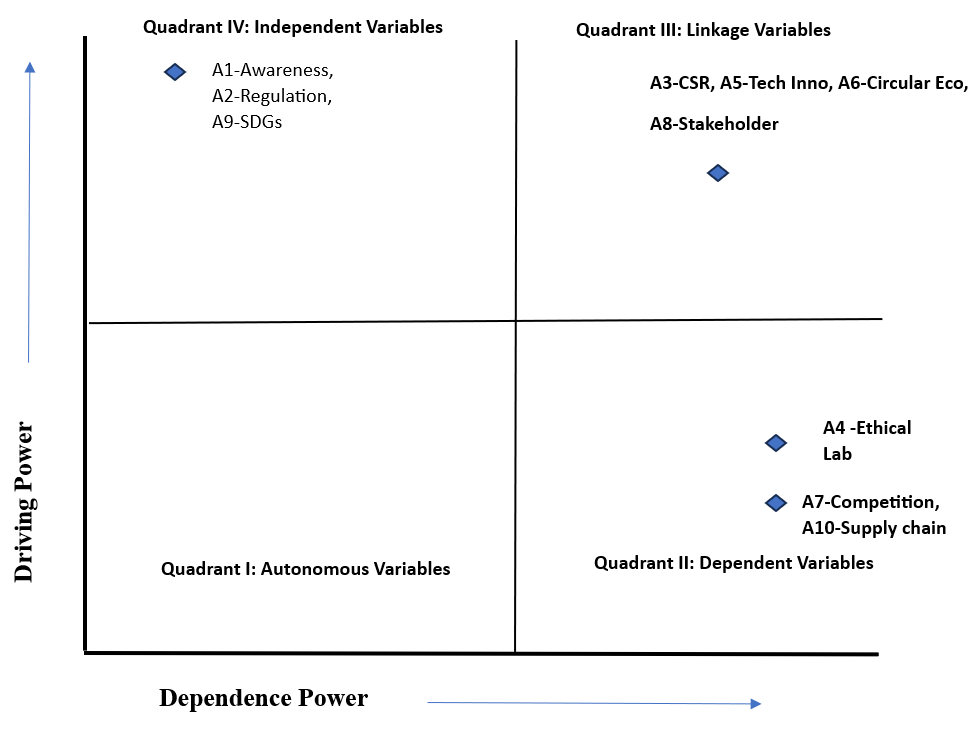
MICMAC analysis (Matrice d'Impacts Croisés Multiplication Appliquée à un Classement) is a strategic analysis tool used to identify and categorize the driving and dependent variables in complex systems (Table 10). It gives the result as shown in Figure 4, in four quadrants, namely Autonomous, Dependent, Linkage, and Independent variables, thereby enhancing the robustness of the TISM results.
| Variables | A7 | A10 | A4 | A3 | A5 | A6 | A8 | A1 | A2 | A9 | Driving Power | Level |
|---|---|---|---|---|---|---|---|---|---|---|---|---|
| A7 | 1 | 0 | 0 | 0 | 0 | 0 | 0 | 0 | 0 | 0 | 1 | 1 |
| A10 | 0 | 1 | 0 | 0 | 0 | 0 | 0 | 0 | 0 | 0 | 1 | 1 |
| A4 | 0 | 1 | 1 | 0 | 0 | 0 | 0 | 0 | 0 | 0 | 2 | 2 |
| A3 | 1* | 1 | 1* | 1 | 1 | 1 | 1 | 0 | 0 | 0 | 7 | 3 |
| A5 | 1 | 1 | 1 | 1 | 1 | 1* | 1* | 0 | 0 | 0 | 7 | 3 |
| A6 | 1* | 1 | 1* | 1 | 1 | 1 | 1* | 0 | 0 | 0 | 7 | 3 |
| A8 | 1 | 1 | 1 | 1 | 1 | 1 | 1 | 0 | 0 | 0 | 7 | 3 |
| A1 | 1 | 1* | 1 | 1 | 1 | 1 | 1 | 1 | 1 | 1 | 10 | 4 |
| A2 | 1* | 1 | 1 | 1 | 1 | 1 | 1 | 1 | 1 | 1* | 10 | 4 |
| A9 | 1* | 1 | 1* | 1* | 1 | 1 | 1* | 1 | 1 | 1 | 10 | 4 |
| Dependence Power | 8 | 9 | 8 | 7 | 7 | 7 | 7 | 3 | 3 | 3 | ||
| Level | 1 | 1 | 2 | 3 | 3 | 3 | 3 | 4 | 4 | 4 |
Source: Author's creation
| Variables | A1 | A2 | A3 | A4 | A5 | A6 | A7 | A8 | A9 | A10 |
|---|---|---|---|---|---|---|---|---|---|---|
| Consumer Awareness and Sustainability Education (A1) | Increases demand for more stringent and effective environmental policies | informing and shaping the expectations and demands of consumers regarding corporate behavior | shapes consumer expectations and behaviors towards the ethical aspects of production | drives consumer demand for products | increases consumer demand for products and services that adhere to the principles of the circular economy | shape consumer preferences toward brands that demonstrate a commitment to sustainability by creating a framework in which companies can distinguish themselves through compliance and leadership in environmental practices | shapes the expectations and demands these groups place on companies. | Empower the consumers to become active participants in achieving these goals. | elevates consumer expectations for ethical sourcing and production practices | |
| Environmental regulations and policies (A2) | highlights important sustainability issues that need attention | set the legal and ethical standards that companies must follow. | It mandates standards that ensure fair treatment and safe working conditions for employees | It sets standards and requirements that necessitate the development of new, environmentally friendly materials. | by mandating or encouraging practices that maximize resource efficiency and minimize waste | by setting the legal and ethical standards that companies must follow. | by aligning national or local practices with international sustainability benchmarks. | by mandating standards and requirements that ensure greater visibility and accountability | ||
| CSR initiatives (A3) | No influence | No influence | by embedding social responsibility into the core values and operations of a company | by creating a framework within which companies actively seek out and develop new, more sustainable materials and production methods | by integrating principles of sustainability and resource efficiency into corporate strategies. | by positioning a company as a responsible and ethical leader in its industry. | It aligns a company's practices with the evolving expectations of these groups regarding sustainability and ethical behavior. | No influence | promotes practices that ensure accountability and visibility throughout the production and distribution processes. | |
| Ethical labor practices (A4) | No influence | No influence | No influence | No influence | No influence | No influence | No influence | No influence | promotes accountability for the working conditions and rights of workers throughout the production process. | |
| Technological innovations in sustainable materials (A5) | No influence | No influence | Enhance corporations' sustainability efforts and demonstrate their commitment to social and environmental responsibility. | creates safer and more sustainable working environments. | provides the necessary technologies and materials that facilitate to circular economy | allow companies to offer unique, eco-friendly products that stand out in the market. | Aligns a company's practices with the growing expectations for environmental responsibility and innovation | No influence | provides new methods and technologies that make it easier to track and verify the sustainability of materials throughout the entire supply chain | |
| Circular economy models (e.g., recycling, upcycling) (A6) | No influence | No influence | embedding principles of sustainability and resource efficiency into the core strategies and operations of a company | fosters more sustainable and socially responsible work environments. | creates a demand for new materials and technologies that support the principles of CE | positions companies as innovators and leaders in sustainability. | demonstrates the company's commitment to sustainable and innovative business practices | No influence | promotes practices that require a detailed understanding of the flow of materials and products through the supply chain. | |
| Brand differentiation and competitive advantage (A7) | No influence | No influence | No influence | No influence | No influence | No influence | No influence | No influence | No influence | |
| Pressure from investors and stakeholders (A8) | No influence | No influence | encourages companies to adopt more transparent, ethical, and sustainable practices | Companies to uphold fair, safe, and transparent working conditions throughout their operations and supply chains | pushes companies to adopt more environmentally responsible and future-proof practices. | encourages companies to shift from linear "take-make-dispose" models to more sustainable, circular practices. | encourages companies to adopt and highlight sustainable, ethical, and responsible business practices. | No influence | demand greater visibility into how and where products are sourced, manufactured, and distributed | |
| Global sustainability goals (e.g., SDGs) (A9) | Set international benchmarks and prioritize | serves as an international benchmarks that guide national and regional policymaking. | provides a globally recognized framework for businesses to align their CSR strategies with broader societal and environmental priorities | promotes decent work, human rights, and social justice as core components of sustainable development | encourages the development and adoption of materials that reduce environmental impact and support sustainable production | promotes sustainable resource management and waste reduction as essential components of global development | provides a globally recognized framework that companies can align with to demonstrate leadership in sustainability. | Set clear, internationally recognized benchmarks for what sustainable and responsible business practices should entail. | encourages businesses to adopt responsible sourcing, ethical labor practices, and environmentally sustainable operations. | |
| Transparency and traceability in supply chains (A10) | No influence | No influence | No influence | No influence | No influence | No influence | No influence | No influence | No influence |
Source: Authors' Compilation
Results
TISM analysis gives a four-level hierarchical model after various iterations, as shown in Figure 3. Transparency and traceability in supply chains (A10) and Brand differentiation and competitive advantage (A7) are the factors identified as the least influential, and consequently positioned at the uppermost layer, i.e, at level 1 of the diagraph. It suggests that these factors are not primary drivers of the adoption of sustainable fashion by the textile industry; rather, they may be subject to the influence of other, more critical factors. Transparency involves openly sharing information about the supply chain, while traceability ensures that every step of the production process can be tracked. Together, they enhance consumer trust and brand reputation, which is essential for differentiating in a competitive market. The integration of technologies like blockchain further strengthens these aspects by providing immutable records of sustainability efforts, thus offering a competitive edge (Shah et al., 2023). Transparency and traceability are interlinked concepts that facilitate sustainable practices by ensuring that all stages of the supply chain are visible and accountable. This visibility is crucial for verifying the use of environmentally friendly materials and ethical labor practices(Garcia-Torres et al., 2021).
Level 2 consists single factor i.e, Ethical labour practices (A 4), as it impacts the adoption of sustainable fashion by promoting practices that reduce environmental harm and improve social conditions of labour . Brand identity is an integral part of ethical labor practices; it significantly impacts the adoption of sustainable fashion by promoting eco-friendly choices and circular fashion initiatives, ultimately leading to a more responsible and ethical fashion industry (Perry et al., 2014).
Level 3 of the digraph comprises four factors namely CSR (A3), technological innovation in sustainable materials (A5), Circular economy models (A6), and pressure from stakeholders (A8). The factors clubbed at level 3 are crucial as they integrate factors at other levels as well.
For instance, CSR, technological innovation, and circular economy principles not only assist in enhancing brand reputation but also help in building consumer trust . This is because CSR helps in establishing a commitment to sustainability, while technological innovations facilitate the development of eco-friendly materials (Sandberg & Hultberg, 2021).
Circular economy models, such as recycling and upcycling, further support these efforts by promoting resource efficiency. However, pressure from stakeholders drives brands to adopt these practices, ensuring alignment with market demand for sustainability in fashion (Abdelmeguid et al., 2024).
Finally, level 4 consists of three factors: Consumer awareness and demand, CSR Knowledge, Sustainability Education (A1); Environmental regulations and policies (A2); and Global sustainability goals (e.g., SDGs) (A9). Nowadays, consumers are aware and increasingly seek environmentally friendly options, which also drives demand for the fashion industry to adopt sustainable practices. CSR knowledge enhances this by encouraging brands to prioritize sustainability (Peleg Mizrachi & Tal, 2022). Environmental regulations and policies create a framework that mandates sustainable practices, while global sustainability goals like the SDGs a roadmap for achieving these objectives . Together, these factors foster a culture of accountability and innovation, ultimately leading to the widespread adoption of sustainable fashion. It is also crucial for mitigating the environmental and social impacts of the fashion industry, which is one of the most polluting sectors globally.
Further, the MICMAC analysis (Matrice d'Impacts Croisés Multiplication Appliquée à un Classement) is a strategic analysis tool used to identify and categorize driving and dependent variables in complex systems, as shown in Figure 4 (Barve & Nayak, 2023). It provides four quadrants, namely Autonomous, Dependent, Linkage, and Independent.
The first quadrant, called the autonomous factor, has weak dependency power and driving power (Ben Ruben et al., 2023). In our study, out of ten factors, only one comes under this quadrant. Next is quadrant is dependent, factors that have high dependent power but weak driving or influencing power come under this, in this study factors-Transparency and traceability in supply chains, Brand differentiation and competitive advantage, and Ethical labor practices are the factors that are not the prime reasons for adoption of sustainable fashion but this indirectly affects successful adoption and also the magnitude of the effect is dependent on some other factors. The third quadrant consists of linkage factors that have high dependency power and high driving power, these factors are interlinked with other factors and provide stability to the entire system. In this study, CSR initiatives, Technological innovations in sustainable materials, Circular economy models (e.g., recycling, upcycling), and Pressure from investors and stakeholders are linkage variables. The final and fourth quadrant is independent, that has high driving power but weak dependent power , in this research factors Consumer awareness and demand, CSR Knowledge, and Sustainability Eductaion (A1), and Environmental regulations and policies (A2), and Global sustainability goals (e.g., SDGs)(A9) are the independent factors that are most influential factors and be treated as top most reasons of adoption of sustaibable fashion by the textile industry.
The MICMAC analysis identified consumer awareness, CSR knowledge, and environmental regulations as the most influential factors driving sustainable fashion adoption. Transparency in supply chains and technological innovations were to play supportive roles. These insights suggest that government policies, corporate initiatives, and consumer education must align to achieve a sustainable textile industry.
Implication
Theoretical Implication
This study is a pioneering effort to identify and analyze the significant factors of adopting sustainable fashion in the textile industry. It is the first research of its kind to explore these factors using the Delphi-assisted TISM and MICMAC-based approach. Unlike other prior studies, this research delves into the interconnections of sustainable factors through these novel methodologies. This study applies TISM to partition factors into hierarchical levels and map their interconnections. This layered analysis enhances comprehension of how factors interact across various levels, providing a clear view of their interrelationships and hierarchy. This methodological innovation not only contributes significantly to research frameworks but also equips future researchers with insights to empirically test relationships between key factors identified through the TISM model. Furthermore, the MICMAC approach facilitates the classification of identified barriers into categories such as autonomous, independent, dependent, and linkage barriers, providing deeper insights into their nature and dynamics. By analyzing literature and gathering expert input, the study computes the driving and dependence power of each factor, placing them into one of four categories within the MICMAC framework. These categorizations and interrelations are visually represented in a MICMAC diagram, offering a structured understanding of the factors. We anticipate that this study will pave the way for further empirical investigations, helping researchers and practitioners better address the challenges of sustainable fashion adoption in the textile industry.
Managerial Implication
This study highlights and provides valuable insights for managers on sustainable fashion. The research identifies key factors like Consumer awareness and demand, CSR knowledge and Sustainability education (A1); Environmental regulations and policies(A2), and Global sustainability goals (e.g., SDGs)(A9). Managers are encouraged to address these factors of adoption sustainability by organizing knowledge transfer sessions with supply chain partners and implementing employee training programs to build a robust internal knowledge base. By fostering a culture of learning and collaboration, managers can ensure smoother cooperation among supply chain partners, thereby facilitating the adoption process. Additionally, the study emphasizes the importance of addressing another major obstacle, like water reduction, pollution, etc. The proposed framework offers managers a structured approach by categorizing and prioritizing factors. It provides a hierarchy that allows managers to assess their firm's unique situation, analyze each factor individually, and develop capabilities or practices to tactically overcome these challenges. For industry practitioners, we recommend integrating blockchain technology to improve transparency and traceability within supply chains.
Additionally, implementing mandatory sustainability training for employees can bridge the knowledge gap. Policymakers should consider financial incentives for companies adopting eco-friendly practices, such as tax breaks or green certification advantages. By taking these steps, managers can strategically navigate the road to successfully adopting sustainable fashion, paving the way for more sustainable and efficient practices in the textile industry.
Conclusion, Limitation, and Future Direction
This study concentrates on identifying key factors for the adoption of sustainability in the textile industry. By conducting an extensive review of scholarly literature, ten factors were identified. The research aims to pinpoint the most influential factors for the adoption of sustainable fashion. To evaluate the impact and significance of these factors, expert opinions were solicited, and the relationships among them were analyzed using an integrated TISM-MICMAC methodology. The application of this methodology highlighted three most influential factors that significantly impede sustainability fashion: Consumer awareness and demand, CSR Knowledge, Consumer awareness(A1) and Sustainability Education, and Environmental regulations and policies (A2), and Global sustainability goals (e.g., SDGs)(A9).
These factors represent the most effective factors that contribute to the successful implementation of sustainable fashion within the industry. The study also acknowledges several constraints and limitations that could affect its findings. One key limitation is the potential bias in expert opinions, which might influence the results and interpretations.
Variations in expert perspectives when scaling factors-whether through binary decisions, fuzzy numbers, or Likert scales-could also lead to discrepancies in the data. Additionally, integrating these diverse viewpoints posed challenges for the analysis. Furthermore, the research scope is specifically confined to sustainability practices in the textile sector, limiting its broader applicability.
Addressing these most important factors is essential for advancing sustainability in the industry. Despite its limitations, this study provides a valuable theoretical framework for understanding and adopting sustainable fashion. It also serves as a foundation for future research and practical interventions aimed at fostering sustainability in the textile domain.
Furthermore, the theoretical model proposed by this study can be empirically validated through structural equation modeling to quantify the impact of these factors, as TISM does not assign weights to factors that lack their relative importance and techniques.
Conflict Statement
The author(s) declared no potential conflicts of interest with respect to the research, authorship, and/or publication of this article
Funding Statement
The author(s) received no financial support for the research, authorship, and/or publication of this article.
References
About contributors

Kiran Yadav
Department of Commerce, PGDAV College, University of Delhi, New Delhi, India
India
Shikha Daga
Department of Commerce, PGDAV College, University of Delhi, New Delhi, India
India
Anubha Saini
Department of Management Studies, Ram Lal Anand College, University of Delhi, New Delhi, India
India