





Abstract
Sustainable tourism has emerged as a key factor of the global tourism industry, driven by the need to balance environmental, social, and economic goals. The integration of Artificial Intelligence (AI) into this domain presents revolutionary opportunities, yet it requires a thorough understanding of its potential and challenges. This study aims to provide a state-of-the-art overview of the literature on sustainable tourism and AI, offering significant contributions to advancing this field. Through a bibliometric analysis and a comprehensive review of 76 articles retrieved from the Web of Science and Scopus databases, we identify current trends, opportunities, challenges, and strategies for AI adoption in sustainable tourism and hospitality. The results show a growing scholarly interest in AI applications for sustainable tourism since 2020, though research remains predominantly exploratory and underdeveloped. Existing studies primarily conceptualize AI as a methodological tool for addressing sustainability challenges, with limited attention to its practical implementation within the tourism sector. This study contributes to the existing literature by offering an in-depth discussion of the progress of technology adoption in tourism and hospitality, along with strategies and practical implications for various stakeholders.
Introduction
The tourism industry is undergoing rapid transformation, with technological innovations playing an important role in shaping its future (Loureiro & Nascimento, 2021). Among these innovations, Artificial Intelligence (AI) has emerged as a relevant dimension capable of improving several aspects of tourism, from enhancing customer experiences (Samala et al., 2020) to operational cost-efficiency (Samara et al., 2020). The integration of AI into tourism development creates new opportunities for promoting sustainability (Majid et al., 2023), especially in response to environmental and social pressures due to overtourism. This opportunity is related to the United Nations' Sustainable Development Goals (SDGs) (Nunkoo et al., 2021). The alignment of AI-driven innovations with these goals might enhance resource efficiency, reduce environmental impact, and foster sustainable practices within the tourism sector. Despite growing interest in AI within tourism, a thorough analysis of its effects on sustainable tourism development is needed (Cristian & Tileagă, 2024).
Sustainable tourism development seeks to balance economic growth with environmental preservation and social equity, ensuring that tourism activities benefit both current and future generations (Streimikiene et al., 2020). AI has the potential to advance this goal by supporting solutions to complex environmental challenges. It can also help create personalized, accessible, and more responsible tourism experiences that align with broader sustainability objectives. While several studies have examined AI’s applications in tourism, few have focused explicitly on its role in advancing sustainability objectives. Moreover, much of the existing research is dispersed across different subfields, leading to a fragmented understanding of AI's broader implications for sustainable tourism (Jain et al., 2024). This fragmentation exists across focus, methodological, geographic, and thematic dimensions (Tuo et al., 2024). Accordingly, this condition might limit integrative knowledge and theoretical comprehension.
Therefore, despite the promising intersections between AI and sustainable tourism, the academic literature in this area remains extensive, with limited synthesis of key contributions and trends. This paper addresses this need, as little is known about how AI can specifically contribute to sustainability in tourism. To address this opportunity, we conduct a bibliometric literature review using the PRISMA framework (Moher et al., 2009) to systematically analyze the existing body of research on the impact of AI on sustainable tourism development. This analysis allows for consolidating research findings and emphasizing the thematic areas and methodological approaches used in studies on AI's impact on sustainable tourism. It also identifies key contributors, emerging trends, and future research opportunities that can guide scholars and practitioners.
This study’s objective is to provide an overview of the state-of-the-art literature related to sustainable tourism and technological innovations, offering insights for further advancing this domain. We employ a bibliometric analysis and a comprehensive review of 76 articles, collected from the Web of Science and Scopus databases, to: (i) explore and discuss the most relevant contributions in the publication landscape; (ii) spotlight key challenges and emerging themes; (iii) shape future research agendas. According to Rowley & Slack (2004), literature reviews are important for supporting the identification of a research topic, question, or hypothesis, building an understanding of theoretical concepts and terminology, and facilitating the compilation of a bibliography or list of sources consulted.
This paper is structured as follows. First, the theoretical background provides the conceptual foundations for the paper's topic. Second, the methodology section used to conduct the bibliometric analysis is presented, outlining the data collection process, selection criteria, and analytical tools employed. Third, the findings are discussed, exploring emerging trends and identifying potential gaps and opportunities for future research.
Conceptual Background
Sustainable Tourism: Context and Relevance
Sustainable tourism can be defined as tourism that seeks to balance the needs of tourists, the environment, and host communities, ensuring that tourism activities benefit present and future generations (Streimikiene et al., 2020). It is centred on three core pillars: environmental protection, social equity, and economic development (Bramwell & Lane, 1993). While earlier sustainable tourism research often relied on the Triple Bottom Line (Elkington, 1997), or the Pyramid of Corporate Social Responsibility (Carroll, 2021) constructs, more recent approaches have evolved to integrate frameworks such as Environmental, Social, and Governance (ESG) (e.g., Mishra & Pandey, 2025; Putzer & Posza, 2024) and the United Nations’ Sustainable Development Goals (SDGs) (e.g., Fauzi, 2023; Nunkoo et al., 2021). According to the literature, sustainable tourism aims to minimize the negative environmental and social impacts of tourism while fostering long-term benefits for local communities (Hunter, 2002). At the same time, the tourism sector plays a critical role in achieving the SDGs, particularly Goal 8 (Decent Work and Economic Growth), Goal 12 (Responsible Consumption and Production), and Goal 13 (Climate Action), as reported by the United Nations World Tourism Organization (United Nations World Tourism Organization, 2018). These goals align with the principles of sustainable tourism by promoting resource efficiency, reducing environmental impact, and encouraging responsible consumption and production patterns in tourism activities. Tourism is often linked to overtourism, which leads to overcrowding and environmental degradation and raises serious concerns for communities (Damnjanovic, 2021). This makes it even more crucial to integrate sustainable practices within the industry to ensure that tourism continues to be a driver of social and economic development without compromising environmental sustainability and sustainable tourism equity (Arya et al., 2024). While several tourism groups and enterprises are doing so, the fact is that much more could be done. According to the literature (e.g., Budeanu et al., 2016), sustainable tourism offers opportunities to enhance environmental conservation and social equity, but it also faces several challenges. The overuse of resources, pollution, and the unequal sharing of tourism's benefits can hold back meaningful progress. To address these challenges, tourism policies must adopt a different approach, such as sustainable frameworks that focus on efficient resource management and community involvement (e.g., Shoeb-Ur-Rahman et al., 2019). At the same time, technological innovations such as AI offer significant opportunities to support the transformation of tourism towards sustainability by improving efficiency and enhancing environmental stewardship (Loureiro & Nascimento, 2021).
Artificial Intelligence: Definitions and Applications
AI refers to the simulation of human intelligence processes by machines, particularly computer systems (Russell & Norvig, 2021). These processes include learning (acquiring and applying knowledge), reasoning (solving problems), and self-correction. According to the authors, AI is not new and is an interdisciplinary field encompassing subfields such as machine learning, natural language processing, and neural networks, which equip machines with the ability to handle tasks traditionally associated with human cognition. AI has already demonstrated its revolutionary potential across various industries, and tourism is no exception (e.g., Gretzel et al., 2015; Suanpang & Pothipassa, 2024). The social and economic impacts of intelligent automation on the tourism sector, local communities, and the broader economy become significant as conventional hospitality and tourism tasks are increasingly performed by intelligent machines (Tong et al., 2022).
AI applications in tourism are diverse and have already begun to reshape the industry in various ways, including customer experience, operational efficiency, and resource management (Majid et al., 2023). When it comes to customer experience, AI-driven tools such as chatbots and virtual assistants are transforming customer service by offering personalized recommendations tailored to travelers' preferences and past behaviors (e.g., Gretzel et al., 2015; Samala et al., 2020). Additionally, AI is being used to suggest destinations, accommodations, and activities tailored to individual tastes. Regarding operational efficiency, AI-driven tools help businesses optimize operations, from dynamic pricing models that adjust rates in real time to resource management systems that improve logistics (Cristian & Tileagă, 2024). In the context of sustainable resource management, AI systems can analyze data to optimize energy consumption, manage waste, and reduce carbon footprints (e.g., Patrichi, 2024). For example, AI can predict tourist arrivals, allowing for better management of transportation, accommodations, and tourist sites to reduce overcrowding and minimize environmental degradation.
Despite its revolutionary potential, implementing AI in tourism presents several challenges. One key issue is the high initial cost of adopting AI technologies, which may be a barrier for smaller businesses (Wang et al., 2025). Additionally, according to the same authors, AI systems require large datasets to function effectively, raising concerns about data privacy and security. The collection and use of personal data for AI-driven applications raise critical privacy concerns, necessitating stringent safeguards to ensure responsible, ethical practices (Olawade et al., 2024). There are several concerns about the social implications of AI, including job displacement and inequality in access to AI-driven solutions (e.g., Subaveerapandiyan & Shimray, 2024). From an environmental perspective, energy consumption poses a significant challenge for the deployment of AI systems, as the high computational demands of advanced models impose substantial energy requirements on data centers and AI infrastructure (Olawade et al., 2024).
Intersection of AI and Sustainable Tourism Development
AI plays a key role in advancing sustainable tourism by helping to use resources more efficiently, reduce waste, and improve the overall performance of tourism operations. At the same time, AI can analyze large amounts of data, enabling it to predict patterns and trends, helping businesses and policymakers make data-driven decisions aligned with sustainability objectives. Several examples illustrate how AI is already being used to promote sustainability in tourism, such as tourism forecasting, sustainable transport solutions, and smart destinations (e.g., Majid et al., 2023). Tourism forecasting is highly important, and AI-driven systems are being used to predict visitor numbers to popular destinations, enabling better crowd management and reducing the environmental strain caused by overtourism (Shafiee, 2024). At the same time, this can have an impact on smart destinations, since in smart cities and destinations, AI is being applied to monitor environmental factors, such as air and water quality, and to manage waste. Additionally, AI can benefit inclusive tourism by providing a personalized, tailored experience that accounts for individual preferences and disabilities (e.g., Suanpang & Pothipassa, 2024).
In another stream, governments and tourism authorities can leverage AI to create and implement more effective policies for sustainable tourism (Afaq et al., 2024). By incorporating AI into the policymaking process, they can improve the targeting of sustainability measures, monitor the success of sustainability initiatives, and adapt strategies based on real-time data, with a real impact on overcoming overtourism, for instance (Siddik et al., 2025). AI-powered initiatives, such as chatbots, can also help monitor tourist behavior, ensuring that sustainability initiatives are followed and identifying areas where additional interventions may be necessary (Majid et al., 2024).
Despite its revolutionary potential to create a more efficient, responsible, and sustainable tourism sector, the intersection of AI and sustainable tourism also presents a challenging academic avenue, given the rapid expansion of research in this field.
Materials and Methods
A comprehensive study was conducted as a bibliometric literature review to fulfill our research objectives, namely:
-
To systematically identify and select relevant literature on the impact of AI on sustainable tourism development;
-
To map the evolution of research on AI's impact on sustainable tourism development;
-
To identify leading contributors (authors, institutions, and countries) on the topic, as well as patterns of research collaboration and networking;
-
To analyse thematic areas and research clusters;
-
To assess the methodological approaches and analytical techniques used;
-
To understand emerging trends and patterns in the topic;
-
To identify gaps and opportunities for future research directions.
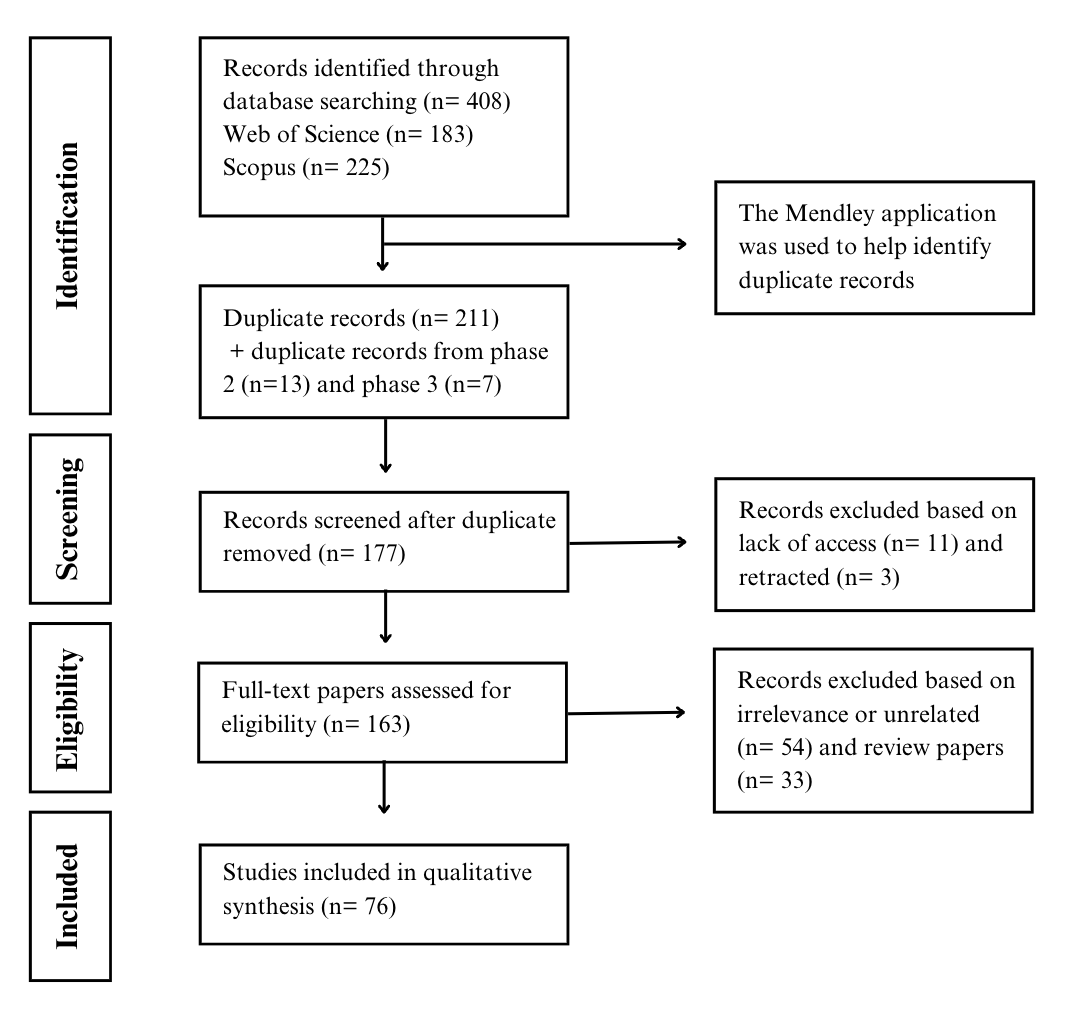
Bibliometric analysis was employed due to its numerous advantages, enabling the evaluation of academic research using objective criteria (Kashem et al., 2023). The use of bibliometrics in literature reviews is steadily growing, as it relies on data from reliable databases and utilizes statistical programs specifically designed for this purpose (Pardosi et al., 2024). Our study followed the Preferred Reporting Items for Systematic Reviews and Meta-Analyses (PRISMA) statement guidelines by Moher et al. (2009). The PRISMA framework helped strengthen the structure of this article (Figure 1).
In this study, we integrated bibliometric techniques to explore the growing body of literature on the application of AI in sustainable tourism. The methods are thoroughly detailed in the following order: Selection of bibliometric databases; Search strategy; Inclusion and exclusion criteria; and Data analysis plan.
Selection of Bibliometric Databases
To understand the interconnectivity among the themes of AI, tourism, and sustainability, we searched the Scopus and Web of Science (WoS) databases for relevant literature. Scopus and WoS are the two most widely used databases for bibliometric analysis (Verma et al., 2021; Blanco-Moreno et al., 2023; Yong-Hak, 2013), Scopus provides broader coverage, advanced search filters, and data analysis tools to improve data management. On the other hand, the WoS database is recognized as a reputable source for academic publishing and citation records, offering extensive access to globally renowned research (Birkle et al., 2020).
Search Strategy
The underlying premise of the applied methodology is grounded in the principle that keywords in scientific literature serve as direct indicators of the primary research topics and, consequently, reflect the nature of the data used in the study (Ordóñez-Martínez et al., 2024). In general, keywords are selected by authors to accurately reflect the study's central themes. All research paper titles, abstracts, or keywords containing the search terms were evaluated.
Table 1. Keywords Strategy
| Operators / Keywords | OR | ||||
| 1st phase | 1st phase | 2nd phase | 3rd phase | ||
| AND | Artificial intelligence | AI | Smart tourism | ||
| Sustainability | Sustainable development | Ecotourism | Green tourism | Regenerative tourism | |
| Tourism | Hospitality | ||||
The initial search string included keywords such as ”artificial intelligence”, “sustainability”, and ”tourism”. Synonyms for artificial intelligence (AI) and Smart tourism are used with Boolean operators like “OR” to retrieve the complete set of papers. TheBoolean operator ”AND” is used to obtain the intersection of papers that cover topics related to artificial intelligence, sustainability, and tourism (Table 1).
During the document scanning process, new keywords such as ”smart tourism” and ”ecotourism” (2nd phase) and “green tourism” and “regenerative tourism” (3rd phase) were incorporated into the search strategy. Smart tourism focuses on integrating technology to enhance tourism experiences and management (Buhalis & Amaranggana, 2013), while ecotourism, green tourism, and regenerative tourism are primarily associated with the ecological and sustainable aspects of tourism (Pavlidis et al., 2022). These keywords were selected for their conceptual relevance in the sustainable tourism literature, thereby ensuring a more comprehensive coverage of the field without altering the original scope of the analysis.
Table 2 presents the annual distribution of publications on the topic of analysis with records identified through database searching. The data reveal a significant increase in the number of articles published, particularly from 2020, indicating a growing academic and practical interest in this emerging interdisciplinary field.
Table 2. Years and the Number of Papers
| Year(s) | 2015 | 2016 | 2017 | 2018 | 2019 | 2020 | 2021 | 2022 | 2023 | 2024 (jan-mar) |
| No. of papers 1st phase | 2 | 2 | 2 | 6 | 3 | 28 | 30 | 49 | 79 | 68 |
| No. of papers 2nd phase | 1 | 0 | 1 | 5 | 3 | 23 | 16 | 13 | 37 | 11 |
| No. of papers 3rd phase | 1 | 1 | 0 | 0 | 1 | 1 | 6 | 9 | 6 | 4 |
A recent systematic review by Majid et al. (2023) showed a notable increase in scholarly attention to intelligent automation in sustainable tourism, with a significant surge starting in 2015. The rapid advancement in AI capabilities has garnered increased scholarly attention and interest in the last decade. Other literature reviews have also analyzed papers published since 2015 and observed a significant increase in articles focused on smart tourism (Liu et al., 2023) or digital tourism research (Luo et al., 2022).
Inclusion and Exclusion Criteria
Inclusion and exclusion criteria were applied to the search results, which helped refine the selection process and extract the most relevant articles for the literature review. Criteria for including and excluding literature were established based on relevance, publication date, and quality, using the eligibility and rejection parameters outlined in Table 3. By applying these criteria, we ensured that only relevant, credible, and current sources were included.
Table 3. Eligibility and Rejection Criteria
| Eligibility criteria | Rejection criteria |
| Published from 2015 to March 2024. | Published before 2015. |
| Articles on AI for its use within the sustainable tourism domain were included. | Book chapters, patent applications, and communications are not reviewed. |
| Articles had to be either empirical or conceptual research | Meta analysis, systematic and bibliometric analysis, literature reviews |
| Articles were written in the English language | Articles written in languages other than English |
| Full-text availability | Articles without total open access |
The review includes literature published from 2015 to March 2024 and was limited to articles written in English to ensure consistency in language. The literature search generated 408 records. The bibliometric study was complemented by a thorough peer review of the selected scientific articles, identifying their application areas, methodologies, and the data/information used in their development. We eliminated duplicate and non-topic-related articles. For example, some articles referred to AI as 'Assessment Indicator' or 'Appreciative Inquiry,' terms that are unrelated to AI. After removing duplicate references and applying selection criteria, this search approach produced a final set of 76 records, the full texts of which were retrieved and evaluated for inclusion in the final analysis.
Data Analysis Plan
VOSviewer was selected for this study to perform the bibliometric analysis and visualize bibliometric networks. This open-source tool is widely recognized among scholars for visualizing literature maps, providing graphical representations of relationships and patterns between studies, such as keywords, co-authorship, and citation networks (Figueroa-Domecq et al., 2015).
We employed four different bibliometric analyses: co-authorship, citation, co-citation, and co-word. Co-authorship analysis allows us to identify the research groups actively contributing to the field of study (Ordóñez-Martínez et al., 2024). Citation analysis is a bibliometric approach used to explore the quantitative patterns and relationships among academic publications (Shiau et al., 2023). This study explores citation patterns across academic literature to identify the most highly cited and impactful papers. Co-citation analysis measures how frequently two articles are cited together within a collection of documents (Liu et al., 2023). Lastly, co-word analysis evaluates the frequency and patterns of keyword co-occurrence in a collection of documents (Liu et al., 2023). A co-word network or map can help identify clusters of frequently co-occurring words that represent particular topics or themes in a research field (Wider et al., 2023). By using this method, we can map connections among publications and gain insights into foundational works, dominant themes, ongoing trends, and emerging directions in sustainable AI tourism.
Results and Discussion
Co-authorship Analysis
Table 4 presents the top 10 most relevant authors based on the total number of citations in the database. The author with the highest number of citations (12,499) is Balsalobre-Lorente, Daniel, who also has the highest G-index (119) and H-index (59). The most contributed topics from 2019 to 2023 are Greenhouse Gas Emissions, Carbon Dioxide, and the Environmental Kuznets Curve. The author with the oldest publication is Ronan De Kervenoael (2020).
Table 4. Co-authorship (most relevant authors)
| Author | H-Index* | G-Index* | Total citations | No of documents | Publishing year start |
| Schwob, Alexandre | 7 | 14 | 457 | 14 | 2010 |
| Hasan, Rajibul | 15 | 33 | 1150 | 36 | 2013 |
| Goh, Edwin | 2 | 4 | 18 | 5 | 2003 |
| De kervenoael, Ronan | 15 | 32 | 1087 | 39 | 1998 |
| Shah, Syed ale raza | 18 | 33 | 1121 | 32 | 2020 |
| Pilar, Ladislav | 16 | 29 | 890 | 46 | 2012 |
| He, Chang | 15 | 27 | 737 | 110 | 2016 |
| Balsalobre-lorente, Daniel | 59 | 119 | 12499 | 184 | 2015 |
| Abbas, Jaffar | 59 | 91 | 8584 | 106 | 2017 |
| Das, Subhankar | 22 | 34 | 1258 | 59 | 2017 |
Countries' affiliations were assessed using the Environmental Performance Index Block20242024. The EPI evaluates 180 countries using 58 performance indicators across 11 issue categories, encompassing climate change performance, environmental health, and ecosystem vitality Block20242024. Table 5 shows that the majority of the most relevant countries in the database score above 50, indicating they are leaders in environmental performance. Despite these challenges, these nations are studying AI's role in sustainable tourism, showing their aspiration to transition towards a more sustainable future. Additionally, the countries' Gross Domestic Products (GDPs) were assessed, as they are among the most well-known indicators of a country's level of development. Vietnam and India are the countries with the lowest GDP and are also classified as laggards in the EPI, indicating that less developed countries tend to exhibit lower levels of concern for sustainability. Finally, the United Kingdom holds the highest EPI score (72.6) and has one of the longest coastlines (12,429 km), which may reflect a strong concern for plastic pollution in oceans. The United Kingdom also has one of the highest GDP per capita (48,866.6 US$), suggesting that more developed countries tend to demonstrate greater environmental concern.
Table 5. Co-authorship (Countries of Affiliation)
| Countries | Documents | Citations | Coastline (km)* | Environmental Performance Index (2024)** | GPD per capita (current US$ - 2023)*** |
| United Kingdom | 4 | 371 | 12 429 | 72.6 | 48 866.6 |
| Singapore | 1 | 348 | 193 | 53.0 | 84 734.3 |
| France | 1 | 348 | 4 853 | 67.0 | 44 460.8 |
| China | 12 | 296 | 14 500 | 35.4 | 12 614.1 |
| Spain | 5 | 259 | 4 964 | 64.0 | 32 677.0 |
| Czech Republic | 1 | 192 | 0 | 65.5 | 30 427.4 |
| Greece | 5 | 186 | 13 676 | 67.3 | 22 990.0 |
| Italy | 5 | 127 | 7 600 | 60.3 | 38 373.2 |
| Vietnam | 3 | 106 | 3 444 | 24.6 | 4 346.8 |
| India | 2 | 96 | 7 000 | 27.6 | 2 484.8 |
Table 6 presents the 10 most cited articles from the 10 organizations included in the database. Marketing, Management, and Economics are the primary fields specializing in studying the impact of AI on sustainable tourism development. However, there is a growing interest in emerging areas such as Finance, Business Administration, and Computational Science and Technology.
Table 6. Co-authorship (Organizations)
| Organization | Documents | Citations | Specialization Areas |
| Singapore institute of management (sim), Singapore | 1 | 348 | Management |
| Department of marketing, rennes school of business, rennes, France | 1 | 348 | Marketing |
| Department of marketing, la rochelle business school, la rochelle, France | 1 | 348 | Marketing |
| Birmingham university, United Kingdom | 1 | 348 | General |
| School of media and communication, shanghai jiao tong university, shanghai, China | 1 | 192 | Media and communication |
| School of economics and finance, xi‘an jiao tong university, xian, 71006[, China | 1 | 192 | Economics and finance |
| Department of management, faculty of economics and management, czech university, Czech Republic | 1 | 192 | Management |
| Department of applied economics, university of castilla-la mancha, Spain | 1 | 192 | Applied economics |
| Business school, shandong jianzhu university, shandong, jinan, China | 1 | 192 | Business Administration |
| Institute of development economics, university of economics ho chi minh city, Vietname | 1 | 90 | Development economics |
| Institute for computational science and technology, sbi building, quang trung software, Vietnam | 1 | 90 | Computational Science and Technology |
Citation and Co-citation Analysis
Table 7 presents the three most relevant sources based on the maximum number of articles published in different journals. The most cited sources in the field are published in Tourism Management, Sustainability, and Resources Policy. Among these, sustainability stands out as the journal with the highest number of documents, totaling 17, while the majority of other sources have contributed only one document each. Tourism Management is a leading academic journal that explores the fields of travel and tourism, with particular emphasis on management, planning, and policy. Sustainability is an internationally recognized, peer-reviewed, open-access journal that publishes research covering the environmental, cultural, economic, and social aspects of human sustainability. Resources Policy is a global journal dedicated to the economic and policy dimensions of mineral and fossil fuel extraction, production, and use. Additionally, the most relevant journals exhibit strong performance across bibliometric indicators such as the H-index and G-index. This underscores the overall influence and quality of the leading sources within this field.
Table 7. Most relevant sources (citation, sources)
| Source | Documents | no. of citations | H-Index (Scopus SJR) | G-Index (Web of Science JIF) |
| Tourism Management | 1 | 348 | 255 (3.352 - 2023) | 32 404 (10.9 - 2023) |
| Sustainability | 17 | 306 | 169 (0.672 - 2023) | 229 272 (3.3 - 2023) |
| Resources policy | 1 | 192 | 114 (2.063 - 2023) | 18 092 (10.2 - 2022) |
| Cities | 1 | 56 | 127 (1.733 - 2023) | 19 543 (6.0 - 2023) |
| EuroMed Journal of Business | 1 | 36 | 36 (0.968 - 2023) | 943 (3.8 - 2023) |
| Investigaciones regionales - Journal of Regional Research | 1 | 26 | 21 (0.192 - 2023) | 301 (0.6 - 2023) |
| Worldwide hospitality and tourism themes | 3 | 25 | 32 (0.451 - 2023) | 1 018 (1.7 - 2023) |
| Journal of Environmental and public health | 1 | 24 | 52 (0.598 - 2022) | 2 494 (2.791 - 2021) |
| Sustainable cities and society | 1 | 21 | 130 (2.545 - 2023) | 40 590 (10.5 - 2023) |
| Frontiers in environmental science | 1 | 19 | 77 (0.715 - 2023) | 17 323 (3.3 - 2023) |
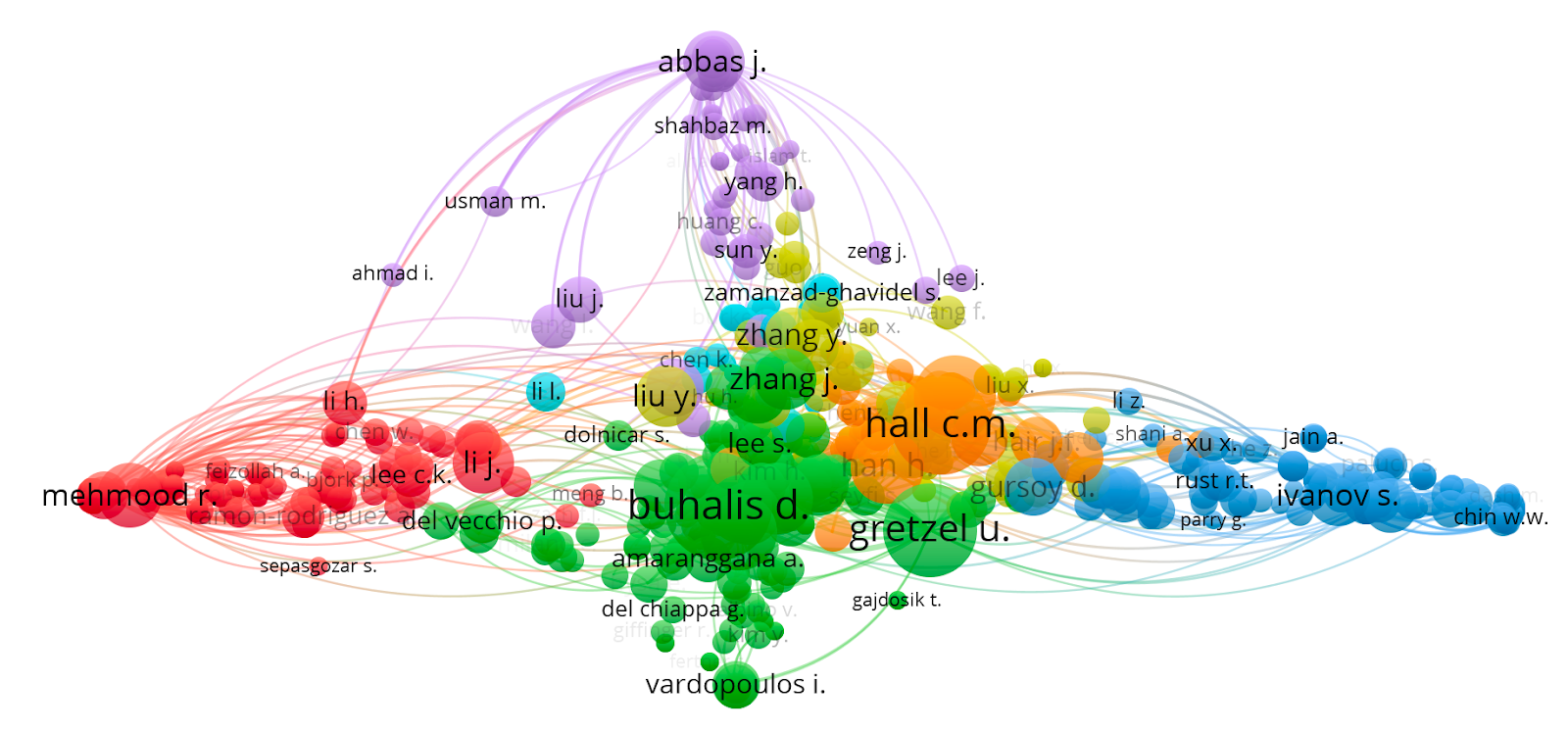
Figure 2 presents the co-citation network analysis of authors. Five main clusters were identified based on citation counts and strong relationships among articles.
-
In cluster one (red), the authors primarily focused on using machine learning and deep learning techniques to collect objective, multi-perspective data. They also integrated these within the Green Internet of Things to align ecological impact assessment with ecotourism development. This includes authors such as Rashid Mehmood, Ana Ramón-Rodríguez, Hui Li, and Jingyu Li. The authors applied qualitative studies by developing models and frameworks such as the Framework of Long-term Competitiveness (Moreno-Izquierdo et al., 2018), the Framework for Smarter Sustainable Tourism (Alsahafi et al., 2023), and the Spatial Spillover Effect Model (Gong et al., 2023).
-
In cluster two (green), authors explored smart tourism and the impact of AI, with a particular focus on eco-hospitality. This includes authors such as Dimitrios Buhalis, Pasquale del Vecchio, and Ioannis Vardopoulos. The authors aimed to shed new light on smart tourism by developing a conceptual framework (Buhalis et al., 2024) and a circular economy business model (del Vecchio et al., 2021). Additionally, the authors contributed to a deeper understanding of economic and developmental issues in a tourism-specialized context by developing a SWOT (Strengths, Weaknesses, Opportunities, and Threats) matrix within the smart city framework (Vardopoulos et al., 2023).
-
Cluster three (blue) discusses human-robot interaction for innovative sustainable tourism and hospitality. This includes authors such as Iis Tussyadiah, Edwin Goh, and Subhankar Das. Adopting an empirical approach, the authors analyzed various variables and their relationships, such as empathy from service robots, perceived value, tangibility of the service, and the intention to use robots. Research shows that AI-powered human-machine interaction devices significantly improve service quality, boosting tourist satisfaction and loyalty (Van et al., 2020).
-
In cluster four (orange), the authors focused on the transport field within the tourism sector, specifically public transport and space tourism. This includes authors like C. Michael Hall and Myung Ja Kim. The authors applied the Value-Attitude-Behavior theory and developed an integrated research model to examine relationships among variables related to AI (e.g., AI awareness) and sustainability (e.g., sustainable mobility). The studies showed how important values and awareness of AI are in shaping people's attitudes and both social and personal norms, which in turn encourage sustainable behaviors (Kim et al., 2024).
-
In cluster five (purple), the authors discuss sustainable tourism development in rural or urbanized areas with AI methods. This includes authors like Jaffar Abbas, Yue Sun, and Hongmei Yang. Some models included in the studies are a tourism-transportation-based Spatial Durbin Model (Gong et al., 2023) and a tourism-environment framework (Balsalobre-Lorente et al., 2023). Some of the findings indicate that urbanization, natural resources, and tourism contribute positively to CO2 emissions, while information and communication technology reduces emissions (Balsalobre-Lorente et al., 2023).
The majority of the articles were published in 2023 and primarily use an exploratory approach, suggesting that the topic is still emerging and remains underexplored empirically. Clusters three and four were the most empirically oriented, emphasizing data-driven analyses and the examination of measurable variables. This focus reflects a strong commitment to anchoring theoretical models in observable phenomena.
Keywords Cluster Analysis
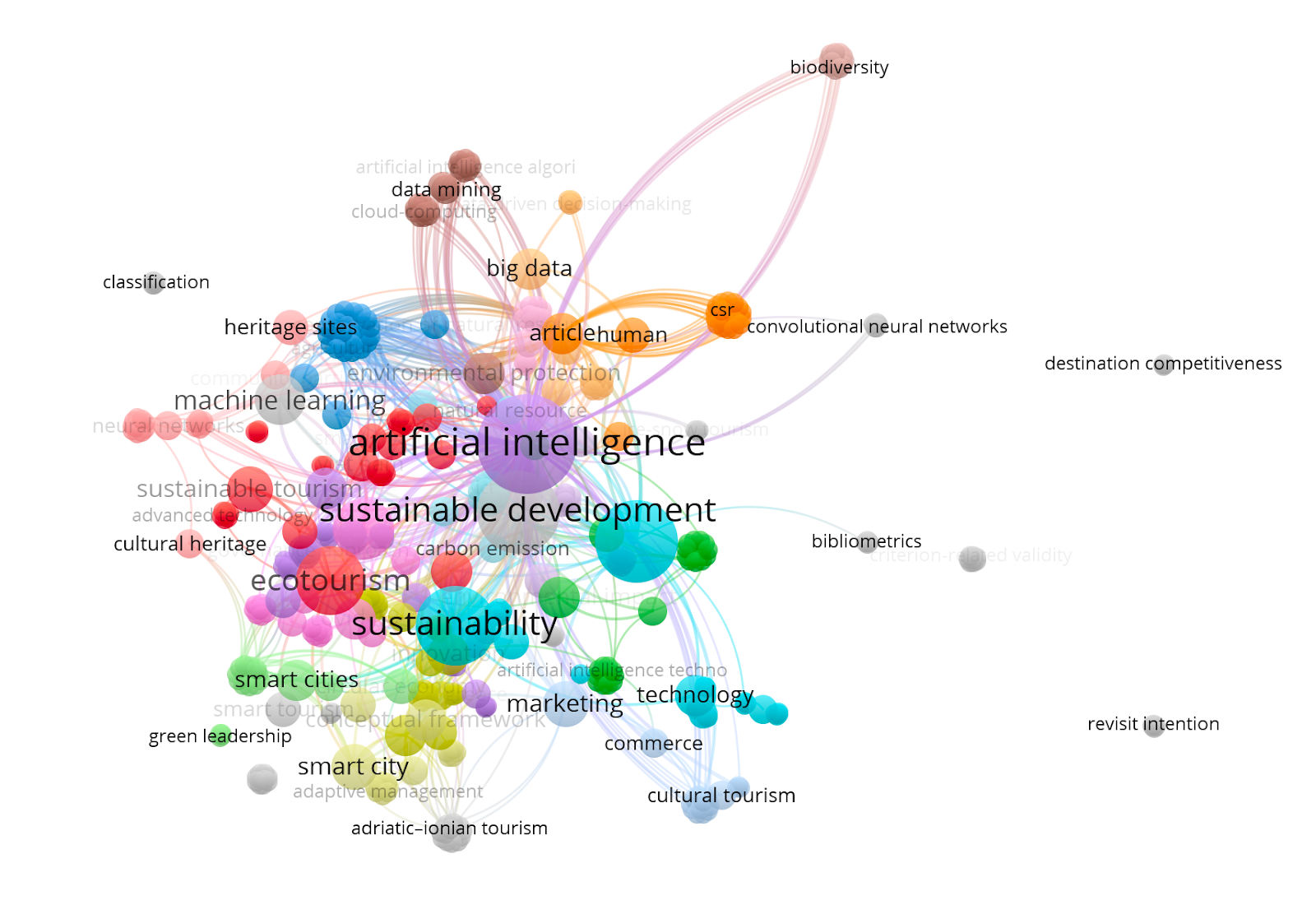
Table 8 shows the top 10 keywords that co-occur most frequently. Artificial intelligence, Tourism, and Sustainable Development were the most relevant keywords, with 23 and 16 occurrences respectively, and a total link strength exceeding 200. The relevance of the keyword ”ecotourism” is also evident, with a total link strength of 153, a term that was incorporated during the second phase of the search strategy. Figure 3 shows how the keywords from the selected articles are linked based on co-citations. The grouping of keywords by subject matter gives rise to the following clusters:
In cluster one (purple), dedicated to AI, terms such as “artificial intelligence”, “deep learning”, “economic development”, “tourism economics” and “governance approach” are highlighted, underscoring the importance of artificial intelligence in driving economic development in tourism and the role of governance in promoting tourism sustainability (Tong et al., 2022; Kim et al., 2023).
Cluster two (light blue) focuses on Tourism, Sustainability, and Technology. This cluster addresses sustainability and technology within the tourism sector, specifically the hospitality and aviation industries, as seen by the terms “tourism”, “hospitality”, “aviation”, “hotel industry”, and “sustainability”. The inclusion of terms such as ”technology,” ”digital transformation,” and ”artificial intelligence” underscores the articles' strong technological focus and explores various domains within AI. Kashem et al. (2023) highlighted the potential of AI and blockchain to balance economy-driven tourism with sustainability-oriented, tech-enhanced tourism.
Cluster three (grey) addresses machine learning in the sustainable development of the tourism industry. Terms like ”smart tourism”, “destination”, “ice-snow tourism” and “cross-border tourism” highlight the different types of tourism analyzed, as do the case studies of specific regions, as mentioned, such as ”Adriatic-Ionian tourism”. The Adriatic-Ionian area presents a clear vocation for tourism, with distinctive cultural heritage, and has been identified as a priority for developing innovative strategies to enhance competitiveness (Ndou et al., 2023).
Cluster four (red) focuses on ecotourism, sustainable tourism, and virtual reality. The presence of terms such as ”artificial neural networks”, ”heritage sites”, and ”cultural heritages” suggests the use of neural networks as a methodological tool, with a focus on UNESCO World Heritage Sites. By leveraging AI capabilities, Artificial Neural Networks can assist in the classification, preservation, and sustainable development of UNESCO World Heritage Sites (Bozkurt & Şeker, 2023).
Cluster five (dark green) addresses sustainability in tourism development using AI. Terms such as “greenhouse gases”, “environmental impact”, and “carbon footprint” underscore the growing concern for the environmental field of sustainability in tourism, while “economic and social effects” reflect a focus on the economic and social practices of tourism companies (Zopiatis et al., 2020; Miedes-Ugarte et al., 2020).
Table 8. Top 10 most relevant keywords
| Keyword | Occurrences | Total link strength |
| artificial intelligence | 23 | 326 |
| sustainable development | 16 | 274 |
| tourism | 16 | 250 |
| sustainability | 15 | 162 |
| ecotourism | 11 | 153 |
| tourism development | 9 | 170 |
| machine learning | 6 | 115 |
| marketing | 5 | 90 |
| smart city | 5 | 84 |
| sustainable tourism | 5 | 46 |
Although ethical, regulatory, and legal issues did not emerge as dominant keywords in the bibliometric analysis, the growing integration of AI and advanced technologies in the tourism sector highlights the critical need for further research in this area. As the digital landscape evolves, ethical concerns —including fairness, transparency, accountability, and data privacy —are increasingly central to responsible technology deployment. While AI offers significant potential to enhance experiences, efficiency, and personalization within the tourism sector, its ethical implications cannot be ignored. Deploying these technologies in an ethically responsible, privacy-conscious, and socially accountable manner will be crucial for fostering a future that is both technologically advanced and ethically robust (Chon & Hao, 2024).
Future Directions and Research Agenda
This section presents a research agenda (Table 9) outlining research directions for each identified theme, aiming to promote interdisciplinary collaboration and innovative approaches to advance knowledge and practical applications in the field.
Table 9. Research Agenda of the Impact of AI on Sustainable Tourism
| Themes/ Type of tourism | Source | Research agenda |
| Tourism transportation (public transports) | Kim et al. (2023) | Diversify data sources and methods: Incorporate varied data sources like websites, social media, observational studies, and expert or panel interviews to better analyze public transport user behavior. Explore national and cultural contexts: Studies in different countries and cultures can provide insights into the similarities and differences in tourist attitudes and usage of public transport, particularly regarding sustainability and technology. |
| Tourism transportation (public transports) | Gong et al. (2023) | Advance theory and methods: Strengthen theoretical exploration and integrate innovative methods in the field of sustainable development in tourism like social network analysis, AI, and machine learning. Analyze spatial spillover effects: Use advanced techniques to simulate and predict the spatial impacts of tourist transportation more accurately. |
| Space tourism | Kim et al. (2023) | Examine cross-cultural differences: Research across different countries and cultures would be valuable to explore the similarities and differences in attitudes towards sustainable space tourism. Investigate new forms of space tourism: Focus on emerging trends in commercial space tourism and its impact on sustainability and future space tourism behaviors. |
| Space tourism | Kim et al. (2024) | Expand research to diverse national and cultural settings: Explore different countries, particularly focusing on the rivalry between nations like the United States and China in space exploration. Incorporate diverse methodologies: Using big data analytics, expert insights, and panel discussions with space travel veterans to enhance findings. |
| Cross-border tourism | Ndou et al. (2023) | Investigate smart tourism and sustainability: Focus on how smart tourism interacts with sustainability goals. Evaluate collaboration among key stakeholders: Assessing how government, academia, business, and civil society can work together to promote smart tourism through effective strategies. |
| UNESCO World Heritage Sites tourism | Bozkurt & Şeker (2023) | Encourage further research: Identifying additional variables for classification and explore the potential of other artificial neural network techniques to advance the field. |
| Ice-snow tourism | Sun (2020) | Expand research applications: Broaden the focus of tourism image-related research to include areas such as coastal and rural tourism. Examine environmental factors: Understand whether factors like global warming, air pollution, pandemics, and holiday overcrowding negatively affect the perception of ice and snow tourism. |
| Hospitality industry | Bulchand-Gidumal et al. (2023) | Explore diverse markets: Conducting focus groups in regions with varying levels of AI adoption can help uncover cultural and AI-related differences. Use the Delphi method: Engaging marketing professionals through the Delphi technique may provide significant contributions and broaden the study’s findings. |
| Hospitality industry | Tan & Wright (2022) | Consumer demand for smart and green hotels: Use quantitative surveys to assess consumer demand, willingness to pay a price premium, and identify key features influencing bookings for ”smart and green” hotels. AI technology in Irish hospitality: Quantitative surveys should explore the acceptance of AI in the Irish hospitality industry, examining concerns and factors encouraging its adoption. |
| Post-COVID-19 era | Dileep et al. (2021) | Examine technology’s impact: Investigate how technology will influence the tourism sector in the post-COVID-19 era. Focus on demand-side analysis: Understanding tourists’ psychological aspects is crucial, as these will be key factors shaping the future of tourism. |
| Post-COVID-19 era | Kakderi et al. (2021) | Foster interdisciplinary collaboration: Addressing health, societal, and environmental challenges requires cross-disciplinary research and holistic solutions through scientific collaboration. Adopt a holistic approach: Lessons from the COVID-19 crisis highlight the need to integrate new regulations, digital tools, and scientific innovations to drive meaningful change. |
Current research agendas in tourism emphasize sustainability, technological innovation, and cross-cultural perspectives across domains such as transportation, hospitality, and emerging forms of tourism. Advanced methodologies, including AI, big data, and interdisciplinary collaboration, are identified as key drivers of progress. Yet, beyond methodological developments, the trajectory of sustainable tourism is profoundly shaped by institutional and political contexts. Government interventions, in particular, can simultaneously facilitate and constrain sustainability (Russo & Vergalli, 2025; Alvarez, 2025), underscoring the need to critically assess their role in this context. In summary, achieving a more balanced perspective on artificial intelligence requires not only recognizing its transformative potential but also critically addressing its challenges. By incorporating discussions on data privacy, algorithmic bias, and energy consumption, future research can foster a more comprehensive understanding of AI’s implications for sustainability. Such an approach ensures that optimism about technological progress is matched by responsible and informed awareness of its broader societal and environmental impacts.
Conclusion
This paper explores the role of AI in addressing sustainability challenges in the tourism sector. A comprehensive bibliometric literature review was conducted to map the current landscape of AI applications for sustainable tourism. Data were collected from high-quality journals indexed in Scopus and Web of Science, leading to a final dataset of 76 relevant records.
The data show a growing interest in AI applications for sustainable tourism, especially since 2020. Most studies take an exploratory approach, indicating that the topic is still emerging and underexplored, with a lack of research on AI's implementation in tourism to enhance sustainability and adapt physical structures. The analysis of the state of the art in bibliometric studies revealed a lack of research on the implementation of AI systems in tourism, particularly regarding how AI can enhance the sustainability of tourist locations and adapt social and physical structures in future tourism departments. The majority of the analyzed articles focus on AI as a method for addressing sustainability issues in tourism. Furthermore, more attention should be paid to the role of AI, environmental, social, and governance factors, sustainability, adoption, and intelligent automation within the tourism sector. The predominance of articles from Sustainability (MDPI) in the sample reflects the current publication landscape of open-access research in this field. While this provides valuable insights, it also suggests a concentration of perspectives within a single outlet. This imbalance highlights the need for further research on the topic to be disseminated across a broader range of journals, to ensure greater representativeness and balance in future reviews.
Theoretical and practical implications
This study contributes to both theory and practice by advancing the understanding of AI applications within the sustainable tourism sector. From a theoretical perspective, this study is particularly relevant given the increasing urgency to adopt sustainable practices within the global tourism industry. AI presents a promising pathway to achieve these goals by providing advanced solutions to sustainability challenges such as resource management, environmental monitoring, and efficiency improvement. By systematically mapping the research landscape, this paper offers a valuable contribution to current trends, collaborative networks, and research gaps. From a practical standpoint, this study provides significant contributions to industry stakeholders seeking to adopt AI technologies. It identifies practical strategies for integrating AI into sustainable tourism practices, helping tourism businesses and policymakers navigate the complexities of AI implementation. The study emphasizes the importance of collaboration among technology providers, tourism operators, and government bodies to maximize AI's impact on sustainability goals, offering actionable recommendations to facilitate the transition to more intelligent, more sustainable tourism systems.
Recommendations for Stakeholders
Building on the findings of this bibliometric review, this section outlines tailored recommendations, each directly informed by the gaps and patterns identified in the analysis. This aims to support stakeholders in addressing the complexities of AI implementation and to contribute to the development of a more sustainable and intelligent tourism ecosystem:
Tourism Industry Professionals: The analysis revealed a scarcity of empirical studies on AI implementation, with existing research remaining largely conceptual. Given the lack of empirical studies on AI implementation, practitioners should prioritize pilot projects and applied initiatives that test AI-driven solutions for enhancing sustainability in tourism operations and infrastructure. This includes experimenting with intelligent automation to reduce resource consumption, adapting physical facilities to evolving environmental and social requirements, and implementing AI-assisted visitor management systems.
Policy Makers: The bibliometric clusters indicated a weak presence of governance and regulation themes in the current literature. Given the literature's limited focus on governance aspects, policy frameworks should incentivize the evidence-based adoption of AI while integrating environmental, social, and governance (ESG) principles. In addition, support for cross-sector collaboration and targeted funding for empirical research can help close the current gap between theory and practice.
Technology Providers: Our keyword analysis highlighted limited attention to sector-specific AI applications. Given the scarcity of sector-specific AI solutions, developers should focus on designing tools tailored to the tourism industry’s sustainability challenges. Emphasis should be placed on scalable applications that improve resource efficiency, foster social responsibility, and align with ethical standards. Academia and Researchers: The co-citation analysis demonstrated a concentration of publications in a single outlet and a predominance of exploratory approaches. The results clearly underscore the need for more empirical and applied research. Scholars should investigate how AI concretely contributes to sustainable practices, including the adaptation of tourism infrastructure, governance mechanisms, and consumer behavior, while also diversifying publication outlets to reduce the current concentration in a single journal.
Consumers: While consumer perspectives were underrepresented in the dataset, consumers can play a critical role by supporting tourism providers that adopt AI-based sustainable practices, thereby shaping demand for responsible and environmentally conscious travel.
Finally, AI implementation in sustainable tourism should follow ethical principles, ensuring benefits for all stakeholders without increasing inequalities or environmental harm. Concerns about data privacy, algorithmic bias, and equitable access to technology are pervasive throughout the literature and remain central to sustainable adoption. Addressing these issues is crucial to ensuring that AI-driven tourism benefits all stakeholders without exacerbating inequalities, environmental harm, and social exclusion.
Limitations
This study has some limitations, particularly concerning its focus and methodology. Firstly, it heavily depends on the databases used, such as Web of Science and Scopus, which may not fully represent non-English publications or content from smaller publishers. Secondly, it is crucial to acknowledge that keywords may not fully capture the methodological aspects of the analyzed articles. Keywords are often general and broad, potentially overlooking unconventional research areas. Furthermore, as the field evolves, keywords may change over time, influencing the interpretation of trends and data. Finally, this study focuses on articles published from 2015 to March 2024, potentially excluding earlier or very recent works, thereby limiting the scope of the analysis. By limiting the analysis to open-access publications, the sample is composed mainly of articles from Sustainability (MDPI), which may affect the overall representativeness of the findings. To address the study's limitations, several strategies were employed. First, Web of Science and Scopus were chosen as the primary databases due to their reputation as the most commonly used sources for bibliometric analysis, providing extensive access to globally recognized research. Keywords were carefully selected in three phases, with additional terms added after reviewing the articles, minimizing the risk of excluding relevant studies. Finally, the time frame (2015–2024) was chosen to maintain a forward-looking perspective, while acknowledging the influence of earlier research through citation analysis, ensuring that current trends and developments were captured. These measures helped provide a comprehensive and accurate analysis of the literature.
Funding Statement
National funds have supported this work through FCT - Fundação para a Ciência e Tecnologia through project UIDB/4728/2025.
Conflict of Interest
The authors declare that there is no conflict of interest regarding the publication of this paper.
References
- . The non-inclusive nature of 'all inclusive' economics: Paradoxes and possibilities of the resort complex. Tourism Management, 78, 104054. https://doi.org/10.1016/j.tourman.2019.104054.
- . Sustainable tourism: An evolving global approach. Journal of Sustainable Tourism, 1(1), 1--5. https://doi.org/10.1080/09669589309450696.
- . The role of artificial intelligence and blockchain technologies in sustainable tourism in the Middle East. Worldwide Hospitality and Tourism Themes, 15(2), 178--191. https://doi.org/10.1108/WHATT-10-2022-0116.
- . Managing Tourist Destinations According to the Principles of the Social Economy: The Case of the Les Oiseaux de Passage Cooperative Platform. Sustainability, 12(12), 4837. https://doi.org/10.3390/su12124837.
- . A critical insight into the intersection of sustainability and technology. International Journal of Contemporary Hospitality Management, 37(1), 239--259. https://doi.org/10.1108/IJCHM-02-2024-0188.
- . Artificial Intelligence Implementation in the Tourism Industry: A Literature Review. In Studies in Computational Intelligence (pp. 149--166). Springer Science and Business Media Deutschland GmbH. https://doi.org/10.1007/978-3-031-75091-5_9.
- . Tourism and the Sustainable Development Goals -- Journey to 2030. . https://www.unwto.org/global/publication/tourism-and-sustainable-development-goals-journey-2030.
- . Advancing sustainable development goals through interdisciplinarity in sustainable tourism research. Journal of Sustainable Tourism, 31(3), 735--759.
- . A critical insight into the intersection of sustainability and technology. International Journal of Contemporary Hospitality Management, 37(1), 239--259. https://doi.org/10.1108/ijchm-02-2024-0188.
- . Smarter Sustainable Tourism: Data-Driven Multi-Perspective Parameter Discovery for Autonomous Design and Operations. Sustainability. MDPI AG, 15, 4166--4166. https://doi.org/10.20944/preprints202302.0066.v1.
- . A conceptual model of multi-level tourism governance in the 2030 Agenda: Applying the common denominator theory of hypernorms. Tourism Review. A conceptual model of multi-level tourism governance in the 2030 Agenda: Applying the common denominator theory of hypernorms. Tourism Review.
- . Let us take a walk to the sustainable tourism practices: a qualitative study through the lens of tourism experts. Environmental Science and Pollution Research, 31(9), 12892--12915. https://doi.org/10.1007/s11356-023-31503-7.
- . Tourism, urbanization and natural resources rents matter for environmental sustainability: The leading role of AI and ICT on sustainable development goals in the digital era. Resources Policy, 82, 103445--103445. https://doi.org/10.1016/j.resourpol.2023.103445.
- . Web of Science as a data source for research on scientific and scholarly activity. Quantitative Science Studies, 1(1), 363--376. https://doi.org/10.1162/qss_a_00018.
- . Big data in tourism marketing: past research and future opportunities. Spanish Journal of Marketing - ESIC, 28(3), 266--286. https://doi.org/10.1108/sjme-06-2022-0134.
- . 2024 Environmental Performance Index. 2024 Environmental Performance Index. Yale Center for Environmental Law \& Policy.
- . Harmonizing Heritage and Artificial Neural Networks: The Role of Sustainable Tourism in UNESCO World Heritage Sites. Sustainability, 15(17), 13031--13031. https://doi.org/10.3390/su151713031.
- . Sustainable tourism: An evolving global approach. Journal of Sustainable Tourism, 1(1), 1--5. https://doi.org/10.1080/09669589309514792.
- . Sustainable tourism, progress, challenges and opportunities: an introduction. Journal of Cleaner Production, 111, 285--294. https://doi.org/10.1016/j.jclepro.2015.10.027.
- . Smart Tourism Destinations. Springer International Publishing. https://doi.org/10.1007/978-3-319-03973-2_40. ISBN: 9783319039725.
- . Charting the progress of technology adoption in tourism and hospitality in the era of industry 4.0. EuroMed Journal of Business, 19(1), 1--20. https://doi.org/10.1108/emjb-11-2023-0310.
- . Artificial intelligence’s impact on hospitality and tourism marketing: exploring key themes and addressing challenges. Current Issues in Tourism, 27(14), 2345--2362. https://doi.org/10.1080/13683500.2023.2229480.
- . Corporate Social Responsibility: Perspectives on the CSR Construct’s Development and Future. Business \& Society, 60(6), 1258--1278. https://doi.org/10.1177/00076503211001765.
- . Technological evolution in tourism: a Horizon 2050 perspective. Tourism Review, 80(1), 313--325. https://doi.org/10.1108/tr-10-2023-0753.
- . Challenges and perspectives of AI in sustainable tourism. Management of Sustainable Development, 16, 14--26. https://doi.org/10.54989/msd-2024-0012.
- . Overtourism Effects: Positive and Negative Impacts for Sustainable Development. Springer International Publishing. https://doi.org/10.1007/978-3-319-95873-6_112. ISBN: 9783319958729.
- . Leveraging human-robot interaction in hospitality services: Incorporating the role of perceived value, empathy, and information sharing into visitors’ intentions to use social robots. Tourism Management, 78, 104042--104042. https://doi.org/10.1016/j.tourman.2019.104042.
- . Circular economy business model for smart tourism: the case of Ecobnb. EuroMed Journal of Business, 17(1), 88--104. https://doi.org/10.1108/emjb-09-2020-0098.
- . COVID-19 and the future of tourism: Back to normal or reformation?. International Journal of Hospitality and Tourism Systems, 14, 10--14.
- . The triple bottom line. Environmental management: Readings and cases. In The triple bottom line. Environmental management: Readings and cases (pp. 49--66).
- . Sustainable Competitiveness of Tourism in the Algarve Region. Critical Stakeholders’ Perception of the Supply Sector. Sustainability, 13(11), 6072--6072. https://doi.org/10.3390/su13116072.
- . Sustainable tourism and sustainable development goals (SDGs): a state-of-the-art review of past, present, and future trends. Environment, Development and Sustainability, 27(2), 2841--2862. https://doi.org/10.1007/s10668-023-04077-0.
- . Tourism gender research: A critical accounting. Annals of Tourism Research, 52, 87--103. https://doi.org/10.1016/j.annals.2015.02.001.
- . Artificial Intelligence in the Tourism Industry: An Overview of Reviews. Administrative Sciences, 13(8). https://doi.org/10.3390/admsci13080172.
- . An Examination of the Spatial Spillover Effects of Tourism Transportation on Sustainable Development from a Multiple-Indicator Cross-Perspective. Sustainability, 15(5), 4522--4522. https://doi.org/10.3390/su15054522.
- . Smart tourism: foundations and developments. Electronic Markets, 25(3), 179--188. https://doi.org/10.1007/s12525-015-0196-8.
- . Sustainable Tourism and the Touristic Ecological Footprint. Environment, Development and Sustainability, 4(1), 7--20. https://doi.org/10.1023/a:1016336125627.
- . The Need for Sustainable Tourism in an Era of Global Climate Change: Pathway to a Greener Future. The Need for Sustainable Tourism in an Era of Global Climate Change: Pathway to a Greener Future. Emerald Publishing Limited, 249--267.
- . Next City: Learning from Cities during COVID-19 to Tackle Climate Change. Sustainability, 13(6), 3158--3158. https://doi.org/10.3390/su13063158.
- . Effects of Value-Belief-Norm Theory, ESG, and AI on Space Tourist Behavior for Sustainability With Three Types of Space Tourism. Journal of Travel Research, 63(6), 1395--1410. https://doi.org/10.1177/00472875231191514.
- . Space tourism: Value-attitude-behavior theory, artificial intelligence, and sustainability. Journal of Retailing and Consumer Services, 77, 103654--103654. https://doi.org/10.1016/j.jretconser.2023.103654.
- . Why do tourists use public transport in Korea? The roles of artificial intelligence knowledge, environmental, social, and governance, and sustainability. Asia Pacific Journal of Tourism Research, 28(5), 467--484. https://doi.org/10.1080/10941665.2023.2247099.
- . Redefining the concept of smart tourism in tourism and hospitality. Anatolia, 35(3), 566--578. https://doi.org/10.1080/13032917.2023.2282712.
- . Shaping a View on the Influence of Technologies on Sustainable Tourism. Sustainability, 13(22), 12691--12691. https://doi.org/10.3390/su132212691.
- . Knowledge map of digital tourism: A bibliometric approach using CiteSpace. Problems and Perspectives in Management, 20(4), 573--587. https://doi.org/10.21511/ppm.20(4).2022.43.
- . Exploring the Potential of Chatbots in Extending Tourists’ Sustainable Travel Practices. Journal of Travel Research, 64(6), 0--0. https://doi.org/10.1177/00472875241247316.
- . Intelligent automation for sustainable tourism: a systematic review. Journal of Sustainable Tourism, 31(11), 2421--2440. https://doi.org/10.1080/09669582.2023.2246681.
- . Managing Tourist Destinations According to the Principles of the Social Economy: The Case of the Les Oiseaux de Passage Cooperative Platform. , 12, 4837--4837. https://doi.org/10.3390/su12124837.
- . Triple bottom line and environmental sustainability: evolution of global ESG research—a bibliometric analysis. Environmental Sciences Europe, 37(1), 136--136. https://doi.org/10.1186/s12302-025-01184-9.
- . Preferred Reporting Items for Systematic Reviews and Meta-Analyses: The PRISMA Statement. PLoS Medicine, 6(7), 1000097--1000097. https://doi.org/10.1371/journal.pmed.1000097.
- . The challenge of long-term tourism competitiveness in the age of innovation: Spain as a case study. Investigaciones Regionales -Journal of Regional Research, 42, 13--34.
- . A Methodological Framework for Developing a Smart-Tourism Destination in the Southeastern Adriatic–Ionian Area. Sustainability, 15(3), 2057--2057. https://doi.org/10.3390/su15032057.
- . Advancing sustainable development goals through interdisciplinarity in sustainable tourism research. Journal of Sustainable Tourism, 31(3), 735--759. https://doi.org/10.1080/09669582.2021.2004416.
- . Artificial intelligence potential for net zero sustainability: Current evidence and prospects. Next Sustainability, 4, 100041--100041. https://doi.org/10.1016/j.nxsust.2024.100041.
- . Defining the Balearic Islands’ Tourism Data Space: An Approach to Functional and Data Requirements. Data, 9(3), 41--41. https://doi.org/10.3390/data9030041.
- . Updating guidance for reporting systematic reviews: development of the PRISMA 2020 statement. BMJ. Center for Open Science, 372--372. https://doi.org/10.31222/osf.io/jb4dx.
- . Mapping Research Streams and Future Agenda in Community-Based Tourism Development: A Bibliometric Approach. African Journal of Hospitality, Tourism and Leisure, 13, 128--141. https://doi.org/10.46222/ajhtl.19770720.490.
- . AI Solutions for Sustainable Tourism Management: A Comprehensive Review. Journal of Information Systems and Operations Management, 18, 172--185.
- . Sustainable Ecotourism through Cutting-Edge Technologies. Sustainability, 14(2), 800--800. https://doi.org/10.3390/su14020800.
- . Transition from CSR to ESG in Tourism – A Bibliometric Analysis. Organizacija, 57(3), 249--259. https://doi.org/10.2478/orga-2024-0018.
- . Design Thinking Approach for Sustainable Hospitality: A Smart Mobile Management System for Indonesia. Archives of Design Research, 36(4), 163--191. https://doi.org/10.15187/adr.2023.11.36.4.163.
- . Conducting a literature review. Management Research News, 27(6), 31--39. https://doi.org/10.1108/01409170410784185.
- . Artificial Intelligence: A Modern Approach. Artificial Intelligence: A Modern Approach.
- . Going green across boundaries: Spatial effects of environmental policies on tourism flows. Journal of Environmental Economics and Management. Advance online publication.
- . Impact of AI and robotics in the tourism sector: a critical insight. Journal of Tourism Futures, 8(1), 73--87. https://doi.org/10.1108/jtf-07-2019-0065.
- . The non-inclusive nature of 'all inclusive' economics: Paradoxes and possibilities of the resort complex. Tourism Management, 78--104054. https://doi.org/10.1016/j.tourman.2019.104054Tablesandfigures.
- . What are the trend and core knowledge of information security? A citation and co-citation analysis. Information \& Management, 60(3), 103774--103774. https://doi.org/10.1016/j.im.2023.103774.
- . Co-management of Capitals for Community Wellbeing and Sustainable Tourism Development: A Conceptual Framework. Tourism Planning \& Development, 17(2), 225--236. https://doi.org/10.1080/21568316.2019.1600161.
- . Artificial intelligence as a catalyst for sustainable tourism growth and economic cycles. Technological Forecasting and Social Change, 210, 123875--123875. https://doi.org/10.1016/j.techfore.2024.123875.
- . Sustainable tourism development and competitiveness: The systematic literature review. Sustainable Development, 29(1), 259--271. https://doi.org/10.1002/sd.2133.
- . Integrating Generative AI and IoT for Sustainable Smart Tourism Destinations. Sustainability, 16(17), 7435--7435. https://doi.org/10.3390/su16177435.
- . The Evolution of Job Displacement in the Age of AI and Automation: A Bibliometric Review (1984–2024). Open Information Science, 8(1), 20240010--20240010. https://doi.org/10.1515/opis-2024-0010.
- . Symmetry Analysis in Analyzing Cognitive and Emotional Attitudes for Tourism Consumers by Applying Artificial Intelligence Python Technology. Symmetry, 12(4), 606--606. https://doi.org/10.3390/sym12040606.
- . Exploring “Smart and Green” Concepts: A New Synergy for Irish Hospitality. Tourism and Hospitality, 3(1), 276--296. https://doi.org/10.3390/tourhosp3010019.
- . Artificial Intelligence Influences Intelligent Automation in Tourism: A Mediating Role of Internet of Things and Environmental, Social, and Governance Investment. Frontiers in Environmental Science, 10, 853302--853302. https://doi.org/10.3389/fenvs.2022.853302.
- . Artificial intelligence in tourism: insights and future research agenda. Tourism Review, 80(4), 793--812. https://doi.org/10.1108/tr-03-2024-0180.
- . The Role of Human–Machine Interactive Devices for Post-COVID-19 Innovative Sustainable Tourism in Ho Chi Minh City, Vietnam. Sustainability, 12(22), 9523--9523. https://doi.org/10.3390/su12229523.
- . Smart ‘Tourist Cities’ Revisited: Culture-Led Urban Sustainability and the Global Real Estate Market. Sustainability, 15(5), 4313--4313. https://doi.org/10.3390/su15054313.
- . Artificial intelligence in marketing: Systematic review and future research direction. International Journal of Information Management Data Insights, 1(1), 100002--100002. https://doi.org/10.1016/j.jjimei.2020.100002.
- . Unveiling trends in digital tourism research: A bibliometric analysis of co-citation and co-word analysis. Environmental and Sustainability Indicators, 20(2), 100308--100308. https://doi.org/10.1016/j.indic.2023.100308.
- . Artificial intelligence and big data in tourism: a systematic literature review. Journal of Hospitality and Tourism Technology, 11(2), 343--367. https://doi.org/10.1108/JHTT-12-2018-0118.
- . Web of science. Web of science. Thomson Reuters.
About contributors

Sandra Cristina Alves Ferreira
Universidade do Minho, Braga, Portugal
Portugal
Olga Filipa de Andrade Brites Pereira
Centre for Research and Innovation in Business Sciences and Information Systems, School of Management and Technology, Instituto Politécnico do Porto, Felgueiras, Portugal
Portugal