





Abstract
This study aims to analyse scientific production on organic product consumption, identifying trends, gaps, and emerging themes through a bibliometric approach. This topic is relevant given the growing interest in health, sustainability, and ethical concerns in agriculture. Following PRISMA 2020 guidelines, the study relied on Scopus and Web of Science databases. Results show a cubic polynomial growth in publications, with 2023 and 2024 as peak years. This rise reflects societal concern for sustainability and health, alongside research funding and policy initiatives that foster organic food adoption. Relevant contributions come from authors such as Chekima and Lairon, from journals such as the British Food Journal, and from countries including France and Malaysia. The field has evolved under the influence of the Theory of Planned Behavior and sustainable consumption, with research clusters highlighting organic food consumption and obesity. Emerging keywords reveal strong attention to diet, perceived value, and sustainability. Theoretical implications reinforce the understanding of consumer behaviour and sustainable practices. From a managerial perspective, the findings suggest opportunities to design marketing strategies aligned with conscious consumer motivations. Overall, the study provides insights for managers and policymakers to strengthen consumer trust and improve the competitive positioning of organic products.
Introduction
The increasing consumption of organic products is indicative of a broader global trend towards sustainable and healthy food practices. This phenomenon is not solely a response to health concerns; it also reflects a growing environmental and ethical awareness regarding agricultural production methods. A substantial body of scientific literature has examined various aspects of organic food consumption, encompassing the factors that propel and the barriers that impede this practice. Several studies have identified a range of motivations underlying the consumption of organic products. In China, consumers place significant value on organic foods, perceiving them as safer and higher quality than conventional products. This perception is consistent with concerns regarding food safety and the adverse environmental impacts of synthetic pesticides and fertilisers (Campos & Qi, 2024).
Similarly, in Brazil, the United States, and Europe, demand for organic products is driven by a combination of factors related to health and well-being, as well as by growing environmental awareness (Sica & Franco, 2024). It is imperative to consider multiple countries, given the significant variations in consumer motivations and barriers across cultural, economic, and policy contexts. For instance, while concerns regarding food safety predominate in China, environmental awareness is a stronger driver in Brazil and Europe. The incorporation of this diversity proffers a more comprehensive understanding of global consumption patterns and underscores the necessity for comparative perspectives. Conversely, substantial obstacles impeding the pervasive adoption of organic products have been identified. In Northern Portugal, the transition towards organic consumption is influenced by consumers' locus of control, which modulates the relationship between environmental concerns and the purchasing decision (Penalba-Sánchez et al., 2024). Furthermore, the paper proffers a perspective on consumer motivations, indicating that although health-related reasons predominate, lack of information and the cost of organic products remain significant barriers to adoption (Shenoy et al., 2024).
The consumption of organic products has become a prominent and multifaceted phenomenon worldwide over the past few decades. The mounting concern for health and sustainability has precipitated an increase in demand for organic foods, underscoring the imperative to understand the factors that drive and constrain this behaviour. Research on the consumption of organic products not only elucidates the underlying motivations but also identifies potential barriers to its widespread adoption. A fundamental aspect of the study of organic product consumption involves identifying the factors that drive this behaviour. Perceptions of health benefits and environmental sustainability play a pivotal role in the decision to opt for organic products (Sica & Franco, 2024). Furthermore, the study examined the integration of health-related motivations into the consumption of organic products. This objective was realised through the implementation of a socio-psycho-hermeneutic approach, which underscores the pivotal role of personal and cultural perceptions in shaping this behaviour (Barbeta-Viñas, 2023).
However, the consumption of organic products is also subject to several obstacles. The potential influence of orthorexia nervosa, a phenomenon that can impact perceptions and consumption patterns related to organic foods, has been identified. This aspect illustrates how profound concerns regarding food purity have the potential to impede the comprehension of organic consumption (Bozkurt & Kocaadam--Bozkurt, 2024). Furthermore, the consequences of the global economic crisis on organic food consumption in the Czech Republic illustrate how unfavourable economic circumstances can impede consumers' capacity to procure organic products, despite their interest in them (Majerova & Cizkova, 2024).
The study of the intention-behaviour gap in organic product consumption is also significant. This issue has been addressed through a dual-moderated mediation model, which has enabled a deeper understanding of how consumer intentions often fail to translate into actual behaviours. The approach facilitates the unravelling of the complexities inherent in organic product consumption, thereby revealing psychological and situational factors that may influence the ultimate purchase decision (Nguyen & Nguyen, 2024).
Notwithstanding the growing interest and significance of organic product consumption, substantial research gaps persist, underscoring the rationale for conducting this study. While several factors that influence the adoption of these products have been identified, such as market perceptions and moral norms, the complete understanding of these factors remains limited. A paucity of studies has been observed in the systematic integration of the multifaceted dimensions of consumer behaviour, including market influences and ethical motivations (Kumar et al., 2024).
The present study adopts an original approach by examining the consumption of organic products from a bibliometric perspective. This methodological approach has hitherto been scarcely applied to this field. The present study's relevance lies in its systematic overview of research trends, gaps, and emerging topics, thereby contributing to a more comprehensive understanding of consumer behaviour, sustainability, and health in the context of organic product consumption.
The novelty of this research resides in its methodological and conceptual integration. In contrast to previous studies, which have primarily employed isolated case studies or consumer surveys to examine consumption of organic products, this study utilises a bibliometric approach to provide a comprehensive, data-driven overview of global scientific production. By mapping the evolution of research fronts, the study identifies how theories such as the Theory of Planned Behavior have expanded towards multidimensional constructs linking sustainability, diet, and perceived value. This approach facilitates the identification of hitherto unanalysed intellectual structures and thematic clusters, thereby offering a comprehensive understanding of the field's trajectory.
Given the paucity of relevant literature, this study explores contemporary trends in the consumption of organic products. To address these issues, the following research questions were established:
-
In which years has interest in organic product consumption been most prominent?
-
What kind of growth trend is observed in the number of scientific publications on organic product consumption?
-
Who are the leading authors, journals, and countries that serve as primary references in the field of organic product consumption research?
-
How has the scientific literature's thematic focus on organic product consumption evolved?
-
What are the primary thematic clusters related to research on organic product consumption?
-
Which keywords are currently emerging and gaining relevance in the research on organic product consumption?
-
Which themes are currently central and influential for shaping a future research agenda on organic product consumption?
The structure of the study is as follows: firstly, a summary is provided to offer an overview of the research; secondly, the introduction defines the topic and outlines the research objective; thirdly, the methodology section details the methods employed; fourthly, the results section presents the most significant findings, which are subsequently analysed in the discussion; finally, the study concludes with the main conclusions drawn from the research.
A bibliometric study is particularly relevant in this field because it allows researchers to systematically synthesise a rapidly growing and fragmented body of literature. By identifying publication patterns, thematic clusters, and emerging concepts, bibliometrics provides an evidence-based map that clarifies how the study of organic product consumption has evolved and where future research and managerial efforts should be directed.
Methodology
The present study adopts an exploratory approach, relying on secondary sources. The present research adheres to the guidelines set out in the PRISMA 2020 statement, which provides updated standards for conducting systematic reviews (Page et al., 2021). The methodological framework utilised in this study ensures a comprehensive and systematic assessment of the extant literature, thereby facilitating the identification of salient trends, research gaps, and recurring patterns within the field.
Eligibility Criteria
In order to be included in the study, documents must contain one or more of the key terms related to the consumption of organic products in their titles or keywords. These terms are regarded as the primary metadata for the selection process. Furthermore, it is imperative that the documents explicitly address the consumption of organic products in their content, ensuring that only sources directly relevant to the topic of study are considered and that they comprehensively address the object of research.
The bibliometric analysis covered the period from 2020 to 2024, considering year-by-year publication output to identify temporal trends in scientific production on organic product consumption.
The exclusion process comprises three distinct phases designed to refine the database. During the initial phase, erroneous records are eliminated to ensure data quality and accuracy. The second exclusion phase, typically applied in systematic literature reviews, involves discarding documents without full-text access. However, since bibliometric analysis focuses on metadata rather than full content, this step was not implemented. Finally, in the third phase, conference proceedings and documents with incomplete indexing are excluded to preserve the consistency and integrity of the bibliometric analysis.
Source of Information
Scopus and Web of Science were selected as the primary data sources due to their extensive coverage and relevance to contemporary academic research. It is widely acknowledged that these databases are at the vanguard of their respective fields, both within the social sciences and the natural sciences. They facilitate access to a wide range of peer-reviewed literature, thereby ensuring broad international representation. The reputation of these publishers for rigour and reliability makes them essential tools in bibliometric studies, as they provide access to high-impact journals and support thorough, precise analyses. The decision to utilise these databases is founded on their capacity to provide a comprehensive and contemporary perspective on the pertinent scientific literature (Asubiaro et al., 2024). The data were collected from Scopus and Web of Science in March 2025, ensuring that the most recent publications up to that date were included in the study.
Search Strategy
To execute the search across the two selected databases, Scopus and Web of Science, two customized search queries were developed. The development of these queries was undertaken in accordance with predefined inclusion criteria, with subsequent adaptation to each platform's specific features. The formulation of these search equations was intended to accurately capture the extant literature on the consumption of organic products, thereby ensuring that key terms related to the topic were adequately represented. The design of the equations accounted for differences in Boolean operators and search syntax across the two databases, thereby optimising the retrieval of relevant documents and ensuring comprehensive, accurate coverage in the bibliometric analysis.
For the Scopus database: TITLE ( ”Organic product* consumption” OR ”Consumption of organic product*” OR ”Organic food consumption” OR ”Consumption of organic food” OR ”Organic good* consumption” OR ”Organic purchase behavior” )
For the Web of Science database: TI= ( ”Organic product* consumption” OR ”Consumption of organic product*” OR ”Organic food consumption” OR ”Consumption of organic food” OR ”Organic good * consumption” OR ”Organic purchase behavior” )
Data Management
The management and analysis of information obtained from the databases were conducted using Microsoft Excel as the principal tool for extracting, storing, and processing bibliometric data. The platform facilitated the organisation of the information and allowed for the efficient handling of the collected data. In addition, the open-source software VOSviewer was utilised for the visualisation and analysis of bibliometric networks, incorporating co-citation and co-occurrence analysis of terms. VOSviewer is software that provides sophisticated tools for constructing maps and graphs that transparently and efficiently elucidate various bibliometric indicators. In conjunction with Microsoft Excel®, VOSviewer facilitated the generation of comprehensive graphs, thereby aiding the interpretation and presentation of the study's findings (Eck & Waltman, 2010).
Selection Process
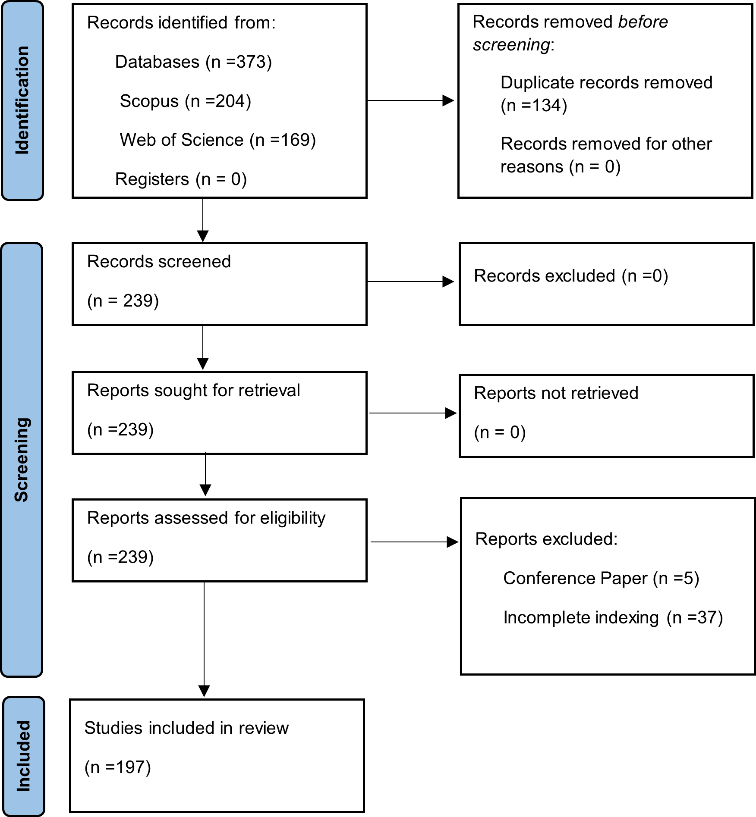
In accordance with the PRISMA 2020 guidelines, the use of internal automated classifiers and validation processes is imperative to ensure the accuracy of study selection and minimise the risk of misclassification or omission (Page et al., 2021). In this study, Microsoft Excel® automation tools – custom-designed by the research team – were employed as internal classifiers. Each team member independently utilised the designated tool to apply the inclusion and exclusion criteria. The integration of this automated system with individual assessments has been demonstrated to enhance consistency in the results and minimise classification errors, thereby reinforcing the reliability and precision of the bibliometric analysis (Figure 1).
Data Collection Process
In accordance with the PRISMA 2020 guidelines, the methodology for extracting data from selected records must be clearly outlined. This encompasses the enumeration of the number of reviewers involved, their independent roles, the procedures employed for data acquisition or verification, and the automation tools utilised (Page et al., 2021). In this study, Microsoft Excel® was utilised as an automation tool to facilitate the extraction of data from the records retrieved from the two selected databases. To ensure data accuracy, all authors served as independent reviewers during the validation process. A subsequent joint review was conducted to reach full agreement on the results, thereby reinforcing the consistency and reliability of the bibliometric analysis.
Data Elements
The results were derived from all articles that fulfilled the study's objectives, specifically those that matched the custom-designed search queries for each database, i.e., articles that addressed the topic of organic product consumption. All results relevant to the domains of interest within the studies were considered, without being constrained by specific measures or time points, to ensure comprehensive coverage. When information was absent or ambiguous, it was excluded as not pertinent to the subject matter.
Assessment of the Risk of Bias of the Study
The risk of bias in the included studies was evaluated following the same systematic approach applied during data collection. All authors participated in the assessment process, using the automated Microsoft Excel tool specifically developed for this purpose. This approach facilitated a consistent and standardised evaluation of the risk of bias in each study, thereby ensuring the quality and integrity of the results. The use of an automated tool facilitated the uniform application of assessment criteria and ensured the process was conducted with the requisite precision, thereby minimising the potential for bias and enhancing the validity of the bibliometric analysis.
Measures of Effect
In primary research, effect measures such as risk ratios and mean differences are frequently used. It is imperative to acknowledge that the present study is based on secondary sources, thereby necessitating the use of distinct metrics for the synthesis and presentation of results. Rather than using conventional effect-size metrics, the analysis emphasizes publication counts, citation counts, and the temporal usage patterns of each keyword. The organisation and presentation of the data is achieved through the utilisation of Microsoft Excel. In addition, the VOSviewer software is employed to examine existing nodes and ascertain the thematic associations between research terms. This process enables a comprehensive evaluation of the extant literature and provides a clear perspective on trends and thematic relationships in the domain of organic product consumption.
Synthesis Methods
Several procedures were implemented to ascertain the eligibility of studies for inclusion in each synthesis. These comprised tabulating study characteristics and comparing them against the predefined criteria for each synthesis. Furthermore, the data were prepared for presentation by resolving any missing summary statistics and performing necessary data conversions. To facilitate the presentation and synthesis of results, multiple methods were employed to tabulate and visually represent data derived from individual studies and syntheses. Bibliometric indicators were employed to assess the quantity, quality, and structure of the data. The aforementioned indicators were applied in an automated manner using Microsoft Excel to all documents that successfully completed the three exclusion phases (Durieux & Gevenois, 2010). To provide a more comprehensive overview of the research topic, a content analysis was also conducted on a set of recent and influential publications (2022–2024). This analysis was undertaken to complement the bibliometric results. This qualitative assessment facilitated a deeper understanding of the substantive contributions of key studies and reinforced the interpretation of findings in the discussion and conclusion sections.
Assessment of Reporting Bias
It is acknowledged that the potential for bias arising from missing results in the synthesis may be associated with reporting biases, particularly those related to the utilisation of synonyms in controlled vocabularies such as the IEEE thesaurus. This potential bias is embedded in the inclusion criteria, search strategy, and data collection process, as specific key terms may be underrepresented. Moreover, excluding conference proceedings and documents with incomplete indexing may omit valuable insights, potentially affecting the comprehensiveness and relevance of the knowledge base on organic product consumption. These factors emphasise the need to consider potential limitations in coverage and biases in the reviewed literature to ensure an accurate and comprehensive interpretation of the results.
Certainty Assessment
The present study adopts a general approach to assessing confidence, diverging from the customary methodology used in primary studies, which evaluates confidence on a case-by-case basis. In this research, the accuracy of study selection is ensured through the independent application of inclusion and exclusion criteria, alongside the definition of bibliometric indicators to assess the quality and breadth of the literature reviewed. Furthermore, confidence in the findings is reinforced by identifying potential biases in the methodological design and addressing limitations during the analysis phase.
Results
This section presents the results of the bibliometric analysis, demonstrating the growth in scientific production and identifying emerging trends and publication patterns in recent years.
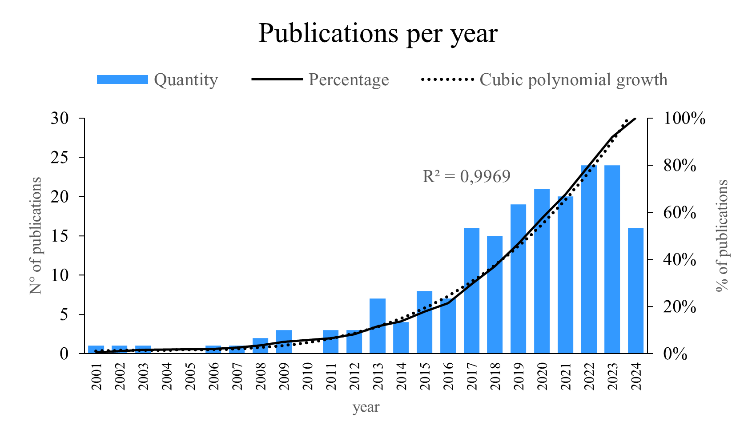
It is noteworthy that the number of articles on organic product consumption has increased substantially, as illustrated in Figure 2. The observed growth showed a high degree of conformity to a cubic polynomial trend, with a goodness-of-fit of 99.69%. This pattern indicates a significant increase in scientific output in this field, particularly in recent years. The data reveal that the years with the highest number of publications were 2023, 2022, 2021, and 2020, highlighting a consistent and recent surge in scholarly interest and research activity on the topic.
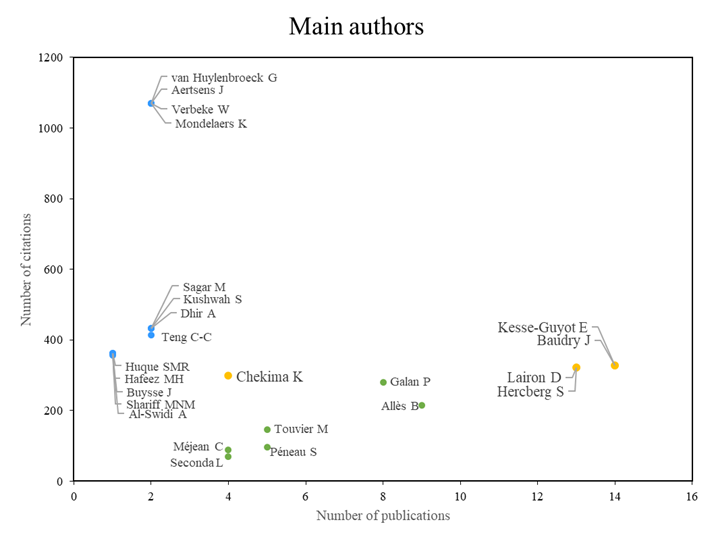
As illustrated in Figure 3, three primary categories of authors are identified. The initial group comprises researchers such as Chekima, Lairon, Hercberg, and Kesse, who are distinguished by their elevated productivity and substantial impact, signifying their considerable influence within the field. The second group consists of authors such as Huyleenbroeck, Aertsens, Verbeke, and Mondelaers, who, despite their relatively low publication output, have made a notable impact. The third group is characterised by elevated scientific productivity, as evidenced by the contributions of prominent scholars such as Allés. However, this productivity is accompanied by a comparatively low citation rate.
As demonstrated in Figure 4, three primary categories of journals were identified. The initial group comprises journals that exhibit both elevated productivity and considerable impact, as evidenced by the British Food Journal. The second group includes titles such as the Journal of Cleaner Production, Appetite, and Food Quality and Preference, which demonstrate high impact despite a lower level of scientific productivity. Conversely, the third group, exemplified by journals such as sustainability, is distinguished by its substantial publication output, though its citation metrics are comparatively diminished.
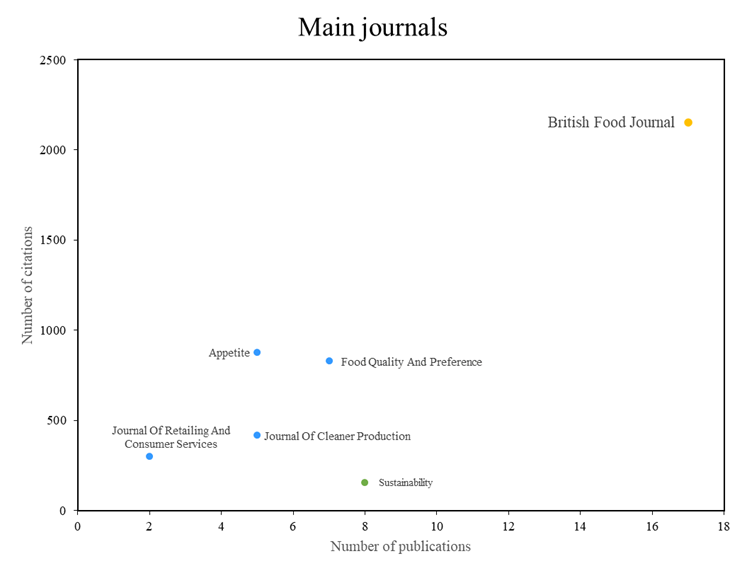
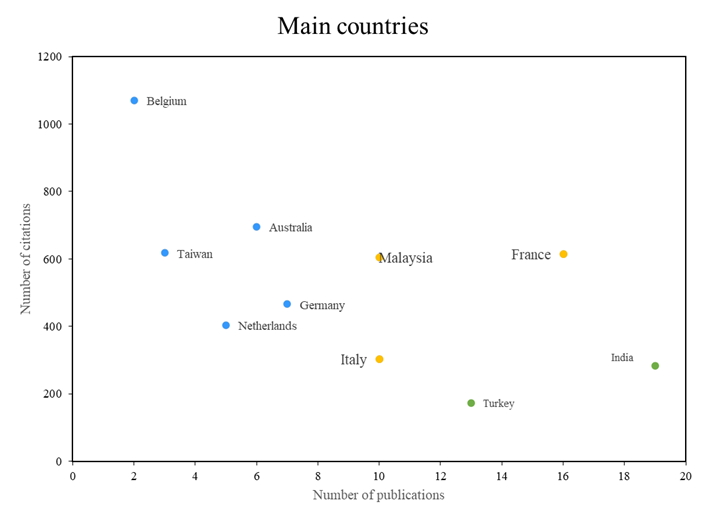
Figure 5 presents the identification of three main groups of countries. The initial group comprises nations such as France, Malaysia, and Italy that exhibit a discernible balance between scientific productivity and impact. The second group consists of countries such as Belgium, Australia, and Germany, which, despite their substantial impact in the field, demonstrate comparatively lower levels of publication output. The third group consists of countries such as India and Turkey, which are distinguished by high scientific productivity but comparatively lower citation impact.
The selection of France, Malaysia, and Italy as the principal countries under investigation is not solely based on their productivity and citation impact, but also on their central role in shaping global research on organic product consumption. France has contributed to the field through large-scale cohort studies, which have established a correlation between organic diets and health outcomes. Malaysia has contributed to the field through research on emerging markets and consumer behaviour, while Italy has contributed through investigations into sustainability and Mediterranean diet practices. These contexts offer a range of perspectives that, while different, complement each other, thereby enhancing the global understanding of the topic.
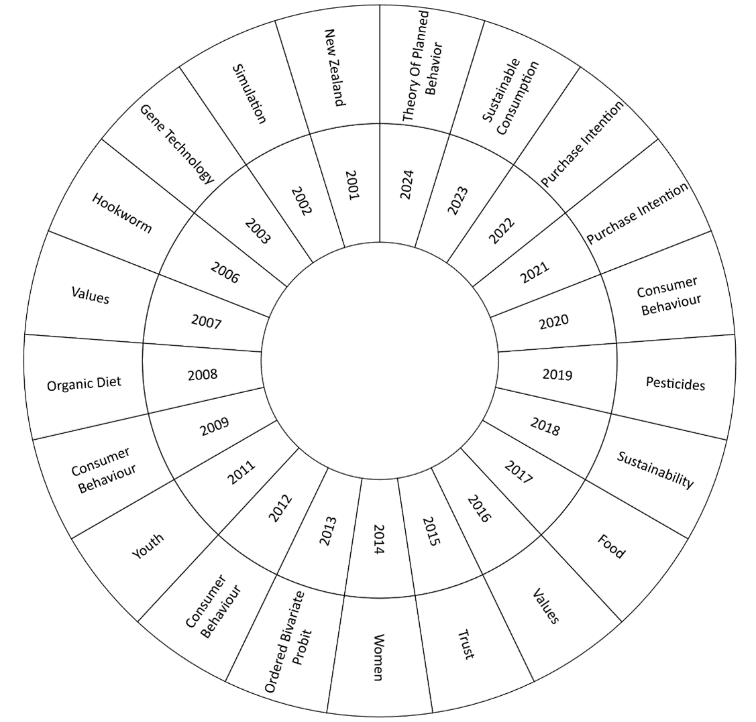
As demonstrated in Figure 6, the present study investigated the thematic evolution of the literature on organic product consumption. This investigation analyzed the most frequently used keywords for each year examined. The analysis demonstrates that in the initial year, 2001, the concept of New Zealand emerged as a significant keyword. Conversely, in recent years, there has been a notable prevalence of contemporary topics, including the Theory of Planned Behavior, sustainable consumption, purchase intention, and consumer behaviour.
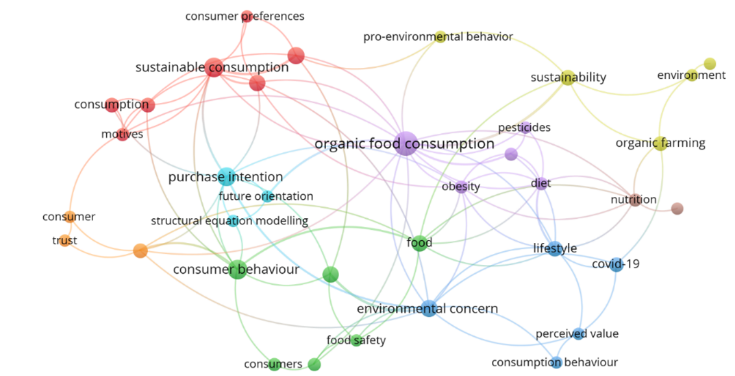
As illustrated in Figure 7, the primary keyword co-occurrence network is comprised of eight distinct thematic clusters. The most prominent of these is the purple cluster, which includes terms such as organic food consumption, obesity, pesticides, and diet. This particular cluster is distinguished by its pivotal position within the thematic framework. The red cluster, which includes terms such as sustainable consumption, consumer preferences, and motives, is also worthy of note. Additional clusters, coloured blue, yellow, and green, capture various aspects of conceptual similarity, thus offering a more profound insight into the diverse topics associated with organic product consumption. The cluster structure provides a comprehensive overview of the dominant research areas and their interrelations.
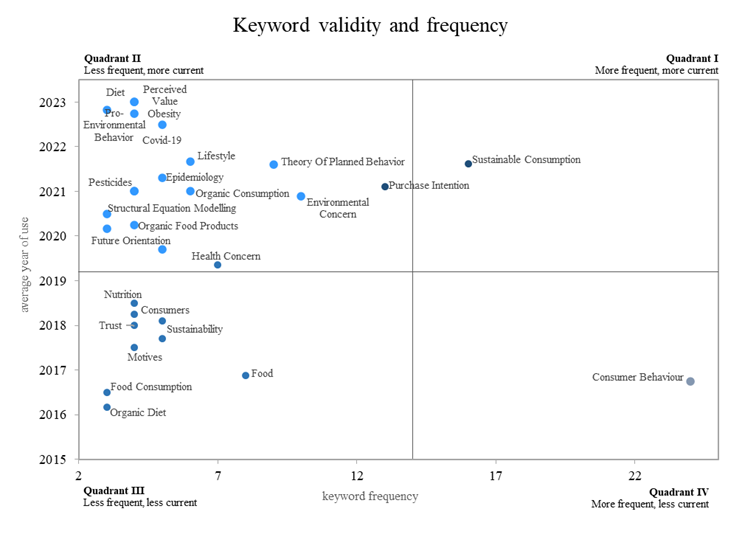
The present study proposes a Cartesian plane for analyzing the extant literature on organic product consumption. The X-axis of the graph denotes the frequency of keyword utilisation, while the Y-axis indicates the validity of the keywords. The Cartesian plane facilitates the identification of four distinct quadrants, as illustrated in Figure 8. The fourth quadrant comprises concepts that are both less frequent and less valid. An illustrative example of this phenomenon is the field of consumer behaviour, which has demonstrated a downward trend in both its relevance and frequency of occurrence in recent literature.
The keywords in quadrant two are characterized by low frequency but high validity, suggesting they are emerging concepts within the field of study. It is evident that terms such as ”diet,” ”perceived value,” and ”obesity” are situated within this category, indicating that they are gaining relevance and may potentially mark future trends. Conversely, Quadrant 1 includes established and developing concepts, such as sustainable consumption, that are widely used and maintain high validity in current research.
As shown in Figure 6, the thematic evolution reveals a notable rise in the concept of ”consumer behaviour” as a central topic in recent years. However, Figure 8 situates this concept in a quadrant of reduced frequency and validity. This should not be interpreted as a contradiction, but rather as indicative of a shift in research priorities. Specifically, it is evident that while the concept of ”consumer behaviour” was previously a central focus in the literature, its significance has recently diminished, with emerging constructs such as ”sustainable consumption,” ”perceived value,” and ”diet” now assuming a predominant role in academic discourse within this field.
Discussion
The present discussion section provides an in-depth analysis of the data, accompanied by a practical interpretation of the results and a critical examination of the study's limitations. Furthermore, the categorisation of keywords is predicated on their function within the relevant literature. Key research gaps are identified, and a forward-looking research agenda is proposed, highlighting emerging areas and critical topics to advance understanding of organic product consumption. The originality of this research lies in combining bibliometric analysis with the study of organic product consumption, a field typically dominated by case studies and consumer surveys. The present study employs a systematic approach to mapping thematic clusters and trends, with the objective of both systematising fragmented knowledge and revealing new connections between health, sustainability, and consumer behaviour. It is evident that these connections have not been consistently addressed in previous literature.
Analysis of the Growth of Scientific Literature on the Consumption of Organic Products
A comprehensive analysis of scientific literature on the consumption of organic products in 2020, 2021, 2022, and 2023 was conducted, revealing noteworthy trends and emergent approaches in the domain. In 2020, research concentrated on the intention-behaviour gap in organic food consumption and on integrative models of the factors that influence this behaviour. During this period, the influence of perceived control and communications on the intention-behaviour gap was examined within the framework of the theory of planned behaviour (Sultan et al., 2020). Conversely, an integrative model of the factors influencing and preventing increased organic food consumption was proposed, emphasising the complexity of the variables involved in this purchasing decision (Hansmann et al., 2020).
In 2021, there was a notable focus on pro-environmental consumer discourse and situational factors affecting organic food consumption. The present study examined the influence of consumer discourse on pro-environmental attitudes and the decision to consume organic products from a political perspective (Saraiva et al., 2020). Furthermore, situational factors within Hanoi households were examined, emphasising the significance of particular circumstances in organic food purchasing behaviour (Tran & Nguyen, 2021).
In 2022, there was a discernible shift in focus towards socio-environmental considerations and personal values associated with organic food consumption. In the current year, empirical research has examined Indian consumers' attitudes, with a particular focus on the socio-environmental factors that influence purchase decisions (Kirmani et al., 2022). In addition, an analysis of the values and motives underlying organic food consumption in China has been conducted to highlight the moderating role of perceived uncertainty in consumption decisions (Wei et al., 2022).
In 2023, a paradigm shift occurred, with a notable shift in focus towards the examination of contextual factors and consumer motivations. This issue was addressed from the perspective of attitude-behaviour-context (Sadiq et al., 2023). The objective of this study was to explore consumers' motivations and differentiate between health consciousness and herd mentality. This finding indicates sustained interest in understanding the motivations and contexts that shape organic food consumption. Furthermore, it emphasised the field's evolution and diversification over recent years (Wang et al., 2023).
Analysis of Research References on the Consumption of Organic Products
In assessing scientific productivity and impact in the field of organic food consumption, several authors have made notable contributions. Chekima and his collaborators have been recognised for their holistic approach to examining the determinants of organic food consumption. In particular, these authors identified several factors that contribute to reducing the discrepancy between intentions and behaviours in organic food consumption (Chekima et al., 2017). In another study involving this author, the moderating role of future orientation on actual organic food consumption is explored, highlighting the importance of long-term expectations in shaping consumer decision-making (Chekima et al., 2019).
In a similar vein, Lairon and Hercberg have made significant contributions to the field through their research on the health and environmental impact of organic food consumption. For instance, the relationship between organic food consumption and metabolic syndrome has been investigated in a French cohort (Baudry et al., 2017). Furthermore, an examination of urinary pesticide concentrations in French adults with varying levels of organic food consumption has been undertaken, thus offering a critical perspective on the health benefits of an organic diet (Baudry et al., 2018). Furthermore, Hercberg has made a significant contribution to the field through studies evaluating the sustainability of the Mediterranean diet in conjunction with organic food consumption (Seconda et al., 2017). Furthermore, these studies analyse the dietary quality of French adults according to their level of organic food consumption (Baudry et al., 2016).
In the field of impact, Huylebroeck, Aertsens, Verbeke, and Mondelaers have been identified as key contributors to the literature on personal determinants and knowledge of organic foods. A review of the individual determinants of organic food consumption was conducted (Aertsens et al., 2009), and the influence of subjective and objective knowledge on attitudes and motivations towards these products was also investigated (Aertsens et al., 2011). It is pertinent to draw attention to further relevant research in this field, namely that of Verbeke and Mondelaers, who have also addressed the influence of knowledge on attitudes towards organic food consumption (Aertsens et al., 2011).
In the results section, several key journals were identified that have had a significant impact on the field. Of these, the British Food Journal stands out for its exceptional productivity and considerable impact. Its relevance is evidenced by studies examining the role of subjective norms within the theory of planned behaviour in the context of organic food consumption (Al-Swidi et al., 2014). Furthermore, the decisional factors that drive organic food consumption and generate purchase intentions among consumers were addressed, providing valuable insights into the influence of social norms and decisional factors on attitudes towards organic foods (Teng & Wang, 2015).
The Journal of Cleaner Production has also played a pivotal role in the research of organic product consumption, with a notable impact on the field. Researchers have investigated the durability of the principles that underpin organic food consumption in China (Thøgersen et al., 2016), while identifying factors that reduce the gap between intention and action in their consumption. These contributions are fundamental to understanding how cultural values and perceptions affect organic food purchasing behaviour (Chekima et al., 2017).
In contrast, Food Quality and Preference has addressed key aspects of organic food consumption from a quality and preference perspective. The factors influencing organic food consumption have been examined using data from national nutrition surveys in Germany (Bravo et al., 2013). Furthermore, research has examined consumer resistance to organic food consumption, with a particular focus on ethical consumer behaviour and purchasing decisions (Kushwah et al., 2019).
Belgium, Australia, and Germany have emerged as leading contributors in organic consumption research, distinguished by their strong academic output and significant influence within the scientific community. In Belgium, a comprehensive insight was provided into the personal determinants and subjective and objective knowledge that influence organic food consumption. This has facilitated a deeper understanding of the variations in attitudes and motivations towards organic food among consumers, thereby establishing Belgium as a leader in research on this topic in Europe (Aertsens et al., 2011; Kushwah et al., 2019).
Furthermore, Australia has been a significant contributor to the scientific literature on organic foods, investigating how market development and the intensity of organic food consumption vary across cultures. This research has enhanced our understanding of the cultural factors that influence consumption patterns (Squires et al., 2001). Moreover, the relationship between organic food consumption, health concerns, and subjective well-being has been investigated, emphasising the significance of well-being perceptions in Australian consumer behaviour (Apaolaza et al., 2018).
Germany has made significant contributions to the literature on organic food consumption. For instance, research has employed structural models to predict organic food consumption based on the theory of planned behaviour (Scalco et al., 2017). Furthermore, the determinants of organic food consumption have been assessed using national survey data, providing a robust foundation for understanding the factors influencing German consumers' purchasing decisions (Bravo et al., 2013).
In contrast, India and Turkey have exerted a substantial influence within this domain. In India, researchers have examined the role of altruistic and egoistic values in promoting organic food consumption among young consumers, as well as the dispositional characteristics that influence this behaviour (Sadiq et al., 2020; Yadav, 2016). The present study conducted a more in-depth investigation of attitudes towards organic food and tendencies towards orthorexia nervosa in Turkey. This investigation has elucidated pivotal aspects of how attitudes and psychological factors influence organic food consumption in non-European contexts (Çabuk et al., 2014; Bozkurt & Kocaadam--Bozkurt, 2024).
Analysis of the Thematic Evolution of Organic Product Consumption
In the early stages of research on organic consumption, the conceptual focus was clearly oriented towards the New Zealand context. The present study was undertaken to facilitate an understanding of the market development and the intensity of organic food consumption in a specific context. The authors conducted a comparative analysis of consumers in Denmark and New Zealand, thereby providing detailed insights into the differences and similarities in purchasing behaviour and the motivations behind organic food consumption in these countries (Squires et al., 2001). The relevance of this concept in the early years lay in its capacity to provide a comparative basis, enabling the establishment of consumption patterns and the identification of specific cultural factors influencing the adoption of organic products. This preliminary approach established the foundations for subsequent expansion of knowledge towards broader concepts, such as the theory of planned behaviour and sustainable consumption, which currently dominate the literature on the subject. In recent research on organic consumption, several concepts have gained increasing importance, including the Theory of Planned Behavior, sustainable consumption, purchase intention, and consumer behaviour. In 2024, the Theory of Planned Behavior has been the primary focus of research, as it has proven instrumental in understanding the discrepancy between intention and behaviour in organic food consumption. The present study examined this phenomenon in the Chinese context, with particular attention to the influence of psychological and social factors on the decision to consume organic food and the potential to bridge the gap between intention and actual behaviour (Liu et al., 2024).
In 2023, the notion of sustainable consumption emerged as a pivotal domain of academic inquiry, signifying an escalating concern for conscientious production and consumption methodologies. The present study examined the potential of organic food availability in fresh markets to foster a more sustainable production and consumption system in emerging economies. The study emphasised the need to integrate local practices into the supply chain to promote sustainability (Thongplew et al., 2023). Conversely, in 2022, the emphasis was on purchase intention, with a study examining the values and motives that influence purchase intention for organic food in China. This study emphasised the significance of understanding the underlying motivations to develop effective marketing strategies (Wei et al., 2022). In conclusion, the study of consumer behaviour was the dominant theme in 2020. This is evidenced by research which emphasised the significance of the health attribute in the consumption of organic food and its impact on purchasing decisions (Rizzo et al., 2020).
Analysis of thematic clusters on the consumption of organic products
The analysis of keyword co-occurrence revealed underlying thematic affinities across studies focused on organic product consumption, highlighting conceptual links within the field. The primary co-occurrence network, as depicted by the purple cluster, comprises terms such as ”organic food consumption”, ”obesity”, ”pesticides”, and ”diet”. This cluster elucidates the interrelationships among organic food consumption, health, and sustainability, underscoring the impact of factors such as obesity and pesticide use on organic food consumption decisions (Chekima et al., 2017). Conversely, the second most prominent cluster, delineated in red, encompasses terms such as ”sustainable consumption”, ”consumer preferences”, and ”motives”. This cluster indicates a focus on sustainability and consumer motivations, elucidating how consumer preferences and motivations shape sustainable consumption. A theoretical framework was proposed to facilitate comprehension of these dynamics, utilising a structural equation model based on the theory of planned behaviour to predict organic food consumption. The findings indicate an advancement in the literature towards a more profound comprehension of the motivations underlying sustainable consumption, and how these can be conceptualised to promote environmentally conscious behaviours (Scalco et al., 2017). The identification of thematic clusters provides theoretical insights that extend beyond a descriptive mapping. For instance, the cluster linking ”organic food consumption,” ”obesity,” and ”diet” advances the Theory of Planned Behaviour by demonstrating how health-related motives interact with perceived risks. Similarly, the cluster on ”sustainable consumption” and ”consumer preferences” extends sustainability theory by illustrating how environmental values translate into actual market choices. These findings contribute to the ongoing efforts to address the intention-behaviour gap, a persistent challenge in consumer research.
Analysis of the frequency and conceptual validity of the consumption of organic products
A comprehensive analysis of the Cartesian plane has been undertaken, revealing that quadrant four is populated by concepts that have experienced a decline in recent usage. Among these, ”consumer behaviour” has emerged as a notable exception, exhibiting a marked reduction in frequency of use in comparison to previous periods. This phenomenon suggests a decline in the centrality of consumer behaviour in research on the consumption of organic products. The study of consumer behaviour has historically been fundamental to understanding the motivations and barriers that influence the adoption of organic foods. A plethora of studies have hitherto examined the factors that influence decisions about the consumption of organic products. As Sica & Franco (2024) demonstrate, a range of factors must be considered, including health attitudes, environmental concerns, and purchasing habits.
The following discussion will address the emerging concepts in the field of organic product consumption as they relate to Quadrant 2 of the Cartesian plane. The following keywords have been associated with this research area: ”diet”, ”perceived value”, and ”obesity”. These terms indicate a growing interest in specific areas that are becoming increasingly relevant in current and future research on the subject. The concept of ”diet” has become increasingly prominent, given its direct correlation with dietary habits and the quality of the food consumed. Recent research has demonstrated that consuming organic foods can reduce exposure to pesticides, thereby positively impacting public health (Baudry et al., 2018).
Conversely, the concept of 'perceived value' is emerging as a pivotal factor in the decision-making process for purchasing organic foodstuffs. A substantial body of research indicates that value perception plays a pivotal role in shaping consumers' inclination to buy organic products. This underscores the need for a deeper understanding of consumer motivations and perceptions across diverse cultural and economic contexts (Akbar et al., 2019). The relationship between organic food consumption and obesity is a significant area of recent research. This can be attributed to concerns regarding obesity and the increasing prevalence of healthier diets. Consequently, a high level of interest has been observed in the potential of organic foods to contribute to the prevention and management of obesity (Bozkurt & Kocaadam--Bozkurt, 2024).
Classification of keywords on organic product consumption according to their function
Table 1 presents a comprehensive classification of the primary emerging and expanding keywords, organised according to their function within the research. The objective of this table is to identify and analyse the main characteristics and applications of each keyword category, thereby facilitating a deeper understanding of current trends in the subject.
Table 1. Classification of Keywords According to Their Function. Prepared by the Authors Based on Scopus and Web of Science
| Keyword | Related tools | Applications | Characteristics |
| Diet | Analysis of dietary composition, longitudinal studies | Public health impact assessment | Dietary health change monitoring |
| Perceived Value | Perceived value surveys, preference analysis | Determining consumer value | Measuring satisfaction and value |
| Obesity | Epidemiological studies, trend analysis | Obesity impact research | Investigation of the relationship between nutrition and obesity |
| Sustainable Consumption | Environmental Impact Assessments, Sustainability Audits | Promoting sustainable farming practices | Promoting responsible consumer practices |
This classification facilitates the identification of emerging research domains and guides scholars in targeting specific dimensions of organic product consumption, thereby contributing to a deeper understanding of the trends and factors influencing both consumer behaviour and environmental outcomes.
Theoretical implications
The organisation of extant literature into discrete categories facilitates the identification of nascent research domains and directs scholarly attention toward specific facets of organic product consumption. By taking this approach, it is possible to enhance the understanding of evolving trends and the various factors that shape both consumer behaviour and environmental impacts. This increase in scientific productivity is indicative of a dual phenomenon: first, an escalation in both academic and practical interest, and second, an increase in the intricacy of the issues being addressed. This, in turn, facilitates a deeper understanding of the dynamics underlying the consumption of organic products.
A comprehensive review of the seminal theoretical references, encompassing the works of Chekima, Lairon, Hercberg, and Kesse, elucidates the contributions of these studies to advancing knowledge in this domain. The research by these authors has established a robust foundation for understanding the factors that drive organic food consumption. Furthermore, the studies by Lairon and Hercberg have integrated health and sustainability considerations into the evaluation of organic consumption. The identification of these authors as leaders in the field is indicative of the significant theoretical and methodological contributions they have made to advancing knowledge in this area. The field's thematic evolution is indicated by bibliometric analysis, which has revealed a notable shift in focus. The extant literature has historically focused on specific contexts, such as New Zealand, which have provided comprehensive insights into markets and consumers in particular regions. However, there has been a shift towards more general and overarching concepts, including the theory of planned behaviour, sustainable consumption, purchase intention, and consumer behaviour. This development is indicative of a heightened level of research sophistication, with an enhanced emphasis on theories and models that span multiple contexts and dimensions of organic consumption.
The application of keyword co-occurrence analysis and the identification of thematic clusters has facilitated the revelation of significant areas of intersection between emerging and growing concepts. To illustrate this point, consider the keyword cluster pertaining to ”organic food consumption,” ”obesity,” and ”pesticides.” This cluster underscores the mounting apprehension about the health ramifications of organic products. Similarly, nascent concepts such as ”diet,” ”perceived value,” and ”obesity” evince an intensified focus on the nexus between organic food consumption and its ramifications for health and value perception. Thematic analyses facilitate a more detailed understanding of how priorities and approaches in organic products research are being redefined.
In conclusion, identifying research gaps is one of the most valuable contributions of this bibliometric analysis. Despite the extensive coverage of health and sustainability-related topics in the existing literature, some areas require further attention. These include the comparative evaluation of sustainable practices across different geographical contexts and the integration of emerging theories into the analysis of consumer behaviour. The existing literature contains numerous gaps, presenting avenues for future research. These gaps could facilitate exploration of previously unexplored aspects, with substantial implications for the formulation of policies and marketing strategies in the organic products sector.
Practical implications
The insights derived from bibliometric analysis are of considerable practical relevance, particularly for formulating corporate strategies and informing public policy. The thematic transition observed in the literature towards constructs such as sustainable consumption, consumer intentions, and behavioural patterns reflects evolving priorities and highlights areas that demand increased attention in decision-making processes. This shift is directly relevant to market participants, as the transition from the theory of planned behaviour to a greater focus on sustainability and purchase intentions indicates a growing demand for products that are not only organic but also aligned with responsible, sustainable consumption practices. It would be prudent for companies to consider this evolution when formulating marketing and communication strategies. Such strategies should emphasise not only the product's health benefits, but also its environmental impact and its alignment with sustainable consumption values.
A comprehensive review of the prevailing thematic cluster, incorporating terms such as ”organic food consumption”, ”obesity”, ”pesticides”, and ”diet”, discloses a considerable interconnection between organic food consumption and public health concerns. This suggests that organisations must be prepared to respond to a market that is increasingly aware of the health implications associated with the food they consume. The presence of terms such as ”obesity” and ”pesticides” within the cluster emphasises the need for effective communication of the health benefits of organic food in the context of concerns about pesticides and obesity. It is imperative to acknowledge the significance of this issue, particularly given its potential impact on consumer purchasing decisions.
A thorough investigation into the frequency and temporal relevance of keywords has demonstrated the ability to unveil significant patterns in the evolution of scholarly interest. The declining utilisation of terms such as 'diet', 'perceived value', and 'obesity' may signify a shift in the thematic focus of contemporary research. Conversely, the mounting emphasis on concepts such as 'sustainable consumption' signifies a shifting agenda that prioritises broader environmental and societal concerns within the field. It would be prudent for organisations to take these trends into account when modifying their product and communication strategies to align with consumers' current expectations. The mounting emphasis on 'sustainable consumption' in academic discourse indicates that organisations are required to adopt environmentally responsible practices across their value chains and to communicate these efforts effectively. By emphasising sustainability in their branding and marketing strategies, companies can align with the values of a growing segment of eco-conscious consumers and enhance their competitive positioning.
Furthermore, the emergence of novel concepts such as ”consumer behaviour” reflects an increasing interest in analysing consumer purchasing patterns and motivations. This development presents a significant opportunity for companies to create more detailed consumer profiles and to tailor their product offerings to meet the specific needs of different market segments. Understanding consumer behaviour in the context of organic products is instrumental in enabling companies to formulate more effective marketing strategies. This, in turn, has been demonstrated to engender customer loyalty and enhance a company's capacity to adapt to evolving market preferences.
Bibliometric analysis yields multifaceted practical implications across critical domains, including consumer awareness initiatives, evidence-based policymaking, and the strategic design of innovative organic products. These insights enable stakeholders to align their actions with evolving academic trends and societal demands. It is noteworthy that the notion of sustainable consumption is gaining prominence in academic and professional discourse. This change suggests that government entities and non-governmental organisations should focus on disseminating information to consumers about the importance of sustainable practices. The implementation of awareness programmes and educational campaigns that promote responsible consumption and environmental sustainability can enhance consumer knowledge and attitudes towards organic products, thereby facilitating the adoption of consumption practices that benefit both individual health and the environment.
In the context of public policy, the growing emphasis on sustainability and consumer purchasing intentions underscores the necessity for policies that facilitate the production and consumption of organic food. It would be prudent for policymakers to consider implementing tax incentives for organic producers, subsidies for sustainable agricultural practices, and regulations that encourage transparency in product labelling. These measures would facilitate a transition among farmers towards more sustainable practices, whilst also ensuring that consumers have access to high-quality organic products that align with their responsible consumption values. Furthermore, the implementation of rigorous standards and certification practices has been demonstrated to help maintain the integrity of the organic market and protect consumers from fraudulent activities.
It is also crucial to emphasise the necessity for research and development (R&D) within the organic products industry. The application of bibliometrics to this field of study reveals the evolution of concepts such as consumer behaviour and purchase intention, thereby identifying potential areas where innovation could be a key factor. A comprehensive understanding of the motivations that drive consumers to choose organic products is imperative for strategic guidance in the design and refinement of offerings in the organic market. These insights enable companies to align product attributes with consumer priorities, such as environmental sustainability, health consciousness, and ethical considerations. This fosters greater market relevance and competitive advantage.
Furthermore, the necessity of interdisciplinary collaboration to address the intricate challenges of organic product consumption is emphasised. The integration of knowledge from diverse fields, including consumer psychology, sustainable agriculture, and nutrition, can facilitate a more comprehensive understanding of the factors that influence purchasing decisions. This collaboration has the potential to facilitate the development of more effective strategies to promote the consumption of organic products and address existing gaps in research. Consequently, the establishment of interdisciplinary research networks and collaborative projects has the potential to accelerate progress in the field and facilitate the development of innovative solutions that benefit both consumers and producers.
In practical terms, the findings suggest specific actions for stakeholders. For instance, companies can design campaigns that emphasise both the health benefits (e.g., reduced pesticide exposure) and the environmental benefits of organic products, addressing the dual motives revealed in the clusters. Conversely, policymakers may prioritise certification programmes that emphasise perceived value and sustainability, as these have been identified as pivotal factors influencing purchase intention. It has been demonstrated that such targeted interventions can extend beyond generic recommendations, providing actionable strategies aligned with consumers' motivations.
Limitations
While the selection of databases was comprehensive, it may not have encompassed the full relevant literature due to the potential exclusion of publications in alternative databases or in institutional repositories that are not indexed in Scopus or Web of Science. This limitation may have constrained the comprehensiveness of the analysis and the complete representation of the current state of knowledge in the field of organic product consumption.
Furthermore, the effectiveness of bibliometric tools and software for analysing keyword co-occurrence and evaluating bibliometric indicators is contingent on the precision and reliability of the extracted data, which in turn has a direct impact on the validity of the resulting insights. The interpretation of co-occurrence networks and emerging trends may be affected by the quality of bibliographic descriptions and inconsistencies in the indexing of publications. Moreover, reliance on such tools may impede the depth of qualitative analysis, as these methodologies are typically oriented towards the quantity and structure of data rather than providing detailed context for the evolution of themes and their theoretical implications. Consequently, despite the value of bibliometrics in providing an overview, its scope and accuracy are constrained by the aforementioned methodological and technological limitations.
Research gaps
Table 2 delineates the key research gaps identified in the extant literature, highlighting critical areas that warrant further exploration to deepen and update the understanding of organic product consumption. These gaps highlight underexplored dimensions and underscore the need for continued scholarly attention to advance theoretical and practical insights in this field.
Table 2. Research Gaps. Prepared by the Authors Based on Scopus and Web of Science
| Category | Gaps | Justification | Questions for Future Research |
| Themes | Lack of integration of cultural and social factors | Lack of research on how cultural dynamics affect consumption. | How do cultural norms influence predisposition towards organic products? |
| Themes | Evaluation of public policies and marketing strategies | Lack of evidence on the real effectiveness of policies and campaigns. | What policies and strategies have proven most effective in different contexts? |
| Themes | Impact of sustainability perception in emerging regions | Insufficient research on sustainability in emerging economies. | How is sustainability perceived in emerging economies? |
| Geographical | Insufficient research in developing economies | Greater focus on developed countries, with gaps in emerging economies. | What barriers do developing countries face in consuming organic products? |
| Geographical | Lack of studies in diverse cultural contexts | Focus on homogeneous cultural contexts, ignoring cultural variations. | What cultural factors determine preferences for organic products? |
| Interdisciplinary | Integration of psychological and sociological approaches | Need to combine different approaches for a comprehensive understanding. | How can interdisciplinary approaches improve the study of organic consumption? |
| Interdisciplinary | Longitudinal studies on consumer behavior | Lack of studies that analyze behavior over time. | How do attitudes towards organic products evolve over time? |
| Storms | Evolution of trends in consumption | Lack of focus on how trends have changed over time. | How have organic product consumption trends changed in recent decades? |
| Storms | Impact of recent global events | Little research on how global events affect consumption. | How has the pandemic influenced the consumption of organic products? |
The following table summarizes the identified research lacunae and proposes a framework for future research. The latter is designed to facilitate a deeper, more contemporary understanding of organic product consumption.
Research Agenda
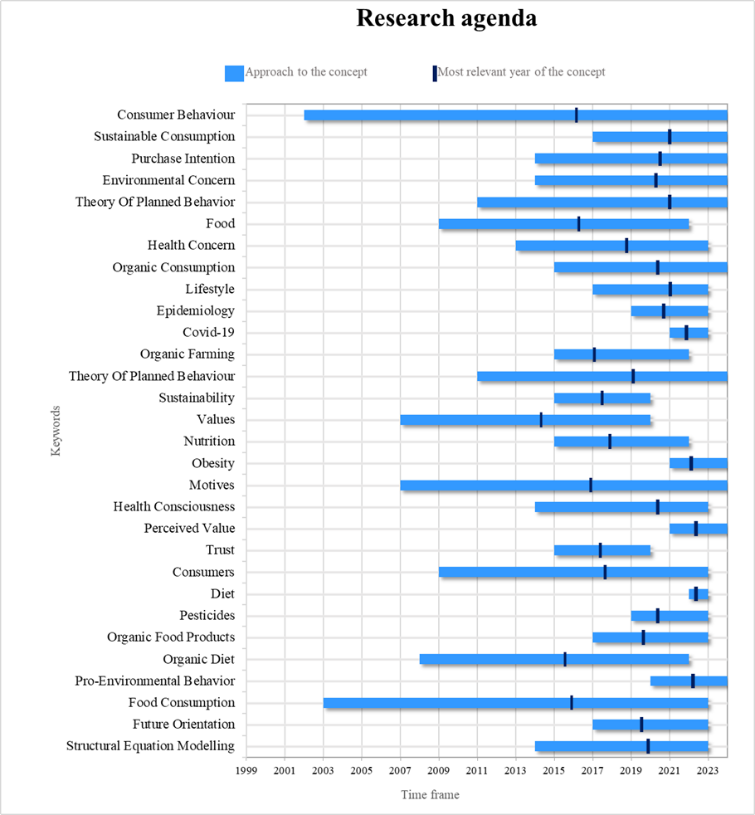
The research agenda formulated in this study is derived from an in-depth examination of the 30 key concepts illustrated in Figure 9. These concepts encapsulate the emerging and critical themes uncovered throughout the research process and form the basis for delineating future directions in the study of organic product consumption.
The study of consumer behaviour remains a crucial area of research on organic product consumption, as it can elucidate purchasing decisions and attitudes towards organic products. This concept helps researchers understand the impact of individual factors, such as perceptions of health and well-being, on the adoption of organic products. Similarly, an examination of consumer behaviour facilitates the identification of purchasing patterns, market segmentation, and the design of more effective marketing strategies. It is recommended that future research focus on the impact of changes in the social and economic milieu, such as heightened environmental consciousness or global health crises, on consumer behaviour regarding organic products. Moreover, it would be beneficial to examine how different generations and demographic groups respond to marketing strategies that prioritise sustainability.
The Theory of Planned Behaviour (TPB) is regarded as a foundational framework in research on intentions and behaviours related to the consumption of organic products. The present study proposes a comprehensive theoretical framework for analyzing the influence of attitudes, subjective norms, and perceived control on purchasing decisions. This theory has been extensively applied to predict behaviour across a range of contexts, and its application to the consumption of organic products facilitates the elucidation of the underlying mechanisms driving their purchase. In subsequent research, it would be advantageous to investigate the impact of emergent factors, such as the escalating concern about climate change or the sway of social media, on specific TPB variables. Furthermore, an analysis of the interplay between individual beliefs and social norms across diverse cultural contexts may yield valuable insights into effective strategies to promote the consumption of organic products.
The notion of sustainable consumption has emerged as a pivotal theme in the broader discourse on organic product consumption, underscoring the mounting imperative for consumption patterns that mitigate environmental degradation and promote global health and well-being. It is imperative to grasp this concept to understand how consumers select products that not only enhance their personal well-being but also benefit the environment. Subsequent research endeavors may examine how sustainability-oriented policies enacted by governments and corporations influence consumer purchasing behaviours towards organic products. The objective of this exploration is to shed light on the interplay between institutional frameworks and individual decision-making processes. This will contribute to a more comprehensive understanding of the dynamics underlying consumer behaviour in the context of sustainability. It would also be beneficial to investigate how consumers perceive and value sustainability certifications, and the impact of these perceptions on their purchasing behaviours.
The issue of obesity is becoming increasingly pertinent in the field of organic product consumption, given the clear correlation between obesity and health and well-being. There is emerging interest in the potential of organic products to help prevent and manage obesity, given the association between organic foods and the health benefits many consumers ascribe to them. It is recommended that further research be conducted into the potential of organic products to reduce obesity. The present study should focus on the specific characteristics of these products that may be most relevant to health, such as the absence of pesticides and additives. Furthermore, longitudinal studies could be conducted to analyse the long-term effects of an organic-based diet on the prevention of obesity-related diseases.
The concept of perceived value of organic products is an emerging area of interest within the field of consumer behaviour, and is identified as playing a crucial role in purchasing decisions. Consumers frequently value organic products for their perceived benefits, such as superior quality and reduced exposure to chemicals. It is imperative for companies to develop a comprehensive understanding of how consumers perceive the value of organic products to optimise their pricing and marketing strategies and ensure alignment with market expectations. It is recommended that further research be conducted to investigate the impact of economic and social changes on the perceived value of organic products. Furthermore, it is imperative to examine the effects of diverse variables, including production information and product credentials, on consumer perceptions of value.
The term ”diet” is increasingly prevalent in research on organic consumption. The adoption of an organic diet has been associated with healthier, more conscious eating habits (Lemke et al., 2024). Furthermore, there is an increasing interest in the impact of an organic diet on overall health and well-being. It would be advantageous to investigate the long-term effects of organic-based diets on health and to ascertain the specific benefits they offer compared with conventional diets in future research. Furthermore, an investigation into the relationship between individual dietary preferences and organic product choices could prove invaluable for developing educational programmes and health promotion strategies.
The issue of food is fundamental to the discourse on organic product consumption, as all related purchasing and consumption behaviours are inherently tied to food choices. Contemporary research has primarily focused on consumer perceptions of organic food, particularly regarding its quality attributes and associated health advantages. It is recommended that future research focus on the factors that influence consumers' decisions to purchase organic foods. Such factors may include price, availability, and personal preferences. Moreover, an inquiry into the repercussions of organic food accessibility across disparate regions and its impact on consumption patterns may furnish a more comprehensive perspective on improving access to organic products. The role of values in the consumption of organic products is significant, as purchasing decisions are often informed by personal values such as concern for health and the environment. The present study aims to investigate the values associated with the consumption of organic products and identify the factors that motivate consumers to select them over conventional alternatives. In future research, it would be pertinent to examine how alterations in social and cultural values impact the consumption of organic products. Moreover, it would be beneficial to investigate how personal values interact with perceptions of value and sustainability in the context of purchasing decisions.
The consumer is the focal point of any study on organic consumption. It is therefore essential to understand their motivations, attitudes, and behaviours if effective marketing strategies are to be developed. It is suggested that forthcoming research will examine how discrete consumer characteristics, including but not limited to age, income level, educational attainment, and lifestyle preferences, influence organic purchasing behaviour. A comprehensive understanding of these variations is imperative for developing more targeted marketing strategies and policy interventions. Furthermore, there is an increasing necessity to examine how technological developments, including e-commerce platforms and digital communication channels, are transforming how consumers access, evaluate, and choose organic products, ultimately influencing their decision-making processes in increasingly complex market environments.
The concept of an organic diet is currently receiving increased attention due to its alleged health and well-being benefits. As consumers become more aware of the effects of food on their health, interest in organic-based diets is increasing. It is recommended that further research be conducted to examine the long-term impact of an organic diet on health and disease prevention. Furthermore, it would be beneficial to analyze the perceived benefits of an organic diet, with a focus on variations across consumer groups. Additionally, the influence of these perceptions on purchasing decisions should be examined.
Conclusion
The bibliometric findings reveal a substantial increase in scholarly output concerning organic product consumption during 2022, 2023, and 2024. This upward trend indicates an escalating academic and societal interest in the subject, underscoring its growing pertinence in contemporary research agendas. This increase is reflected in the scientific literature, which shows a cubic polynomial growth pattern, indicating a continuous, accelerated expansion in the number of publications over time. Moreover, the most frequently cited sources in this field include seminal authors such as Chekima, Lairon, Hercberg, and Kesse, as well as highly influential journals such as the British Food Journal. France and Malaysia are at the vanguard of this field of research, demonstrating a diversified global interest.
A thorough review of the extant literature indicates a discernible evolution in focus, with the initial emphasis on the Theory of Planned Behavior having undergone a notable transition towards contemporary research on consumer behaviour and purchase intention. This phenomenon can be interpreted as an adaptation to novel domains of interest and practical applications. The principal thematic clusters, encompassing terms such as organic food consumption, obesity, pesticides, and diet, demonstrate a high degree of conceptual affinity. This suggests that these topics are interconnected in the study of organic product consumption.
The analysis of keywords indicates that established and expanding concepts, such as organic food consumption and obesity, remain prominent, while emerging terms, such as diet and perceived value, are gaining relevance. Evidence suggests an evolution in the areas of interest, with a concomitant adjustment towards new trends and perceptions in the consumption of organic products.
The present study contributes to the field in several ways, extending beyond the conventional descriptive mapping. The framework under discussion is evidence-based, connecting bibliometric insights with behavioural and sustainability theories. In establishing a methodological bridge between quantitative trend analysis and conceptual development, the framework thus connects two fields of enquiry. This integration has the potential to further advance the existing literature by providing both an empirical and a theoretical foundation for understanding how health, ethical awareness, and sustainable consumption converge to shape research on organic products. Accordingly, the study consolidates extant evidence and redefines the analytical tools available to scholars examining evolving consumption paradigms.
The originality of this work lies in its integration of bibliometric analysis with the study of organic product consumption, an area traditionally examined through empirical or case-based approaches. The present study constitutes a novel and pertinent contribution to the extant literature, as evidenced by the comprehensive review undertaken. The book provides a comprehensive overview of the field's evolution, emphasising its theoretical and practical implications for sustainability, consumer health, and market strategies. The present study addresses a specific gap in the literature by integrating bibliometric evidence into the field of organic product consumption, thereby challenging the predominance of isolated case studies. The present study contributes to the theoretical framework by establishing a link between behavioural models and research in sustainability and health. This objective is realised through the analysis of thematic clusters. In practice, it provides unambiguous guidance for both market actors and policymakers to develop strategies that leverage consumer health concerns and sustainability values, which are demonstrated to be central drivers in recent literature. To conclude, it is recommended that future research focus on further developing these emerging concepts. This will facilitate the resolution of the identified gaps and the advancement of a more comprehensive and up-to-date understanding of organic product consumption (See Figure 9).
Supplementary Materials
Supplementary material for this article is available online via https://doi.org/10.51300/JSM-2025-162.
Funding Statement
No external funding was received
Conflict of Interest
The author declares that there is no conflict of interest regarding the publication of this paper.
References
- . The influence of subjective and objective knowledge on attitude, motivations and consumption of organic food. British Food Journal, 113(11), 1353--1378. https://doi.org/10.1108/00070701111179988. CrossRef | Google Scholar
- . Personal determinants of organic food consumption: a review. British Food Journal, 111(10), 1140--1167. https://doi.org/10.1108/00070700910992961. CrossRef | Google Scholar
- . Understanding the Antecedents of Organic Food Consumption in Pakistan: Moderating Role of Food Neophobia. International Journal of Environmental Research and Public Health, 16(20), 4043--4043. https://doi.org/10.3390/ijerph16204043. CrossRef | Google Scholar
- . The role of subjective norms in theory of planned behavior in the context of organic food consumption. British Food Journal, 116(10), 1561--1580. https://doi.org/10.1108/bfj-05-2013-0105. CrossRef | Google Scholar
- . Eat organic – Feel good? The relationship between organic food consumption, health concern and subjective wellbeing. Food Quality and Preference, 63, 51--62. https://doi.org/10.1016/j.foodqual.2017.07.011. CrossRef | Google Scholar
- . Regional disparities in Web of Science and Scopus journal coverage. Scientometrics, 129(3), 1469--1491. https://doi.org/10.1007/s11192-024-04948-x. CrossRef | Google Scholar
- . Health in the motivational process of organic product consumption: A socio-psycho hermeneutical approach. Journal of Consumer Culture, 24(1), 45--63. https://doi.org/10.1177/14695405231181507. CrossRef | Google Scholar
- . Dietary intakes and diet quality according to levels of organic food consumption by French adults: cross-sectional findings from the NutriNet-Santé Cohort Study. Public Health Nutrition, 20(4), 638--648. https://doi.org/10.1017/s1368980016002718. CrossRef | Google Scholar
- . Association between organic food consumption and metabolic syndrome: cross-sectional results from the NutriNet-Santé study. European Journal of Nutrition, 57(7), 2477--2488. https://doi.org/10.1007/s00394-017-1520-1. CrossRef | Google Scholar
- . Urinary pesticide concentrations in French adults with low and high organic food consumption: results from the general population-based NutriNet-Santé. Journal of Exposure Science \& Environmental Epidemiology, 29(3), 366--378. https://doi.org/10.1038/s41370-018-0062-9. CrossRef | Google Scholar
- . Evaluation of factors related to organic food consumption and orthorexia nervosa tendencies. Food Science \& Nutrition, 12(5), 3585--3592. https://doi.org/10.1002/fsn3.4029. CrossRef | Google Scholar
- . Assessing determinants of organic food consumption using data from the German National Nutrition Survey II. Food Qual Prefer, 28, 60--70. https://doi.org/10.1016/j.foodqual.2012.08.010. CrossRef | Google Scholar
- . Understanding organic food consumption: attitude as a mediator. International Journal of Consumer Studies, 38(4), 337--345. https://doi.org/10.1111/ijcs.12094. CrossRef | Google Scholar
- . A literature review on the drivers and barriers of organic food consumption in China. Agricultural and Food Economics, 12, 18--18.
- . Understanding factors underlying actual consumption of organic food: The moderating effect of future orientation. Food Qual Prefer, 74, 49--58. https://doi.org/10.1016/j.foodqual.2018.12.010. CrossRef | Google Scholar
- . Narrowing the gap: Factors driving organic food consumption. Journal of Cleaner Production, 166, 1438--1447. https://doi.org/10.1016/j.jclepro.2017.08.086. CrossRef | Google Scholar
- . Bibliometric Indicators: Quality Measurements of Scientific Publication. Radiology, 255(2), 342--351. https://doi.org/10.1148/radiol.09090626. CrossRef | Google Scholar
- . Software survey: VOSviewer, a computer program for bibliometric mapping. Scientometrics, 84, 523--538. https://doi.org/10.1007/s11192-009-0146-3. CrossRef | Google Scholar
- . Increasing organic food consumption: An integrating model of drivers and barriers. Journal of Cleaner Production, 275, 123058--123058. https://doi.org/10.1016/j.jclepro.2020.123058. CrossRef | Google Scholar
- . Socio-environmental considerations and organic food consumption: An empirical investigation of the attitude of Indian consumers. Food Quality and Preference, 100, 104604--104604. https://doi.org/10.1016/j.foodqual.2022.104604. CrossRef | Google Scholar
- . Modelling the role of perceived marketplace influence and moral norms in organic food consumption: a moderated mediation approach. Management of Environmental Quality: An International Journal, 35(7). https://doi.org/10.1108/meq-08-2023-0239. CrossRef | Google Scholar
- . Understanding consumer resistance to the consumption of organic food. A study of ethical consumption, purchasing, and choice behaviour. Food Qual Prefer, 77, 1--14. https://doi.org/10.1016/j.foodqual.2019.04.003. CrossRef | Google Scholar
- . Bridging the Intention-Behavior Gap in Organic Food Consumption: Empirical Evidence from China. Foods, 13--14.
- . Global economic crisis impact on organic food consumption in the Czech Republic. Front Sustain Food Syst, 8, 1331257--1331257. https://doi.org/10.3389/fsufs.2024.1331257. CrossRef | Google Scholar
- . Intention-behaviour gap in organic food consumption: a dual-moderated mediation model. Asia Pacific Journal of Marketing and Logistics, 36(12). https://doi.org/10.1108/apjml-02-2024-0224. CrossRef | Google Scholar
- . The PRISMA 2020 statement: an updated guideline for reporting systematic reviews. International Journal of Surgery, 88--105906. https://doi.org/10.1016/j.ijsu.2021.105906. CrossRef | Google Scholar
- . Bridging the Gap: Exploring the Role of Locus of Control in the Transition from Environmental Concerns to Organic Product Consumption in North Portugal, a SmartPLS Study. Sustainability, 16(4), 1405--1405. https://doi.org/10.3390/su16041405. CrossRef | Google Scholar
- . Organic Food Consumption: The Relevance of the Health Attribute. Sustainability, 12(2), 595--595. https://doi.org/10.3390/su12020595. CrossRef | Google Scholar
- . Organic food consumption and contextual factors: An attitude-behavior-context perspective. Bus Strategy Environ, 32, 3383--3397. https://doi.org/10.1002/bse.3306. CrossRef | Google Scholar
- . Dispositional traits and organic food consumption. Journal of Cleaner Production, 266, 121961--121961. https://doi.org/10.1016/j.jclepro.2020.121961. CrossRef | Google Scholar
- . Drivers and barriers to adoption of regenerative agriculture: case studies on lessons learned from organic. International Journal of Agricultural Sustainability, 22(1), 2324216.
- . The pro--environmental consumer discourse: A political perspective on organic food consumption. International Journal of Consumer Studies, 45(2), 188--204. https://doi.org/10.1111/ijcs.12611. CrossRef | Google Scholar
- . Predicting organic food consumption: A meta-analytic structural equation model based on the theory of planned behavior. Appetite, 112, 235--248. https://doi.org/10.1016/j.appet.2017.02.007. CrossRef | Google Scholar
- . Assessment of the Sustainability of the Mediterranean Diet Combined with Organic Food Consumption: An Individual Behaviour Approach. Nutrients, 9(1), 61--61. https://doi.org/10.3390/nu9010061. CrossRef | Google Scholar
- . Conceptualizing organic food consumption: a consumer motive perspective. Cogent Social Sciences, 10(1), 2338864--2338864. https://doi.org/10.1080/23311886.2024.2338864. CrossRef | Google Scholar
- . Drivers and barriers of organic food consumption: a comparative analysis in Brazil, the U. S., and Europe. Journal of Consumer Protection and Food Safety, 19(1), 113--118. https://doi.org/10.1007/s00003-023-01469-2. CrossRef | Google Scholar
- . Level of market development and intensity of organic food consumption: cross-cultural study of Danish and New Zealand consumers. Journal of Consumer Marketing, 18(5), 392--409. https://doi.org/10.1108/07363760110398754. CrossRef | Google Scholar
- . Intention-behaviour gap and perceived behavioural control-behaviour gap in theory of planned behaviour: moderating roles of communication, satisfaction and trust in organic food consumption. Food Quality and Preference, 81, 103838--103838. https://doi.org/10.1016/j.foodqual.2019.103838. CrossRef | Google Scholar
- . Decisional factors driving organic food consumption: Generation of consumer purchase intentions. British Food Journal, 117, 1066--1081. https://doi.org/10.1108/BFJ-12-2013-0361. CrossRef | Google Scholar
- . How stable is the value basis for organic food consumption in China?. Journal of Cleaner Production, 134, 214--224. https://doi.org/10.1016/j.jclepro.2015.06.036. CrossRef | Google Scholar
- . Mainstreaming local organic foods: organic food provision in a fresh market to promote organic production–consumption system in emerging economy. Environment, Development and Sustainability, 27(12), 1--25. https://doi.org/10.1007/s10668-023-03823-8. CrossRef | Google Scholar
- . Organic Food Consumption among Households in Hanoi: Importance of Situational Factors. Sustainability, 13(22), 12496--12496. https://doi.org/10.3390/su132212496. CrossRef | Google Scholar
- . Consumer motivation for organic food consumption: Health consciousness or herd mentality. Frontiers in Public Health, 10, 1042535--1042535. https://doi.org/10.3389/fpubh.2022.1042535. CrossRef | Google Scholar
- . Values, Motives, and Organic Food Consumption in China: A Moderating Role of Perceived Uncertainty. Frontiers in Psychology, 13, 736168--736168. https://doi.org/10.3389/fpsyg.2022.736168. CrossRef | Google Scholar
- . Altruistic or egoistic: Which value promotes organic food consumption among young consumers? A study in the context of a developing nation. Journal of Retailing and Consumer Services, 33, 92--97. https://doi.org/10.1016/j.jretconser.2016.08.008. CrossRef | Google Scholar
About contributors

Luis Antonio Capelo Brito
Unidad de Profesionalizantes y Tecnologías, Universidad Casa Grande, Guayaquil, Ecuador
Ecuador
Alejandro Valencia-Arias
Facultad de Ingenierías, Corporación Universitaria Americana, Medellín, Colombia & Vicerrectoría de Investigación y Postgrado, Universidad de Los Lagos, Osorno, Chile
Chile
Sebastián Cardona-Acevedo
Coordinación de Investigación, Institución Universitaria Marco Fidel Suárez, Bello, Colombia & Grupo de Investigación en Innovación Educativa, Formación y Desarrollo Profesional - G-PIEFORD, Universidade Federal do Rio Grande do Norte (UFRN), Natal, Brasi
Colombia
Luz Elena Terán Calle
Facultad de Comunicación, Universidad Casa Grande, Guayaquil, Ecuador
Ecuador