





Abstract
Drawing on the Stimulus-Organism-Response framework, the study examines 55 male-led Instagram reels on food waste and 945 user comments to explore the relationships among message appeals (stimulus), affective reactions expressed in comments (organism), and platform-level symbolic engagement (response). Combining thematic analysis, sentiment scoring, hashtag analysis, and exploratory statistical analysis, the study reveals that stronger positive sentiment is generated by affective and inspiring appeals than by humorous or rational appeals. Further, an “appreciation-intention” gap was revealed, where, despite widespread appreciation for the content, expressed behavioral intention was limited. Statistical analysis indicated a modest association between engagement metrics and positive sentiment, but positive emotion does not consistently translate into expressed intention within the platform context. The study refines the application of the S-O-R framework to short-form video content contexts, highlighting structural limits of digital sustainability advocacy. Rather than demonstrating direct behavioral engagement, findings point to symbolic engagement in social media environments produced by sustainability messaging, offering insights for researchers and practitioners seeking to design sustainable communication that focuses on participation and engagement, beyond mere affective approval
Introduction
Food waste remains a pressing issue.Released in July 2025, the United Nations Sustainable Development Goals (UN SDGs) 2025 report states that global food waste in 2022 was 1.05 billion metric tons, amounting to 132 kg per person per year, representing around 20% of food lost globally.The household, restaurant, and retail sectors contributed to food waste, with household waste at 60% the largest contributor (United Nations Environment Programme, 2025). Food waste is a multidimensional issue.On the social front, food waste exacerbates hunger and malnutrition; on the economic front, it wastes valuable, scarce resources such as water. On the environmental front, it accounts for 8-10% of global greenhouse gas emissions, more than the aviation sector's emissions (Dhir et al., 2020; United Nations Environment Programme, 2025).
In the era of digital storytelling, short-form video content, such as Instagram reels, has emerged as a powerful medium for shaping users' attitudes toward sustainability (Smith & Sanderson, 2015; Horrich et al., 2025).Known for its audiovisual features, Instagram has become a popular platform for influencers and content creators to communicate about sustainability, including food waste reduction. While food waste campaigns on text-based platforms like Twitter have been explored in research (Jenkins et al., 2023), there is scarce research on food waste in the context of visually oriented platforms like Instagram, particularly on reels as the unit of analysis. The limited literature on food waste in the context of Instagram relates to the promotion of upcycled food (Ma et al., 2024), management of ugly produce, measurement of responsible food consumption (Terenteva et al., 2023) and chefs’ discourse of food aesthetics (Irimias & Volo, 2022).Of these studies, only (Irimias & Volo, 2022) included 20 videos of a chef on Instagram. Recent work has started examining the psychological mechanisms underlying sustainable behavior through social media (Andika et al., 2025), yet food-waste communication through reels remains academically underexplored. This study analyzes 55 male-led reels, a significantly larger sample size than prior Instagram reel-based literature.Following the announcement of the UN SDGs in 2015, with increased emphasis on reducing food waste, it would be critical to understand how digital advocacy on food waste is perceived by Instagram users, a rapidly expanding, powerful yet scarcely researched platform.
The Stimulus-Organism-Response (S-O-R) framework (Mehrabian & Russell, 1974) provides a useful structure to study how users engage with online content.Among the few studies that have utilized the S-O-R framework in the context of Instagram, most have employed surveys (Dhiman & Bhati, 2025; Ibrahim et al., 2025).The S-O-R model has scarcely been used to study Instagram reels. The study extends the existing work.Given the prominence of female sustainability voices in digital space, the focus on male-led reels is contextual and exploratory, offering insights into an underexplored area of sustainability communication. Male-led communication is not assumed to be superior; rather, the study aims to understand how this specific segment operates within the Instagram ecosystem. The purpose is to understand how this subset frames food-waste discourse and how audiences respond within the platform context.
The study explores the synergy among Instagram reels’ content (stimulus), the users’ emotional state in comments (organism), and symbolic engagement in likes and comments (responses). A creator-generated hashtag analysis was conducted to contextualize the wider thematic emphasis of food waste advocacy on Instagram. Hashtags not only index online content but also carry information related to cultural narratives, allied issues, and activism trends. By systematically analyzing hashtags through frequency analysis and thematic grouping, the study sought to reveal how content on food waste reduction is mobilized, contextualized, and framed in the reels, thereby deepening understanding of sustainability-led communication. Beyond the qualitative interpretation, a quantitative layer of exploratory statistical analysis was introduced to examine how message appeals influence user sentiments and whether emotional positivity translates into behavioral engagement.
The rest of the paper is structured as follows.Section 2 describes the theoretical foundation of the study, i.e., the S-O-R framework and its application in the digital sustainability discourse. Section 3 explains the study's methodology, including data sampling, filtering, collection, and analysis methods. Section 4 presents the study's results and findings.Section 5 discusses the theoretical and practical implications of the study. Section 6 concludes the study after presenting limitations and drawing an agenda for future research.
Literature Review and Theoretical Framework
Social Media and Sustainability Discourse
Social media platforms are used to shape public awareness and perceptions of sustainable consumption behavior through short videos called reels (Strähle & Gräff, 2016; Coman et al., 2025), content related to sustainable food consumption, such as leftover recipes, etc., has found traction on digital social media platforms like TikTok and Instagram, although academic research with respect to these platforms is limited in comparison to other platforms like Twitter, which have been widely studied. The present study responds to this gap by examining 55 male-led Instagram reels through the lens of the S-O-R framework. It adopts a mixed-methods approach, combining qualitative analysis with quantitative validation of the S-O-R model using sentiment and engagement metrics.
S-O-R Framework in Digital Platform Research
The Stimulus-Organism-Response (S-O-R) framework, proposed by Mehrabian & Russell (1974), provides a useful structure for studying how users engage with online content. Here, stimulus refers to the elements of online content presented in reels, such as visuals, audio, and text overlays. ‘Organism’ refers to the user's internal emotional state while engaging with the content and ‘response’ refers to the user's symbolic behavioral expression (Mehrabian & Russell, 1974). Organism and response may be inferred from patterns observed in user comments and engagement metrics. This framework has been widely applied in studies concerning environmental psychology (Kim & Hall, 2020) and sustainable communication (Rauschnabel et al., 2019). However, the S-O-R framework is underutilized in the context of visual social media like Instagram reels that advocate sustainability, a contextual gap that the current study seeks to address. Most previous studies are based on surveys (Hussain et al., 2022; Horrich et al., 2025) and narrative studies (Helgeson et al., 2022). While most S-O-R Instagram studies have relied on survey data from static posts (not reels), only Rashidin et al. (2026) have mentioned reels; however, their analysis was based on survey data rather than content analysis of reels. Accordingly, a focused sample of 55 reels, consistent with and comparable to emerging social media research on sustainability, was chosen for this study. The present study, unlike limited prior literature, combines qualitative and quantitative evidence derived directly from the digital content. This integration allows the present study to empirically examine the relationships among Instagram reels’ message appeals (Stimulus), users’ sentiment (Organism), and symbolic behavioral expression (Response). This analytical extension aligns with recent calls in sustainable marketing research to adopt hybrid methods for testing behavioral models using social media data (Afifa et al., 2025).
Users’ Comments on Social Media
The user-generated comments (UGCs) on social media posts are a rich source of information. Comments provide an organic, spontaneous dataset that reflects cognitive and affective user engagement with posts. While positive comments indicate acceptance of the content, negative comments indicate resistance or anxiety (Goh et al., 2013). Mining UGCs, therefore, helps identify user emotions, which may affect the overall efficacy of social media content. To analyze user-generated comments on the reels, the study utilized (Braun & Clarke, 2006) thematic analysis (TA) method. It is a method that offers flexibility for analyzing qualitative data and for observing, identifying, and reporting patterns within it. It is a six-step method including data familiarization, coding, theme identification, theme review, theme naming, and report production. The current study allows for the inductive emergence of themes from the comments. Accordingly, 945 user comments on 55 reels were examined.
Gender Framed Communication in Online Advocacy
In the context of social media research, gender may play a subtle yet critical role in the perception and acceptance of the message conveyed through the content. Sustainability communication on social media featuring male protagonists is under-researched in the extant literature, and the present study aims to address this gap. The study posits male-led communication as a bounded communicative segment, rather than attempting a comparative evaluation of gender effectiveness.
Despite the growing overall research interest in social media-mediated sustainability communication, three key gaps remain. First, extant research has focused primarily on text or image-based platforms (static content) while Instagram reels (dynamic content), which are increasingly central to digital engagement, have received scarce attention. Secondly, rather than studying actual user-generated content within the platform environment, much prior research has relied on survey-based methods. Thirdly, while the S-O-R framework has been widely used in prior studies, it has had limited application in analyses of organic social media data, particularly in visual sustainability contexts. To address these limitations, the present study adopts a mixed-method approach to offer a nuanced, empirically grounded examination of the S-O-R model in the context of digital sustainability.
Conceptual Framework and Research Questions
Conceptual Framework
In the domain of sustainable marketing, the S-O-R provides a robust framework to understand how consumers process sustainability information and respond through online actions (Dhiman & Bhati, 2025). The present study draws on the S-O-R model (Mehrabian & Russell, 1974) to explain how male content creators frame food-waste reels on Instagram (Stimulus), how users are affectively influenced by the content (Organism), and how they respond (Response). The stimulus here refers to the message appeal (e.g., rational, emotional, humorous, and inspirational), organism is represented by the emotional tone of the comments, reflecting users' internal states. The response component refers to platform-level behavioral engagement, operationalized through observable metrics such as likes and comments. It reflects mediated expression in the Instagram ecosystem rather than actual adoption of sustainable behavior in the real world. The framework is applied to understand symbolic engagement in a digital environment rather than real-world behavioral change. Together, the stimuli, organism, and response construct a passage that helps understand how sustainability messaging flows from the creator's intent to impact the audience. Importantly, the S-O-R framework functions as a partial model of influence in digital contexts, explaining how environmental stimuli shape emotional states and immediate responses, rather than capturing long-term behavioral change. The present study, therefore, interprets the response component as a symbolic, platform-bound engagement rather than as real-world sustainable behavior, a distinction that requires complementary frameworks, such as the Theory of Planned Behavior (Ajzen, 1991).
From Affective Engagement to Participatory Response: Conceptual Tension in Digital Sustainability
While sustainability communication on social media assumes that positive affective engagement leads to persuasive effectiveness, emerging literature suggests that symbolic approval may not translate into behavioral intentions. Users may express appreciation through likes and positive comments, but may not follow up with responses that indicate action. This creates a conceptual tension within the S-O-R framework: the stimuli may elicit organismic affect, yet the response may remain restricted to symbolic engagement. The present study examines this empirically in the context of male-led sustainability reels on Instagram. The following research questions are proposed:
-
RQ1: What message appeals characterize male-led Instagram reels advocating food-waste reduction?
-
RQ2: How do user comments reflect affective processing within the S-O-R framework?
-
RQ3: To what extent does expressed behavioral intention emerge alongside affective appreciation?
-
RQ4: How do creator-generated hashtags frame sustainability discourse in ways that may reinforce or limit participatory engagement?
-
RQ5: What patterns of association exist among message appeals, sentiment, and platform-level engagement within the S-O-R pathway?
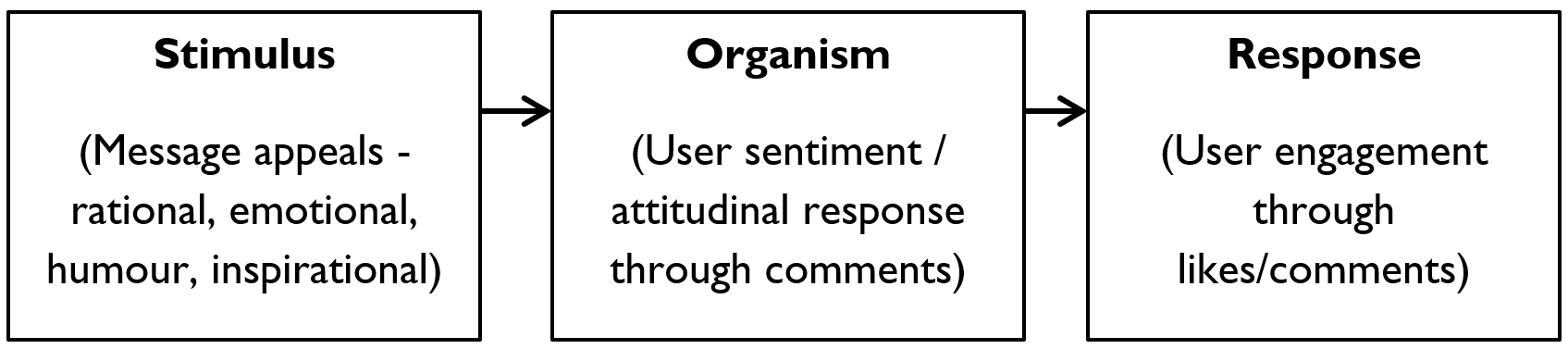
Source : Authors’ adaptation
Figure 1 shows the conceptual framework of the study. It shows the sequential flow of message appeal in the reels (Stimulus), the users’ emotional state expressed through comments on the creators’ posts (Organism), subsequently shaping their symbolic engagement (Response). This framework, aligned with the traditional S-O-R framework, is adapted to the context of digital sustainability. It includes both qualitative and quantitative indicators. Hence, the model serves as an integrated pathway within the Instagram ecosystem, connecting the content design of sustainability communication with audience-level reactions.
Methodology and Research Design
Research Design
To capture both interpretive depth and empirical patterns in the data, a mixed-method design was adopted. A qualitative analysis of the reel content (captions), user comments, and hashtags was initially conducted. Subsequently, a statistical analysis examined the contextual relationships in the S-O-R framework. This approach is suitable for analyzing organically generated social media data, where contextual interpretation can be performed before quantitative analysis. The study considered each reel as a unit of analysis. User comments and associated engagement metrics were treated as embedded data. Analysis of message appeals, examination of user-generated comments, and thematic grouping of creator hashtags constituted the qualitative parts of the study. The quantitative analysis involves exploratory statistical testing of the relationships among message appeals (Stimulus), average sentiment scores (Organism), and engagement metrics (Response). Researchers therefore adopted a ‘positivist-interpretivist’ position, in which quantitative and qualitative analyses complement each other to enrich the study's findings. This integrated design enables a comprehensive understanding of how sustainability communication operates within platform-mediated environments.
Data Source, Sampling, Inclusion/Exclusion Criteria
Instagram, a popular platform for hosting audio-visual content, was considered the data source. Unlike Twitter, which is better suited to text-based content, Instagram hosts images and short-form video content (reels). To meet its gendered communication objective, the study considered reels featuring a male protagonist. In addition, three other conditions were followed: reels exceeding 90 seconds were excluded to maintain consistency with short-form content norms. The final sample included reels ranging from 10 to 90 seconds. To collect the reels, Instagram was searched for ‘#foodwaste' in the reels section; the platform's recommendation algorithm auto-populated the most relevant and viral content, minimizing sampling bias. Reels were shortlisted until algorithmic saturation occurred, i.e., Instagram started repeating them. The study initially sampled 61 reels. From these, 3 reels with 0 comments, 2 non-English reels, and 1 reel with six minutes duration were removed. Thus, 55 Instagram reels, each 10-90 seconds long, in English, with 1 or more comments, and featuring male protagonists, were finally included for analysis. To protect the creator's identity, each reel was anonymized by assigning a unique ID. The dataset showed a higher proportion of reels from 2025, reflecting increased platform engagement with sustainability discourse and the algorithmic prioritization of recent content. The temporal distribution of reels highlights platform dynamics rather than the researchers' selection bias. Instagram's recommender system favors engagement velocity and recency, as reflected in the study's dataset.
Analysis of Content, Comments, and Hashtags
From the 55 reels, metadata such as reel link (URL), creator username, date of posting, context (household, restaurant, retail, etc.), duration (seconds), creator type (individual/organization-led), visual theme (e.g., spoiled food, compost), text overlay (present/not present), and call to action were extracted. Further, to perform organism-response (O-R) level coding in the thematic analysis of user-generated comments, 945 comments were extracted from the 55 reels, and a unique ID was assigned to each comment to protect the identity of the user (commenter). For reels having 10 or fewer comments, all comments were extracted; for reels having up to 50 comments, 15 comments were extracted; for reels having up to 100 or more comments, 25 comments were extracted. The ‘proportional’ extraction of comments helped maintain representation and sampling parity across both high- and low-engagement reels. For analytical clarity, only the text part of the comments was considered, while ‘emojis’ – pictorial icons that represent emotions and objects were not extracted.
The classification of comments into ‘organism’, ‘response’, or ‘none’ was grounded in the definitions of the S-O-R framework. Comments expressing affective reactions without behavioral indication were coded as Organism, whereas comments indicating intention, action, or commitment were coded as Response. Coding of message appeals was done inductively through iterative content analysis. Each reel was reviewed by two independent coders, who categorized the dominant persuasive strategy based on the reel's primary communication orientation. Appeals focusing on facts, figures, statistics, and data were coded as rational; those invoking the feeling of empathy, morality, or suffering were coded as emotional; those centered on comic, wit, or satirical framing were coded as humorous; and those emphasizing motivation, entrepreneurial success, or positive transformation were coded as inspirational. Where multiple appeals were present, coders identified the dominant appeal based on thematic prominence. Inter-coder agreement for appeal classification achieved Cohen's κ= 0.83, indicating significant reliability (Krippendorff, 2004; Neuendorf, 2017). For sentiment score calculation, each comment was given a sentiment score. The scoring scheme is detailed in the results section. An overall sentiment score was calculated for the entire dataset. Subsequently, an average aggregate sentiment index per reel was also calculated.
For hashtag analysis, the creators' reel captions were manually extracted for hashtags. Frequency analysis and thematic grouping were conducted to identify framing patterns around sustainability, e.g., #composting, #savefood, #mindfulconsumption. This provided contextual depth to the sustainability narrative.
Quantitative Analysis
To empirically validate the S-O-R relationships, quantitative testing was conducted using SPSS (Version 28). The analysis examined whether message appeals (Stimulus) influenced user sentiment (Organism) and whether affective positivity translated into symbolic behavioral engagement (Response). The quantitative analysis should be considered exploratory rather than confirmatory, given the modest sample size of 55 reels and 945 comments. The statistical tests conducted in this study provide directional evidence of relationships rather than hypothesis testing.
Each of the 55 reels was considered as a single case in the SPSS dataset. Four key variables were used for analysis: message appeal, average sentiment score, creator type, and weighted engagement. Based on the qualitative content analysis, four types of message appeals were identified: rational, humorous, emotional, and inspirational. Average sentiment (organism) score was calculated as the mean of the sentiment score of all the comments linked with a reel. It ranged from -1 (highly negative) to +1 (highly positive). The weighted engagement (response) was calculated using the following formula to capture the depth of user interaction with the reel.
A weight factor of 2 was assigned to comments to reflect their greater significance for engagement than likes. There were two creator types – individual and organization-led. Descriptive statistics (mean, SD, range, skewness, and kurtosis) were computed for all continuous variables to characterize distributions and identify outliers. Kolmogorov–Smirnov and Levene’s tests were conducted (p > 0.05) to assess normality and homogeneity of variance, respectively, confirming suitability for parametric analysis.
SPSS version 28 was used for conducting inferential statistics. The confidence level was set at 95% (α= 0.05). Three statistical tests were applied to examine the proposed S-O-R linkages. Firstly, a one-way Analysis of Variance (ANOVA) was performed to determine whether the mean sentiment scores differed significantly across the four message-appeal categories. The corresponding effect size was estimated using -squared (η²), calculated as:
An η² value of 0.01 indicates a small effect, 0.06 a medium effect, and 0.14 a large effect (Cohen, 1988). Secondly, Pearson and Spearman correlation tests were used to examine the association between sentiment (Organism) and engagement (Response). Both linear and monotonic relationships were captured using these complementary tests, ensuring robust results. Thirdly, an independent-samples t-test (with Welch's correction) was conducted to compare weighted engagement scores between individual and organization-led creators. The significance of this difference was estimated using Cohen's d.
All analyses were interpreted on the basis of effect sizes and p-values. This approach represents a balanced evaluation of the theoretical and practical significance. Tukey’s HSD post hoc test was conducted to examine significant pairwise mean differences among appeal types, thereby strengthening the study's methodological rigor by combining observational insights with statistical testing. This approach helped ensure that the relationships among content, sentiment, and symbolic engagement were interpreted both narratively and empirically, within the theoretical limitations of the S-O-R framework.
Ethical Considerations
During data extraction and analysis, ethical considerations were given due importance. Data was sourced only from publicly available Instagram reels. Reels and comments were assigned IDs to mask the identity of the creators and commenters, ensuring their privacy. Ethical research guidelines for digital data collection (Townsend & Wallace, 2016) were strictly followed. To minimize coding bias, inter-coder reliability was ensured. Transparency at every step of data collection and analysis ensured the study's trustworthiness.
Results and Findings
To ensure conceptual coherence and systematic presentation of findings, each research question (RQ) was addressed through a distinct analytical component of the study. While Section 5.1 provided a descriptive analysis of the data, RQ1, which examined the types of stimuli, was addressed through the content analysis presented in Section 5.2. RQ2 and RQ3, exploring users’ attitudinal and behavioral responses, were examined through thematic and sentiment analyses of user-generated comments in Sections 5.3 and 5.4, respectively. RQ4, focusing on the framing of sustainability messaging through creator-generated hashtags, was addressed by examining hashtag frequency and thematic clustering in Section 5.5. Finally, RQ5, which examined the empirical relationships among message appeals, user sentiment, and engagement under the S-O-R framework, was analyzed quantitatively in Section 5.6.
Descriptive Analysis
The study analyzed 55 male-led reels and 945 related user-generated comments, sampled using the Instagram algorithm and filtered by the hashtag “#foodwaste”. The analyzed reels were posted between 2021 and 2025, had a duration of 10-90 seconds, and were liked by 4,097,403 users (approximately 4 million users). While the sample included just one reel from 2021, it contained 25 reels from 2025. 4, 6, and 19 reels were posted in 2022, 2023, and 2024, respectively. This trend aligns with global awareness of food waste and the growing popularity of Instagram. While Instagram had 1.21 billion subscribers in 2021, it had approximately 2 billion subscribers as of 2025 (Statista, 2026).
The total screen time for the 55 reels was 2976 seconds, averaging about 54 seconds per reel. Minimum duration of a reel was 10 seconds, while the maximum duration was 90 seconds. It was observed that 13 reels had a duration of 80 to 90 seconds, while 9 reels had durations of 31 to 40 seconds and 61 to 70 seconds. Out of 55, 31 had a duration above 50 seconds, while only 11 reels had a duration of less than 30 seconds. It can be inferred that even in shorter video content, such as reels, creators produce relatively detailed content to facilitate effective understanding for the audience.
Turning to creator types, two were identified: individual and organization-led. In the individual creator type, an individual male was the creator and lead protagonist of the reel, whereas in the organization-led creator type, although an individual male was the protagonist, the reel was produced by an organization, such as a UN agency. The reels featured 35 individual creator types and 20 organization-led creator types. The higher proportion of individual creators suggests active male participation in food waste advocacy on the platform.
Instagram Reels as 'Stimuli'
In the S-O-R model, Stimuli refer to environmental elements that influence an individual's psychological state and behavior. For the purpose of the study, reel settings (context), presence or absence of text overlay, types of appeals in reel content (informative, emotional, humorous, rational, etc.), and call to action (CTA) with respect to food waste reduction, were considered as the stimulus elements, as these influenced the emotional state as well as subsequent response of the viewers. Household, food service (restaurants), retail stores, and agriculture (farming) were the four major contexts identified. Table 1 presents the contexts and the number of reels based on each. Approximately 53% of the reels focused on household waste management. This aligns with the United Nations Environment Programme 2024 report, which found that households are the largest global contributors to food waste. There were 5 reels that focused on farming. These reels highlight the importance of resilient supply chains, food security, and related issues. One reel had its settings in 'dumpster diving’, the practice of scavenging waste or dumps for useful items such as food and electronics, with the purpose of reducing waste and saving money. 3 reels were based on other contexts.
Table 1. Setting (context) of reels
| Reel Settings (context) | No. of reels |
| Household (kitchen) | 29 |
| Food service (restaurant) | 9 |
| Retail stores | 8 |
| Agriculture (farming) | 5 |
| Dump | 1 |
| Other | 3 |
Another important element was identified as text overlay, i.e., text description written over the video. 50 out of 55 reels (approximately 91%) had text overlays. This was done to ease the interpretation of the reel audio and enable viewers to understand the content while watching at zero volume. Most creators chose to include text overlays because their presence makes the reel more comprehensible, enhancing its impact on viewers.
In terms of appeals, i.e., persuasive strategies to influence the feelings of the viewers, it was found that the 55 reels carried four dominant types of appeals. These appeals were recognized as emotional, humorous, inspirational, and rational. It was observed that most of the reels, i.e., 32, carried rational appeal in which the dominant theme of the reel was numbers, information, innovation, and facts. 15 reels carried humor, 4 were emotional (featuring poor kids suffering from malnutrition, etc.) while 4 were inspirational (related to entrepreneurial success in leftover food ventures, etc.). It can be concluded that rational appeal was used by most of the content creators.
Different types of Call to Action (CTA) were recognized from the reels. CTAs are actions that creators expect viewers to take to reduce food waste. The major CTAs were food rescue (encouraging viewers to consume near expiry food, imperfect produce or food past their ‘best before’ date), leftover recipe (recipes for making dishes from leftover food to prevent it from going waste), freezing (freezing the food items to elongate its life), composting (making compost from unavoidable food waste), fermentation (preserving of food to increase its life span), sustainable storage (storing the food in zip bags, airtight containers etc. to prevent damage) etc. Table 2 lists all the CTAs identified. As indicated, most male creators were preparing recipes from household leftovers, preventing them from going to waste while also challenging gender norms. CTA for behavioral change included responsible purchasing, meal planning, etc. Food rescue, which encouraged consumption of food past their 'best before' dates and the use of apps like 'Too good to go' and 'Olio’, through which rescued food can be purchased at a discounted price, was encouraged in such reels. Composting, sustainable storage in zipper bags, and freezing were also popular CTAs in the reels. Innovative recycling included making decorative or cosmetic items from food waste. There was one reel in which the protagonist advocated following the South Korean model for reducing food waste, which has been very effective. The South Korean model involves mandatory food waste segregation, a pay-as-you-throw system, and RFID-based smart bins that track and charge households based on the quantity of food waste generated. In South Korea, this system is often cited as a benchmark for waste management policy, as it has significantly reduced food waste.
Table 2. Types of Call to Action (CTA) of reels
| Call to Action (CTA) | No. of reels |
| Leftover Recipe | 22 |
| Behavioral Change | 9 |
| Food Rescue | 6 |
| Composting | 3 |
| Sustainable storage | 4 |
| Biogas production | 2 |
| Freezing | 2 |
| Fermentation | 1 |
| Food sharing | 1 |
| Innovative recycling | 1 |
| Use of data analytics | 1 |
| Dumpster diving | 1 |
| Right harvesting | 1 |
| Following South Korea model | 1 |
Thematic analysis of User-generated Comments (Organism & Response)
Nine hundred and forty-five user-generated comments were collected for analysis, averaging approximately 18 per reel. The analysis was conducted in two stages. In the first stage, the comments were classified into 'Organism' (O) and 'Response' (R). Comments which exhibited emotional state of a user (e.g., ”wow”, ”amazing”, ”that's a great recipe”, ”loved your idea”, ”that is disgusting” etc.) were classified as Organism while those which depicted a behavioral intention (e.g., ”I wish I could do that”, ”I have been doing this”, ”I did this today”, ”I will freeze it now onwards”, ”My family uses this app”, ”I will never do it” etc.) were classified as response. Comments that could not be classified as either 'organism' or 'response' were labeled as 'none' (”my son!”, ”today's farmer's life”). Out of 945 comments, 519 comments were categorized as ‘Organism’, 180 comments were classified as 'Response' and 246 comments were categorized as ‘None’ as they belonged to neither O nor R. It can be observed that organism comments were approximately three times the response comments, highlighting that although the content of the reels triggered emotional state of many viewers, there were few of them who expressed behavioral intention. Thus, the analysis revealed an “appreciation–intention” gap in the male-led Instagram content on food waste.
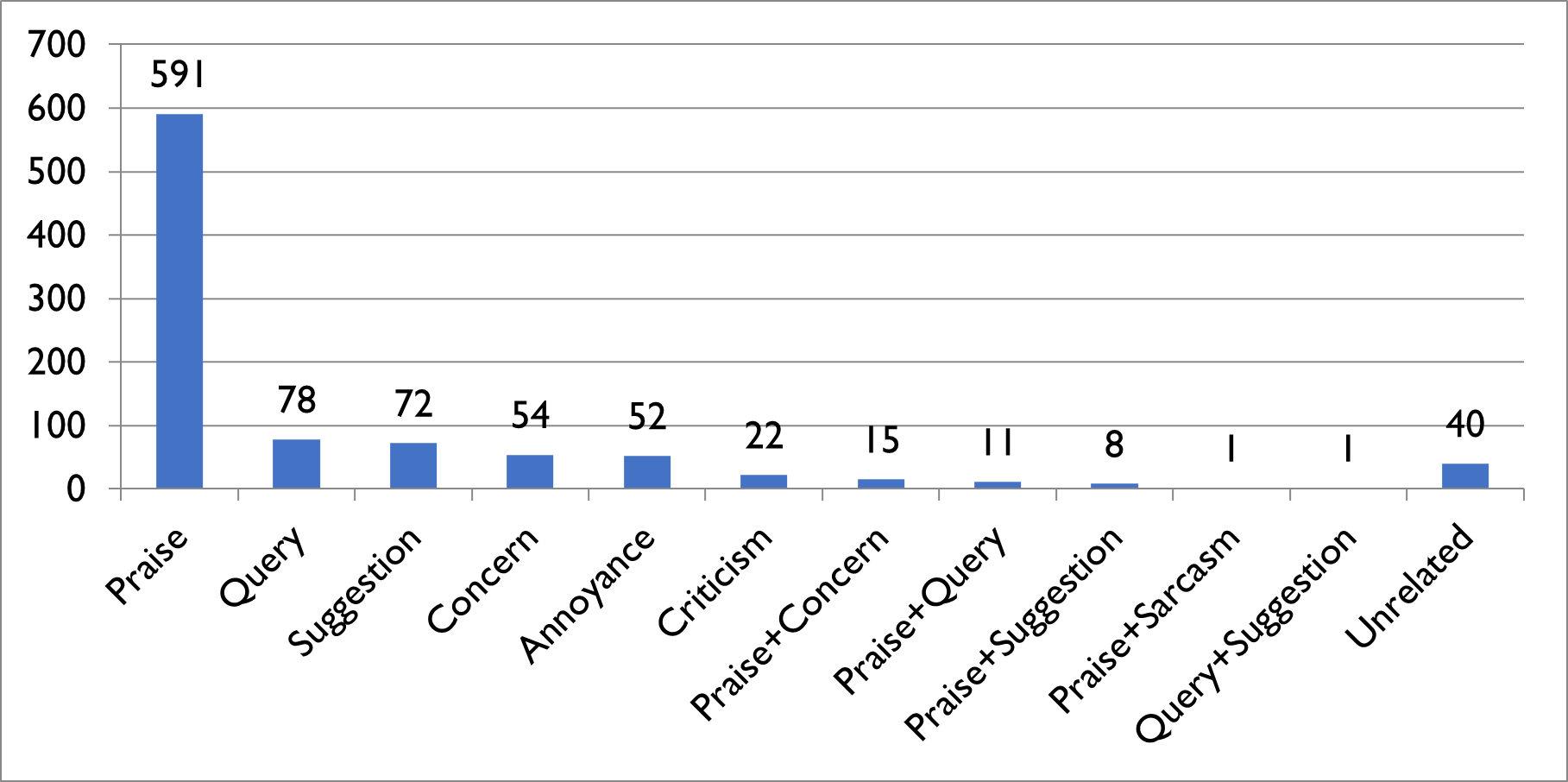
A deeper comment level analysis conducted using (Braun & Clarke, 2006) thematic analysis method revealed a thematic pattern in the comments; these were classified as pure emotions, like –‘praise’ (591 comments), ‘suggestion’ (72 comments), ‘query’ (78 comments), ‘concern’ (54 comments), ‘criticism’ (22 comments) and ‘annoyance’ (52 comments) or hybrid emotions, like – ‘praise + concern’ (15 comments), ‘praise + query’ (11 comments), ‘suggestion + query’ (1 comment), ‘praise + sarcasm’ (1 comment), ‘praise + suggestion’ (8 comments). Figure 2 shows the distribution of each type of comment. 40 comments were categorized as ‘unrelated’ as they did not fall into any of the above categories. The data show that praise is the dominant emotion in the comments, with approximately 63% of comments being pure praise. Thus, content about the male protagonist's food-waste reduction efforts was well received on Instagram. The presence of only 7% comments expressing criticism and annoyance shows that viewers received the content positively, offering suggestions and posting queries that showed their curiosity to learn more, while also expressing sustainability-related concerns. The predominance of positive comments suggests that male-led content on food waste is generally well received in the sampled context.
Source : Authors’ adaptation
Sentiment Analysis and Overall Sentiment Score Calculation
For sentiment analysis, the comments were assigned sentiment scores based on the degree of positivity or negativity. For example, pure praises such as ”Fabulous idea” or ”What a great recipe!” were assigned a score of +1, whereas pure criticism and annoyance like ”What a waste of electricity and water” and ”I tried, awful!” were assigned a score of -1 (minus one). Pure queries like ”do you have two fridges?”, ”Do you shop for 2/3/ or 4 weeks at a time?” was assigned a score of 0 (zero) because it conveyed a neutral sentiment. Comments carrying hybrid emotions were assigned scores accordingly. Table 3 shows the sentiment scoring scheme along with total scores for each comment type (praise, query, etc.), the overall sentiment score for all reels, as well as the average sentiment score per reel.
Table 3. Comment score assignment
| Comment type | Sentiment | Score | Total Score |
| Praise | Positive | +1 | 591 x +1 = +591.0 |
| Suggestion | Slightly positive | +0.5 | 72 x +0.5 = +36.0 |
| Query (pure) | Neutral | 0 | 78 x 0 = 0 |
| Concern | Slightly negative | -0.5 | 54 x -0.5 = -27.0 |
| Criticism | Negative | -1 | 22 x -1 = -22.0 |
| Annoyance | Negative | -1 | 52 x -1 = -52.0 |
| Praise + concern | Slightly positive | 0.5 | 15 x 0.5 = +7.5 |
| Praise + Query | Positive | 1 | 11 x 1 = +11.0 |
| Praise + Sarcasm | Slightly positive | 0.5 | 1 x 0.5 = +0.5 |
| Praise + Suggestion | Positive | +1 | 8 x +1 = +8.0 |
| Query + Suggestion | Slightly positive | +0.5 | 1 x +0.5 = +0.5 |
| Unrelated | Neutral | 0 | 40 x 0 = 0 |
| Overall sentiment score for all the reels | +553.5 | ||
| Average aggregate sentiment index (unbounded) | +10.06 | ||
Based on the above scoring scheme, the sentiment score for each comment type was calculated by multiplying the number of comments of that type by the assigned score (+1 for praise, 0 for pure query, and so on). For example, there were 591 'praise' comments, each with a score of +1; hence, the total score for 'praise' type comments was calculated as 591 multiplied by +1 = +591. Similarly, the total score for other comment types was also calculated. The overall sentiment score for all the reels was calculated by summing the sentiment scores for each comment type. It came to +553.5, a highly positive score, underscoring that the content was extremely well received by the audience. To provide a descriptive aggregate indicator, the overall sentiment score (+553.5) was divided by the number of reels, yielding an average aggregate sentiment index of +10.06 per reel. This value represents cumulative sentiment volume rather than the bounded mean sentiment score used in statistical analysis. It is noteworthy that, to avoid complications, an unweighted scoring scheme was adopted, with every comment given a weight of 1. The purpose here is to measure the affective tone (and not interaction strength). Therefore, comment weight has not been specifically shown in the calculations.
Hashtag Analysis
Hashtags (#) play an important role in categorizing social media posts. From a data analysis perspective, hashtags can serve as a lens for understanding content framing and classification. In the current study, 55 Instagram reel hashtags were collected and analyzed. Hashtag analysis was conducted to achieve the following objectives: identify the top hashtags in male-led Instagram reels related to food waste and group them into themes. To achieve this, firstly, the hashtags were extracted manually from the reels; thereafter, the hashtags were ‘cleaned’ – all hashtags were converted to lowercase, and spacing between hashtags, etc., was checked. Around 200 unique hashtags were identified. A frequency analysis was performed on the hashtags to identify the top hashtags, followed by a thematic classification. Table 4 summarizes the top hashtags identified.
Table 4. Frequency analysis of hashtags
| S. No. | Hashtag(s) | Frequency |
| 1. | #foodwaste | 55 |
| 2. | #zerowaste | 12 |
| 3. | #sustainability | 11 |
| 4. | #sustainableliving | 10 |
| 5. | #recipe | 7 |
| 6. | #leftovers, #healthyfood, #recycle | 6 |
| 7. | #cooking, #kitchenhacks, #ecofriendly | 5 |
| 8. | #goodnews, #easyrecipes, #reducewaste, #vegan | 4 |
| 9. | #mealprep, #endhunger, #socialimpact, #climatechange, #waste, #fitnessfood, #reelsinstagram, #awareness | 3 |
| 10. | #composting, #kids, #reducefoodwaste | 2 |
Thematic grouping of hashtags was conducted using an inductive content analysis approach as propounded by Braun & Clarke (2006). The hashtags were grouped in conceptually coherent themes. Table 5 lists the thematic grouping of hashtags.
Table 5. Thematic grouping of hashtags
| S. No. | Hashtag(s) | Thematic Group |
| 1. | #savetheplanet, #gogreen, #zerowaste, #ecofriendly, #recycle, #lowwaste | Environment and Sustainability |
| 2. | #reducefoodwaste, #foodwastenot, #foodwaste, #foodwasteactionweek, #foodwastetips | Food waste awareness |
| 3. | #diet, #caloriecounting, #fitnessfood, #healthyfood, #cleaneating, #gymfood, #weightloss, #dietician | Diet and Lifestyle |
| 4. | #leftover, #recipes, #recipe, #mealprep, #easyrecipes, #kitchenhack | Leftover recipe and food upcycling |
| 5. | #impactentrepreneurship, #toogoodtogo, #foodtech, #circularfood, #misfitsmarket, #sustainablebranding, #aiforgood | Startups and Entrepreneurship |
| 6. | #spreadpositivity, #socialimpact, #endhunger, #socialwork, #activist, #humanity | Campaigning and Social Media Activism |
| 7. | #italianfood, #southkorea, #sweden, #seoul, #texasroadhouse | Culture and Region |
| 8. | #viral, #instareels, #comedy, #hotelmanagement, #trending, #reelitfeelit | General hashtags |
Inductive thematic grouping revealed eight coherent themes ranging from environmental sustainability to social activism. Hence, male-led Instagram conversations on food waste were multidimensional, merging personal wellness, collective action, and pragmatic solutions.
Quantitative Results
To provide exploratory support to the qualitative findings, statistical testing was conducted using SPSS version 28. Four variables—message appeal, weighted engagement, average sentiment score, and creator type—were analyzed using one-way ANOVA, correlation, and independent-samples t-test. It is noteworthy that, in the statistical analysis, a weight of 1 was assigned to each like and a weight of 2 to each comment, because comments signify the depth of engagement. Table 6 presents the descriptive statistics of message appeals.
Table 6. Descriptive statistics of message appeals
| Message Appeal Type | No. of Reels (n) | Mean Sentiment (M) | SD | Mean Weighted Engagement |
| Emotional | 4 | 0.76 | 0.24 | 1210 |
| Rational | 32 | 0.60 | 0.36 | 1045 |
| Humorous | 15 | 0.57 | 0.29 | 1080 |
| Inspirational | 4 | 0.81 | 0.14 | 1265 |
| Total (N = 55) |
One-way ANOVA was applied to infer whether different message appeals (stimuli) had a significantly different effect on the average sentiment score (organism). The results of the test indicated a significant effect of message appeal on sentiment, F (3, 51) = 4.72, p = 0.006, η² = 0.22. The obtained -squared value (η² = 0.22) indicates that approximately 22% of the variance in user sentiment is attributable to the type of message appeal, indicating a large effect size (Cohen, 1988). To identify which specific groups differed, post-hoc pairwise comparisons were conducted using Tukey's Honestly Significant Difference (HSD) test. The Tukey HSD value was calculated as HSD = q × √(MSwithin / nh), where q is the studentized range statistic, MSwithin is the within-group mean square from the ANOVA table, and nh is the harmonic mean of the sample sizes. Results from Tukey’s test indicated that inspirational appeals generated significantly higher sentiment scores than both rational (p < 0.05) and humorous (p < 0.01) appeals, while the difference between emotional and inspirational appeals was not statistically significant. These findings imply that, in the context of the study, reels with inspirational or emotionally rich messages are more effective at evoking positive emotional reactions among users than those that rely on factual (rational) or humorous content.
A correlation analysis was performed between average sentiment scores (Organism) and weighted engagement (Response) to examine whether a positive emotional tone is associated with higher behavioral engagement. Pearson's correlation coefficient (r = 0.41, p = 0.002) suggested a moderate positive relationship between the two variables, suggesting that the reels generating more positive comments tended to receive higher user engagement. This was further supported by Spearman's rank correlation, which yielded a similar coefficient (ρ= 0.39, p = 0.003), indicating that the relationship was not affected by potential non-normality in the data. Thus, while positivity in user comments moderately predicted higher engagement, it cannot be inferred that affective appreciation consistently leads to behavioral action—reiterating the appreciation–intention gap observed in the study's qualitative findings.
To determine whether there was a significant difference in engagement between individual creators and organization-led creators, an independent-samples t-test was conducted. The results revealed no statistically significant difference in weighted engagement between the two groups, t(53) = 0.74, p = 0.46, d = 0.16. The small effect size (d = 0.16) suggests that both individual- and organization-led male reels attracted similar levels of audience interaction. This finding implies that in the study context, creator identity (individual vs. organization-led) does not substantially influence engagement outcomes. In other words, the content characteristics—particularly the emotional appeal—drive engagement more strongly than the creator's type.
Collectively, these statistical results provide exploratory support to the S-O-R pathway: Stimuli (message appeals) significantly affect Organism (user sentiment), while sentiment moderately predicts Response (engagement). Inspirational and emotional reels evoke stronger positive affect and higher interaction; however, the moderate correlation indicates that appreciation does not always convert into behavioral engagement—reinforcing the appreciation–intention gap highlighted qualitatively. The findings suggest that male-led advocacy for food-waste reduction is affectively influential but may remain symbolically bounded within the platform context. This is insightful for sustainable marketing communication. Table 7 summarizes the empirical outcomes for each research question, indicating whether the findings provide strong, partial, or limited support.
Table 7. Interpretation of findings
| Research Question | Analytical Approach | Outcome | Interpretation |
| RQ1 | Content analysis | Supported | Appeals identified |
| RQ2 | Thematic/sentiment | Supported | Positive affect dominant |
| RQ3 | Engagement analysis | Partially supported | Limited expressed intention |
| RQ4 | Hashtag analysis | Supported | Hashtag frequencies and clusters identified |
| RQ5 | ANOVA/correlation | Exploratory support | Moderate S→O; O→R limited |
Discussion and Implications
Discussion
The findings of this study contribute to the understanding of male-led sustainability communication through Instagram reels, particularly in the context of food waste. It shows how male-led Instagram reels frame content about food waste and how users perceive it. An in-depth study of 55 algorithmically sampled reels was conducted using thematic, sentiment, and hashtag analyses. 945 user comments were sampled and coded. S-O-R framework was applied to the reel content. Thus, an appreciation-intention gap was observed, underscoring the bounded explanatory power of the S-O-R framework. While the stimuli effectively generate emotional approval, this affect does not consistently translate into expressed behavioral commitment, suggesting that affective influence is a necessary but insufficient condition for sustainable action. Therefore, future research may integrate behavioral intention and habit-based frameworks. It was also revealed that user engagement with such content is multidimensional. Insights were uncovered from the analysis of creator hashtags: frequency analysis and thematic grouping revealed that reels focus on the individual, community, and practice. Content creators could use thematic groups to frame their content and bridge the appreciation-intention gap. The quantitative layer reaffirmed that content characteristics influence audience emotions, which, in turn, influence their responses. Importantly, the study does not merely demonstrate the power of digital sustainability messaging; it reveals its limits. The appreciation-intention gap emphasizes that symbolic engagement on social media and behavioral inertia may coexist.
From Intention–Behavior Gap to “Appreciation–Intention” Gap
The appreciation-intention gap observed in this study is analogous to, but conceptually distinct from, the well-documented “intention-behavior” gap in pro-social and sustainable consumption research (Ajzen, 1991; Sheeran, 2002). Whereas the intention-behavior gap refers to the failure of stated intentions to translate into behavioral action, the appreciation-intention gap represents an earlier discontinuity in the chain of persuasion, in which affective approval does not consistently progress to expressed intention within the platform context. In mediated environments, users may engage in symbolic appreciations (e.g., positive comments) without expressing a commitment to change, suggesting that digital sustainability communication may encounter friction even before the intention-formation stage theorized in reasoned action frameworks. While the Theory of Planned Behavior (Ajzen, 1991) emphasizes intention as a proximal predictor of behavior, the present findings suggest that, in social media contexts, affective appreciation may not reliably translate into intention, thereby introducing an additional layer of attenuation in the persuasive process.
This conceptual distinction identifies a pre-intentional discontinuity in a digital environment and, in this way, extends existing behavioral and sustainability literature. It suggests that affective approval, assumed to be a precursor to intention within the S-O-R framework, may serve as a terminal form of symbolic engagement in platform contexts. It refines the boundary of the S-O-R framework when applied to social media-based sustainability communication.
Theoretical Implications
The study contributes to sustainable marketing literature by advancing understanding of how sustainability communication outcomes are shaped by digital platform environments. It demonstrates that sustainability messaging on digital platforms may generate affective approval without significant progress to intention formation, introducing a structurally constrained pathway of influence. This challenges the assumption in sustainable marketing that positive affect and engagement translate naturally into pro-environmental intentions. The study identifies the appreciation-intention gap as a platform contingent phenomenon. Highlighting the reconceptualization of engagement metrics as indicators of symbolic participation rather than behavioral readiness, the study extends sustainable marketing discourse by underscoring the boundaries of digital advocacy and the importance of designing communication strategies with a participatory, action-oriented focus, beyond affect and visibility.
The study refines the application of S-O-R in digital sustainability contexts by identifying asymmetry between affective response and participatory expression. Rather than introducing a new theory, the study clarifies how established models operate in conditions of symbolic engagement. The findings highlight the limits of digital advocacy, particularly the disconnect between emotional appreciation and expressed behavioral intention within the platform. By doing so, the study contributes to the literature on platform-mediated sustainability communication and symbolic participation. The significant effect of message appeals on sentiment (stimulus-organism) shows that not all communication strategies elicit the same emotional responses. It shows that the audience connects more deeply with content that inspires and evokes emotions than with content based on plain facts and humor. This finding resonates with prior studies, such as (Arnesen, 2025), who emphasized that emotionally charged environmental messaging elicits greater psychological involvement. However, a moderate correlation between sentiment and engagement (Organism-response) highlights a persistent appreciation-intention gap. The audience may express appreciation and approval for the content, but avoid displaying behavioral intent to adopt the sustainable practices promoted through reels. In terms of S-O-R, this means that positive organismic responses do not automatically convert into behavioral responses in digital advocacy contexts. This aligns with research on prosocial communication, where symbolic engagement may be sufficient without behavioral change (Kristofferson et al., 2014; Sudirman et al., 2024; San Cornelio et al., 2024). Additionally, a non-significant difference between individual and organization-led content creators signifies that content framing does not depend on the creator’s identity. This finding contrasts with earlier assumptions that institutional sources command greater credibility (Rauschnabel et al., 2019). Instead, our findings suggest that individual creators can be as effective as organization-led creators in promoting sustainability narratives. Conceptually, the study moves beyond the straightforward application of S-O-R by highlighting a structural asymmetry within the model in the digital sustainability context. While the stimulus-organism pathway appears robust, the organism-response pathway shows diminution, suggesting that the affective approval may reflect a distinct form of symbolic engagement rather than a predecessor to S-O-R in participatory behavior. The study refines the S-O-R framework for mediated advocacy contexts. The study contributes to broader dialogue on environmental sustainability and to the digital marketing scholarship.
Applied Implications
Findings of the study indicate that Instagram-based sustainability communication is affectively compelling but behaviorally constrained. While male-led reels generate positive sentiment and emotional approval, translating appreciation into expressed behavioral intentions is limited, suggesting that visibility and affect do not automatically translate into action in digital sustainability advocacy. The results suggest that future research may examine whether more explicit, participatory, or accountability-based CTAs can reduce the appreciation-intention gap. These remain empirical questions rather than established prescriptions. The findings suggest that future research may examine whether combining clearer CTAs with engaging narratives enhances participatory expression. Future research may examine whether including easily executable actions, such as 'tag your food rescue moment' or 'share your leftover recipe’, enhances participatory expression to reduce the appreciation-intention gap. This type of content framing will elevate the intention component. The findings suggest that male-led sustainability communication can generate positive affective engagement on Instagram. However, without comparative evidence, no conclusions can be drawn about relative gender effectiveness. Male sustainability creators may challenge gender norms and attract a broader demographic. The hashtag clusters revealed many impactful frames – health and lifestyle, environmental activism, sustainable entrepreneurship, etc., creators can use hashtags that align with their areas of interest. Optimizing hashtags and following thematic coherence backed by algorithmic visibility on Instagram will ensure higher engagement with their posts. Socially, the study highlights how male-centered reels challenge the gender narrative around ‘kitchen responsibility’. The study also highlights the role of social media in promoting sustainability conversations; it shows how to develop an individual's sense of social responsibility for reducing food waste through collective action.
Limitations and future directions
Like any other research study, this study also carries certain limitations. Firstly, the study is limited to 55 Instagram reels; future studies may include a larger dataset. Secondly, for the purpose of analysis, the study considers only user-generated comments, while ignoring emojis, which could form an important component of analysis in future studies. Thirdly, in the hashtag analysis, the study has considered only creator-generated hashtags, ignoring user-generated hashtags. Future studies may also analyze user-generated hashtags. To address an important knowledge gap, this study intentionally focused on male-led Instagram reels, limiting generalizability across genders. The study does not compare male-led communication with female-led or non-gendered sustainability content. Therefore, no conclusions are drawn regarding gender-based effectiveness. The findings are limited to understanding the dynamics of one specific communication segment. Future research may include both male and female-led reels in similar or different contexts. The cross-sectional nature of this study's data collection limits causal inference. Future studies may consider conducting longitudinal tracking of users' sustainability sentiment. Despite its limitations, this study provides insights into how short-form, male-led sustainability storytelling on social media influences public perception and symbolic engagement. It offers both academic and practical value to the field of sustainable marketing.
Future research on this subject can take many directions. Contextually, cross-platform comparisons can be done by using relevant data from platforms other than Instagram, such as TikTok and Facebook. This will enable the researchers to discover platform-specific framing of sustainability-related content. Methodologically, machine learning-based sentiment analysis for larger datasets can be undertaken in the future, thereby rendering the analysis more robust (Kumar et al., 2023). Also, surveys or focus groups can complement purely social media-based analysis like this to provide additional evidence, support, and opportunities for triangulation. In addition, since visual cues such as emojis play a key role in shaping digital sentiment and self-presentation, future research could incorporate emoji-based or multimodal emotion analysis to deepen understanding of user affect (Vicari & Murru, 2020). Future research can also be extended to other sustainability contexts, such as plastic and fashion waste.
Conclusion
To conclude, this study provides multi-method evidence of how users perceive male-led Instagram reels on food waste discourse. The research integrated content analysis, sentiment analysis, thematic evaluation, hashtag mapping, and quantitative testing (ANOVA, correlation, and t-test). In addition to highlighting the multidimensional nature of user engagement, the in-depth comment-level analysis revealed significant appreciation for the online content but weak conversion of positive sentiment into expressed behavioral intention. By combining the S-O-R framework with comment analysis and applying hashtag analysis on a visually oriented platform such as Instagram, the study advances theoretical and practical aspects of sustainability communication in the digital ecosystem, offering an empirically grounded perspective on symbolic engagement in this context. By adopting a gendered lens, the study contextualizes the application of S-O-R within an underexplored segment of communication. It offers a replicable pathway for future social media studies contextualized in sustainability.
Funding Statement
This research received no specific grant from any funding agency in the public, commercial, or not-for-profit sectors.
Conflict of Interest
The authors declare that they have no known competing financial interests or personal relationships that could have appeared to influence the work reported in this paper.
Data Availability
The datasets generated during and/or analyzed during the current study are not publicly available due to data sharing and privacy guidelines presented, but are available from the corresponding author on reasonable request.
CRediT Authorship Contribution Statement
Ashish Awasthi: Conceptualization, Methodology, Data curation, Formal analysis, Investigation, Visualization, Writing – original draft, Writing – review & editing.
Arvind Virendranath Shukla: Supervision, Conceptualization, Methodology, Writing – review & editing.
S M Fatah Uddin: Methodology, Validation, Writing – review & editing.
Supplementary Materials
Supplementary material for this article is available online via https://doi.org/10.51300/JSM-2026-171.
Publisher Disclaimer
The views expressed in this article are solely those of the author(s) and do not necessarily reflect those of their institutions, the publisher, editors, or reviewers. The publisher and editorial team make no warranties regarding the accuracy or completeness of the content and accept no responsibility for errors, omissions, or any consequences arising from its use. The publisher remains neutral regarding jurisdictional claims in maps and institutional affiliations.
References
- . Pathway to Green Consumerism: Decoding the Interplay of Affective and Cognitive Green Brand Factors. Journal of Sustainable Marketing, . https://doi.org/10.51300/jsm-2025-132. CrossRef | Google Scholar | Luminous Insights
- . The theory of planned behavior. Organizational Behavior and Human Decision Processes, 50(2), 179-211. https://doi.org/10.1016/0749-5978(91)90020-t. CrossRef | Google Scholar
- . The Role of Social Media in Sustainable Fashion Adoption: Examining Psychological Mechanisms and Financial Constraints. Journal of Sustainable Marketing, . https://doi.org/10.51300/jsm-2025-144. CrossRef | Google Scholar | Luminous Insights
- . Unraveling the Threads: How Feedback on Sustainability and Exclusivity Drives Pride and Fosters Word-of-Mouth in Luxury Fashion. Journal of Sustainable Marketing, . https://doi.org/10.51300/jsm-2025-140. CrossRef | Google Scholar | Luminous Insights
- . Using thematic analysis in psychology. Qualitative Research in Psychology, 3(2), 77-101. https://doi.org/10.1191/1478088706qp063oa. CrossRef | Google Scholar
- . Statistical power analysis for the behavioral sciences. Statistical power analysis for the behavioral sciences. Lawrence Erlbaum Associates.
- . The Influence of Social Media Platforms on Promoting Sustainable Consumption in the Food Industry: A Bibliometric Review. Sustainability, 17(13), 5960-5960. https://doi.org/10.3390/su17135960. CrossRef | Google Scholar
- . When AI meets influencers: Role of AI-powered instagram influencers driving consumers’ purchase intentions: An integration of SMIV & SOR framework. Journal of Open Innovation: Technology, Market, and Complexity, 11(3), 100591-100591. https://doi.org/10.1016/j.joitmc.2025.100591. CrossRef | Google Scholar
- . Food waste in hospitality and food services: A systematic literature review and framework development approach. Journal of Cleaner Production, 270(5), 1461-1487. https://doi.org/10.1016/j.jclepro.2020.122861. CrossRef | Google Scholar
- . Social media brand community and consumer behavior: Quantifying the relative impact of user-and marketer-generated content. Information Systems Research, 24, 88-107. https://doi.org/10.1287/isre.1120.0469. CrossRef | Google Scholar
- . Narratives of sustainability in digital media: An observatory for digital narratives. Futures, 142, 103016-103016. https://doi.org/10.1016/j.futures.2022.103016. CrossRef | Google Scholar
- . Machine learning in marketing: Recent progress and future research directions. Journal of Business Research, 170, 114254-114254. https://doi.org/10.1016/j.jbusres.2023.114254. CrossRef | Google Scholar
- . Exploring the role of social media in shaping sustainable consumer behavior: a qualitative study. Cogent Business & Management, 12(1). https://doi.org/10.1080/23311975.2025.2560648. CrossRef | Google Scholar
- . Integrating the S-O-R Model to Examine Purchase Intention Based on Instagram Sponsored Advertising. Journal of Promotion Management, 29(1), 77-105. https://doi.org/10.1080/10496491.2022.2108185. CrossRef | Google Scholar
- . From perceived creativity and visual appeal to positive emotions: Instagram's impact on fast-food brand evangelism. International Journal of Hospitality Management, 128, 104140-104140. https://doi.org/10.1016/j.ijhm.2025.104140. CrossRef | Google Scholar
- . Food discourse: ethics and aesthetics on Instagram. British Food Journal, (13), 34-44. https://doi.org/10.1108/bfj-06-2022-0522. CrossRef | Google Scholar
- . Exploring Food Waste Conversations on Social Media: A Sentiment, Emotion, and Topic Analysis of Twitter Data. Sustainability, 15(18), 13788-13788. https://doi.org/10.3390/su151813788. CrossRef | Google Scholar
- . Can sustainable restaurant practices enhance customer loyalty? The roles of value theory and environmental concerns. Journal of Hospitality and Tourism Management, 43, 127-138. https://doi.org/10.1016/j.jhtm.2020.03.004. CrossRef | Google Scholar
- . Content analysis: An introduction to its methodology. Sage Publications.
- . The nature of slacktivism: How the social observability of an initial act of token support affects subsequent prosocial action. Journal of Consumer Research, 40, 1149-1166. https://doi.org/10.1086/674137. CrossRef | Google Scholar
- . Promoting Upcycled Food: An analysis of social media communication strategies of Upcycled Food Association. Future Foods: A Dedicated Journal for Sustainability in Food Science, 10, 100483-100483. https://doi.org/10.1016/j.fufo.2024.100483. CrossRef | Google Scholar
- . An approach to environmental psychology. MIT Press.
- . Food Waste Index Report 2024. .
- . {UN} Sustainable Development Goals Progress Report 2025. .
- . The Content Analysis Guidebook. SAGE Publications, Inc. https://doi.org/10.4135/9781071873045. CrossRef | Google Scholar
- . From cultural curiosity to culinary sustainability: how social food reels foster food culture preservation. International Journal of Contemporary Hospitality Management, 38(13), 28-48. https://doi.org/10.1108/ijchm-06-2025-0940. CrossRef | Google Scholar
- . Augmented reality marketing: How mobile AR-apps can improve brands through inspiration. Journal of Retailing and Consumer Services, 49, 43-53. https://doi.org/10.1016/j.jretconser.2019.03.004. CrossRef | Google Scholar
- . “It is the Voice of the Environment that Speaks”, Digital Activism as an Emergent Form of Environmental Communication. Environmental Communication, 18(4), 375-389. https://doi.org/10.1080/17524032.2023.2296850. CrossRef | Google Scholar
- . Intention—Behavior Relations: A Conceptual and Empirical Review. European Review of Social Psychology, 12(1), 1-36. https://doi.org/10.1080/14792772143000003. CrossRef | Google Scholar
- . I'm Going to Instagram It! An Analysis of Athlete Self-Presentation on Instagram. Journal of Broadcasting & Electronic Media, 59(2), 342-358. https://doi.org/10.1080/08838151.2015.1029125. CrossRef | Google Scholar
- . The Role of Social Media for a Sustainable Consumption. Springer Singapore. https://doi.org/10.1007/978-981-10-2440-5_12. CrossRef | Google Scholar
- . Hashtags, Resistance, and Reform: The Global Rise of Digital Activism. Sinergi International Journal of Communication Sciences, 2(4), 233-244. https://doi.org/10.61194/ijcs.v2i4.681. CrossRef | Google Scholar
- . Measuring the Level of Responsible Consumption Influenced by the Digital Environment: A Case Study of University of Barcelona and Bielefeld University Students. Information, 14(2), 73-73. https://doi.org/10.3390/info14020073. CrossRef | Google Scholar
- . Social Media Research: A Guide to Ethics. .
- . Number of {Instagram} users worldwide from 2013 to 2025. . Statista. Accessed: 2026-06-20. https://www.statista.com/statistics/183585/instagram-number-of-global-users/.
- . A Comprehensive Review on Sentiment Analysis: Tasks, Approaches and Applications. arXiv preprint arXiv:2311.11250. https://doi.org/10.48550/arXiv.2311.11250. CrossRef | Google Scholar
- . One Platform, a Thousand Worlds: On Twitter Irony in the Early Response to the COVID-19 Pandemic in Italy. Social Media + Society, 6(3), 2056305120948254-2056305120948254. https://doi.org/10.1177/2056305120948254. CrossRef | Google Scholar
About contributors

Ashish Awasthi
Birla Institute of Management Technology, Greater Noida, India
India
Arvind Virendranath Shukla
Birla Institute of Management Technology, Greater Noida, India
India
S M Fatah Uddin
Birla Institute of Management Technology, Greater Noida, India
India