



Abstract
Cet article concerne les rythmes à pulsations irrégulières ou bichrones (habituellement désignés en musicologie comme « aksaks ») dans la musique au Yémen. Ma réflexion prend pour point de départ la pratique d'un musicien yéménite qui, dans les mariages, introduit volontairement dans un cycle aksak une ou plusieurs pulsations supplémentaires afin d'empêcher les convives de danser et les obliger à écouter sa musique. De cette particularité née de la tension artistique (et sociale), entre la danse et la musique, émerge en toute lumière la propriété musicologique caractéristique des rythmes aksaks : leur irrégularité. Quelles formes celle-ci peut-elle revêtir ? Jusqu'où peut-elle aller dans le raffinement esthétique ? Et quelles fonctions peut-elle remplir ? Après avoir exposé les caractéristiques des deux principaux cycles rythmiques à pulsations irrégulières, à 7 temps et à 11 temps existant dans le Chant de Sanaa, l'article décrit ces mécanismes d'ajout, de soustraction et de répétition d'une ou plusieurs pulsations chez Yaḥyā al-Nūnū et chez Aḥmed 'Ušayš, deux musiciens qui exprimaient leurs objectifs esthétiques de manière relativement explicite. L'article examine également un procédé de composition qui transforme un cycle aksak en un rythme binaire par expansion d'une de ses pulsations irrégulières, également en vue de produire un certain effet sur l'auditeur (chez Moḥammed al-Ḥarīfī). Ces procédés que je qualifie de « modulaires » permettent d'approfondir la théorie de ces rythmes irréguliers depuis leur découverte en Europe centrale : ils convergent avec la notion de « rythme additif » telle que celle-ci avait été formulée par les musicologues Djoudjeff, Stoïn et Bartók, avant l'adoption du terme aksak par Constantin Brăiloiu. Plus globalement, ils ouvrent les rythmes aksaks sur les autres formes de rythmes car, selon l'expression de Curt Sachs, ceux-ci ne sont pas « sans portes ni fenêtres ». L'étude des aksaks en relation avec la poésie chantée soulève la question du rapport qu'ils entretiennent avec la métrique poétique dans les premiers écrits théoriques. arabes (notamment chez Avicenne et Farābī) Cette profondeur historique nous permet de mieux comprendre ce paradoxe : comment un musicien peut introduire de l'irrégularité dans la régularité, ainsi que de la régularité dans l'irrégularité, au point d'empêcher ses auditeurs de danser ?
This article concerns the rhythms with an irregular pulsation, the "bichron" or "aksak" ones in the music of Yemen. My reflection started from the practice of a Yemeni musician who, sometimes in wedding parties, introduces in an aksak cycle one or several additional pulsations in order to forbid people to dance, and to compel them to listen to his music. From this particularity which was born from the artistic (and social) tension between dance and music, comes out in full light the most characteristic feature of the aksak rhythms : their irregularity. Which forms may they take? Until which degree of artistic refinery? And which functions can they fulfill? After having exposed the two main irregular rhythmic cycles in the Song of Sanaa, the 7 beats and the 11 beats, the article describes these mechanisms of adding, subtracting and repeating one or several pulsations in the music of Yaḥyā al-Nūnū and Aḥmed 'Ušayš, two musicians who were assuming their esthetic purpose. The article examines also another process which transforms an aksak cycle in a binary cycle by expending one of its irregular pulsations, here too with the purpose of creating a certain effect on the listener (in Moḥammed al-Ḥarīfī's music). These techniques which I qualify as "modular" or "formulaic", allow us to elaborate more about the theory of the irregular rhythms. When they had been discovered in Eastern Europe at the beginning of the 20th century, they had been called "additive rhythms" by Bartók, Stoïn and Djoudjeff. Thus, there is a convergence between our Yemeni material and these early observations, although it does not dismiss Brăiloiu's work which called them "aksak" later on. More widely, these mechanisms open the aksak system on the other forms of rhythm, as, according to Curt Sachs, this system is not "without doors nor windows". Moreover, the study of the aksaks in relation to the sung poetry raises the question of the relation they entertain with poetic meters in the first writings on Arabian music (mainly Avicenne and Farābī). This historical depth allows us to better understand this paradox: how a musician can introduce irregularity in the regularity of rhythm (and vice versa), to the extend that he is able to forbid his audience to dance?
Notice
Revue des Traditions Musicales was originally published in print by Antonine University Press. It is now being republished by Luminous Insights Publishing House as part of the journal’s transfer.
This article is currently available in PDF format only. An HTML version will be available soon.
About contributors

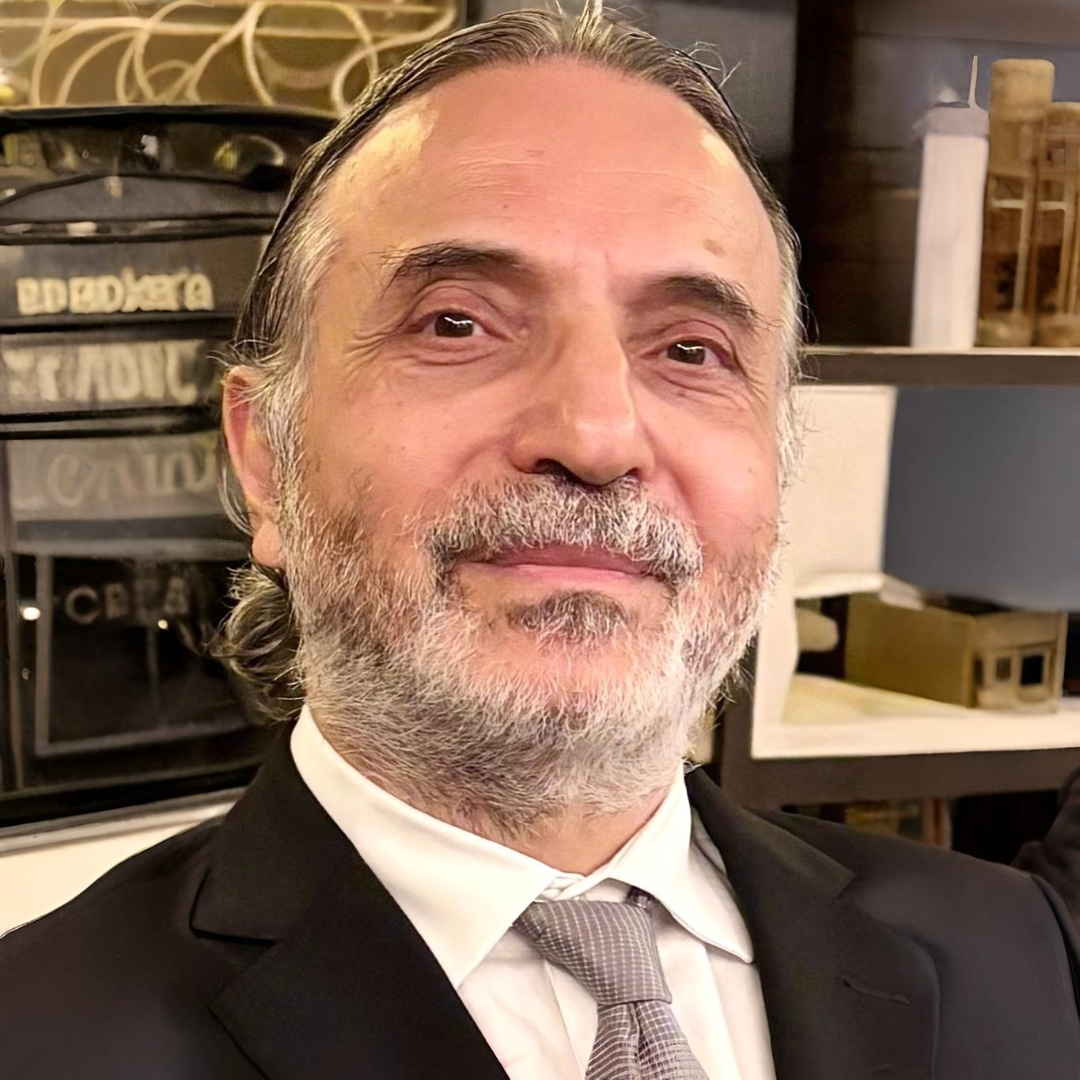
Jean Lambert
Laboratory of Ethnology and Comparative Sociology, Centre for Research in Ethnomusicology, University Paris Ouest Nanterre La Défense, Nanterre, France
France