





Abstract
Advertising has the power to create shifts in human behavior. Storytelling is a powerful, primal skill that humans have used for thousands of years. Storytelling and advertising share the same goal of persuasion, but this action is becoming increasingly difficult to achieve due to constant changes in the dynamic human environment. Advertising experts need to develop new approaches to engage, motivate, and inspire the desired actions. The climate change crisis and the need to promote ideas for climate neutrality require urgent strategies for moving forward. Storytelling's power to persuade is undeniable, but more practical, ready-to-use models are needed to help various experts reach and convince society to act. A systematic literature review was conducted, following the PRISMA checklist and organizing information using a combination of TCM and ADO frameworks. There is a lack of specificity and clarity about how stories should be presented and created. This knowledge is crucial in the context of the climate change crisis, which needs urgent, united, and mission-oriented actions from society. Further research should focus on specific story elements and other important strategic aspects of storytelling. Unity between storytelling and advertising can become a bridge between scientists and society.
Introduction
You’re never going to kill storytelling, because it’s built in the human plan. We come with it.” - Margaret Atwood
Storytelling is one of the oldest ways to connect with the world that surrounds us, to understand the past and the present, and to move toward the future (Lipsey et al., 2020; Boyd et al., 2022). Storytelling in the marketing field helps to overcome communication problems related to attention retention and conviction (Coker et al., 2021). Marketers use stories to create knowledge about a product, service, or idea in a way that encourages a deeper emotional connection with the concept and attributes meaning to the processes with which they interact (Domazet, 2020). Storytelling strengthens a brand by forming an emotion-based relationship with the target audience (Tsai, 2020; Keel & Tran, 2023) note that storytelling can convince people to take action if a practically ready-to-use methodology is provided.
Storytelling can become a powerful advertising tool, but a more structured understanding of how to utilize this tool is needed (Choi, 2023). In the current sustainable marketing context, Adamkaite et al. (2022) argue that it is essential for brands to take a stand and demonstrate that they care about broader societal issues and are willing to create a positive impact. We live in a constantly changing environment that affects how we communicate with society. The shift to digital methods in advertising changed the way an audience can be reached and understood (Baslandze et al., 2023). While there are more opportunities than ever to reach the audience, gaining and maintaining attention is one of the biggest challenges (Santoso et al., 2021). Attention is one of the most important and sought-after aspects of communication with consumers (Maslowska et al., 2021; McGregor, 2015). To overcome the challenges of a market overflowing with content, information, and strategic choices, the advertising field must transform (Paulson et al., 2018).
The advertising industry has a significant impact on the environment and society (Royne Stafford & Pounders, 2021; Hartmann et al., 2022) note the direct negative impact of the advertising industry, which encourages consumerism, makes false promises (e.g., greenwashing), and fosters short-term economic growth. Advertising is like a mirror of society, showing the current context while also forming new views, opinions, and even values (Sutiah et al., 2023). Society plays a crucial role in the road towards a more sustainable future, but change comes from the unity of all fields. Business is the most trusted institution according to the 2025 Edelman Trust Barometer (Edelman, 2025). High levels of trust in business create an opportunity for marketing to become a positive force towards climate neutrality goals. To achieve this, the advertising industry should be less one-sided, which is beneficial only to the advertiser (Dahlen, 2021). Brands can transform their impact by prioritizing social and environmental fields (Milfeld & Flint, 2020).
Climate neutrality or other climate change management goals cannot be achieved without a different approach to the relationship between humans and nature, while also ensuring active participation from society (United Nations Environment Programme, 2021). To ensure a clean future for generations to come, growth in various sectors and areas must happen with responsibility and a commitment to a better world for people and the environment (Ben Amara & Qiao, 2023). Evidence suggests that communication about climate change often features a negative and even tragic tone that tends to discourage people from taking the necessary actions to achieve the goals of climate neutrality and other positive areas (Hinkel et al., 2020). There is a need for a more effective way to communicate about the risks of climate change.
Taking into consideration the challenges of successful communication regarding climate change, the goal of this paper is to identify ways to achieve climate neutrality goals through storytelling advertising. In pursuing this goal, the manuscript aims to answer three main research questions:-
RQ1: What theories are the focus of current research in the context of storytelling, advertising, and climate neutrality-related issues?
-
RQ2: What are the main storytelling elements that are highlighted in the literature and that could help in the context of climate neutrality promotion?
-
RQ3: What are the guidelines for future research related to storytelling advertising being used for climate neutrality promotion?
Thus, this study reviews how storytelling is used in the advertising context, examining the specific methods and areas employed to achieve advertising goals. There is a need for a practical framework that enables marketing experts to effectively utilize storytelling in the context of climate neutrality. The study aims to identify the specific storytelling elements that must be used in practice to facilitate the implementation of necessary changes. The overall goal of the article is to identify areas where further research is needed and to provide a framework for future researchers.
Theoretical Background
Storytelling Advertising
Storytelling has been a part of humanity since the very beginning (Kim, 2020). Stories are a primal human tool used to give meaning to the world around us (Agirreazkuenaga & Ayllon, 2023). They are a fundamental part of human culture that changes along with other areas of society. Stories remain one of the most effective ways to address current issues and leave a lasting impact on the future (Weedon, 2018). When stories are used correctly, they allow us to present innovations in a way that helps people understand and attribute meaning to phenomena or specific processes (Boldosova, 2020).
Storytelling is implemented in marketing and advertising by using various forms of stories, techniques, and channels. Digital Storytelling [DST] is used to spread information to the audience by creating stories for digital media and serves various goals in the fields of education, health, and sciences (Musfira et al., 2022). Yang & Kang (2021) and Kasilingam & Ajitha (2022) note that storytelling is a powerful and cost-effective tool for spreading information to consumers about a specific product or brand, conveying details authentically and compellingly. In the context of tourism, stories help create a more favorable view of a particular place, country, or object (Bassano et al., 2019).
Stories enable us to understand situations more deeply, consider the outcomes of specific actions, and create knowledge that, in turn, can influence behavior (Lipsey et al., 2020). When used as a communication method, storytelling helps to find meaning in threatening, negative situations and various crises (Harris, 2023). Storytelling is also used to present data visualizations and help to engage the audience (Tong et al., 2018). Rhetoric and advertising share the primary goal of persuading the audience to take action (Biržietienė, 2012). Rhetorical elements, whether expressed visually or verbally, can enhance the emotional engagement of an advertisement (Mzoughi & Abdelhak, 2006).There is a tendency to underestimate the power of storytelling in raising awareness about important issues and the overall well-being of humanity. Storytelling is a lot more than just a simple entertainment activity. When used correctly, it can convey the importance of various subjects, alter an individual's perspective on a specific topic, or even influence value systems (Joosse et al., 2023). Stories are a powerful way to maintain the desired relationships with audiences in the context of public relations, while also providing crucial information or uniting society during crises or other issues (Keith, 2024). Storytelling is a powerful communication tool used during various crises. However, it is essential to pay attention to the tone and other elements of the story to encourage people without scaring, blaming, or discouraging them (Harris, 2023).
Some communicators prefer storytelling over presenting information based on facts and statistics because it creates an emotional bond through the use of sensory elements in a story (Bernier, 2020). Empathy is a crucial factor in the process of consumer engagement, and it can be achieved by incorporating specific elements into advertisements (Zou & Wang, 2021). The storytelling method is especially relevant in the context of business communication because sharing information convincingly requires building trust and creating an emotional bond with stakeholders almost immediately (Key & Duening, 2020). Stories are viewed as a powerful tool to overcome communication barriers with stakeholders and help present the desired information in the business world (Chapple et al., 2021). Innovations are typically accepted due to the conviction of stakeholders who have the power to help the idea succeed. Stories used to promote innovations need to be created with specific elements in mind: 1) context, 2) content, and 3) execution (Key & Duening, 2020).
With the various benefits that storytelling offers to the advertising industry, it is not surprising that it is becoming a more frequently used method. With an increasing focus on storytelling in the advertising field and practical examples of the technique being used by various brands, companies, and individuals, there is a wide range of ways to apply this method. Many different methods, elements, and approaches to using stories as a tool in advertising, especially in the field of climate neutrality, can create confusion when professionals or experts from other fields need to apply them. Fictional versus more official types of stories differ in the narrative structure used, but the main basic elements of the story are similar, despite the context in which it is told (Boyd et al., 2022).
For smaller brands, consistency in content creation is crucial, as is thoroughness in other advertising actions. In contrast, for larger brands, consistency is less important in the broader context (Becker & Gijsenberg, 2023). Authenticity and emotional engagement are key elements while conducting environmental communication to create a strong relationship with people (Dessart & Standaert, 2023). When advertisements are created using emotionally engaging tools, a deeper connection with the audience is formed, making the message easier to understand and remember (Otamendi & Sutil Martín, 2020). To achieve marketing goals, it is critical to understand or at least attempt to identify the associations that an audience has with a brand, product, or service (Chan et al., 2018). Furthermore, selecting the right characters for the story is crucial so that recipients of the message feel connected to the narrative. Highlighting a sense of community in a story is also essential for achieving unity and taking significant actions towards the main goal (Mocanu, 2020).
An important aspect of storytelling as a method in the advertising field is the type of story created in the content, as different types of stories represent and encourage different results and reactions from the message receivers. Storytelling is especially relevant when conveying not only what the consumer will gain from a specific product, service, or idea but also presenting the information in a way they understand, enabling them to make a more informed decision (Gasparin et al., 2022). Stories connect logic with emotions, and in this way, the decisions and actions made by people are rooted in a deeper understanding and willingness to respond and act. Rhetorical elements, whether expressed visually or verbally, can help make an advertisement more emotionally engaging (Mzoughi & Abdelhak, 2006).
Common themes emerge when one reads what experts in various fields have to say about climate change communications and related subjects. The point highlighted in various scientific sources is that communication must be crafted with a deep understanding of who the audience is, where they are going, and what they perceive as authentic. Authenticity is one of the most crucial elements of effective communication in today's context.
Storytelling Advertising to Promote Climate Neutrality
Storytelling is an integral component of overcoming communication problems with society; however, a deeper understanding of how stories should be presented and utilized in the context of advertising is necessary. Additionally, there is a need for enhanced knowledge on selecting the most suitable elements for messages focused on climate neutrality, a field that is particularly complex and often challenging to communicate to society.
To assist with the implementation of storytelling in advertising aimed at promoting climate neutrality, a systematic literature review is chosen as a research method. Social media and other new forms of communication can change how consumers behave and interact with each other, as well as with brands or individuals. To this purpose, traditional advertising methods also need to change (Joshi & Lakshmikantha, 2022). Companies/brands, or individuals, face specific challenges when presenting their efforts to mitigate adverse environmental impact. The primary issue is a lack of awareness and knowledge, which significantly impacts consumer trust, especially in a marketing environment overfilled with content and information (Domazet, 2020; Dhote & Kumar, 2019). To create relationships with consumers that are built on trust, it is crucial to find effective ways to disseminate information.
Climate neutrality is achieved by compensating for the emissions produced by a country, city, brand, or individuals, or by conducting activities in a way that does not create any emissions (Chen et al., 2022). Climate change affects not only physical health but also the mental health of people worldwide (Clayton et al., 2022). Children and young adults between the ages of 10 and 19 are particularly affected by climate change, with the primary emotions associated with the crisis being anxiety and worry (Treble et al., 2023). Managers and policymakers need to be exposed to additional approaches that can help alleviate the anxiety faced by younger generations (Stoica & Hickman, 2021).
The primary challenge that experts face in the current context of informing and encouraging society to act towards climate neutrality is striking a balance between presenting threatening and negative information and shifting the focus to solutions rather than negativity (Goldberg, 2022). Trust is one of the most crucial aspects for moving towards climate neutrality. To achieve climate neutrality goals, it is essential to identify the barriers that prevent people from adopting more environmentally friendly lifestyles. When creating content, various researchers note that achieving inclusion and united actions towards climate change solutions involves differentiating narratives based on target audiences (Gordon et al., 2018; Kang et al., 2020; Moreno et al., 2023; Fan et al., 2023).
Humanity and the environment are deeply connected in at least two ways: 1) humans cannot exist without it, and 2) people do have an influence on their surroundings and can create a negative impact with their actions (Omoyajowo et al., 2024). Susan Goldberg highlights the power of stories to change the world by uniting science with stories to create public awareness on various subjects (JPMorgan Chase \& Co, 2015).
Therefore, it is crucial to first target consumers who are receptive to change and willing to take action. Storytelling creates a more powerful way to change behavior compared to informational-based communication, which is logical and often features a commanding tone (Lipsey et al., 2020). Improving communication effectiveness and overcoming misinformation about climate change can be facilitated by increasing understanding of the target audience's actions and how they receive information (Krishna, 2021). Climate neutrality cannot be achieved without specific actions taken in various sectors, ensuring sustainable growth and that all actions contribute to the primary goal of achieving a bright future (Haller et al., 2023). Another important aspect of reaching the right audience is understanding who and what is trusted. People tend to make decisions by processing and accepting information that aligns with their existing views on various subjects (Park et al., 2025). Social media has changed the way people receive information, allowing misinformation to be spread more easily and creating a repetitive cycle of disseminating specific information, thereby reinforcing preexisting beliefs (Essien, 2025). Confirmation biases must be considered and addressed when making strategic decisions and utilizing tools such as storytelling in advertising. To move towards climate neutrality, it is crucial to understand human behavior, motivations, wishes, and expectations, and to create content that reflects these characteristics.
Materials and Methods
Qualitative research methods are employed to understand social phenomena, uncover the reasoning behind people's behavior, and identify ways to modify specific aspects of human understanding and alter value systems. These methods also help devise effective strategies to inspire particular actions (Bearman, 2019). Qualitative research is especially relevant in the context of climate change and its solutions (climate neutrality) for understanding how humans perceive this subject, why necessary actions are not implemented, and how to inspire people to become more responsible and active.
A systematic literature review [SLR] can provide a thorough overview of existing literature that is relevant to this research project. Additionally, research suggests that SLR is being increasingly used in scientific contexts (Smela et al., 2023). SLR can be used as part of a mixed-method design or as a standalone research tool (Rahman et al., 2022). SLR is useful in identifying relevant elements of a focal topic by providing conclusions about the subject while also offering guidelines for future research (de Oliveira et al., 2022). SLR review is often employed in the fields of business, management (Jadhav et al., 2023; Mukhopadhyay, 2024) to identify existing knowledge and pinpoint future research based on the gaps that are discovered (Majstorovic, 2016; Sauer & Seuring, 2023; Mukhopadhyay, 2024).
SLR is especially relevant in the context of this study, which aims to contribute to knowledge about the subject, eliminate repetitive sources of information, and ensure that the researcher conducts the process ethically and without bias (Ktisti et al., 2022). This is crucially important when trying to gain knowledge about storytelling advertising in the field of climate neutrality. Although this subject is widely discussed and researched, it still needs significant attention and practical application. In conducting SLR for this study, PRISMA guidelines were used to create trustworthy and reliable results.
PRISMA is often used in the field of social sciences, as well as in other types of research (Page & Page, 2020). SLR was performed by following the methodological examples provided by other authors in peer-reviewed journals (Priya & Sathish, 2024; Arman & Mark--Herbert, 2024; Page & Page, 2020; Tseng et al., 2019). The main structure of SLR was identified by following the basic principles of this research method: 1) definition of relevant phenomena in a research field; 2) data selection by use of specific exclusion/inclusion criteria; 3) choice of relevant articles for the field of the research; and 4) final articles inclusion procedure (Tseng et al., 2019). To achieve the desired level of confidence in the study’s literature review, PRISMA’s checklist was used (Page & Page, 2020). Use of the PRISMA checklist increases the likelihood that the selection process is conducted with the highest level of accuracy (Tedja et al., 2024). A ten-year timeframe was employed for sampling to enhance the reliability of the current information. Data selection for the literature review was conducted following the rules of the SLR research method.
Source. Adapted from Page & Page (2020).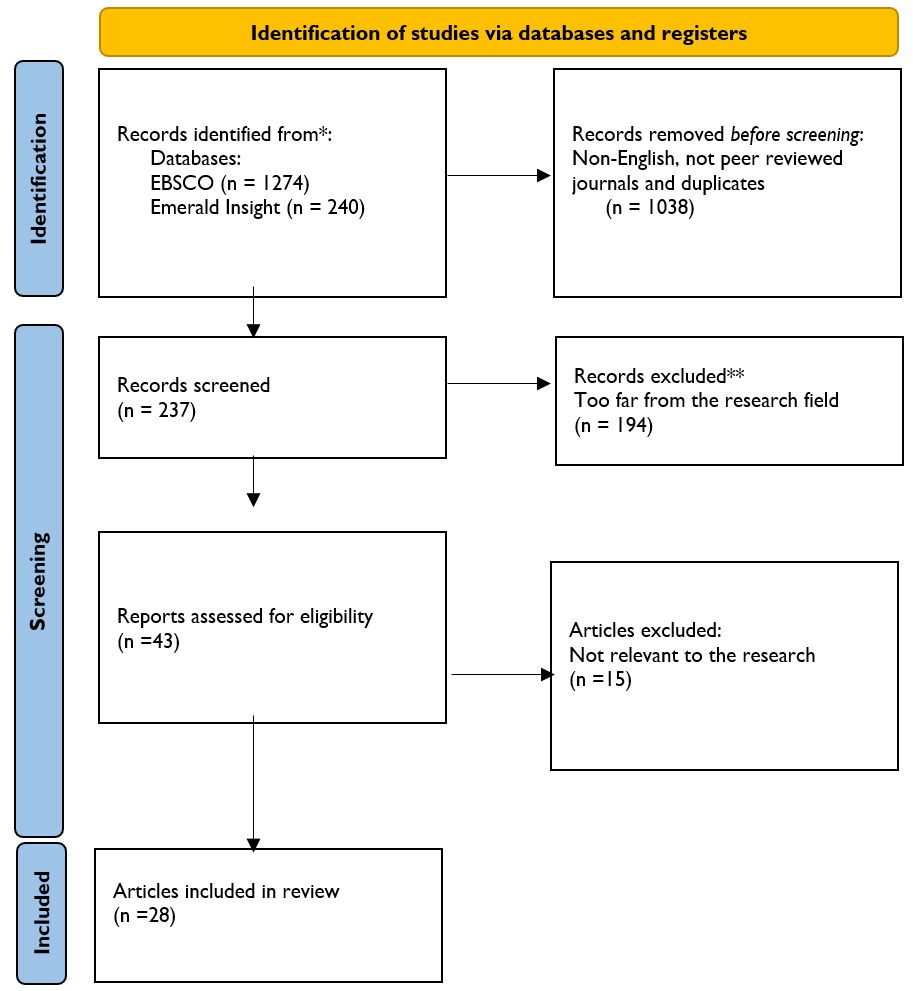
Articles chosen for the final analysis were selected by in line with the inclusion and exclusion criteria that follows: 1) publication year - 10-year period to see how the subject changed over time, the amount of research and attention it receives, while also finding the area where more research is needed; 2) only peer-reviewed journals were chosen to maintain the highest level of trustworthiness; 3) The languages: Lithuanian or English; 4) Full text version of the articles, and they all must be open access.
All the chosen articles that were analyzed in the final steps of the SLR are presented in the Appendix. Keywords that were used during SLR are: “storytelling advertising climate neutrality”; “storytelling advertising”; “storytelling advertising climate change”. Information collected during the final steps of SLR was organized by uniting the TCM and ADO (Priya & Sathish, 2024; Arman & Mark--Herbert, 2024) frameworks. Both frameworks, with the main information, can be seen in the second figure. The information collected during SLR was systematized using frameworks frequently used in the SLR method.
The ADO framework is made of three connected parts: 1) antecedents that represent the primary drivers/factors of behavior or other phenomena; 2) decisions represent strategies and actions taken with a identified antecedents in mind and finally 3) outcomes shows that kind results that are created because of the decisions taken by an audience (Thannikkottu et al., 2023; Paul et al., 2023). The TCM framework organizes the information within three areas: theory, context, and methodology. Three fields reveal theories formed in a specific field, the context in which those theories are formed, and finally the methodological tools used in that particular field (Paul et al., 2023).
Results
The research identified the usage of the storytelling method in various countries and in the context of different types of advertising. Key findings are presented by antecedents in the ADO framework (see second figure) and specify different storytelling elements, external factors, and cognitive aspects. The mentioned antecedents influence decisions that lead to specific outcomes. Unwanted consequences and barriers are also provided.
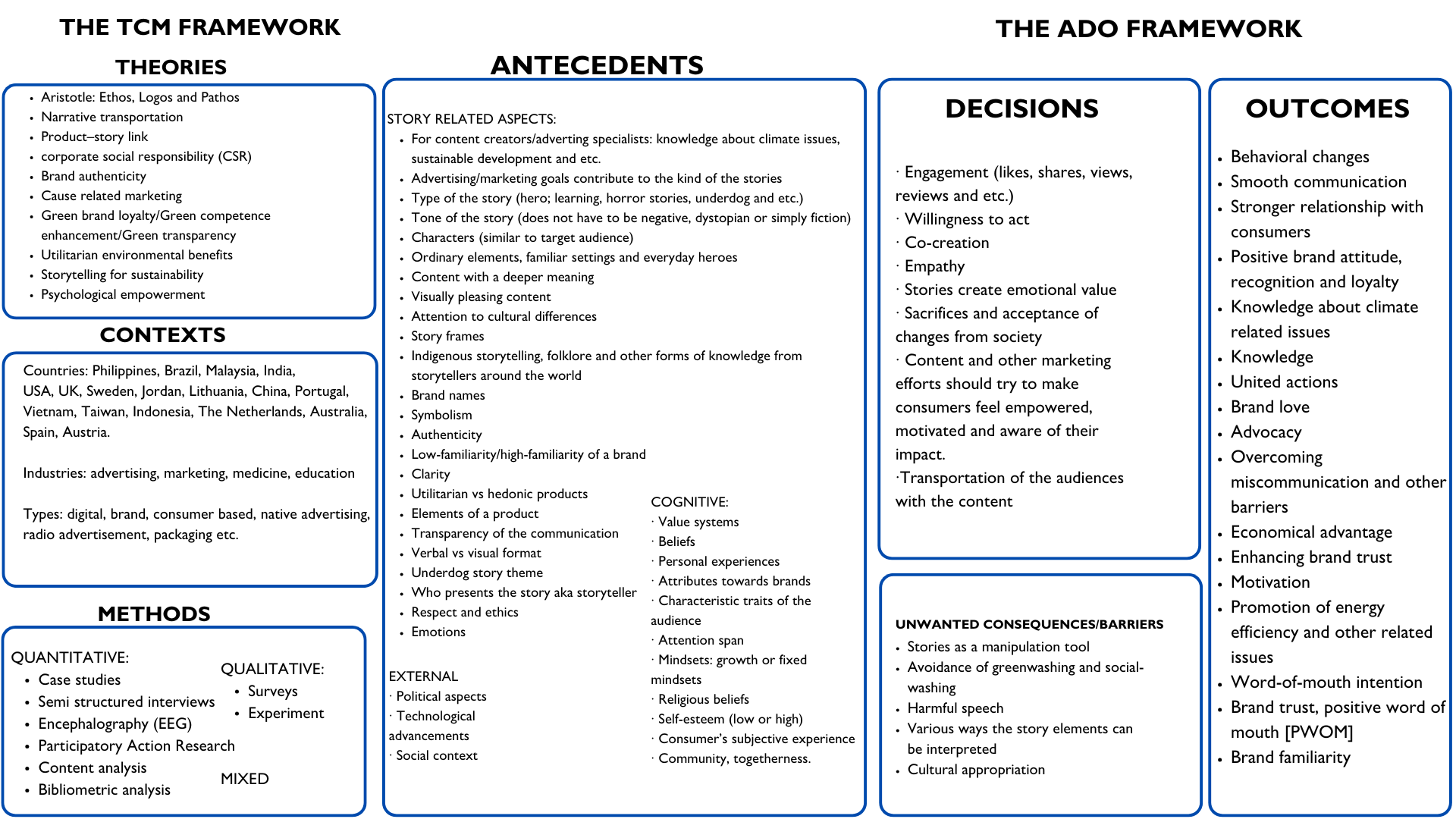
Source. Adapted from Priya & Sathish (2024) and Arman & Mark--Herbert (2024).
The figure summarizes current scientific knowledge about storytelling methods, while also highlighting the need for further research. The main findings show that storytelling is becoming part of marketing strategy in various forms: from ancient methods like Aristotle's persuasion triangle to more widely accepted theories like corporate social responsibility [CSR] and other theories more directly related to sustainability, ecology, and environmentalism. It should be noted that while these theories are crucial for various fields, advertising needs a storytelling approach that is unifying and more closely related to climate neutrality. The importance of the advertiser's knowledge, identified in multiple research studies, influences the theme, tone, and other fundamental elements of the story. While research provides an overview of various ways storytelling can be used in advertising, it lacks an explanation of which elements are crucial to every story. Brand image is presented as one of the aspects that creates a strong foundation for effective communication with an audience. All attributes of the brand should be considered, from brand name to familiarity. Cognitive factors highlighted in research emphasize the importance of gathering as much information as possible about the selected audience. A great deal of importance is attributed to the emotional approach and overall tone of the story, which should be chosen carefully. Positive emotions are often presented as more superior and effective in changing attitudes, encouraging change, and achieving other desired goals; however, more research is needed to determine which emotions can activate the audience to become more involved and take action. The choice of characters is another frequently mentioned factor that determines the success of the story. Authenticity, clarity, and transparency are presented as a basis for all communication. Outcomes from decisions made in response to the mentioned storytelling include changes in behavior, increased unity, and a more positive overall attitude towards a brand. While these and other mentioned outcomes are crucial and beneficial, future research should focus on inspiring actions related to climate neutrality and strengthening the relationship between nature and human beings.
Discussion
Theoretical Implications
Climate change issues are complex and require specific strategic tools, allowing for the use of methods such as storytelling. A variety of theories is crucial, but they should be further analyzed and united by providing specific steps on how to incorporate them into storytelling elements. First, the reasoning behind the effectiveness of the storytelling method was identified, highlighting this method's excellence and importance in the current context. In a market overflowing with content and information, stories have the power to create a deeper, emotional bond with consumers. Stories encourage the identification process, narrative transportation, and empathy, a cognitive process that can transform into action. With the proper methodological steps, storytelling can engage specific behaviors and actions more effectively than information-based content. Before discussing specific elements of the storytelling method, it is necessary to establish a strong, trustworthy foundation for the advertisement. The importance of advertisers' knowledge is highlighted by Harris (2023), who notes that authenticity is achieved by having knowledge about the practical object of the work.
Brands have a unique opportunity to take a stand and use their platform to educate, facilitate wise choices, focus on sustainability, and move towards a better future. When building a trustworthy relationship with customers, brands should strategically choose brand names (Joshi & Kronrod, 2019) and consider the brand's familiarity (Herédia-Colaço, 2022) when creating content. Specific aspects of a product/service/idea must be considered before choosing specific storytelling elements, one of which is the product category highlighted by Gong et al. (2022). The existing premonitions about a brand must be considered and researched to predict the audience's reaction to it. This study suggests examining not only the effectiveness of storytelling for climate change communication but also identifying which storytelling elements are crucial and how to integrate them into a cohesive creation. There is a focus on specific story types, highlighting the shift of the story tone to a positive one (Janda & Topouzi, 2015; Sabherwal & Shreedhar, 2022), but there's a need to identify which storytelling form, structure, character details, and other elements should be used to achieve a higher level of involvement from the audience.
Stories possess the ability to shape and sway societal beliefs, yet they also can manipulate or cause adverse effects. Guidance on how to avoid greenwashing/social washing should be applied (Rathee & Milfeld, 2023). Poor handling of sensitive knowledge from various cultures and the threat of cultural appropriation should be considered and avoided (Sabherwal & Shreedhar, 2022). Advertising should contribute to the greater good and avoid negatively impacting any stakeholders. The storytelling method can be advantageous in facing challenges posed by a dynamic environment, but there is a need to understand storytelling more deeply and create content with responsibility, clarity, and authenticity. The goal of the study does not end with this manuscript. The overall goal is to establish a framework with guidelines for marketing professionals and other experts on how storytelling advertising can be used to disseminate knowledge, inspire societal change, and contribute to a climate-neutral future.
Managerial Implications
This study identifies current knowledge that can contribute to the execution of storytelling methods more effectively, while also highlighting the need for further research. A strong relationship with the target audience is built by implementing theories and strategies that enhance the trustworthiness of the brand and advertising creators. Aristotle’s persuasion triangle is a powerful tool that various authors mention. Aristotle’s ancient knowledge creates a strong, trustworthy, and emotionally engaging basis for advertisements. There is a need to focus on specific target audiences and the most effective storytelling elements based on their characteristics that encourage actions related to climate neutrality. The creation of advertisements must be based on integrity and transparency. Trustworthiness stems from consistency and a commitment to upholding the brand’s virtues. Trust can and should be built by using tools like Aristotle’s rhetorical elements. Through the research, universally applicable concepts were identified that can enhance the current messaging and make it more story-like. The existing practices can incorporate storytelling elements into content creation by following the simple rules of the storytelling method. The third figure presents specific steps that can help make the current communication more storytelling-based.
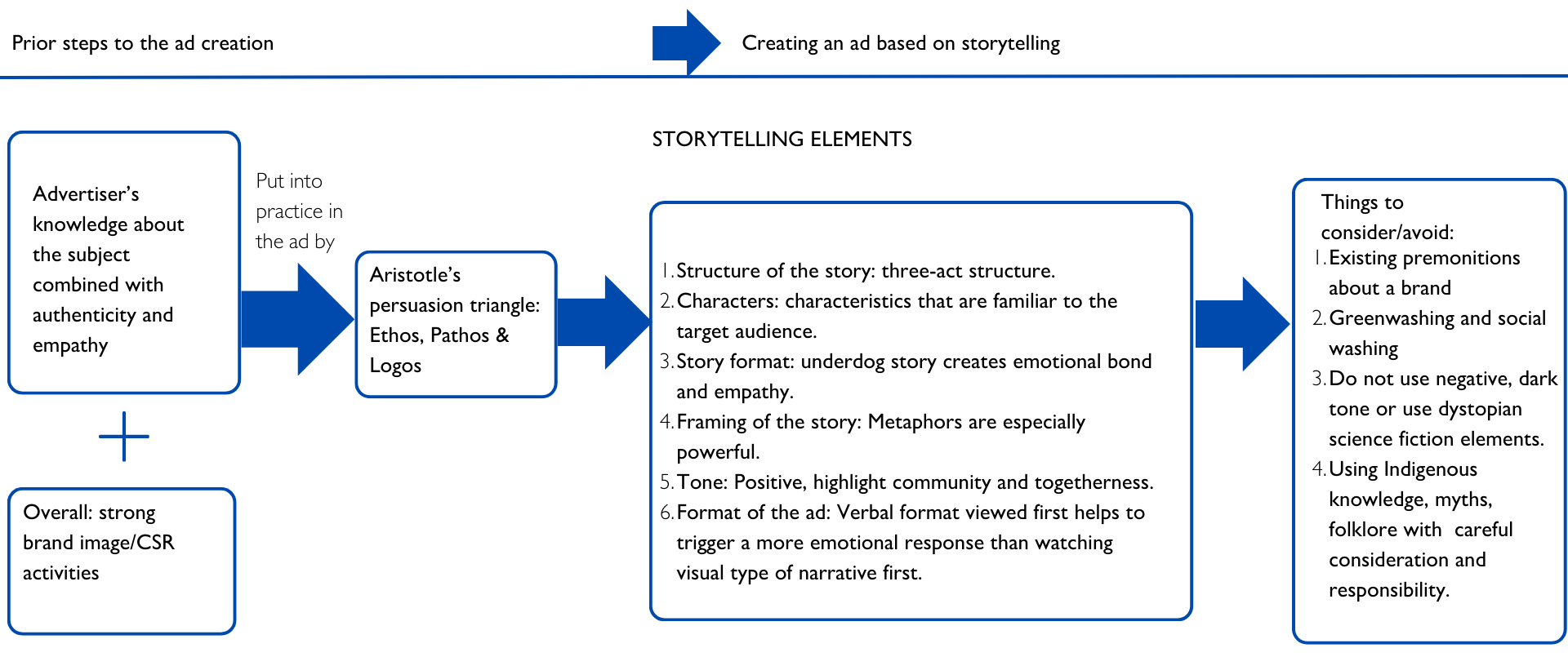
The third figure illustrates that current knowledge about storytelling advertising as a tool to promote climate neutrality is complex and lacks clarity on how to effectively incorporate and unite different elements. Future research should focus on storytelling elements that create a strong story while remaining relevant across various conditions, target audiences, and objectives. There are many different aspects, components, and ways in which stories can be created, but they need to be simplified and unified into a practical framework. For brands with limited budgets and experts from other fields who lack marketing knowledge, it is crucial to consider alternative strategies. The most significant gaps in further research should be addressed in terms of structure, format, and elements such as characters, tone, or specific emotions to be employed. There's a need to determine the optimal number of crucial elements to use in every story. Current knowledge highlights the importance of character design, which increases the likelihood of identification with the story. Greater immersion in the story is achieved by creating characters that are relatable to the audience. The story structure should be chosen based on the target audience's specific interests, values, and characteristics. For example, more open-ended endings can be more effective for those with growth mindsets, while others prefer a more direct and logical approach. The use of metaphors and symbolism helps make the content more memorable, even more so than an emotional or function-based approach.
The tone and frame of the story can depend on various factors, but generally, there's a tendency toward positivity and unity, with a focus on overcoming negativity and guilt. The tone of the story is another strategic step towards achieving the desired impact of the storytelling-based advertisements. Stories that highlight social value and evoke positive emotional reactions tend to be more effective than those that convey negative messages when it comes to environmental concerns (Gong et al., 2022). Clarity and authenticity should be the basis of all advertising efforts. Further research should identify which emotions are the most universally accepted and effective in the context of climate neutrality and are the most powerful in inspiring action. Research shows that sound symbolism is a crucial aspect of efforts to portray a brand's environmental impact and can be used to convey messages or add more weight to claims. The metaphorical tone of the messaging should be researched further to identify which metaphorical tools are most effective in climate neutrality communication. Brand awareness and other branding aspects should be considered before choosing a storytelling strategy and specific story elements. For example, low familiarity with the brands might become a competitive advantage and inspire actions related to climate neutrality more than brands with a higher familiarity rate.
Stories are especially powerful for attention retention, and their structure is one of the factors that determine this. For younger generations, shorter content is recommended to address issues such as short attention spans. There is a need to identify which structure of the story is more effective in terms of capturing attention and facilitating later stages of content reception. Storytelling is often associated with the arts, but there is a lack of understanding of which elements apply to other areas, such as climate neutrality communication. Advertising and marketing do not equal art, but they do incorporate elements from this field. Research that unites the arts with marketing, especially advertising and storytelling-based activities (such as cinema), would provide important insights into how to use stories effectively.
Overall, storytelling can achieve some degree of universal acceptance among various audiences, but the elements of the story that contribute to this should be identified through further research. To make current communication and advertising efforts more storytelling-driven, it is necessary to identify specific audiences and select story elements based on their characteristics. People encounter vast amounts of data and information about climate change and efforts to mitigate its negative consequences. Therefore, it is essential to find common ground with society by providing crucial information that people need to hear and understand the importance of acting urgently. To achieve better communication with society, we need to find tools to reach people and present information in a way that does not overwhelm them. This approach should generate knowledge about issues and propose ways to implement the necessary changes to move forward, rather than backward. This study identified important storytelling elements (third figure). Still, there is a lack of consistent guidelines on which elements are crucial and how they must come together in a cohesive story to achieve maximum success. When used correctly, storytelling advertising can serve as a bridge between scientists and other individuals seeking to achieve climate neutrality.
Limitations and Guidelines for Future Research
This study identified ways to enhance current marketing efforts by incorporating a storytelling-based approach, but it is crucial to acknowledge the limitations of this manuscript. This study was conducted to identify the current knowledge about storytelling in advertising, with a specific context in mind (climate neutrality). Exact literature combining all the subjects mentioned was not found. Articles chosen for the final step of the SLR were selected to cover relevant topics, and to achieve this, some articles had to have a slight overlap between the main research topics. Some articles focused on communication about climate issues and were not primarily about the main subject (advertising), but they were very relevant to this research. A slight deviation from the advertising field was necessary to address the lack of relevant scientific research on storytelling advertising concerning climate issues.
With storytelling becoming a more common practice in many fields, research on specific story elements to use is still being developed. More research is needed to develop a more practical method for utilizing storytelling in advertising, particularly in the context of a subject as crucial and challenging as climate neutrality. Research on storytelling advertising is often conducted to prove the effectiveness of the storytelling method compared to other methods. While research on the power of storytelling is relevant, it is essential to understand how to utilize this method, what elements are mandatory for all stories, and what additional elements should be incorporated to create compelling communication. Style, tone, structure, visual imagery, language, and other aspects of storytelling must be reviewed more thoroughly, keeping the subject of climate neutrality in mind. Maintaining climate neutrality in mind while conducting further research is crucial, as climate issues are complex, and it can often become challenging to see the broader picture of what needs to be achieved. There is a need to find an effective way to tell stories, identify specific theories and elements, and provide practically relevant guidance on creating content that will not only reach but also contribute to the behavioral changes of the target audience. In the third figure, future research directions are outlined based on an overview of current knowledge and research gaps identified from the selected articles during the SLR.
Further research should aim to identify specific story elements that contribute to positive behavioral changes in the target audiences. Differences among audiences must be considered, especially when creating content; more research is needed to determine what kind of content is most suitable for specific audiences. Engaging generations with different attention spans, value systems, and other attributes that influence persuasion is especially challenging. A common thread among the analyzed articles was the importance of authenticity in all areas of content. Trust is earned by being transparent, providing trustworthy information, and creating content with clarity; however, specific guidelines on how to establish trust-based relationships with society should be studied further. Research on ensuring authenticity in advertising content is highlighted as a crucial element for reaching and convincing people in the current context. It is recommended to employ a mixed-methods research approach. Using qualitative methods first would create a deeper understanding of how storytelling is used in advertising, gain knowledge from experts, and identify practical insights from real-life examples. Later, quantitative research can provide specific models of storytelling elements that should be used in advertising.
Table 1. Guidelines for future research and current research gaps
| Research gaps | Directions for future research | |
| METHODOLOGY | Quantitative methods (experiments most often) are more commonly used. | More research combining both quantitative and qualitative approaches would be more efficient. Case studies that portray how various types of stories are used in advertising to see patterns and the most effective elements. Interviews with professionals in the field who are using storytelling as a method. |
| CONTEXT | Lack of consideration about specific areas/countries and how the content should be different. Differences in actions according to specific types of advertising. Digital advertising is usually the focus of the research. | Story elements that must be used in every story. Story elements that are specific to some audiences only (age, culture, gender, or other characteristics of the audience). How to create a universally accepted story that overcomes the barriers of countries, cultures, or other specific factors. Looking into how to create stories with traditional advertising methods as well. For example, portraying a story with outdoor advertising. What kind of visual elements help to create an effective story with a single billboard? |
| FIELD | Most research is focused on storytelling effectiveness compared with other, more traditional advertising methods. More focus should be on HOW to create advertising content | What story elements contribute to changes in behavior? What kind of emotions are most likely to create lasting effects and encourage changes in behavior or/and values, opinions, or understanding of certain issues? The process of portraying content with authenticity. How to convey authenticity. What tone of the story is the most compelling in the context of climate issues? |
| THEORY/ PHENOMENA | How to portray types of stories used for climate issues; tone of the story; frame of the story. Guidelines for content creators (advertising professionals) to gain knowledge and take other important actions for authentic communication. How changes in behavior occur. How to use Aristotle’s persuasion triangle in advertising. Choosing the right story elements, tone, frames and other aspects of a story within climate change and climate neutrality fields. | Lack of specific guidelines on how various theories can be used. How to inspire behavioral changes with storytelling in advertising. How decisions are made and how to encourage wanted outcomes with stories. Guidelines on how to use Aristotle’s persuasion elements in stories are used in advertising. How do you portray ethos, pathos, and logos? How do you unite them? What kind of symbolism is relevant in the context of climate neutrality, and how to portray it in the content? Differences in content creation according to generations. How to ensure the trustworthiness of the content? |
Overall, a practical framework for storytelling in advertising is needed that experts can use to present information about climate neutrality and inspire action. Scientists and advertising experts must collaborate to share knowledge and make a positive impact on society. Storytelling and advertising can create a bridge between a person's heart and mind, but only when the story is crafted with a deep understanding of this tool. When used effectively, by combining science with art, stories can become a powerful tool to move towards climate neutrality. Future research should focus on utilizing different storytelling elements, various types of stories, and other aspects of storytelling, as well as integrating all these elements.
Conclusions
The main research gap identified in this study highlights the importance of adopting a more unified approach to storytelling methods and the need to identify specific storytelling elements crucial to every story, as well as the choice of analysis structures. It provides recommendations on how to diversify stories based on specific goals or audiences. While some storytelling elements are a basis for every story, others change depending on the context or goals. Further research should identify the basic storytelling elements that create a strong foundation for a story. For example, whether a story should follow the three-act structure in a linear or non-linear way is unclear. In addition, story structures like Joseph Campbell's Hero's Journey should be analyzed further to determine the optimal number of elements that can and should be used in storytelling-based communication about climate neutrality. Other research should focus on specific storytelling elements, such as characters (which characteristics increase the chance of identification) and tone (a positive tone is recommended, but it's important to identify which emotions to highlight). Additionally, it should consider the results regarding the usage of other elements accordingly. Furthermore, future studies should explore the universality of storytelling elements and their ability to resonate with diverse audiences and be applied in various contexts. It is also important to identify how to convey and transfer storytelling elements from one advertising format to another or create a transmedia storytelling strategy. In summary, future research should yield a theory-based yet practical storytelling framework that enables the effective use of stories in climate neutrality promotion contexts.
Supplementary Materials
Supplementary material for this article is available online via https://doi.org/10.51300/JSM-2025-158.
Funding Statement
This research received no external funding.
Conflict of Interest
The authors declare that there is no conflict of interest regarding the publication of this paper.
References
- . A conversation with National Geographic Editor Susan Goldberg. A conversation with National Geographic Editor Susan Goldberg. JPMorgan Chase \& Co.
- . Semiotics Analysis of Modern Drink Advertisements on the Palangkaraya Cafe Instagram Account. Channing: Journal of English Language Education and Literature, 8(2), 38--47. https://doi.org/10.30599/channing.v8i2.2844. CrossRef | Google Scholar
- . Systematic Literature Review Using {PRISMA}: Exploring the Influence of Service Quality and Perceived Value on Satisfaction and Intention to Continue Relationship. Future Business Journal, 10(1), 39. https://doi.org/10.1186/s43093-024-00326-4. CrossRef | Google Scholar
- . Telling stories that sell: The role of storytelling and big data analytics in smart service sales. Industrial Marketing Management, 86, 122--134. https://doi.org/10.1016/j.indmarman.2019.12.004. CrossRef | Google Scholar
- . Influence of Changing Technological Landscape on Indian Advertising Industry: A case study. Specialusis Ugdymas / Special Education, 43(2022), 1. https://sumc.lt/index.php/se/article/download/688/551.
- . Why it's important to tell stories that inspire action, not despair. . https://www.nationalgeographic.com/magazine/article/why-its-important-to-tell-stories-that-inspire-action.
- . Systematic Literature Review on Sustainable Consumption from the Perspective of Companies, People and Public Policies. Sustainability, 14(21), 13771. https://doi.org/10.3390/su142113771. CrossRef | Google Scholar
- . A literature review on green supply chain management: Trends and future challenges. Resources, Conservation and Recycling, 141(1), 145--162. https://doi.org/10.1016/j.resconrec.2018.10.009. CrossRef | Google Scholar
- . Global Report: Trust and the Crisis of Grievance. .
- . Stories of value: Business model innovation adding value propositions articulated by Slow Storytelling. Journal of Business Research, 149, 101--111. https://doi.org/10.1016/j.jbusres.2022.04.069. CrossRef | Google Scholar
- . Making Peace with Nature: A scientific blueprint to tackle the climate, biodiversity and pollution emergencies. Making Peace with Nature: A scientific blueprint to tackle the climate, biodiversity and pollution emergencies. United Nations Environment Programme.
- . The power of advertising in society: Does advertising help or hinder consumer well-being?. International Journal of Advertising, 40(4), 487--490. https://doi.org/10.1080/02650487.2021.1893943. CrossRef | Google Scholar
- . The impact of social responsibility on corporate financial performance in the energy sector: Evidence from Lithuania. Corporate Social Responsibility and Environmental Management, 30(1), 91--104. https://doi.org/10.1002/csr.2340. CrossRef | Google Scholar
- . Beyond the Power of Audio in Native Transmedia Storytelling: Synergies between Fiction and Reality. Social Sciences, 12(6), 344--344. https://doi.org/10.3390/socsci12060344. CrossRef | Google Scholar
- . The PRISMA 2020 statement: an updated guideline for reporting systematic reviews. BMJ, 71--71. https://doi.org/10.1136/bmj.n71. CrossRef | Google Scholar
- . Ethical Consumption: A Review and Research Agenda. International Journal of Consumer Studies, 48(5). https://doi.org/10.1111/ijcs.13079. CrossRef | Google Scholar
- . The Role of Environmental Attitudes in Explaining Public Perceptions of Climate Change and Renewable Energy Technologies in Lithuania. Sustainability, 13(8), 4376--4376. https://doi.org/10.3390/su13084376. CrossRef | Google Scholar
- . The expansion of varieties in the new age of advertising. Review of Economic Dynamics, 50. https://doi.org/10.1016/j.red.2023.07.008. CrossRef | Google Scholar
- . Storytelling about places: Tourism marketing in the digital age. Cities, 87, 10--20. https://doi.org/10.1016/j.cities.2018.12.025. CrossRef | Google Scholar
- . Making Ads Stick: Role of Metaphors in Improving Advertising Memory. Journal of Advertising, 53(1), 1--18. https://doi.org/10.1080/00913367.2022.2089302. CrossRef | Google Scholar
- . Focus on Methodology: Eliciting rich data: A practical approach to writing semi-structured interview schedules. Focus on Health Professional Education: A Multi-Professional Journal, 20(3), 1--11. https://doi.org/10.11157/fohpe.v20i3.387. CrossRef | Google Scholar
- . Consistency and commonality in advertising content: Helping or Hurting?. International Journal of Research in Marketing, 40(1). https://doi.org/10.1016/j.ijresmar.2022.05.004. CrossRef | Google Scholar
- . From economic growth to inclusive green growth: How do carbon emissions, eco-innovation and international collaboration develop economic growth and tackle climate change?. Journal of Cleaner Production, 425. https://doi.org/10.1016/j.jclepro.2023.138986. CrossRef | Google Scholar
- . Sustainability Storytelling Is Not Just Telling Stories About Sustainability. Elsevier, Vol. 5. https://doi.org/10.1016/b978-0-12-409548-9.12133-5. ISBN: 9780128160978. CrossRef | Google Scholar
- . Lietuviškos socialinės reklamos retorika: įtikinimo būdai. Respectus philologicus. Lietuviškos socialinės reklamos retorika: įtikinimo būdai. Respectus philologicus, 144--155.
- . The narrative arc: Revealing core narrative structures through text analysis. Current Issues in Philology and Pedagogical Linguistics, 6(4), 2196--2196. https://doi.org/10.29025/2079-6021-2022-4-17-34. CrossRef | Google Scholar
- . Neural Profiling of Brands: Mapping Brand Image in Consumers' Brains with Visual Templates. Journal of Marketing Research, 55(4), 600--615. https://doi.org/10.1509/jmr.17.0019. CrossRef | Google Scholar
- . From Pitching to Briefing: Extending entrepreneurial storytelling to new audiences. Organization Studies, 43(5), 773--795. https://doi.org/10.1177/01708406211024564. CrossRef | Google Scholar
- . Strategies to achieve a carbon neutral society: a review. Environmental Chemistry Letters, 20(4), 2277--2310. https://doi.org/10.1007/s10311-022-01435-8. CrossRef | Google Scholar
- . A Typology of Storytelling Marketing: A Case Analysis. Journal of Logistics, Informatics and Service Science, 11. https://doi.org/10.33168/jliss.2024.0124. CrossRef | Google Scholar
- . Psychological and emotional responses to climate change among young people worldwide: Differences associated with gender, age, and country. Age, and Country. Sustainability, . Springer Science and Business Media LLC, 15, 3540--3540. https://doi.org/10.21203/rs.3.rs-2256929/v1. CrossRef | Google Scholar
- . Video storytelling ads vs argumentative ads: how hooking viewers enhances consumer engagement. Journal of Research in Interactive Marketing, 15(4). https://doi.org/10.1108/jrim-05-2020-0115. CrossRef | Google Scholar
- . Improving Consumer Mindset Metrics and Shareholder Value through Social Media: The Different Roles of Owned and Earned Media. Journal of Marketing, 82(1), 37--56. https://doi.org/10.1509/jm.16.0055. CrossRef | Google Scholar
- . It's Time for TGA: Truly Good Advertising. Journal of Current Issues \& Research in Advertising, 42(2), 123--131. https://doi.org/10.1080/10641734.2020.1780999. CrossRef | Google Scholar
- . Effect of underdog (vs topdog) brand storytelling on brand identification: exploring multiple mediation mechanisms. Journal of Product \& Brand Management, 30(4). https://doi.org/10.1108/jpbm-11-2019-2639. CrossRef | Google Scholar
- . Strategic storytelling in the age of sustainability. Business Horizons, 66(3), 371--385. https://doi.org/10.1016/j.bushor.2023.01.005. CrossRef | Google Scholar
- . Long-duration Storytelling: Study of Factors Influencing Retention Ability of Brands. Journal of Creative Communications, 14(1), 31--53. https://doi.org/10.1177/0973258618822871. CrossRef | Google Scholar
- . The Effect of Storytelling Advertising on Consumer Evaluation of Green Fashion in the Online Shopping Environment. The Effect of Storytelling Advertising on Consumer Evaluation of Green Fashion in the Online Shopping Environment.
- . Climate Change Disinformation on Social Media: A Meta-Synthesis on Epistemic Welfare in the Post-Truth Era. Social Sciences, . MDPI AG, 14, 304--304. https://doi.org/10.20944/preprints202505.0146.v1. CrossRef | Google Scholar
- . Telling more or less? The impact of blank-leaving narrative style on story immersion and brand attitude. Journal of Product \& Brand Management, 33(2), 181--191. https://doi.org/10.1108/jpbm-04-2023-4449. CrossRef | Google Scholar
- . Systematic Literature Review on Sustainable Consumption from the Perspective of Companies. People and Public Policies. Sustainability, 14, 13771--13771. https://doi.org/10.3390/su142113771. CrossRef | Google Scholar
- . You're never going to kill storytelling -John Ferris -Medium. Medium. You're never going to kill storytelling -John Ferris -Medium. Medium.
- . 'It's beautiful, living without fear that the world will end soon' – digital storytelling, climate futures, and young people in the UK and Ireland. Children's Geographies, 21(5), 1--16. https://doi.org/10.1080/14733285.2022.2153329. CrossRef | Google Scholar
- . Don't Lose Your Product in Story Translation: How Product–Story Link in Narrative Advertisements Increases Persuasion. Journal of Advertising, 51(2), 1--18. https://doi.org/10.1080/00913367.2021.1973623. CrossRef | Google Scholar
- . The carbon almanac: it's not too late. The carbon almanac: it's not too late.
- . When is sustainability an asset? The interaction effects between the green attributes and product category. Journal of Product \& Brand Management, 31(6). https://doi.org/10.1108/jpbm-06-2021-3534. CrossRef | Google Scholar
- . Using EEG to examine the role of attention, working memory, emotion, and imagination in narrative transportation. European Journal of Marketing, 52(1/2), 92--117. https://doi.org/10.1108/ejm-12-2016-0881. CrossRef | Google Scholar
- . Climate neutrality through economic growth, digitalisation, eco-innovation and renewable energy in European countries. Kybernetes, 53(4), 1250--1280. https://doi.org/10.1108/k-09-2022-1254. CrossRef | Google Scholar
- . Stories, crisis, and meaning-making: storying possibility and community in the terrain of cultural struggle. cultural geographies, 31(1), 33--46. https://doi.org/10.1177/14744740221147550. CrossRef | Google Scholar
- . The role of psychological empowerment in climate-protective consumer behaviour. European Journal of Marketing, 52(1/2), 392--417. https://doi.org/10.1108/ejm-01-2017-0080. CrossRef | Google Scholar
- . Perspectives: Advertising and climate change – Part of the problem or part of the solution?. International Journal of Advertising, 42(2), 430--457. https://doi.org/10.1080/02650487.2022.2140963. CrossRef | Google Scholar
- . The Art of Persuasion: Analyzing Advertising Hints in Classic Literary Works. Asian Journal of Economics, Business and Accounting, 24(3), 47--53. https://doi.org/10.9734/ajeba/2024/v24i31240. CrossRef | Google Scholar
- . Pro-environmental messages have more effect when they come from less familiar brands. Journal of Product \& Brand Management, 32(3). https://doi.org/10.1108/jpbm-12-2021-3782. CrossRef | Google Scholar
- . Scabies of cattle / by Richard W. Hickman.. U.S. Dept. of Agriculture. https://doi.org/10.5962/bhl.title.19711. CrossRef | Google Scholar
- . Transformative narratives for climate action. Climatic Change, 160(4), 495--506. https://doi.org/10.1007/s10584-020-02761-y. CrossRef | Google Scholar
- . Storytelling as an Educational Tool in Sustainable Education. Sustainability, 14(5), 2946--2946. https://doi.org/10.3390/su14052946. CrossRef | Google Scholar
- . A systematic literature review: digital marketing and its impact on SMEs. Journal of Indian Business Research, 15(1). https://doi.org/10.1108/jibr-05-2022-0129. CrossRef | Google Scholar
- . Telling tales: using stories to remake energy policy. Building Research \& Information, 43(4), 516--533. https://doi.org/10.1080/09613218.2015.1020217. CrossRef | Google Scholar
- . Storytelling to save the planet: who gets to say what is sustainable, who tells the stories, and who should listen and change?. Journal of Environmental Planning and Management, 67(9), 1--19. https://doi.org/10.1080/09640568.2023.2258276. CrossRef | Google Scholar
- . Sounds of Green: How Brand Name Sounds Metaphorically Convey Environmental Friendliness. Journal of Advertising, 49(1), 61--77. https://doi.org/10.1080/00913367.2019.1696720. CrossRef | Google Scholar
- . A story to sell: The influence of storytelling on consumers' purchasing behavior. Psychology \& Marketing, 40(2), 239--261. https://doi.org/10.1002/mar.21758. CrossRef | Google Scholar
- . The role of storytelling in advertising: Consumer emotion, narrative engagement level, and word--of--mouth intention. Journal of Consumer Behaviour, 19(1), 47--56. https://doi.org/10.1002/cb.1793. CrossRef | Google Scholar
- . Storytelling in advertisements: understanding the effect of humor and drama on the attitude toward brands. Journal of Brand Management, 29(4). https://doi.org/10.1057/s41262-021-00253-7. CrossRef | Google Scholar
- . Increasing small nonprofits' influence through strategic storytelling. Business Horizons, 66(3). https://doi.org/10.1016/j.bushor.2023.01.004. CrossRef | Google Scholar
- . The Power of Storytelling in Public Relations. Journal of Public Relations, 2(1), 50--61. https://doi.org/10.47941/jpr.1698. CrossRef | Google Scholar
- . Strategic Entrepreneurial Storytelling: An Applied Framework for Better Pitches. Contemporary Management Research, 16(4), 279--300. https://doi.org/10.7903/cmr.19684. CrossRef | Google Scholar
- . Storytelling Marketing Strategy based on Utopian Value. The International Journal of Advanced Culture Technology, 8, 38--44. https://doi.org/10.17703/ijact.2020.8.3.38. CrossRef | Google Scholar
- . Understanding the differences between climate change deniers and believers' knowledge, media use, and trust in related information sources. Public Relations Review, 47(1), 101986--101986. https://doi.org/10.1016/j.pubrev.2020.101986. CrossRef | Google Scholar
- . Green Advertising on Social Media: A Systematic Literature Review. Sustainability, 14(21). https://doi.org/10.3390/su142114424. CrossRef | Google Scholar
- . Green brand communication, brand prominence and self–brand connection. Journal of Product \& Brand Management, 30(8), 1148--1161. https://doi.org/10.1108/jpbm-04-2020-2874. CrossRef | Google Scholar
- . Evaluation of first-person storytelling on changing health-related attitudes, knowledge, behaviors, and outcomes: A scoping review. Patient Education and Counseling, 103(10), 1922--1934. https://doi.org/10.1016/j.pec.2020.04.014. CrossRef | Google Scholar
- . In-app advertising: a systematic literature review and implications for future research. Spanish Journal of Marketing - ESIC, 28(3), 334--355. https://doi.org/10.1108/sjme-05-2022-0120. CrossRef | Google Scholar
- . Critical Marketing: A Systematic Literature Review. Critical Marketing: A Systematic Literature Review.
- . What Do \#Storytelling and \#Marketing Have in Common? A Comprehensive Literature Review from the Web of Science. Springer Nature Switzerland. https://doi.org/10.1007/978-3-031-35385-7_9. ISBN: 9783031353840. CrossRef | Google Scholar
- . Attention to Social Media Ads: The Role of Consumer Recommendations and Smartphones. Journal of Interactive Advertising, 21(3), 283--296. https://doi.org/10.1080/15252019.2021.1997675. CrossRef | Google Scholar
- . Narrative Representation and Phenomenological Knowledge. Australasian Journal of Philosophy, 94(2), 327--342. https://doi.org/10.1080/00048402.2015.1061677. CrossRef | Google Scholar
- . When brands take a stand: the nature of consumers' polarized reactions to social narrative videos. Journal of Product \& Brand Management, 30(4). https://doi.org/10.1108/jpbm-10-2019-2606. CrossRef | Google Scholar
- . Storytelling and Cinematic Strategies in Advertising Spots. Journalism, Communication and Management, 6, 5--12.
- . Penetrating through Distractions: Analyzing the Function of Storytelling Advertisements in Attracting the Focus of Gen Z Customers. Journal of Business and Management Studies, 5(3), 8--24. https://doi.org/10.32996/jbms.2023.5.3.2. CrossRef | Google Scholar
- . Nostalgia marketing - a systematic literature review and future directions. Journal of Marketing Communications, 1--21. https://doi.org/10.1080/13527266.2024.2306551. CrossRef | Google Scholar
- . A Thematic Review on Digital Storytelling (DST) in Social Media. The Qualitative Report, . https://doi.org/10.46743/2160-3715/2022.5383. CrossRef | Google Scholar
- . Visual and Verbal Rhetoric in Advertising: Impact on Emotions and Attitudes. Visual and Verbal Rhetoric in Advertising: Impact on Emotions and Attitudes.
- . Narrate, Act, and Resonate to Tell a Visual Story: A Systematic Review of How Images Transport Viewers. Journal of Advertising, 53(4), 605--625. https://doi.org/10.1080/00913367.2024.2309921. CrossRef | Google Scholar
- . Advancing a Cleaner Society: Exploring the Impact of Storytelling, Social Media, Humor, and Celebrity Influence in Research Communication for Pollution. Advancing a Cleaner Society: Exploring the Impact of Storytelling, Social Media, Humor, and Celebrity Influence in Research Communication for Pollution. Qeios Ltd. https://doi.org/10.32388/owoed1. CrossRef | Google Scholar
- . No Story Without a Storyteller: The Impact of the Storyteller as a Narrative Element in Online Destination Marketing. Journal of Travel Research, 61(8), 1703--1718. https://doi.org/10.1177/00472875211046052. CrossRef | Google Scholar
- . The emotional effectiveness of advertisement. Frontiers in Psychology, 11, 2088. https://doi.org/10.3389/fpsyg.2020.02088. CrossRef | Google Scholar
- . Graham Page. BMJ, . https://doi.org/10.1136/bmj.m881. CrossRef | Google Scholar
- . Confirmation bias through selective readout of information encoded in human parietal cortex. Nature Communications, 16(1). https://doi.org/10.1038/s41467-025-61010-x. CrossRef | Google Scholar
- . Frameworks for developing impactful systematic literature reviews and theory building: What, Why and How?. Journal of Decision Systems, 33(4), 1--21. https://doi.org/10.1080/12460125.2023.2197700. CrossRef | Google Scholar
- . Efficient Large-Scale Internet Media Selection Optimization for Online Display Advertising. Journal of Marketing Research, 55(4), 489--506. https://doi.org/10.1509/jmr.15.0307. CrossRef | Google Scholar
- . Storytelling alchemy in marketing: unveiling future research directions with ADO TCM framework. Cogent Business \& Management, 11. https://doi.org/10.1080/23311975.2024.2392257. CrossRef | Google Scholar
- . Sustainable Safety Management: A Safety Competencies Systematic Literature Review. Sustainability, 14(11), 6885--6885. https://doi.org/10.3390/su14116885. CrossRef | Google Scholar
- . Sustainability advertising: literature review and framework for future research. International Journal of Advertising, 43(1), 1--29. https://doi.org/10.1080/02650487.2023.2175300. CrossRef | Google Scholar
- . Users' reactions captured by means of an EEG headset on viewing the presentation of sustainable designs using verbal narrative. European Journal of Marketing, 52(1/2), 159--181. https://doi.org/10.1108/ejm-12-2016-0837. CrossRef | Google Scholar
- . Stories of intentional action mobilise climate policy support and action intentions. Scientific Reports, 12(1). https://doi.org/10.1038/s41598-021-04392-4. CrossRef | Google Scholar
- . Role of corporate social responsibility authenticity in developing perceived brand loyalty: a consumer perceptions paradigm. Journal of Product \& Brand Management, 32(2), 330--342. https://doi.org/10.1108/jpbm-01-2022-3807. CrossRef | Google Scholar
- . Mind the attention gap: how does digital advertising impact choice under low attention?. European Journal of Marketing, 56(2), 442--466. https://doi.org/10.1108/ejm-01-2021-0031. CrossRef | Google Scholar
- . How to conduct systematic literature reviews in management research: a guide in 6 steps and 14 decisions. Review of Managerial Science, 17(5), 17--17. https://doi.org/10.1007/s11846-023-00668-3. CrossRef | Google Scholar
- . Systematic literature reviews over the years. Journal of Market Access \& Health Policy, 11(1). https://doi.org/10.1080/20016689.2023.2244305. CrossRef | Google Scholar
- . The Effectiveness of Tensile Pricing Tactics in the Advertising of Services. Journal of Advertising, 29(2), 487--490. https://doi.org/10.1080/00913367.2000.10673608. CrossRef | Google Scholar
- . Sustainability through the lens of the professional adviser: the case for brand trust. Journal of Product \& Brand Management, 31(5). https://doi.org/10.1108/jpbm-05-2021-3466. CrossRef | Google Scholar
- . Climate anxiety in children and young people and their beliefs about government responses to climate change: A global survey. The Lancet Planetary Health, 5, 278--281. https://doi.org/10.1016/s2542-5196(21)00278-3. CrossRef | Google Scholar
- . Systematic literature review using PRISMA: exploring the influence of service quality and perceived value on satisfaction and intention to continue relationship. Future Business Journal, 10(1). https://doi.org/10.1186/s43093-024-00326-4. CrossRef | Google Scholar
- . A Systematic Literature Review on Humour Advertising: The ADO Model Approach. SDMIMD Journal of Management, 1--16. https://doi.org/10.18311/sdmimd/2023/32653. CrossRef | Google Scholar
- . Narrative transportation: A systematic literature review and future research agenda. Psychology \& Marketing, 41(8), 1805--1819. https://doi.org/10.1002/mar.22011. CrossRef | Google Scholar
- . Storytelling and Visualization: A Survey. In Storytelling and Visualization: A Survey. SCITEPRESS - Science and Technology Publications. https://doi.org/10.5220/0006601102120224. CrossRef | Google Scholar
- . Child and Adolescent Psychological Reactions to Climate Change: A Narrative Review Through an Existential Lens. Current Psychiatry Reports, 25(8), 357--363. https://doi.org/10.1007/s11920-023-01430-y. CrossRef | Google Scholar
- . Storytelling Advertising Investment Profits in Marketing: From the Perspective of Consumers' Purchase Intention. Mathematics, 8(10), 1704--1704. https://doi.org/10.3390/math8101704. CrossRef | Google Scholar
- . THE EFFECTIVENESS OF APPLYING STORYTELLING IN ADVERTISING SPOTS. Proceedings on Engineering Sciences, 1(2), 945--958. https://doi.org/10.24874/pes01.02.100. CrossRef | Google Scholar
- . Story, Storyteller, and Storytelling. Logos, 29(2-3), 46--53. https://doi.org/10.1163/18784712-02902006. CrossRef | Google Scholar
- . Predicting the Relationships Between Narrative Transportation, Consumer Brand Experience, Love and Loyalty in Video Storytelling Advertising. Journal of Creative Communications, 16(1). https://doi.org/10.1177/0973258620984262. CrossRef | Google Scholar
- . Solving the mystery of storytelling in destination marketing: A systematic review. Journal of Hospitality and Tourism Management, 59, 222--237. https://doi.org/10.1016/j.jhtm.2024.04.013. CrossRef | Google Scholar
- . A study on Consumer Empathic Response to Advertising Expressions: Focusing on mobile storytelling video advertising. Journal of System and Management Sciences, . https://doi.org/10.33168/jsms.2021.0101. CrossRef | Google Scholar
|
Supplementary Material(s) |
Download |
|---|---|
|
Supplementary Materials |
About contributors

Aušra Pažėraitė
Vytautas Magnus University, Kaunas, Lithuania
Lithuania
Laura Laurynaitytė
Vytautas Magnus University, Kaunas, Lithuania
Lithuania